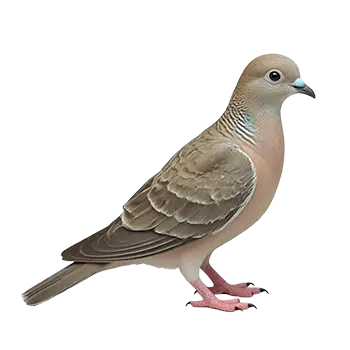

Zebra Dove chicks fledge remarkably early compared to many companion bird species, typically leaving the nest between 12 and 16 days of age. This rapid progression from helpless hatchling to fledgling reflects the species' evolutionary history as a small, ground-dwelling Columbid in the tropical forests and open landscapes of Southeast Asia, where remaining in a nest for extended periods increases vulnerability to predation. The fledging process is not a single dramatic event but a gradual buildup of wing strength, balance, and confidence over the final days of nest life.
In the days leading up to fledging, the juvenile Zebra Dove begins vigorous wing-flapping exercises within the nest or brooder. These rapid bursts of flapping strengthen the pectoral muscles and flight feathers that have been developing since the first week of life. The chick may perch on the edge of the nest or brooder wall, teetering and testing its balance before retreating. Caregivers should ensure that the area around the nest is safe for these initial ventures, removing sharp objects, open water containers, and any gaps where a clumsy fledgling could become trapped.
The first flights are typically short, awkward, and poorly controlled. A newly fledged Zebra Dove may flutter to the floor, crash-land on a nearby surface, or flap in a panicked burst before landing in an unintended location. This is entirely normal and should not be cause for alarm unless the chick sustains a visible injury. Provide a safe, enclosed space for the chick to practice, free from ceiling fans, glass windows, and other household hazards that claim the lives of countless fledgling birds each year. Covering windows with curtains or hanging fabric barriers helps the chick avoid collisions during these uncoordinated early flights.
Within three to five days of the first fledging attempt, most Zebra Dove juveniles gain substantial flight control. They learn to navigate short distances with increasing accuracy, land on perches with better coordination, and begin making deliberate flights rather than reactive ones. Encourage this progression by placing perches at varying heights within the flight space, allowing the young dove to build its skills incrementally. Parent-raised chicks benefit from observing their parents' flight patterns and often develop navigational skill faster than hand-raised birds that lack avian flight models.