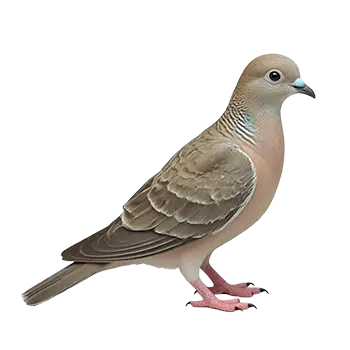

An adult Zebra Dove's dietary needs differ meaningfully from those of a growing juvenile, and providing the correct nutritional foundation is one of the most impactful things a keeper can do for long-term health. In the wild, Geopelia striata subsists primarily on small grass seeds, weed seeds, and the occasional small invertebrate gleaned from the ground. Captive diets should replicate this nutritional profile as closely as possible while accounting for the reduced energy expenditure of a caged bird compared to a free-ranging one.
The dietary core for an adult Zebra Dove is a high-quality small seed mix formulated for doves or finches. Look for mixes that include white millet, panicum millet, canary grass seed, and small quantities of niger seed and linseed. Avoid mixes that are heavily padded with filler grains or large seeds such as sunflower and safflower, which are too big for a Zebra Dove to hull easily and are excessively high in fat for a small Columbid. Seed should be offered fresh daily, with uneaten portions discarded rather than topped off, as empty hulls sitting atop a dish can make a full container appear depleted, causing the bird to go hungry.
Fresh vegetables and leafy greens provide essential micronutrients and dietary variety. Finely chopped dark leafy greens such as dandelion leaves, endive, romaine lettuce, and carrot tops can be offered daily in a small side dish. Many Zebra Doves are initially reluctant to try fresh produce, particularly if they were raised exclusively on seed. Persistence and creative presentation, such as mixing finely grated carrot into dampened seed, can gradually overcome this resistance. Avoid avocado, onion, garlic, and any plants from the nightshade family, all of which are toxic to birds.
Grit and mineral supplementation are essential components of the adult Zebra Dove diet. Unlike parrots, which hull seeds before swallowing the kernel, doves swallow many seeds whole and rely on insoluble grit in the gizzard to grind food mechanically. A small dish of fine-grade insoluble grit, along with a cuttlebone or mineral block for calcium and trace minerals, should be available at all times. Calcium is particularly important for hens, as chronic calcium deficiency predisposes them to egg binding, a potentially fatal reproductive emergency.
Clean, fresh water must be provided daily in a container deep enough for the dove to immerse its beak for the characteristic sucking drinking method used by all Columbids. Shallow dishes are inadequate because the bird cannot generate suction with insufficient water depth. Change the water at least once daily, more often if the dove bathes in its drinking water or if the dish becomes contaminated with seed hulls or droppings.