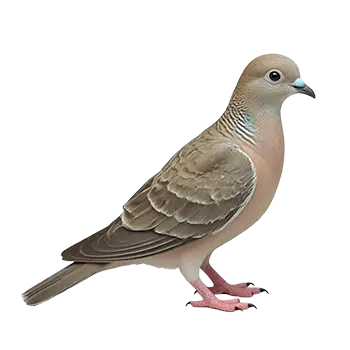

Determining exactly when a Zebra Dove transitions from a healthy adult into its senior years is not as straightforward as it might seem. There is no single birthday or marker that announces old age. Instead, the transition is a gradual accumulation of subtle changes that attentive keepers notice over months. In captive Zebra Doves with lifespans typically ranging from five to twelve years, the senior stage generally begins between six and eight years of age, though individual variation is significant and influenced by genetics, diet, and lifetime care quality.
Early indicators of aging in Zebra Doves include a gradual reduction in overall activity level. A dove that once flew energetically between perches may begin favoring shorter flights or spending more time walking along the cage floor. Vocalization patterns may shift, with the characteristic soft cooing becoming less frequent or less sustained. These changes are often so incremental that they escape notice until the keeper reflects on how the bird's behavior has changed over the preceding year. Keeping a simple behavioral log, even just brief weekly notes, helps establish a timeline that makes these gradual shifts visible.
Physical changes accompany the behavioral ones. The plumage of a senior Zebra Dove may lose some of its luster, appearing slightly dull compared to the sleek, sharply barred feathers of the prime adult years. Molts may take longer to complete, and replacement feathers may not be quite as tightly structured as earlier generations. The bare orbital skin around the eye may appear slightly less vivid. Muscle mass along the keel bone may decrease even if body weight remains stable, as the dove's metabolism shifts to favor fat deposition over lean tissue maintenance.
Recognizing these changes is not cause for alarm but rather a signal to begin adapting the dove's care regimen. A senior Zebra Dove can live comfortably for years beyond the onset of age-related changes if its environment, diet, and veterinary care are adjusted to accommodate its evolving needs. The key is observation: the keeper who notices change early and responds proactively is the one whose dove ages gracefully.