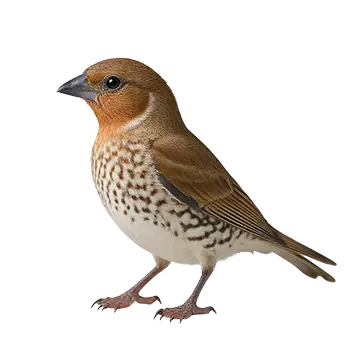

The weaning period is one of the most consequential phases in a young Spice Finch's life, marking the shift from complete dependence on parental feeding to self-sufficient foraging. This transition typically begins around three weeks of age, shortly after fledging, and is usually complete by five to six weeks. During this window, the juvenile birds learn to crack seed, drink water independently, and navigate the feeding stations in their enclosure, all while still soliciting and receiving supplemental feedings from their parents.
Parent birds drive the weaning process through a gradual reduction in feeding frequency. In the first days after fledging, the adults continue to feed the juveniles at nearly the same rate as they did in the nest. Over the following one to two weeks, the parents increasingly ignore begging calls, particularly as the young birds begin to show competence with seed. This natural tapering is far less stressful than forced weaning and produces healthier, more confident juveniles. Interfering with this timeline by separating the young birds from the parents too early can lead to weight loss, stress-related illness, and behavioral abnormalities.
To support successful weaning, provide easily accessible food sources throughout the enclosure. Scatter seed on the cage floor in addition to placing it in elevated dishes, as fledgling finches often begin foraging on the ground before they are confident enough to feed from hanging or elevated stations. Soaked and sprouted seeds are particularly valuable during this period because they are softer and easier for inexperienced birds to hull. Egg food should remain available daily to provide supplemental protein as the juveniles build muscle mass and complete feather growth.
Monitoring weight during weaning is the most reliable way to ensure the transition is proceeding safely. A healthy juvenile Spice Finch should maintain or gradually increase its weight throughout the weaning period. A weight loss of more than ten percent of body mass, or a declining trend over two or more consecutive days, indicates that the bird is not consuming enough food on its own and may need continued parental access or, in rare cases, supplemental hand-feeding. Digital gram scales accurate to 0.1 grams are indispensable tools for tracking the weights of birds this small.