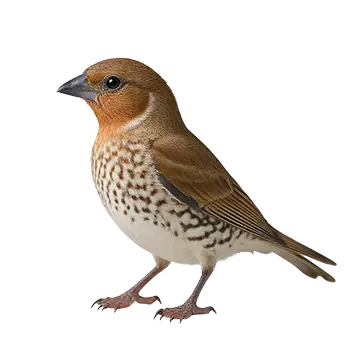
The Spice Finch possesses a gentle, peaceful, and hardy temperament that has made them favorites among finch keepers from beginners to experts. Understanding their behavioral characteristics helps owners provide appropriate care and develop realistic expectations for these charming birds that are meant for observation rather than interaction.
The defining characteristic of Spice Finch temperament is their exceptionally peaceful, non-aggressive nature combined with remarkable hardiness and adaptability. Unlike some finch species that can be territorial or aggressive toward other birds, Spice Finches are gentle souls that rarely cause problems in community aviaries. They coexist peacefully with other small finch species, making them ideal candidates for mixed collections housing multiple species. This peaceful temperament extends to interactions with their own species, as Spice Finches rarely fight even when kept in groups, though breeding pairs do establish small territories around nest sites.
With humans, Spice Finches are naturally nervous and wary like all finches, viewing people as potential threats rather than companions. They do not seek human interaction, do not enjoy handling, and will panic if grabbed or restrained. Even captive-bred birds raised around people remain essentially wild in temperament and behavior. This wariness is completely normal and appropriate for their species. Proper Spice Finch care involves respecting their need to avoid close human contact while providing excellent husbandry from a distance without attempting to force tameness or interaction.
However, Spice Finches are notably bolder and less skittish than many other finch species including Gouldians or some waxbills. Captive-bred birds that see humans daily from hatching may become relatively accustomed to keeper presence, accepting food changes and maintenance activities without excessive panic. They may even approach food dishes and feed while keepers are present if approached slowly and predictably. This relative boldness makes them easier to maintain than extremely nervous species, though they should still never be handled except when absolutely necessary for health examinations.
Social behavior with their own species is central to Spice Finch wellbeing. These highly gregarious birds are flock animals requiring constant companionship from other Spice Finches or compatible finch species. Solitary confinement causes severe stress, abnormal behaviors, and shortened lifespan. Pairs form bonds during breeding season, with males performing courtship displays and singing soft songs to attract females. Bonded breeding pairs work together to build nests, incubate eggs, and raise chicks. Outside breeding season, Spice Finches are happy in groups without strong pair bonds, often huddling together for warmth and security.
With other finch species, Spice Finches demonstrate exceptional compatibility and are widely considered one of the best species for mixed finch communities. They coexist peacefully with society finches, zebra finches, Gouldian finches, star finches, and numerous other small finch species without aggression or territorial disputes. Their gentle nature means they can be bullied by more aggressive species, so careful species selection is important. Provide adequate food, water, and perch space preventing competition and ensuring Spice Finches can access resources without being displaced.
Territoriality in Spice Finches is minimal except during active breeding when pairs defend immediate nest areas. Males may posture toward other males approaching nests but rarely engage in physical aggression. Multiple pairs can breed in relatively close proximity without serious conflicts if adequate nest sites and space are provided. This mild territoriality makes Spice Finches suitable for colony breeding systems.
Vocalizations in Spice Finches are extremely soft and pleasant. Males produce gentle, whisper-soft songs consisting of quiet chirps and trills during courtship that are barely audible even in quiet rooms. These songs are so quiet that many keepers never notice males singing. Contact calls between flock members are soft chirps maintaining group cohesion. The vocalizations are soothing background sounds that will never create noise problems, making Spice Finches absolutely ideal for apartments, condominiums, senior housing, or any living situation with noise concerns.
Activity levels in Spice Finches are moderate compared to some hyperactive finch species. They are active during daylight hours, hopping between perches, foraging on cage floors, flying to water dishes, bathing, and engaging in social behaviors with cage mates. However, they also spend considerable time perched quietly, preening, or simply sitting contentedly. They are less frenetic than species like zebra finches, displaying a more relaxed, peaceful energy that many keepers find appealing.
Hardiness and adaptability are hallmark characteristics that make Spice Finches excellent for beginners. Unlike delicate species like Gouldians that require precise environmental conditions, Spice Finches tolerate a wide range of temperatures (though extremes should be avoided), adapt to various housing situations, and are forgiving of minor husbandry mistakes that would stress more sensitive finches. They acclimate well to new environments, handle routine changes better than nervous species, and generally demonstrate robust health when basic care needs are met. This resilience makes them ideal first finches for people learning finch husbandry.
Stress sensitivity is relatively low compared to delicate finch species. While all finches benefit from stable, predictable environments, Spice Finches tolerate more variability and disturbance than species like Gouldians. They adapt to household activities, recover from fright responses quickly, and are less prone to stress-triggered illness. This hardiness does not mean they should be subjected to poor care, but rather that they are forgiving of the learning curve inherent in new finch keeping.
Breeding behavior in Spice Finches is straightforward and reliable. Pairs that bond build dome-shaped nests using provided materials, with both parents participating in construction. They are generally attentive parents, sharing incubation and chick-rearing duties. Spice Finches are often recommended for beginning finch breeders due to their willingness to breed in captivity, reliability as parents, and relatively easy management.
Prospective owners seeking hardy, peaceful, low-maintenance observational birds will find Spice Finches nearly ideal. Their forgiving nature, peaceful temperament, and subtle beauty make them perfect for beginners while remaining appreciated by experienced keepers for their reliability and ease of care.