
The Weaning Transition

Weaning is the pivotal developmental event of the Senegal Dove's juvenile period, marking the shift from dependence on parental crop milk or hand-feeding formula to independent consumption of solid food. In parent-raised birds this transition begins naturally around 14 to 18 days of age, when the adults start introducing progressively larger quantities of partially digested seed into the crop milk they deliver. By roughly three weeks the squab's diet is predominantly seed-based, and by four weeks most parent-raised Senegal Doves are feeding themselves entirely.

For hand-raised squabs the weaning process requires careful management. Begin offering small, shallow dishes of fine-grade millet, canary seed, and finely cracked safflower alongside the regular formula feedings around day 16 to 18. Do not reduce formula volume preemptively; instead, allow the squab to explore solid food at its own pace while maintaining full formula support. You will notice the squab pecking at seeds tentatively at first, scattering more than it consumes. This exploratory behavior is a necessary stage, and rushing it by cutting formula too soon can lead to dangerous weight loss.

As solid food intake increases, reflected by visible seed in the crop and the presence of formed, seed-containing droppings, begin gradually reducing the volume and frequency of formula feedings. Most hand-raised Senegal Doves complete the weaning process between 25 and 35 days of age, though individual variation is normal. A squab that resists weaning beyond five weeks may have an underlying health issue, an inadequately diverse food offering, or an anxiety-driven dependence on the hand-feeding ritual. Evaluate each possibility systematically rather than forcing an abrupt cutoff.

Throughout weaning, daily weight monitoring remains essential. A squab undergoing a healthy weaning will show a temporary plateau or very slight dip in weight as it transitions from the calorie-dense formula to the lower energy density of dry seed. This minor fluctuation is normal. However, a sustained downward trend of more than 10 percent from peak weight is cause for concern and may require temporarily resuming supplemental feedings while investigating the cause.

Fledging and First Flight

Senegal Doves fledge earlier than most companion parrot species, with the first tentative flights typically occurring between 15 and 19 days of age in parent-raised birds. This precocious fledging timeline reflects the species' wild ecology, where rapid independence from the nest reduces predation risk. In captivity, this means caregivers must prepare the environment for a flying bird well before many expect it. A squab that was a sedentary nestling yesterday can launch itself across a room today with little warning.

Before the squab takes its first flight, ensure the room or flight space is safe. Cover or remove mirrors and windows, as fledglings have no understanding of transparent or reflective barriers and will fly into them at full speed, risking concussion, neck injury, or death. Turn off ceiling fans, close toilet lids, cover open water containers, and block gaps behind furniture where a panicked fledgling could become trapped. The flight area should be as obstacle-free as possible while still offering low, padded perches where the young bird can land safely.

First flights are characteristically clumsy. The fledgling will launch with a burst of rapid wing beats, gain altitude quickly, and then struggle with steering, braking, and landing. Crash landings are common and rarely harmful on carpeted or padded surfaces, but hard floors, sharp edges, and cluttered shelves present genuine injury risks. Supervise every out-of-cage flight session during this learning period. As the juvenile's coordination improves over the following week, its landings will become more controlled, and it will begin to navigate around objects rather than colliding with them.

For hand-raised birds that are not yet weaned when fledging begins, the combination of flight practice and continued formula feeding creates a logistical challenge. The squab may fly to you when it sees the feeding syringe, which is endearing but also means formula can end up on surfaces throughout the room. Designate a consistent feeding station, ideally a towel-covered surface at a comfortable height, and gently return the fledgling to this spot for each feeding. Consistency helps the bird learn where feedings happen and reduces the chaos of a newly volant squab associating your every movement with food.

Diet and Nutrition for Growing Juveniles

Once weaning is complete, the juvenile Senegal Dove's diet must provide the caloric density and micronutrient balance necessary to support rapid skeletal growth, feather development, and the metabolic demands of an increasingly active lifestyle. A seed-only diet, while eagerly consumed, is nutritionally incomplete and will lead to deficiencies over time, particularly in calcium, vitamin A, and essential amino acids. Building good dietary habits during the juvenile period establishes preferences that persist into adulthood.

The foundation of the juvenile diet should be a high-quality small-seed mix formulated for doves and pigeons. Look for blends that include white millet, red millet, canary seed, safflower, small sunflower hearts, and niger seed. Avoid mixes padded with excessive filler seeds or dried corn pieces that are too large for a Senegal Dove to process comfortably. Supplement the seed mix with a pelleted diet designed for doves or small softbills. Pellets provide a nutritionally complete base that compensates for the inherent imbalances of a seed diet. Introduce pellets early in the juvenile period while the bird is still forming food preferences; older birds that have never encountered pellets are often resistant to accepting them.

Fresh foods play an important role in rounding out the juvenile's nutrition. Offer finely chopped dark leafy greens such as kale, dandelion greens, and romaine lettuce several times per week. Grated carrot, small pieces of cooked sweet potato, and finely diced apple provide additional vitamins and variety. Senegal Doves are ground feeders by nature and will often pick through fresh foods more readily when they are scattered on a shallow tray or the cage floor rather than presented in an elevated dish.

Grit and mineral supplementation are particularly important during the juvenile growth phase. Doves require insoluble grit to aid in grinding whole seeds within the gizzard, unlike parrots which hull seeds before swallowing. Provide a small dish of appropriately sized dove grit mixed with crushed oyster shell, which serves double duty as a calcium source. A cuttlebone attached to the cage wall offers an additional calcium and mineral resource that the juvenile can access freely. Ensure fresh, clean water is available at all times in a dish deep enough for the dove to submerge its beak, as columbids drink by suction rather than by tipping their heads back.

Behavioral Development and Socialization

The juvenile period is when a Senegal Dove's personality and behavioral repertoire take definitive shape. Between four and twelve weeks of age the young bird transitions from a dependent, nest-bound squab into an alert, mobile individual with emerging social behaviors, territorial instincts, and the first signs of species-typical vocalizations. How you manage this period has a lasting impact on the bird's temperament, confidence, and willingness to interact with humans and other birds.

Senegal Doves are naturally sociable and mild-tempered, but these traits are enhanced by consistent, positive interaction during the juvenile stage. Handle the young bird daily, speaking to it in calm, even tones. Allow it to perch on your hand, shoulder, or lap during supervised out-of-cage time. Unlike parrots, doves generally do not enjoy being stroked or petted extensively, but they do value proximity and the security of a trusted person's presence. Respecting the species' preference for companionship over physical affection builds a bond rooted in genuine comfort rather than forced interaction.

Vocal development progresses noticeably during this stage. Juvenile Senegal Doves begin practicing the characteristic laughing coo that gives the species its common alternative name, the Laughing Dove. Early attempts are often halting and incomplete, bearing little resemblance to the smooth, rolling cadence of an adult's call. Encourage vocalization by speaking to the bird frequently and, if possible, allowing it to hear adult Senegal Doves. Vocal learning in doves is less complex than in parrots, but auditory exposure to conspecifics does help refine the juvenile's call structure.

If the juvenile Senegal Dove will eventually share space with other birds, gradual introductions should begin during this period while the young bird is still socially flexible. Place the juvenile's cage adjacent to the other birds' enclosure so they can see and hear one another without physical contact. After several days of calm coexistence, supervised face-to-face introductions in a neutral space can begin. Senegal Doves are generally peaceful cohabitants, but individual personality clashes occur, and a juvenile that is bullied during early introductions may develop lasting fearfulness. Monitor all interactions closely and separate birds at the first sign of persistent aggression.

This stage also marks the emergence of species-typical comfort behaviors. The juvenile will begin dust bathing or water bathing, preening methodically, and sun basking with one wing extended. Provide opportunities for these natural behaviors by offering a shallow dish of clean water for bathing and, when possible, access to unfiltered natural sunlight for brief supervised periods. These behaviors are not merely aesthetic; they serve essential functions in feather maintenance, parasite control, and vitamin D synthesis.

Housing and Environment

The housing needs of a juvenile Senegal Dove expand significantly as the bird transitions from brooder to cage to flight space. A recently fledged juvenile needs an enclosure large enough to practice flight and build stamina, yet secure enough to prevent escape or injury. The minimum recommended cage size for a single juvenile Senegal Dove is 24 inches long by 18 inches wide by 24 inches tall, but larger is always better. Flight cages or small indoor aviaries that allow sustained horizontal flight are ideal for promoting muscular and cardiovascular development during this growth-intensive period.

Perch selection matters more than many keepers realize. Provide perches of varying diameters, ranging from approximately three-eighths of an inch to three-quarters of an inch, to exercise the feet and prevent pressure sores that can develop when a bird grips the same diameter continuously. Natural wood branches with bark intact are preferable to dowel rods, as the irregular surface promotes healthy foot condition and provides textural enrichment. Position perches at different heights and angles within the cage, but avoid placing them directly above food and water dishes where droppings will contaminate the contents.

Substrate on the cage floor should be easy to clean and monitor. Paper-based cage liners, including plain newsprint or butcher paper, allow you to observe droppings daily for changes in color, consistency, or volume. Avoid corn cob bedding, walnut shell, or cedar shavings, all of which can harbor bacteria, generate harmful dust, or release irritating volatile oils. Change the cage liner daily and perform a thorough cage cleaning with a bird-safe disinfectant weekly.

Environmental enrichment for a juvenile Senegal Dove looks different from parrot enrichment. Doves are not generally destructive chewers and show limited interest in puzzle toys. Instead, they appreciate sensory variety, including different textures underfoot, shallow dishes for bathing, mirrors placed outside the cage for visual stimulation, and access to natural sunlight when possible. A flat platform or shelf within the cage gives the dove an alternative resting spot that accommodates the species' preference for horizontal surfaces over round perches. Small bundles of dried grasses or millet sprays offered on the cage floor mimic natural foraging conditions and encourage species-appropriate feeding behavior.

Common Juvenile Health Concerns

Juvenile Senegal Doves face a specific set of health challenges tied to their rapid growth, dietary transition, and increasing environmental exposure. Awareness of these common conditions allows caregivers to catch problems early when treatment is most effective. While the species is generally robust, the juvenile period is a vulnerability window that demands attentive monitoring.

Trichomoniasis remains a significant threat through the juvenile stage, particularly in birds raised alongside adults or in multi-bird environments. Trichomonas gallinae organisms are transmitted through contaminated crop milk, shared water dishes, and direct beak-to-beak contact. Symptoms in juveniles include reluctance to eat, weight loss, visible white or yellowish plaques in the oral cavity, and in advanced cases, a foul odor from the mouth. Routine veterinary screening via crop swab is advisable at least once during the juvenile period, even in the absence of symptoms, because subclinical carriers can harbor the organism and shed it to other birds.

Coccidiosis is another protozoal infection that commonly affects juvenile doves, especially those housed on solid substrates where fecal contact is likely. The causative organisms, typically Eimeria species in columbids, invade the intestinal lining and cause bloody or mucoid diarrhea, dehydration, and weight loss. Diagnosis is made through fecal flotation testing, and treatment with appropriate anticoccidial medications is generally effective when initiated promptly. Prevention centers on rigorous cage hygiene, frequent substrate changes, and avoiding overcrowded housing conditions.

Feather development abnormalities occasionally present during the juvenile molt, when the bird replaces its juvenile plumage with its first set of adult feathers. Stress bars, which appear as thin translucent lines running across the vane of a feather, indicate periods of nutritional stress or illness that occurred while the feather was growing. A few stress bars on scattered feathers are not alarming on their own, but widespread stress barring across multiple feather tracts suggests a systemic problem that warrants veterinary investigation. Feather cysts, where a developing feather becomes trapped beneath the skin and forms a painful lump, occur occasionally in doves and may require surgical drainage.

Respiratory infections, both bacterial and fungal, pose a risk to juveniles whose immune systems are still maturing. Aspergillosis, caused by the ubiquitous environmental mold Aspergillus, can establish in the air sacs and lungs of immunocompromised birds. Symptoms include labored breathing, tail bobbing, reduced activity, and weight loss. Bacterial respiratory infections may present with nasal discharge, sneezing, and audible congestion. Any respiratory symptom in a juvenile dove warrants a veterinary consultation, as respiratory disease in birds can progress rapidly and is far more treatable when caught early.

Preparing for Adulthood

The final phase of the juvenile period is the transition zone where the young Senegal Dove sheds the last vestiges of adolescent dependency and begins to exhibit the behaviors, routines, and physical characteristics of an adult bird. This period, roughly spanning from eight to sixteen weeks of age, is your opportunity to cement the husbandry practices, social bonds, and environmental norms that will define the bird's quality of life for the next decade or more.

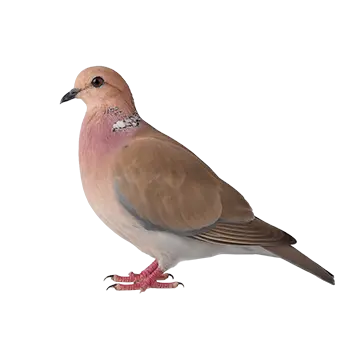
By eight weeks, the juvenile molt is typically underway. The soft, somewhat muted feathers of the fledgling are progressively replaced by the richer, more defined plumage of the adult. In Senegal Doves this means the development of the distinctive speckled bib of black and copper feathers across the lower throat and upper breast, the warm pinkish-brown tones of the body, and the long, graduated tail with its characteristic white outer tips. The molt is nutritionally demanding, and the diet should be at its most varied and nutrient-dense during this time. Ensure adequate protein through a quality seed mix supplemented with pellets, and consider adding a small amount of egg food, a commercial protein supplement used widely in aviculture, two to three times per week.

Habits established now tend to persist. If you want your adult Senegal Dove to bathe regularly, ensure bathing opportunities are a consistent part of the juvenile's routine. If you plan to maintain a flight-capable bird, continue providing daily out-of-cage flight time so the juvenile builds and retains its flight muscles and navigational skills. If the bird will eventually move to an outdoor aviary, begin acclimatizing it gradually to outdoor temperatures, sounds, and visual stimuli while it is still adaptable and curious rather than set in its ways.

Social dynamics also mature during this transitional window. Juvenile Senegal Doves housed with conspecifics will begin to establish the pair bonds and hierarchical positions that define their adult social lives. If you intend the bird to remain a single companion animal, invest extra time in reinforcing your bond through consistent daily interaction, shared routines, and calm, predictable handling. A Senegal Dove that enters adulthood with a strong human bond and a well-structured daily routine is a remarkably content and easy-to-care-for companion.

Finally, schedule a juvenile-to-adult transitional veterinary checkup around twelve to sixteen weeks of age. This visit establishes the bird's adult baseline health parameters, including weight, body condition score, and a clean bill of health regarding common parasitic and infectious diseases. The veterinarian can also assess whether the bird's feather condition, skeletal development, and overall growth are appropriate for its age. This baseline becomes an invaluable reference point for all future health evaluations throughout the bird's life.

Always consult a qualified professional before making any health-related decisions. This content is provided for informational reference only and should not replace professional guidance specific to your animal.