
The First 24 Hours

Senegal Dove squabs hatch after an incubation period of approximately 13 to 15 days, entering the world as small, helpless nestlings weighing between 5 and 7 grams. Unlike precocial species that emerge ready to move, columbid chicks are altricial and arrive with closed eyes, sparse tufts of pale yellowish down, and virtually no ability to thermoregulate. The newly hatched squab is entirely dependent on its parents or a human caregiver for warmth, nutrition, and protection. Those first hours establish the physiological foundation upon which all subsequent growth depends.

In a parent-raised clutch the hen and cock share brooding duties almost immediately. Both adults produce crop milk, a protein- and fat-rich secretion of the crop lining that is unique to pigeons and doves. This substance is the sole food source for newly hatched squabs and contains immunoglobulins, growth factors, and beneficial microflora that no commercial formula can fully replicate. The first feeding typically occurs within two to four hours of hatching. If you are monitoring a parent-raised nest, resist the urge to intervene unless the adults show clear signs of neglecting the squab, such as leaving the nest for prolonged periods or failing to settle over the chick.

For hand-raised squabs the first feeding should be delayed until the yolk sac has been absorbed, usually within six to ten hours after hatching. A small amount of warmed, diluted hand-feeding formula designed for columbids can be delivered via a very small syringe or a specially shaped feeding tip. Because Senegal Dove squabs are considerably smaller than parrot chicks, the volume per feeding at this stage is tiny, often just a fraction of a milliliter. Precision matters enormously. Overfeeding can distend the crop and lead to stasis, while underfeeding triggers rapid weight loss that a bird this small cannot afford.

During the first day, the squab should be kept in a brooder maintained at 95 to 98 degrees Fahrenheit with humidity around 55 to 65 percent. Observe the chick every hour for skin color, responsiveness, and whether the crop is emptying at a normal rate. Healthy skin should appear pinkish and translucent, and the chick should respond to gentle touch with subtle head movements. Any grayish or bluish discoloration, persistent lethargy, or failure to accept feeding attempts warrants immediate consultation with an avian veterinarian.

Feeding and Nutrition

Nutrition during the first two weeks of a Senegal Dove squab's life is overwhelmingly the most consequential factor in its long-term health. In nature, both parents feed the squab crop milk for the first several days, gradually introducing partially digested seeds and grain as the chick matures. This natural transition mirrors changes in the squab's digestive enzyme production and crop capacity. Understanding this progression is essential whether you are supporting parent-raised chicks or hand-rearing them yourself.

For hand-fed squabs, use a commercially prepared formula intended for pigeons and doves rather than a generic parrot hand-feeding mix. Columbid-specific formulas more closely approximate the macronutrient profile of natural crop milk, which is significantly higher in fat and protein than the regurgitated fruit and seed mash that parrot parents provide. Mix the formula to the manufacturer's recommended consistency, typically a thin, soupy texture for the first three to four days, thickening slightly as the squab's crop strengthens. Always prepare formula fresh for each feeding and discard any leftover mixture.

Formula temperature is critical. Heat the prepared mixture to between 104 and 108 degrees Fahrenheit and verify with a thermometer before every feeding. Senegal Dove squabs are small enough that even a brief exposure to formula that is a few degrees too hot can cause thermal burns to the delicate crop lining. Conversely, formula served below 100 degrees is poorly digested and can lead to crop stasis, sour crop, or bacterial overgrowth. If the crop has not emptied from the previous feeding, do not add more formula. Allow the crop to empty completely before the next scheduled feed.

Feeding frequency during the first week should be approximately every two hours during waking hours, with one or two overnight feedings to prevent dangerous gaps. By the second week, as the squab's crop capacity grows and it begins to process food more efficiently, feedings can be spaced to every three to four hours. Keep a written log of each feeding's time, volume delivered, and the squab's weight taken at the same time each day. Consistent weight gain of approximately 10 to 15 percent of body weight per day during the first week is the single best indicator that nutritional needs are being met.

Parent-raised squabs generally manage nutrition without intervention, but daily weighing is still advisable if the nest is accessible without causing undue stress to the adults. Senegal Doves are relatively tolerant of brief nest inspections compared to more skittish species, but excessive disturbance can cause abandonment. Weigh the squab quickly, record the number, and return it to the nest within a minute. If weight gain stalls or the squab appears lethargic compared to a sibling, supplemental hand-feedings may be necessary to bridge a nutritional gap.

Developmental Milestones

Senegal Dove squabs develop rapidly compared to many psittacine species, reflecting the columbid family's evolutionary strategy of fast growth to fledging. Knowing the typical developmental timeline allows caregivers to recognize healthy progression and to identify delays that may indicate underlying problems. While individual variation exists, the general milestones are consistent enough across the species to serve as reliable benchmarks.

During the first three days the squab is essentially immobile, capable only of raising its head to accept feedings and shifting its position slightly under the brooding parent. The eyes remain sealed, and the sparse natal down provides minimal insulation. By day four or five, the squab's eyes begin to slit open, and the first pin feathers start to erupt along the wings and back. This is also when the chick's legs gain enough strength to push against the nest substrate, though coordinated standing is still days away.

Between days six and ten the transformation is dramatic. The eyes open fully, revealing the dark irises characteristic of juvenile Senegal Doves. Pin feather growth accelerates across the body, and the chick begins to look less like a naked hatchling and more like a recognizable bird. The squab's vocalizations evolve from faint peeping sounds to soft, insistent begging calls that intensify when a parent approaches the nest or when a hand-feeder presents the syringe. Leg strength improves rapidly, and the squab can now brace itself in a semi-upright position during feedings.

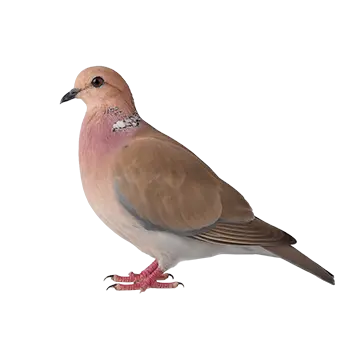
By the end of the second week, the squab is substantially feathered, with emerging contour feathers giving it the warm pinkish-brown and rufous tones of the species' plumage. Wing feathers develop noticeably, and the squab begins to stretch and flap in the nest, building the pectoral muscles it will need for flight. At this point the squab's weight should be approaching or exceeding 50 percent of its anticipated adult weight of approximately 90 to 110 grams. Any squab that has not reached this threshold by day 14 deserves a veterinary evaluation to rule out nutritional deficiency, parasitic infection, or congenital abnormality.

Brooder Setup and Environmental Control

The brooder environment is the artificial substitute for parental warmth and nest insulation, and it must be managed with the same reliability that a brooding parent would provide. Senegal Dove squabs are small-bodied birds with a high surface-area-to-mass ratio, which means they lose heat rapidly and are acutely vulnerable to temperature fluctuations. A well-designed brooder is not optional for hand-raised squabs; it is the difference between survival and loss.

Select a brooder that allows precise temperature control and easy cleaning. Commercial avian brooders with thermostatically regulated heating elements are ideal. If using a homemade setup, a glass or plastic enclosure with an under-tank heating pad connected to a pulse-proportional thermostat offers reliable results. Avoid heat lamps as the sole heat source, because they create temperature gradients that can overheat the chick on one side while leaving the other side too cool. Place a digital thermometer at the level where the squab rests to ensure accurate readings rather than relying on ambient air temperature.

For the first five days, maintain the brooder floor temperature at 95 to 98 degrees Fahrenheit. Between days five and ten, reduce the temperature gradually to approximately 90 degrees. As feather coverage increases through the second week, continue stepping the temperature down by two to three degrees every few days, reaching roughly 80 to 85 degrees by the time the squab is well feathered around day 14. Always let the squab's behavior guide adjustments. A comfortable chick rests quietly with normal posture. A cold chick huddles tightly and may tremble, while an overheated chick pants, holds its wings away from its body, and appears agitated.

Humidity should be maintained between 55 and 65 percent. In dry climates or air-conditioned rooms, a shallow water dish placed near the heat source inside the brooder can raise humidity passively. Monitor levels with a digital hygrometer. Bedding choices matter for both hygiene and safety. Non-shredding paper towels layered two or three sheets thick provide a clean, disposable substrate that allows easy crop and droppings inspection. Avoid loose substrates like wood shavings, corn cob, or sand, which newly hatched squabs can ingest, leading to crop impaction. Replace soiled bedding after every feeding to reduce bacterial load.

Ventilation is the often-forgotten third pillar of environmental control. The brooder needs adequate air exchange to prevent the buildup of ammonia from droppings and carbon dioxide from the chick's respiration, but openings must be positioned to avoid creating drafts directly over the squab. A brooder with adjustable ventilation ports at the top is the most practical solution, allowing stale air to rise and exit without channeling cold air across the nestling.

Early Socialization and Handling

Senegal Doves are naturally gentle and relatively unflappable compared to many cage bird species, but their temperament as adult companions is still shaped significantly by their experiences during the nestling period. A squab that is handled calmly and consistently during its first two weeks develops into an adult that accepts human contact readily, steps onto hands without hesitation, and tolerates routine husbandry tasks such as nail trimming and wing inspections with minimal stress.

For hand-raised squabs, socialization is woven into every feeding session. Each time you pick up the chick, warm it against your hand, deliver formula, and return it to the brooder, you are building an association between human contact and comfort. Speak in a soft, even tone during these interactions. Doves are sensitive to vocal pitch and cadence, and a calm voice paired with gentle handling creates a multisensory bond. Avoid passing the squab between multiple handlers during the first week; consistency builds trust more effectively than variety at this fragile stage.

Once the squab's eyes are open, usually around day four or five, its awareness of its environment expands dramatically. This is the ideal time to begin brief handling sessions outside of feeding. Cup the squab gently in your hands for two to three minutes, allowing it to feel your warmth and hear your heartbeat. Keep these sessions short and always return the chick to the brooder before it shows signs of chilling. As the squab matures through the second week and its feather coverage improves, handling sessions can gradually lengthen to five or ten minutes.

Parent-raised squabs benefit from a complementary socialization strategy. While the parents provide essential species-appropriate social modeling, the squabs still need regular human interaction to prevent them from becoming entirely parent-bonded and wary of people. Beginning around day five to seven, carefully remove each squab from the nest once daily for a brief, gentle handling session lasting no more than two to three minutes. Return the chick before the parents become visibly agitated. This routine, maintained consistently through the nestling period, produces parent-raised birds that are well socialized to both their own kind and their human caregivers.

Health Screening and Veterinary Care

Proactive veterinary care during the newborn period can prevent small problems from becoming fatal ones. Senegal Doves are hardy birds as a species, but individual squabs are fragile organisms with limited reserves to fight infection, nutritional deficiency, or congenital abnormalities. Establishing a relationship with a veterinarian experienced in avian or specifically columbid medicine should be done before the eggs hatch, so that expert guidance is available immediately if complications arise.

The first veterinary examination should occur within the first three to five days of life. The veterinarian will assess the squab's overall condition, including hydration status, skin turgor, crop function, navel closure, and skeletal alignment. A crop swab examined under the microscope can reveal early signs of candidiasis, bacterial overgrowth, or trichomoniasis, the latter being a particularly common and dangerous protozoan infection in columbids. Trichomoniasis, caused by Trichomonas gallinae, can produce caseous lesions in the mouth, throat, and crop that obstruct feeding and can be fatal if untreated. Early detection through routine screening allows prompt treatment with appropriate antiprotozoal medication.

Fecal analysis is another standard component of the newborn health check. The veterinarian will examine a fresh dropping sample for evidence of coccidia, roundworm eggs, or other parasites that the squab may have acquired from the parents or the nest environment. Even in well-maintained aviaries, parasitic loads can flare during the breeding season when adult birds are physiologically stressed and shedding organisms at higher rates. Identifying and addressing parasitic infections early prevents the cascading effects of malabsorption, dehydration, and growth retardation.

Between veterinary visits, daily home monitoring is essential. Weigh the squab at the same time each day and plot the weights on a simple chart. A healthy Senegal Dove squab should gain weight steadily, with only minor day-to-day fluctuations. Two consecutive days of weight loss or stagnation in the first week is a serious warning sign. Additionally, observe droppings at every feeding. Normal squab droppings consist of a dark fecal component surrounded by white urate material and a small amount of clear liquid. Droppings that are watery, unusually dark, tinged with blood, or have an abnormal odor indicate a problem that requires veterinary attention. Monitor the crop's emptying rate as well; a crop that remains full or doughy several hours after a feeding suggests stasis, which can rapidly progress to a life-threatening secondary infection.

When to Worry

Even experienced dove keepers can struggle to distinguish between a squab that is simply developing at its own pace and one that is in genuine distress. Senegal Dove chicks are small, and their condition can deteriorate quickly once a problem takes hold. Learning the warning signs specific to columbid neonates equips you to act decisively when it matters most, rather than waiting until a problem becomes irreversible.

Weight loss is the most reliable early alarm. A squab that loses weight on two or more consecutive days during the first ten days of life is in trouble regardless of how it appears otherwise. Because Senegal Dove squabs are so small, even a loss of one or two grams represents a significant percentage of body mass and signals that caloric intake is not meeting metabolic demand. Possible causes range from inadequate feeding volume to crop stasis, infection, or congenital metabolic disorder. Do not adopt a wait-and-see approach; contact your avian veterinarian immediately.

Respiratory symptoms in a newborn squab demand urgent attention. Any audible clicking, wheezing, or gurgling during breathing suggests aspiration of formula, respiratory infection, or airsac involvement. Healthy squabs breathe silently with a smooth, rhythmic chest motion. Tail bobbing, where the tail pumps visibly with each breath, is another indicator of respiratory compromise and is never normal in a resting chick. Open-mouth breathing outside of a brief post-feeding moment is equally concerning and can indicate overheating, respiratory disease, or both.

Crop-related problems are among the most common emergencies in hand-raised columbid squabs. A crop that fails to empty within the expected timeframe, typically three to four hours for a properly fed squab, may indicate crop stasis. The crop will feel doughy, distended, and may have a sour smell if bacterial fermentation has begun. Do not attempt to empty the crop manually without veterinary guidance, as improper technique can cause aspiration or crop rupture. Crop burns from overheated formula present as reluctance to feed, flinching when the crop area is touched, and eventually a discolored or necrotic patch on the skin overlying the crop. This injury requires immediate veterinary treatment and often surgical intervention.

Finally, be vigilant for signs of trichomoniasis, which is sometimes called canker in columbid circles. Early symptoms include white or yellowish plaques visible in the mouth when the squab gapes for feeding, difficulty swallowing, regurgitation of formula, and a progressively declining interest in food. The disease progresses rapidly in neonates and can obstruct the esophagus within days if untreated. Any suspicious oral lesion warrants a same-day veterinary visit, as early treatment with metronidazole or carnidazole is highly effective, but delayed intervention often results in permanent damage or death.

Always consult a qualified professional before making any health-related decisions. This content is provided for informational reference only and should not replace professional guidance specific to your animal.