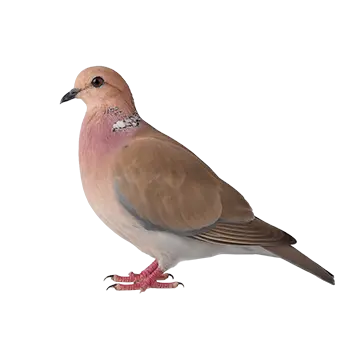

Recognizing the Senior Stage

Senegal Doves typically enter their senior years around age seven to nine, though the onset of age-related changes varies with genetics, lifetime nutrition, and overall health history. Unlike mammals, birds do not gray visibly with age, which means the transition into the geriatric phase often goes unrecognized until functional changes become apparent. Observant keepers who have tracked their bird's behavior, weight, and activity level throughout its life are best positioned to notice the subtle shifts that mark the beginning of the senior period.

The earliest signs are usually behavioral rather than physical. A dove that once flew eagerly during out-of-cage time may begin opting to walk or hop between perches instead. Morning activity, normally a period of enthusiastic cooing and movement, may start later in the day or diminish in intensity. The bird may sleep more, taking longer and more frequent naps during daylight hours. These changes do not necessarily indicate illness; they can reflect the natural reduction in metabolic rate and activity level that accompanies aging in most avian species.

Physical changes become more apparent as the bird progresses deeper into its senior years. Feather quality may decline slightly, with plumage appearing less sleek and vibrant than during the prime adult years. Molts may take longer to complete and produce feathers that are marginally thinner or more prone to fraying. Muscle mass, particularly in the pectoral region, may decrease, giving the keel bone a more prominent feel under the breast feathers. The bird's feet and legs may develop a slightly rougher, scalier texture as skin cell turnover slows.

Recognizing these age-related changes allows you to make timely adjustments to care, diet, and environment that improve your Senegal Dove's comfort and quality of life during its remaining years. The senior period is not a decline to be endured; it is a life stage with its own character that, with appropriate management, can be comfortable and fulfilling for both bird and keeper.

Dietary Adjustments for Aging Birds

The nutritional needs of a senior Senegal Dove shift in several important ways. Metabolic rate declines with age, meaning the bird requires fewer total calories to maintain its weight. At the same time, the efficiency of nutrient absorption from the gastrointestinal tract may decrease, creating a paradox where the bird needs fewer calories but higher concentrations of key nutrients per calorie consumed. Managing this balance is one of the most impactful things a caregiver can do for an aging dove.

Reduce the overall volume of high-fat seeds in the daily diet, particularly sunflower hearts and safflower, which contribute disproportionate calories without matching nutritional density. Increase the proportion of millet and canary seed, which are lower in fat but still well accepted. If the bird tolerates pellets, this is the ideal time to shift the seed-to-pellet ratio further toward pellets, as their formulated nutrient profiles are better suited to meeting a senior bird's needs without excess calories. A ratio of approximately 40 to 50 percent pellets and 50 to 60 percent seed mix is a reasonable target for most senior doves.

Calcium and vitamin D become critically important in the senior diet. Aging birds are increasingly susceptible to calcium depletion, which affects bone density, eggshell quality in hens that continue to lay, and proper muscle and nerve function. Maintain cuttlebone access and offer mineral grit containing crushed oyster shell. If the bird receives limited natural sunlight, which is the primary driver of endogenous vitamin D synthesis in birds, discuss vitamin D supplementation with your avian veterinarian. Over-supplementation can be harmful, so guided dosing is essential.

Senior doves may develop preferences for softer foods as beak strength diminishes or if minor beak overgrowth makes cracking hard seeds more effortful. Soaked or sprouted seeds, which are softer and more digestible than dry seeds, can be offered as a partial replacement for the dry seed mix. Finely chopped cooked vegetables, particularly sweet potato, peas, and carrots, provide easily consumed nutrition. Egg food crumbled into a fine texture offers a palatable protein boost during the annual molt, which becomes more physiologically taxing as the bird ages.

Water intake should be monitored carefully in senior birds. Kidney function may decline with age, and adequate hydration becomes even more critical to support renal health. Ensure water is always fresh, positioned at an easily accessible height, and available in a dish format that allows the bird to drink comfortably. If the bird appears to be drinking excessively, a condition known as polydipsia, this may indicate renal disease, diabetes, or other metabolic conditions that require veterinary evaluation.

Environmental Modifications

The housing environment that served a vigorous adult Senegal Dove well may need thoughtful adjustments as the bird ages. The goals of senior environmental management are to maintain comfort, reduce injury risk, and preserve the bird's ability to access food, water, and preferred resting spots without undue physical effort. These modifications need not be dramatic; small, targeted changes can make a significant difference in an aging bird's daily experience.

Perch placement is the most important modification. Lower all perches so that the bird does not need to make steep upward flights to reach its preferred resting spot. A senior dove whose pectoral muscles have atrophied may struggle with vertical ascents and could fall during the attempt, risking fractures in bones that are less resilient than they once were. Replace narrow-diameter perches with wider, flat-topped perches or platform shelves that distribute the bird's weight across a larger foot surface, reducing pressure point discomfort. If the bird shows signs of arthritis, such as reluctance to grip, favoring one foot, or shifting weight frequently, a padded perch wrapped in soft veterinary wrap provides cushioning.

Cage floor accessibility becomes relevant for senior doves that spend more time on the ground. Ensure that food and water dishes are placed at floor level or on low platforms rather than elevated positions that require climbing or flying. A shallow ramp leading from the cage floor to a low perch gives the bird an alternative to flight when it wants to move vertically. Cage door openings should be easily negotiable; if the bird struggles with a small door during out-of-cage time, consider a cage with a larger access point.

Temperature sensitivity often increases with age. Senior Senegal Doves may be less tolerant of temperature fluctuations that they handled without issue during their prime years. Keep the bird's living area at a stable temperature between 68 and 78 degrees Fahrenheit, avoiding proximity to drafty windows, heating vents, or air conditioning outlets. A supplemental ceramic heat emitter mounted safely outside the cage can provide a gentle warmth zone that the bird can move toward or away from as needed. Ensure that any heat source is thermostatically controlled and positioned so the bird cannot contact it directly.

Lighting adjustments can support the senior bird's circadian rhythm and overall well-being. Provide a consistent light-dark cycle of approximately 12 hours of light and 12 hours of darkness. Full-spectrum avian lighting, which includes the UVA and UVB wavelengths that birds can perceive but standard household bulbs lack, supports vitamin D metabolism and appears to have a positive effect on mood and feeding behavior in aging birds. Position the light source above the cage at an appropriate distance according to the manufacturer's specifications.

Age-Related Health Conditions

Senior Senegal Doves become increasingly vulnerable to a set of health conditions that are rare or uncommon in younger birds. Understanding these conditions, their early signs, and their management options allows caregivers to intervene promptly and, in many cases, to extend the bird's comfortable lifespan significantly.

Arthritis and degenerative joint disease are among the most prevalent geriatric conditions in captive doves. The feet, hock joints, and wing joints are most commonly affected. Symptoms include reluctance to perch, shifting weight from foot to foot, decreased flight activity, visible swelling or heat in affected joints, and a preference for resting on flat surfaces rather than gripping perches. Diagnosis is typically made through physical examination and radiography. Treatment may include anti-inflammatory medications prescribed by an avian veterinarian, environmental modifications such as padded perches and lowered food stations, and gentle physical therapy in the form of encouraged walking on soft surfaces.

Renal disease occurs with increasing frequency in older doves and can progress silently until significant kidney function has been lost. Early signs include increased water consumption, increased urine volume with dilute or watery droppings, weight loss, and lethargy. Blood work revealing elevated uric acid levels confirms renal involvement. While avian kidney disease is not curable, its progression can often be slowed through dietary modification, including reduced protein intake and elimination of high-purine food sources, adequate hydration support, and medication to manage secondary complications such as gout, a painful condition in which uric acid crystals deposit in joints and organ tissues.

Hepatic lipidosis, or fatty liver disease, is a consequence of years of high-fat diets and sedentary living. The liver becomes infiltrated with fat, impairing its metabolic and detoxification functions. Affected birds present with obesity, poor feather quality, overgrown or discolored beaks, lethargy, and in advanced cases, abdominal distension. Blood work reveals elevated liver enzyme levels and cholesterol. Treatment involves gradual dietary correction, weight management through increased activity, and supportive hepatic medications. Prevention throughout the adult years by maintaining a balanced diet and regular exercise is far more effective than treating established disease.

Cataracts and declining vision can affect senior doves, though they are less commonly reported than in some parrot species. A bird with deteriorating vision may startle more easily, misjudge distances when flying or landing, collide with cage bars or obstacles, and become reluctant to leave familiar perching spots. If cataracts are suspected, a veterinary ophthalmologic examination can confirm the diagnosis. Surgical correction is technically possible but rarely performed in small doves due to the risks associated with anesthesia in geriatric birds. Environmental management, including reducing clutter in the cage, maintaining consistent furniture placement, and avoiding sudden rearrangement of the bird's surroundings, helps a visually impaired dove navigate its environment safely.

Veterinary Monitoring in the Senior Years

The frequency and scope of veterinary care should increase as a Senegal Dove enters its senior years. Annual wellness visits should shift to semi-annual examinations starting around age eight, or earlier if the bird has known health conditions. The senior veterinary visit is more comprehensive than a standard adult checkup, incorporating diagnostics that screen for the organ-level changes characteristic of avian aging.

Each semi-annual visit should include a thorough physical examination with particular attention to body condition scoring, keel prominence, feather quality, joint mobility, and foot health. The veterinarian will palpate the abdomen for any masses, organ enlargement, or fluid accumulation. A complete blood count and serum chemistry panel provide critical information about liver function, kidney function, blood glucose levels, calcium and phosphorus balance, and immune status. Tracking these values over time creates a longitudinal health profile that makes it possible to detect gradual declines before they manifest as clinical illness.

Fecal examination remains important in senior birds, as immune function may weaken with age, making the bird more susceptible to parasitic infections that a younger immune system would have suppressed. Routine screening for Trichomonas, coccidia, and intestinal worms should be part of every senior visit. Crop swabs for candidal or bacterial overgrowth are likewise advisable, especially if the bird has been on medication that disrupts normal flora.

Radiographic imaging may be recommended periodically to evaluate skeletal health, cardiac size, and the condition of the air sacs and lungs. In senior doves, radiographs can reveal early arthritic changes, hepatomegaly from fatty liver disease, or suspicious soft tissue densities that warrant further investigation. While advanced imaging modalities such as CT and MRI are available at some avian specialty practices, standard radiography provides substantial diagnostic information and is less stressful for a small, elderly bird.

Between veterinary visits, the caregiver serves as the primary health monitor. Keep a weekly log that records the bird's weight, appetite, activity level, droppings quality, and any notable behavioral changes. This log becomes an invaluable reference during veterinary consultations, providing the clinician with trend data that a single-point-in-time examination cannot capture. Photograph any physical changes, such as foot lesions, feather abnormalities, or changes in eye clarity, to share with the veterinarian.

Cognitive Enrichment and Mental Well-Being

Cognitive decline in aging birds is an area of growing awareness in avian medicine, and while doves are less cognitively complex than parrots, they are still capable of boredom, frustration, and diminished mental engagement as they age. Maintaining cognitive stimulation during the senior years contributes to the bird's overall quality of life and may slow the progression of age-related behavioral changes such as increased sleeping, reduced social interaction, and loss of interest in previously enjoyed activities.

Sensory enrichment is the most accessible form of cognitive stimulation for a senior Senegal Dove. Rotate the position of food dishes, perches, and enrichment items within the cage on a regular basis, introducing mild novelty without creating confusion or anxiety. Place the cage in an area where the bird can observe household activity, passing scenery through a window, or the movement of other pets at a safe distance. Auditory enrichment through calm music, nature recordings featuring birdsong, or simply the sound of human conversation provides stimulation that does not require physical effort.

Foraging enrichment can be adapted for senior birds with reduced mobility. Instead of scattering food across elevated platforms that require flying to reach, create ground-level foraging trays filled with a mix of substrate and seed. Crumpled paper loosely covering a food dish encourages the bird to push aside the paper to access food, providing a low-effort but mentally engaging foraging task. Millet sprays laid flat on the cage floor offer a natural foraging target that a senior dove can explore without climbing.

Social interaction remains a critical component of mental health in the senior years. Even if the bird is less physically active than it once was, it still benefits from your presence and attention. Sit near the cage and talk to the bird, allow it to perch quietly on your hand or lap during supervised sessions, and maintain the daily routines that provide structure and predictability. A senior dove that is socially isolated will decline more rapidly, both mentally and physically, than one that remains an engaged member of the household.

Watch for signs that the bird's mental state may require additional support or veterinary evaluation. Persistent disorientation, failure to recognize familiar people or environments, repetitive behaviors without apparent purpose, and a sudden or progressive loss of trained responses can indicate cognitive dysfunction. While specific treatments for avian cognitive decline are limited, environmental and dietary interventions, including antioxidant-rich foods and consistent social engagement, may provide some benefit and are unlikely to cause harm.

Quality of Life Assessment

One of the most important responsibilities of caring for a senior Senegal Dove is the ongoing, honest assessment of its quality of life. This evaluation is not a one-time decision but a continuous process that should be woven into your daily interactions with the bird. The goal is to ensure that the bird's remaining time is characterized by comfort, dignity, and the ability to engage in the behaviors that bring it satisfaction, not merely by the absence of acute distress.

Several frameworks exist for assessing quality of life in companion animals, and while most were developed for dogs and cats, their core principles apply to avian patients as well. Consider the bird's ability to eat and drink with interest and without difficulty. A senior dove that approaches its food dish eagerly, consumes a reasonable quantity, and maintains stable weight is meeting one of the most fundamental quality-of-life criteria. A bird that has lost interest in food, struggles to eat, or is losing weight despite dietary adjustments is signaling that something is compromising its well-being.

Evaluate the bird's comfort and pain status. Birds are stoic creatures that mask pain as an evolutionary survival strategy, making pain assessment challenging. Indicators of discomfort in a senior Senegal Dove include persistent fluffing with eyes closed, reluctance to move or shift position, vocalizing when handled in ways that were previously tolerated, and changes in foot positioning that suggest joint pain. If you suspect your bird is in pain, consult your avian veterinarian about appropriate analgesic options. Modern avian pain management has advanced considerably, and no bird should endure uncontrolled pain when effective treatments are available.

Social engagement is another pillar of quality-of-life assessment. A dove that still responds to your voice, shows interest in its surroundings, engages in preening and normal comfort behaviors, and maintains some level of its characteristic cooing vocalization is demonstrating continued psychological well-being. A progressive withdrawal from social interaction, combined with loss of interest in food and declining physical condition, may indicate that the bird's quality of life is diminishing to a point where difficult decisions will need to be considered.

Document your observations in a simple journal. Writing down daily notes about the bird's behavior, appetite, and overall demeanor creates a record that helps you identify gradual trends rather than reacting only to dramatic changes. This journal also provides your veterinarian with the contextual information needed to make informed recommendations about ongoing care, additional diagnostics, or, when the time comes, compassionate end-of-life decisions.

Always consult a qualified professional before making any health-related decisions. This content is provided for informational reference only and should not replace professional guidance specific to your animal.