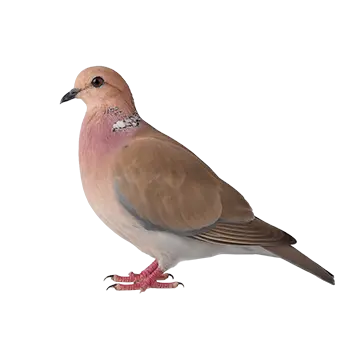

Senegal Dove Species Guide - Furry Critter Network

Senegal Dove

Quick Facts

🔬 Scientific Name
Streptopelia senegalensis
📊 Care Level
Beginner
😊 Temperament
Gentle, Calm, Adaptable
📏 Adult Size
9-11 inches
⏱️ Lifespan
10-15 years
🔊 Noise Level
Quiet to Moderate
🗣️ Talking Ability
None - Melodious Cooing
🍽️ Diet Type
Seed-based
🌍 Origin
Africa, Middle East, South Asia
🏠 Min Cage Size
30x24x24 inches for pair
📐 Size
Small

Senegal Dove - Names & Recognition

The Senegal Dove (Streptopelia senegalensis) derives one of its common names from Senegal in West Africa, part of its extensive native range, following the historical practice of naming species after type localities or representative regions. However, this species is far more widely known by its descriptive common name, the Laughing Dove, referencing its distinctive vocalization that resembles soft, gentle laughter. The characteristic call consists of a rising and falling cooing sequence that genuinely sounds like someone chuckling quietly, creating the impression of a bird engaged in jovial amusement. This charming vocalization has made "Laughing Dove" the preferred common name in most of the world, though "Senegal Dove" remains in use, particularly in aviculture.

Other alternate names occasionally encountered include Palm Dove (referencing habitat associations with palm trees in some regions), Little Brown Dove (descriptive of size and coloration), and various regional vernacular names across its vast range. In aviculture and among bird enthusiasts, both Senegal Dove and Laughing Dove are used interchangeably, with Laughing Dove being slightly more common worldwide while Senegal Dove is frequently used in North American aviculture.

Taxonomically, the Senegal Dove belongs to the genus Streptopelia within the family Columbidae (pigeons and doves). The genus Streptopelia contains numerous small to medium-sized dove species distributed across Europe, Africa, Asia, and introduced populations elsewhere, including familiar species like the Eurasian Collared-Dove, Ring-necked Dove, and Mourning Collared-Dove. These doves share similar body plans, behaviors, and vocalizations, representing a successful and widespread lineage.

The scientific name Streptopelia senegalensis combines Greek and geographic elements. "Streptopelia" derives from Greek words meaning "collar" or "necklace" (streptos) and "dove" (peleia), referencing the collar or neck markings characteristic of many species in this genus. "Senegalensis" indicates Senegal as the type locality where the species was first scientifically described. The nomenclature thus references both the genus-wide characteristic collar patterns and the specific geographic origin of the type specimen.

Geographic variation exists across the Senegal Dove's vast range, with several subspecies recognized by taxonomists based on differences in size, plumage intensity, and coloration details. These include Streptopelia senegalensis senegalensis (the nominate form from West Africa), S. s. aegyptiaca (from Egypt and northeastern Africa), S. s. phoenicophila (from the Arabian Peninsula), S. s. ermanni (from South Asia), and several others depending on taxonomic authority. In aviculture, subspecies distinctions are rarely maintained or recognized, with most captive birds representing mixed ancestry or uncertain geographic origin. The variations are relatively subtle, with all forms sharing the basic plumage pattern and characteristic laughing call.

In aviculture and among bird enthusiasts, Senegal Doves are recognized as excellent beginner birds and popular aviary subjects. They have been kept in captivity for many decades with established captive breeding populations, though they are less commonly kept than Ringneck Doves or Diamond Doves in some regions. Their combination of attractive plumage, pleasant vocalizations, hardy constitution, and easy care makes them enduring favorites among dove enthusiasts and mixed aviary keepers. They are particularly popular in outdoor aviaries where their colors photograph beautifully and their calls add pleasant ambiance.

The species should not be confused with other "Laughing" birds including the Laughingthrush (which belongs to an entirely different family) or various "Laughing" parrots. The "laughing" designation in each case refers to similar-sounding vocalizations but represents convergent naming rather than taxonomic relationship.

Senegal Dove Physical Description

The Senegal Dove is a small, beautifully colored dove measuring approximately 9 to 11 inches in length from beak to tail tip, making it slightly larger than Diamond Doves but still among the smaller dove species. The size is intermediate between tiny Diamond Doves (7-8 inches) and larger doves like Ringnecks (12 inches). Adults are moderately robust, typically weighing between 80 to 110 grams (approximately 2.8 to 3.9 ounces). The body structure is typical of small doves with small head, medium neck, plump compact body, relatively short legs, and moderately long graduated tail creating balanced, attractive proportions.

The plumage coloration is warm, rich, and subtly beautiful, creating one of the most attractive color palettes among commonly kept doves. The head, neck, and breast display beautiful soft pinkish-grey to vinaceous (wine-colored) tones, creating warm, appealing coloration. The crown (top of head) is typically blue-grey, creating subtle contrast with the pinker face and neck. This blue-grey crown is particularly noticeable in good lighting and represents a characteristic field mark.

The most distinctive plumage feature is the rufous or cinnamon-colored patch on the breast marked with black speckles or spots. This breast patch consists of warm brown to rusty-cinnamon feathers irregularly marked with small black spots creating attractive patterning unique to the species. The exact pattern varies among individuals but consistently shows this combination of rufous base color with black spotting. This breast patch is the species' signature feature visible from the front and represents the most reliable identification characteristic.

The back, wings, and mantle (upper back) display warm brown to greyish-brown coloration, creating earth-toned upperparts. The wings show subtle darker and lighter areas with some individuals displaying faint barring or scaling patterns. The wing coverts and scapulars (shoulder feathers) are generally warm brown matching the back. The overall impression is of warm, harmonious earth tones without bold contrasts.

The belly and undertail coverts are typically pale grey to whitish, creating lighter underparts contrasting with the warmer breast and neck. The tail is relatively long, graduated (tapering to a point), and brown with distinctive white outer tail feathers visible during flight and when the tail is spread. These white outer tail feathers flash conspicuously during takeoff and landing, creating beautiful contrast.

The face and neck display the characteristic "collar" or neck markings that give the genus Streptopelia its name, though in Senegal Doves this feature is subtle compared to more boldly marked relatives like Ringneck Doves. The neck shows faint scaling or fine barring creating textured appearance rather than bold collar.

Sexual dimorphism is minimal to absent in Senegal Doves, with males and females appearing virtually identical in plumage coloration, size, and markings. Visual sexing is unreliable or impossible without behavioral observation (males coo more frequently and perform courtship displays) or surgical/DNA sexing. This lack of obvious sexual differences is typical of many dove species and creates challenges for breeding programs as pairs cannot be formed through visual assessment alone.

The beak is relatively small, short, and dark grey to blackish, adapted for picking small seeds from surfaces. The eyes are dark brown, relatively large, and bright, surrounded by narrow bare orbital skin that may be grey or slightly pinkish. The legs and feet are pinkish-red to coral-red, relatively short and sturdy, equipped with typical dove toe arrangement allowing both perching and ground locomotion. The reddish leg color is more pronounced than in Diamond Doves and represents an attractive feature.

Juvenile Senegal Doves resemble adults in basic pattern but display duller, paler overall coloration with less intense pinkish tones, less defined breast spotting (smaller, fewer, less contrasting spots), browner overall appearance lacking the clean grey and pink tones of adults, and overall less refined plumage. As juveniles mature over their first few months, the colors intensify, breast pattern becomes more defined, and adult appearance emerges. Full adult plumage is typically achieved by 4-6 months of age.

Color mutations are rare in captivity compared to highly bred species like Ringneck Doves, with most Senegal Doves displaying normal wild-type coloration. Occasional lighter or darker individuals occur but standardized color mutations have not been developed.

Overall body posture is upright and alert when standing, with characteristic dove head-bobbing when walking. At rest, they often sit in relaxed, somewhat hunched postures. In peak condition, Senegal Doves are genuinely beautiful birds whose warm cinnamon and pink tones, distinctive spotted breast, and subtle elegance create understated beauty that photographs wonderfully and captivates observers in aviary settings.

Affection Level
Senegal Doves are not particularly affectionate toward humans and do not seek physical contact. They are gentle, calm birds that tolerate human presence well once habituated but remain fundamentally observational pets. Hand-raised individuals may become quite tame and comfortable around people, but they do not cuddle or enjoy prolonged handling. Their appeal lies in their beauty, vocalizations, and peaceful presence.
Sociability
Highly social birds that thrive when kept in pairs or small compatible groups. Bonded pairs display strong attachment, engaging in mutual preening, synchronized cooing, and roosting together. They can be successfully housed in mixed aviaries with other peaceful dove species and non-aggressive birds. While they can survive alone, they are significantly happier with appropriate companions, displaying more natural behaviors and vocalizations.
Vocalization
Moderately vocal birds producing distinctive laughing-like cooing sequences that give them their common name. Males coo frequently during courtship and territorial displays, with the characteristic rising and falling cadence resembling soft laughter. While more vocal than Diamond Doves, the sounds are pleasant, melodious, and rarely disruptive. Suitable for most living situations including apartments, though more audible than extremely quiet species.
Intelligence
Senegal Doves possess moderate intelligence typical of small doves, learning to recognize keepers, anticipate feeding schedules, and navigate their environments. They display awareness and can learn simple routines but are less cognitively complex than parrots. Their intelligence is adequate for their needs, allowing them to adapt to captive conditions and respond to consistent care patterns.
Exercise Needs
Moderately active birds requiring adequate space for short flights, walking, and ground foraging. While not hyperactive, Senegal Doves benefit from spacious cages allowing flight exercise and extensive floor area for their preferred ground-foraging behaviors. They spend considerable time walking and foraging on surfaces, requiring more floor space than highly aerial species. Regular exercise maintains health and natural behaviors.
Maintenance Level
Low maintenance birds requiring straightforward, beginner-friendly care. Daily food and water changes, regular substrate replacement, and basic cage cleaning are sufficient. Their hardy constitution, seed-based diet, minimal messiness, and forgiving nature make them among the easiest birds to maintain. They are excellent first birds for novices learning avian husbandry and require no specialized knowledge or expensive equipment.
Trainability
Essentially not trainable for tricks or complex behaviors. Hand-raised Senegal Doves may become tame enough to accept treats and tolerate gentle handling, but they are not candidates for training like parrots. Their value lies in their beauty, pleasant vocalizations, and gentle nature rather than trainability or interaction. They may learn to recognize feeding routines but show limited capacity for deliberate training.
Independence
Quite independent from humans, requiring minimal interaction beyond daily care. Once established with appropriate companions (if kept in pairs or groups), they entertain themselves through natural behaviors including foraging, preening, sunbathing, and social interaction. They neither need nor seek constant human attention, making them perfect for people with busy schedules or who prefer low-maintenance observational birds.

Natural Habitat & Range

The Senegal Dove possesses one of the most extensive natural ranges of any dove species, inhabiting vast areas across Africa, the Middle East, and South Asia. The native distribution extends across sub-Saharan Africa from Senegal and West Africa eastward through the Sahel zone, East Africa, and southern Africa, northward through the Arabian Peninsula, Middle East, Turkey, and eastward into Pakistan, India, and parts of Southeast Asia including Myanmar. This enormous range reflects the species' remarkable adaptability to diverse environments and climates.

Additionally, Senegal Doves have been introduced (accidentally or deliberately) to various regions outside their native range and have established thriving feral populations in Australia (particularly Western Australia and Northern Territory), where they are now considered common, and parts of the Middle East and Mediterranean where introduction or natural range expansion has occurred. The species' adaptability has allowed successful colonization of new areas where conditions are suitable.

Senegal Doves inhabit primarily open and semi-open habitats including savannas, grasslands with scattered trees and shrubs, scrublands, agricultural areas, gardens, parks, human settlements, and urban areas. They show strong association with human-modified landscapes and are commonly found in villages, towns, and cities where they exploit food sources and nesting sites provided by human activity. Unlike forest specialists, Senegal Doves prefer open areas with clear ground for foraging combined with scattered trees or structures for perching and nesting.

The species tolerates arid and semi-arid conditions extremely well, occurring in areas receiving minimal rainfall. However, they require access to drinking water and are typically found near water sources including rivers, ponds, wells, and artificial water points. Their ability to thrive in dry environments while requiring daily water creates habitat patterns centered around reliable water sources.

In their natural environment, Senegal Doves are social, gregarious birds typically found in pairs or small groups. Bonded pairs maintain close associations year-round, often staying together for life. Outside breeding season, pairs may join loose flocks of 10-30 individuals at productive feeding areas or water sources. These gatherings are temporary associations rather than structured flocks, with birds coming and going independently.

Daily activity patterns involve feeding intensively during early morning and late afternoon, with midday rest periods in shade during hot weather. Wild Senegal Doves are active birds spending considerable time on the ground walking while foraging for seeds, flying between feeding and water sources with direct, swift flight typical of doves, perching on low branches, wires, and structures between activities, and sunbathing by spreading wings to absorb warmth. They are bold and tolerant of human presence, often feeding in close proximity to people in urban areas.

The vocalizations that give them their "Laughing Dove" name are frequent, distinctive, and characteristic. Males produce the laughing coo consisting of a rising and falling sequence of soft notes: "oh-cook-cook-cook-coorrrr" or similar patterns that genuinely resemble gentle laughter. This call is used during courtship, territorial advertisement, and general communication. The sound is pleasant, melodious, and carries moderate distances. Females vocalize much less frequently, producing only occasional soft calls.

The natural diet consists almost entirely of small seeds gathered from the ground. Senegal Doves are specialist granivores preferring grass seeds, weed seeds, grain (including spilled agricultural grain), and seeds from various herbaceous plants. They forage by walking on open ground, picking individual seeds from the surface with rapid pecking motions. They require daily access to water for drinking. The ability to subsist on dry seeds and adapt to various seed sources contributes to their wide distribution and success in human-modified landscapes.

Breeding biology involves monogamous pairs nesting throughout the year in favorable conditions, with peak breeding following rainy seasons when food availability increases. Pairs build flimsy platform nests of twigs placed in trees, shrubs, buildings, or other structures. The female lays 2 white eggs that both parents incubate for approximately 13-14 days. Both parents feed chicks crop milk initially, gradually transitioning to regurgitated seeds. Chicks fledge at approximately 14-16 days, then remain with parents briefly while learning to forage. Pairs may produce multiple broods per year when conditions are favorable.

The conservation status of Senegal Doves is classified as Least Concern by the IUCN Red List, reflecting their extensive range, very large population, and increasing or stable population trends in most areas. The species is adapting well to human landscape modification and appears to be expanding its range in some regions. They face no significant conservation threats and remain abundant throughout appropriate habitat. Their association with human settlements and ability to exploit agricultural areas contribute to their continued success.

Temperament

The Senegal Dove possesses a gentle, calm, peaceful, and adaptable temperament that makes them excellent birds for beginners, families, and experienced keepers seeking lovely but undemanding companions. Understanding Senegal Dove temperament helps owners appreciate these delightful birds while maintaining appropriate expectations.

The defining characteristic of Senegal Dove temperament is their gentle, non-aggressive nature combined with slightly more boldness than extremely timid species. These are peaceful, calm birds displaying virtually no aggression except mild territorial behavior between males during breeding season. They are more confident and tolerant of activity than very shy species, adapting well to household environments and showing curiosity about their surroundings. This combination of gentleness and boldness creates pleasant, engaging birds that are delightful to observe and interact with at appropriate levels.

With humans, Senegal Doves are not affectionate or cuddly but can become remarkably comfortable and tolerant. Hand-raised birds or those receiving consistent gentle interaction become quite tame, allowing close approach, accepting treats from hands, and displaying little fear around familiar caretakers. Some tame individuals will perch on offered hands or shoulders briefly, though most prefer to maintain some distance. They never bite aggressively and their small beaks pose no danger. Their tolerance and calm demeanor make them suitable for families with gentle children.

Senegal Doves do not require or seek human interaction, being content to entertain themselves through natural behaviors. Once daily care is provided, they occupy themselves foraging, preening, sunbathing, cooing (males), and interacting with companions if kept in pairs or groups. This independence combined with adaptability creates ideal pets for people wanting attractive birds without demanding attention requirements.

With other Senegal Doves, social dynamics are generally peaceful and positive. Bonded pairs form strong attachments, engaging in mutual preening, synchronized cooing displays, and roosting in contact. The bond between paired birds is obvious and touching to observe. Pairs may spend hours sitting touching side-by-side, creating heartwarming scenes. Multiple pairs can coexist in sufficiently spacious aviaries, though males may engage in mild territorial displays during breeding season including puffing up, cooing intensely, and occasionally chasing rivals. However, serious fighting is rare and injuries virtually never occur in properly housed groups.

With other bird species, Senegal Doves are generally good community aviary candidates though slightly more assertive than extremely peaceful Diamond Doves. They coexist well with similarly sized peaceful doves, finches, and other non-aggressive species of comparable size. They may occasionally chase or displace smaller birds from preferred feeding areas but rarely cause harm. Their ground-dwelling habits minimize competition with aerial species. Avoid housing with very small, timid finches that might be intimidated or with aggressive species that might harass them.

Activity levels are moderate and appropriate for their size. Senegal Doves spend time engaging in various natural behaviors including extensive ground foraging (walking around cage floors or aviary grounds searching for seeds, a primary activity), perching on low to mid-level branches (they prefer accessible perches rather than highest positions), short flights between perches and ground (direct, swift flight), preening and feather maintenance, sunbathing (spreading wings and tail to absorb warmth), dust bathing if appropriate substrate is available, and drinking (they drink regularly, particularly in warm conditions). The activity is steady and interesting without being frantic or chaotic.

Vocalizations are more prominent than Diamond Doves but remain pleasant and generally non-disruptive. Males produce the characteristic laughing coo frequently, particularly during breeding season and morning hours. The call is distinctive, melodious, and genuinely charming - the rising and falling cadence really does sound like gentle laughter. While more audible than Diamond Doves' barely-there cooing, Senegal Doves remain suitable for most living situations including apartments, as the volume is moderate and most people find the sound pleasant rather than annoying. The vocalizations add ambiance rather than creating noise problems.

Stress sensitivity is moderate. Senegal Doves are relatively bold and adaptable, tolerating reasonable household activity and adjusting to changes better than extremely nervous species. However, they still require protection from excessive stress including predator exposure, rough handling, and chaotic environments.

Messiness is minimal, similar to Diamond Doves. Their seed-based diet creates firm, dry droppings that are easy to clean. They scatter seed hulls and create some dust, but overall mess is very manageable compared to parrots or softbills.

Prospective owners seeking gentle, beautiful, moderately vocal birds with charming calls, easy care requirements, and minimal interaction needs will find Senegal Doves delightful companions combining attractive appearance with peaceful presence.

Care Requirements

Providing appropriate housing and care for Senegal Doves is straightforward and beginner-friendly, following simple protocols suitable for novices with minimal prior experience. Their undemanding requirements and hardy constitution make them forgiving of minor mistakes while thriving under optimal care.

The minimum cage size for a pair of Senegal Doves should measure at least 30 inches long by 24 inches deep by 24 inches tall, somewhat larger than Diamond Doves due to their slightly larger size (9-11 inches versus 7-8 inches). Larger dimensions of 36-48 inches long by 24-30 inches deep by 30-36 inches tall are strongly preferred and provide significantly better quality of life. These doves need primarily horizontal space for short flights and extensive floor area for ground foraging behaviors. For groups of 4-6 birds, provide minimum 6 feet long by 3 feet deep by 4 feet tall. Floor-style aviaries or large flight cages work excellently, allowing substantial ground space for natural behaviors.

Bar spacing should be 1/2 inch maximum to prevent escapes while accommodating their slightly larger size than Diamond Doves. Horizontal bars facilitate any climbing behavior though doves primarily fly or walk.

Cage construction should be sturdy wire with powder-coated or stainless steel materials. Standard dove, pigeon, or finch cages of appropriate dimensions work well. Removable floor trays facilitate maintenance.

Critically important: NEVER use wire cage floors for Senegal Doves or any dove species. Wire floors cause severe bumblefoot (painful foot infections) that can become debilitating or fatal. Instead, provide solid cage floors covered with 1-2 inches of appropriate substrate including paper-based bedding, aspen shavings, kiln-dried pine shavings, or commercial bird cage bedding. The substrate allows natural ground foraging while providing proper foot support. Change substrate weekly or more frequently if soiled, maintaining clean, dry conditions.

Temperature requirements are very forgiving. Senegal Doves are extremely hardy birds tolerating wide temperature ranges from approximately 50-90°F comfortably, reflecting their adaptation to diverse climates from hot African deserts to cooler montane regions. They handle both warm and cool conditions excellently, making them suitable for typical indoor environments year-round without supplemental heating. Outdoor aviaries work in most temperate and warm climates with appropriate shelter from weather extremes. They are considerably hardier regarding temperature than tropical species.

Cage placement should avoid direct drafts, prolonged direct sunlight causing overheating, kitchens with cooking fumes (deadly Teflon/non-stick fumes), and areas with extreme temperature fluctuations. Their moderate vocalizations make most room placements suitable. Provide access to natural daylight or full-spectrum lighting supporting health and breeding cycles.

Perches should vary in diameter from 3/8 to 3/4 inch using natural branches from bird-safe trees. Provide perches at low to mid-level heights (Senegal Doves prefer accessible positions) in various locations. Include at least one flat platform perch where pairs can roost together comfortably. Avoid overcrowding with excessive perches. Position perches avoiding droppings contaminating food and water below.

Enrichment and accessories include shallow dishes for bathing (Senegal Doves bathe frequently and enthusiastically), areas with fine sand or dust for dust bathing (they enjoy this natural behavior), multiple food and water stations for groups, cuttlebone hung at accessible height for calcium and beak maintenance, grit offered in small separate dish for digestion (essential), safe branches for perching variety, and substrate allowing natural ground foraging. Their needs are simple and easily provided.

Daily maintenance includes refreshing food and water dishes completely (never just top up - change completely to prevent canker transmission), checking substrate condition and removing obvious droppings, and general monitoring. Weekly maintenance includes complete substrate change, thorough cleaning of all perches and dishes with disinfection, and general cage cleaning. The maintenance is minimal and straightforward - substantially easier than parrots or softbills.

Outdoor aviaries work excellently for Senegal Doves in appropriate climates, allowing natural behaviors including sunbathing, dust bathing, exposure to weather, and extensive floor space. Provide adequate shelter from rain and extreme weather, protection from predators (secure wire with no gaps), and appropriate drainage. Many breeders maintain Senegal Doves in outdoor flights with excellent results.

Mixed species housing is possible with appropriate companions. Senegal Doves can coexist with other peaceful dove species (Diamond Doves, Ringneck Doves, etc.), larger peaceful finches, and other gentle species of similar size. Their slightly more assertive nature compared to Diamond Doves means careful species selection and adequate space are important. Avoid housing with very small timid finches or aggressive species.

Feeding & Nutrition

Proper nutrition for Senegal Doves is straightforward and beginner-friendly, following simple seed-based protocols requiring no specialized preparation or expensive ingredients. Their dietary needs mirror other small doves and are easily met with readily available foods.

The foundation of a captive Senegal Dove diet should consist of high-quality dove/pigeon seed mix or small bird seed mix, comprising approximately 70-80% of daily intake. Appropriate seed mixes contain various small seeds including millet varieties (white, red, Japanese millet), canary seed, niger seed, small amounts of wheat or other grains, and limited amounts of larger seeds. Many commercial dove/pigeon mixes work perfectly. Some keepers successfully use finch mixes. Offer seeds in shallow dishes or scattered on substrate (or both) encouraging natural ground foraging behaviors. Change seeds daily, removing hulls and ensuring fresh seed is always available.

Fresh vegetables should be offered daily, comprising approximately 10-15% of diet. Appropriate vegetables include dark leafy greens (romaine lettuce, kale, spinach in moderation, dandelion greens), grated or finely chopped carrots, chopped broccoli, bell peppers, sweet potato, and other safe vegetables. Chop into small pieces appropriate for their beaks. Many Senegal Doves readily accept vegetables once accustomed, though individual preferences vary. Vegetables provide essential vitamin A and other nutrients preventing deficiencies common in seed-only diets.

Fresh fruits can be offered several times weekly in small amounts. Appropriate fruits include apples (no seeds), berries, melon, grapes (halved), banana, and other safe fruits. Limit quantities as excessive fruit may cause loose droppings.

Grit is absolutely essential for Senegal Doves and must be provided continuously. Offer fine granite grit or commercial bird grit in a small separate dish available at all times. Doves swallow small amounts of grit that helps grind seeds in their muscular gizzard (stomach organ specialized for mechanical digestion). Without adequate grit, seed digestion becomes impaired and birds may develop health problems. Replace grit weekly ensuring it remains available.

Calcium supplementation is critical particularly for breeding females. Provide cuttlebone hung at accessible height where doves can reach it continuously. Breeding females require substantial calcium for egg formation, preventing egg binding and skeletal depletion. Crushed oyster shell or calcium-enriched grit may supplement cuttlebone. Monitor consumption and replace as needed.

Vitamin supplementation using powdered avian vitamins sprinkled on moistened vegetables several times weekly helps prevent deficiencies common in seed-based diets. Commercial vitamin supplements designed for doves, finches, or small birds work well. Follow product directions carefully avoiding harmful over-supplementation.

Occasional treats include spray millet (enjoyed by most doves), small amounts of cooked grains (brown rice, quinoa, oats), egg food during breeding season providing extra protein, and occasionally small amounts of whole grain bread. Treats should comprise no more than 5-10% of total diet.

Foods to avoid include avocado (highly toxic to all birds), chocolate, caffeine, alcohol, salt, onions, garlic, and processed human foods. Avoid moldy or spoiled seeds which can cause fatal fungal infections.

Fresh, clean water must be available at all times in clean dishes changed at least once daily, preferably twice daily. Senegal Doves drink regularly and require constant water access. They drink by sucking/pumping (unlike most birds that must tilt heads to swallow), allowing continuous drinking. CRITICAL: Maintain scrupulously clean water dishes as canker (trichomoniasis), the most common serious disease affecting doves, spreads primarily through contaminated water. Wash and disinfect water dishes daily with hot, soapy water, rinse thoroughly, and refill with fresh water. Never allow water to become contaminated with droppings or food debris.

Feeding practices should include offering seeds in shallow dishes or scattered on clean substrate for natural foraging, providing multiple feeding stations for pairs or groups preventing competition, ensuring vegetables are fresh and removed after several hours if uneaten, and monitoring that all individuals have adequate food access.

The dietary management for Senegal Doves is simple, straightforward, and beginner-friendly - essentially identical to Diamond Doves and other small doves. Basic seed mix, fresh vegetables, grit, cuttlebone, and scrupulously clean water provide complete nutrition supporting health and longevity without complex protocols.

Senegal Dove Health & Lifespan

Senegal Doves are hardy, robust birds with good disease resistance and longevity when provided proper care. Their adaptability to diverse climates and conditions in the wild translates to excellent captive hardiness, making them suitable for beginners and forgiving of minor husbandry mistakes. Respiratory infections from bacteria, viruses, or fungi can affect Senegal Doves particularly when exposed to drafts, damp conditions, sudden temperature changes, or stress, causing difficulty breathing, nasal discharge, wheezing, lethargy, and requiring prompt veterinary care with appropriate antimicrobial therapy. Canker (trichomoniasis), a protozoal infection particularly common in doves and pigeons, affects the mouth, throat, and crop causing whitish cheesy lesions, difficulty swallowing, regurgitation, weight loss, and requiring veterinary treatment with appropriate antiprotozoal medications (typically metronidazole or similar). Canker is one of the most common serious diseases affecting captive doves and requires vigilance. Parasites including intestinal worms (roundworms, capillaria), coccidiosis, external mites, and lice may affect birds particularly those newly acquired, housed in outdoor aviaries with wild bird exposure, or in unsanitary conditions, requiring veterinary fecal testing and appropriate antiparasitic medications. Egg binding affects breeding females unable to expel eggs due to calcium deficiency, obesity, first-time breeding, cold conditions, or stress, requiring immediate veterinary intervention to prevent death. Overgrown beaks and nails develop in some captive birds without adequate opportunities for natural wear, requiring periodic careful trimming. Obesity can develop in captive doves with inadequate exercise space and excessive high-fat seeds, requiring appropriate diet and sufficient space for activity. Bumblefoot, painful infections of foot pads, develops from wire cage floors (doves MUST have solid floors with appropriate substrate), poor substrate conditions, or obesity, requiring veterinary treatment and improved housing. Nutritional deficiencies particularly of vitamin A, calcium, and minerals occur in birds fed seed-only diets without supplementation, requiring appropriate vegetables and supplements. Feather problems including poor quality, abnormal molts, or missing feathers may indicate stress, disease, or nutritional deficiencies.

Preventive care for Senegal Doves is straightforward and beginner-friendly. Regular veterinary checkups with avian veterinarians should ideally occur annually, allowing early disease detection and fecal testing for common parasites including canker. Proper diet and nutrition including high-quality dove/pigeon seed mix or small bird seed mix as foundation, daily fresh vegetables providing vitamins particularly vitamin A, occasional fruits in small amounts, grit provided continuously for digestion, cuttlebone available continuously for calcium (especially important for breeding females), and fresh clean water changed daily prevents nutritional deficiencies. Environmental management through adequate cage size allowing exercise, appropriate temperature range (Senegal Doves are very hardy tolerating 50-90°F comfortably), protection from drafts and damp conditions, solid cage floors with appropriate substrate (never wire floors), and stress minimization maintains health. Cage cleanliness with daily removal of droppings and seed hulls, substrate changes as needed (weekly to biweekly depending on substrate type and bird numbers), thorough weekly cage cleaning, and fresh food/water daily reduces disease transmission particularly canker which spreads through contaminated food and water. Quarantine of new birds for 30 days before introduction to existing collections with fecal testing for canker and other parasites prevents disease introduction. Monitoring for signs of illness including lethargy, fluffed feathers, difficulty breathing, mouth lesions (canker), changes in droppings, or weight loss allows early intervention. With good care including appropriate diet, proper housing with solid floors, disease prevention, and basic husbandry, Senegal Doves typically live 10 to 15 years in captivity, with some individuals potentially reaching 18-20 years under excellent conditions. This lifespan is substantial and represents moderate to long-term commitment. The combination of good hardiness, straightforward care requirements, and reasonable lifespan makes Senegal Doves excellent choices for beginners seeking rewarding birds without complex management or decades-long commitments.

Common Health Issues

  • Their adaptability to diverse climates and conditions in the wild translates to excellent captive hardiness - Making them suitable for beginners and forgiving of minor husbandry mistakes.\n\nRespiratory infections from bacteria, viruses, or fungi can affect Senegal Doves particularly when exposed to drafts, damp conditions, sudden temperature changes, or stress, causing difficulty breathing, nasal discharge, wheezing, lethargy, and requiring prompt veterinary care with appropriate antimicrobial therapy.
  • Egg binding affects breeding females unable to expel eggs due to calcium deficiency - Obesity, first-time breeding, cold conditions, or stress, requiring immediate veterinary intervention to prevent death.

Preventive Care & Health Monitoring

  • Egg binding affects breeding females unable to expel eggs due to calcium deficiency - Obesity, first-time breeding, cold conditions, or stress, requiring immediate veterinary intervention to prevent death.
  • Nutritional deficiencies particularly of vitamin A - Calcium, and minerals occur in birds fed seed-only diets without supplementation, requiring appropriate vegetables and supplements.
  • Feather problems including poor quality - Abnormal molts, or missing feathers may indicate stress, disease, or nutritional deficiencies.\n\nPreventive care for Senegal Doves is straightforward and beginner-friendly.
  • Regular veterinary checkups with avian veterinarians should ideally occur annually - Allowing early disease detection and fecal testing for common parasites including canker.
  • Proper diet and nutrition including high-quality dove/pigeon seed mix or small bird seed mix as foundation, daily fresh vegetables providing vitamins particularly vitamin A, occasional fruits in small amounts, grit provided continuously for digestion, cuttlebone available continuously for calcium - Especially important for breeding females, , and fresh clean water changed daily prevents nutritional deficiencies.
  • Cage cleanliness with daily removal of droppings and seed hulls, substrate changes as needed - Weekly to biweekly depending on substrate type and bird numbers, , thorough weekly cage cleaning, and fresh food/water daily reduces disease transmission particularly canker which spreads through contaminated food and water.

Training & Vocalization

Training Senegal Doves is not typically emphasized as these are fundamentally observational birds appreciated for their beauty, charming vocalizations, and peaceful presence rather than interaction or trainability. However, basic habituation and taming are achievable with patient effort, creating comfortable birds that enhance the keeping experience.

Basic habituation and taming are possible with Senegal Doves through gentle, consistent positive interaction. Captive-bred birds receiving regular handling from youth can become remarkably tame and comfortable around people. However, even initially untame birds gradually habituate to keeper presence, continuing normal behaviors while humans work nearby. This habituation creates pleasant interactions without requiring extensive hands-on contact.

Taming techniques include spending quiet time near cages speaking softly, moving slowly and deliberately during care routines, offering favorite treats (millet spray, greens) through cage bars building positive associations, gradually placing hands in cages during maintenance allowing habituation to human presence, never making sudden movements or loud noises, and maintaining patience as progress occurs gradually over weeks to months. Consistent gentle interaction builds trust over time.

Hand-raised Senegal Doves properly socialized from fledgling age can become quite tame, accepting gentle handling, perching on offered hands or shoulders briefly, and showing little fear around familiar people. Some individuals become remarkably confident, approaching keepers voluntarily. However, expectations should remain modest as doves are not cuddly or highly interactive like some parrots. Handling should always be gentle given their small size and delicate structure.

Finger training can be attempted using standard step-up techniques: offering finger as perch, gentle pressure encouraging the step, immediate rewards with treats and praise. Success varies among individuals, with hand-raised birds being most receptive. However, many doves never become reliably finger-tame, and this should be accepted without frustration.

Trick training is not applicable to Senegal Doves. They lack the cognitive complexity and motivation for learning complex behaviors. Their value lies in beauty, pleasant vocalizations, and peaceful presence, not trainability.

Vocalizations are the species' most distinctive and appealing characteristic. Male Senegal Doves produce the delightful laughing coo that gives them their common name. The call consists of a distinctive rising and falling sequence of soft coos: "oh-cook-cook-cook-coorrrr" or variations, with the characteristic cadence genuinely resembling gentle laughter or soft chuckling. The sound is melodious, pleasant, and charming - most people find it delightful rather than annoying.

Males coo frequently, particularly during breeding season and morning hours. The cooing serves courtship functions (attracting mates and maintaining pair bonds) and territorial advertisement (announcing presence to other males). Established bonded males may coo throughout the year, though intensity peaks during breeding periods. The frequency and volume are moderate - more vocal than Diamond Doves but less persistent than some larger dove species. The vocalizations add pleasant ambiance to homes and aviaries without creating noise problems.

Females vocalize much less frequently, producing only occasional soft contact calls and rarely or never producing the full laughing coo sequence. This vocal difference is one of the few reliable methods for sexing Senegal Doves.

While more audible than extremely quiet Diamond Doves, Senegal Doves remain suitable for most living situations including apartments. The volume is moderate and the sound quality is pleasant and melodious rather than harsh or irritating. Most neighbors won't hear the calls through walls, and household members typically find the sounds charming. The laughing quality of the coo is genuinely entertaining and creates pleasant household soundscapes.

Talking ability is completely absent. Senegal Doves cannot mimic human speech or learn words. Their vocalizations are limited to their natural dove calls. Anyone expecting speech has fundamentally misunderstood the species. Their appeal lies in their beautiful natural laughing coos, attractive plumage, and gentle nature, not vocal mimicry.

Prospective owners seeking gentle, beautiful birds with charming melodious calls that remain suitable for apartments will find Senegal Doves delightful. Those wanting highly interactive, trainable, or talking birds should consider parrots instead.

Children & Other Pets

Senegal Doves present excellent compatibility with households containing children and other pets when appropriate guidelines and supervision are established. Their gentle temperament, hardy constitution, and simple care requirements make them suitable family birds while their small size requires respectful handling.

Regarding children, Senegal Doves can coexist beautifully in households with children of various ages when proper education and supervision are provided. Their exceptionally gentle, non-aggressive nature means they never bite dangerously or behave aggressively toward people, making them safe around children. The primary risk involves children handling birds too roughly, potentially injuring delicate doves through squeezing, dropping, or chasing. Children must be taught that doves are gentle, fragile creatures requiring careful, respectful treatment.

For families with young children (ages 5-10), supervised observation and limited gentle interaction work well. Children can participate in appropriate care tasks including preparing fresh food, changing water under supervision, and observing birds' natural behaviors while understanding these are look-but-don't-grab pets. The peaceful, calm demeanor and charming laughing calls often captivate children's interest and create positive experiences with animals.

For families with older children and teenagers, Senegal Doves provide excellent educational opportunities about basic aviculture, bird behavior and communication including the fascinating laughing calls, responsible pet care and daily commitment, breeding biology if pairs nest, and appreciating animals that don't require constant handling. Their simple care requirements make them excellent first birds for young people learning responsibility. The hardy nature makes them forgiving of reasonable mistakes.

The primary benefits for families include exceptional gentleness (never aggressive), hardy constitution (tolerates household activity well), simple care requirements (children can meaningfully participate), beautiful appearance and charming calls capturing interest, suitable vocalizations (pleasant to most people and rarely disruptive), and affordable maintenance. The laughing calls often delight children and adults alike, creating pleasant household ambiance.

The primary risks include accidental injuries from rough handling, cage openings allowing escapes, exposure to household hazards from children's actions, and potential neglect if children lose interest and parents don't maintain commitment. However, these risks are minimal with proper supervision and family commitment.

Concerning other pets, Senegal Doves are vulnerable to predation from cats and dogs despite their hardiness. Cats represent extreme threats as hunting instincts strongly trigger even in friendly, well-behaved house cats. Cat saliva contains deadly Pasteurella bacteria making even minor scratches or bites potentially fatal. Never allow cats in rooms with dove cages, and ensure cages are completely secure with no gaps. Outdoor aviaries must be cat-proof.

Dogs also pose risks particularly breeds with prey drive. Even friendly dogs may injure birds through sudden movements, barking causing stress, or predatory responses. Complete separation is essential for dove safety. The stress of constantly seeing predatory animals affects wellbeing and may reduce breeding success.

Other pet birds are often compatible with Senegal Doves. They can coexist with other dove species including Diamond Doves, Ringneck Doves, and peaceful doves in mixed collections with adequate space. They can also live peacefully with larger peaceful finches (Society Finches, Zebra Finches if not too aggressive), canaries, and other gentle species of similar size in community aviaries. Their ground-dwelling habits minimize competition with aerial species. However, their slightly more assertive nature compared to Diamond Doves means careful species selection is important. Avoid housing with very small timid finches that might be intimidated or with aggressive species that might harass them.

Ultimately, Senegal Doves are excellent family birds suitable for households with children of all ages provided families protect birds from predatory pets, teach children gentle handling and respect, and commit to basic daily care. Their gentle nature, hardy constitution, charming calls, simple requirements, and peaceful presence make them ideal first birds for families beginning aviculture adventures.