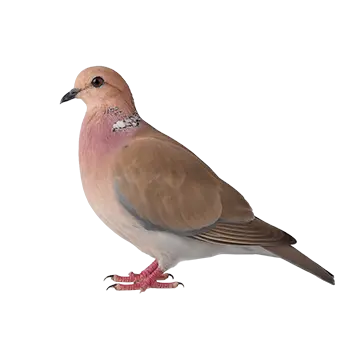

Adult Nutrition and Daily Diet

A mature Senegal Dove's dietary needs are less demanding than those of a rapidly growing juvenile, but the importance of nutritional balance does not diminish with age. An adult bird in its prime years requires a diet that maintains healthy weight, supports annual molting cycles, sustains immune function, and provides the energy for daily activity without promoting obesity, a surprisingly common problem in captive doves that receive unlimited seed with limited exercise.

The staple diet should be a high-quality dove seed mix comprising white and red millet, canary seed, safflower, small sunflower hearts, and niger seed in appropriate proportions. Seed mixes designed specifically for doves and small pigeons are preferable to generic wild bird seed, which often contains fillers and oversized grains unsuitable for this species. Supplement the seed base with a formulated pellet diet to fill nutritional gaps inherent in any seed-based feeding plan. Pellets provide consistent levels of vitamins, minerals, and amino acids that fluctuate unpredictably in whole-seed diets depending on the seed's origin, freshness, and storage conditions.

Fresh vegetables and greens should constitute approximately 15 to 20 percent of the daily diet. Offer finely chopped dark leafy greens such as kale, dandelion greens, endive, and romaine lettuce on a rotating basis. Grated carrot, cooked sweet potato, and small pieces of broccoli floret add variety and micronutrient diversity. Fruit can be offered sparingly as an occasional treat, with apple slices, melon, and berries being well accepted. Avoid avocado, which is toxic to birds, and limit high-sugar fruits that contribute to yeast overgrowth in the digestive tract.

Grit and mineral supplementation remain essential throughout the adult years. Senegal Doves, like all columbids, swallow seeds whole and rely on insoluble grit within the gizzard to grind food for digestion. Provide a dedicated dish of appropriately sized dove grit, refreshed weekly, alongside a cuttlebone or mineral block for calcium and trace mineral intake. During the annual molt, when feather production places extra demands on the bird's mineral reserves, consider adding a liquid vitamin and mineral supplement to the drinking water two or three times per week according to the manufacturer's dosage guidelines.

Fresh water must be available at all times and changed at least twice daily. Columbids drink by immersing the beak and sucking water continuously, a method that introduces food particles, feather dust, and bacteria into the water dish quickly. Use a heavy ceramic or glass dish that resists tipping, and position it away from perches to minimize fecal contamination. Some keepers prefer tube-style water dispensers to keep the water cleaner, but these must be thoroughly cleaned and disinfected regularly to prevent biofilm buildup inside the tube.

Housing and Environmental Enrichment

Adult Senegal Doves are active fliers with a strong preference for horizontal flight paths, and their housing should reflect this. The minimum recommended cage size for a single adult is 30 inches long by 18 inches wide by 24 inches tall, but a flight cage of 36 to 48 inches in length is strongly preferred. Doves kept in cramped cages develop atrophied flight muscles, obesity, and behavioral issues including excessive preening and repetitive pacing. If space permits, an indoor aviary measuring four feet or more in length gives the bird enough room for sustained flight between perches, which is the closest captive analog to its natural movement patterns.

Cage bar spacing must be narrow enough to prevent escape or head entrapment. For Senegal Doves, bar spacing of no more than half an inch is appropriate. Horizontal bars on at least two sides of the cage allow the bird to climb if it chooses, though doves are less inclined to climb than parrots. Position the cage in a well-lit area that receives natural daylight but is not in direct, unrelenting sun, which can cause overheating. Avoid placement near kitchens, where cooking fumes from heated nonstick cookware release polytetrafluoroethylene particles that are rapidly fatal to birds, and away from drafty windows or exterior doors.

Enrichment for adult Senegal Doves emphasizes sensory variety and opportunities for natural behavior rather than the puzzle-based enrichment that parrots enjoy. Provide a shallow bathing dish at least three times per week; most Senegal Doves are enthusiastic bathers and the activity is essential for feather condition and skin health. Offer fresh millet sprays anchored to the cage wall or floor for foraging enrichment. Scatter a portion of the daily seed ration on a tray of clean, coarse sand or pebbles to simulate ground foraging, the feeding strategy this species uses in the wild.

Perching variety is an underappreciated form of enrichment. Include natural wood branches of differing diameters, at least one flat platform shelf, and a soft rope perch for sleeping. Senegal Doves often prefer to sleep on flat surfaces rather than round perches, tucking their heads into their shoulder feathers in a characteristic resting posture. A platform placed at the highest point in the cage accommodates this preference and gives the bird a secure sleeping spot.

Out-of-cage time in a bird-safe room remains valuable throughout the adult years. Daily flight sessions of 30 to 60 minutes improve cardiovascular fitness, maintain healthy weight, and provide mental stimulation that cage life alone cannot deliver. Ensure the flight area is secured against escape, free of hazards such as ceiling fans and open water, and supervised at all times. Many Senegal Doves will voluntarily return to their cage when they are ready, especially if the cage is associated with food and comfort.

Behavior and Social Needs

Adult Senegal Doves exhibit a behavioral profile that is distinct from parrots and requires an adjusted set of expectations from their keepers. They are quiet, gentle birds whose social communication relies heavily on soft cooing vocalizations, subtle body postures, and ritualized displays rather than the loud calls, acrobatic play, and destructive chewing that characterize parrot behavior. Understanding and appreciating these species-typical behaviors is the key to a rewarding relationship with a Senegal Dove.

The most prominent adult vocalization is the species' characteristic laughing coo, a series of rising and falling notes that sounds like a gentle, descending chuckle. Males vocalize more frequently and more loudly than females, particularly during the breeding season or when courting a perceived mate, which can include a bonded human. The display that accompanies this call involves the male puffing his chest, bowing repeatedly, and fanning his tail. These behaviors are entirely normal and are not signs of distress or aggression. If the bird directs courtship displays toward you, acknowledge them calmly without encouraging or discouraging them, as they are a sign of a strong social bond.

Senegal Doves are pair-bonding birds in the wild, and this instinct persists strongly in captivity. A single dove kept as a companion will typically bond closely with its primary caretaker and may show preference behaviors such as cooing when that person enters the room, flying to the person's shoulder, and becoming restless or vocal when the person leaves. If the bird will live without an avian companion, the human caretaker must be willing to provide consistent daily social interaction to meet the bird's bonding needs. A Senegal Dove left alone for extended periods without adequate social contact can develop signs of depression, including reduced vocalization, decreased appetite, and excessive sleeping.

For keepers who are frequently away from home, housing the Senegal Dove with a compatible conspecific is the most effective solution for its social needs. Same-sex pairs often bond successfully, though mixed-sex pairs will almost certainly attempt to breed if given the opportunity. Introductions should be conducted gradually, with adjacent housing for a week or more before supervised shared-space sessions. Senegal Doves are among the more peaceable dove species, and serious aggression between potential companions is uncommon, but monitor initial interactions carefully for any sustained chasing, pecking, or food guarding that would indicate incompatibility.

Annual Molt and Feather Care

Adult Senegal Doves undergo a complete molt once per year, typically triggered by changes in photoperiod as day length shifts between seasons. During the molt, every feather on the bird's body is gradually replaced over a period of approximately six to ten weeks. The molt is a physiologically demanding process that draws heavily on the bird's protein, mineral, and energy reserves, and it requires supportive husbandry adjustments to proceed smoothly.

During active molting, increase the protein content of the diet by offering small amounts of hard-boiled egg crumbled finely, commercial egg food designed for cage birds, or a few mealworms if the bird will accept them. These protein sources provide the amino acids, particularly methionine and cysteine, that are the building blocks of keratin, the structural protein of feathers. Continue providing cuttlebone and mineral grit, and consider adding a liquid multivitamin supplement to the drinking water on alternate days to support the additional metabolic demands.

The bird's comfort during the molt deserves attention. New feathers emerge as pin feathers, sheathed in a waxy keratin casing that crumbles away as the feather matures. Pin feathers have a blood supply at their base and are sensitive to the touch. Handle the molting bird more gently than usual, and avoid forcing it into situations that require extensive physical contact, such as toweling for nail trims, unless medically necessary. Bathing opportunities become especially valuable during the molt, as the moisture helps soften and loosen the keratin sheaths, making the bird more comfortable.

Monitor the progress of the molt for any abnormalities. Feathers should be replaced symmetrically, with corresponding feathers on each wing and each side of the body molting at roughly the same rate. Asymmetric molt, persistent retained feathers, or feathers that emerge malformed, discolored, or with stress bars across their vanes can indicate nutritional deficiency, hormonal imbalance, liver disease, or viral infection such as Psittacine Beak and Feather Disease, which despite its name can affect non-psittacine species in rare circumstances. A molt that stalls entirely, leaving the bird in a perpetual state of partial feather replacement, also warrants a veterinary evaluation to identify the underlying cause.

Outside of the active molt, routine feather care involves providing regular bathing opportunities and maintaining appropriate humidity levels in the bird's environment. Senegal Doves kept in very dry environments, such as air-conditioned or centrally heated homes, may develop dry, brittle feathers that are prone to breakage. A room humidifier running near the cage during dry months helps maintain feather pliability. The bird's own preening behavior, in which it draws each feather through its beak to align the barbs and distribute oils from the preen gland, is the primary mechanism of feather maintenance and should not be disrupted by excessive handling.

Routine Health Maintenance

An adult Senegal Dove in its prime years should receive a comprehensive veterinary examination at least once annually. This wellness visit establishes updated baseline health data and provides an opportunity to catch subclinical problems before they become serious. The examination typically includes a thorough physical assessment of body condition, keel prominence, feather quality, and mucous membrane color, along with a crop and fecal analysis to screen for trichomoniasis, coccidiosis, and intestinal parasites.

Blood work may be recommended annually or biennially depending on the veterinarian's assessment and the bird's history. A basic avian chemistry panel evaluates liver and kidney function, calcium and phosphorus levels, blood glucose, and total protein, all of which provide insight into the bird's nutritional status and organ health. Complete blood counts reveal information about immune function and can detect early signs of infection or anemia. While blood draws in small birds like Senegal Doves require skilled handling and yield small sample volumes, the diagnostic value is substantial and well worth the minimal stress involved.

Between veterinary visits, the caregiver's daily observations form the front line of health monitoring. Weigh the bird weekly on a gram-scale and record the results. An adult Senegal Dove in good condition typically weighs between 90 and 130 grams depending on its individual build. A gradual increase suggests overfeeding or reduced activity, while a downward trend may signal illness, parasitic infection, or dental problems that make eating painful. Observe droppings daily. Normal adult Senegal Dove droppings consist of a well-formed dark green or brown fecal portion, a white urate component, and a small amount of clear urine. Changes in any of these components, particularly watery or discolored stool, bright green or yellow urates, or a significant increase in urine volume, should prompt a veterinary consultation.

Nail and beak maintenance are part of routine adult care. If the bird's nails grow long enough to catch on fabric, impede walking, or curve into the footpad, they should be trimmed with a small bird nail clipper or cautery tool. Beak overgrowth is uncommon in healthy doves with access to cuttlebone and grit, but it can occur secondary to liver disease, mite infestation, or nutritional imbalance. A beak that appears overgrown, misaligned, or flaky should be evaluated by a veterinarian rather than trimmed at home, as the underlying cause must be addressed.

Common Adult Health Conditions

While Senegal Doves are among the hardier dove species kept in captivity, certain health conditions appear with enough regularity in adults to warrant specific awareness. Recognizing these conditions and their early symptoms enables prompt treatment, which is often the decisive factor in outcomes for small avian patients with limited physiological reserves.

Trichomoniasis remains a lifelong concern in columbids, as birds can carry the Trichomonas gallinae organism subclinically and experience recurrent symptomatic episodes during periods of stress, immune suppression, or concurrent illness. Adult birds with active trichomoniasis may present with difficulty swallowing, weight loss, regurgitation, and the characteristic yellowish caseous plaques in the oral cavity and upper esophagus. Treatment with metronidazole or carnidazole is effective, but the carrier state is difficult to eliminate permanently, and reinfection from environmental sources or contact with carrier birds is common.

Avian pox, transmitted by mosquitoes and direct contact, occasionally affects Senegal Doves, particularly those housed outdoors or in aviaries with insect exposure. The dry form produces raised, wart-like lesions on unfeathered skin areas, including the eyelids, cere, and feet. The wet form, which produces diphtheritic membranes in the mouth and respiratory tract, is more dangerous and can obstruct breathing. Prevention through mosquito control, including fine mesh screening on outdoor aviaries and elimination of standing water, is far more effective than treatment, as there is no specific antiviral therapy. Supportive care and secondary infection management are the mainstays of treatment for affected birds.

Candidiasis, a fungal infection caused by Candida albicans overgrowth in the digestive tract, can occur in adult doves, particularly following antibiotic therapy that disrupts normal gut flora. Symptoms include white plaques in the mouth that can resemble trichomoniasis, crop stasis, regurgitation, and fluffed feathers indicating general malaise. Diagnosis is confirmed by crop swab and microscopic examination. Treatment with antifungal medication such as nystatin is generally effective.

Obesity deserves mention as a prevalent but underrecognized condition in captive Senegal Doves. Birds that receive unlimited high-fat seed mixes, particularly those rich in sunflower and safflower, and have limited opportunity for flight exercise can accumulate excessive subcutaneous and visceral fat. Obese birds are at increased risk for hepatic lipidosis, atherosclerosis, and reproductive complications. Prevention through measured daily food portions, reduced high-fat seed content, and consistent daily flight exercise is the most effective approach. A bird that is already overweight should have its diet adjusted gradually under veterinary guidance rather than subjected to abrupt caloric restriction, which can trigger hepatic lipidosis in birds.

Long-Term Bonding and Companionship

The adult years of a Senegal Dove's life are when the rewards of patient early socialization become fully apparent. A well-bonded adult Senegal Dove is a remarkably peaceful and companionable bird that integrates smoothly into household life. Its gentle cooing provides a calming ambient soundscape, its care requirements are manageable for keepers of all experience levels, and its docile temperament makes it suitable for households that include children or other pets, with appropriate supervision.

Maintaining a strong bond with an adult Senegal Dove does not require the intensive time commitment that many parrot species demand, but it does require consistency. Spend at least 30 minutes of direct, focused interaction with the bird daily. This can include supervised out-of-cage time, sitting quietly together while the bird perches on your hand or nearby, or simply talking to the bird while you go about nearby activities. Senegal Doves are creatures of routine and draw comfort from predictable daily patterns. Try to maintain consistent wake, feed, interaction, and bedtime schedules.

As the bond deepens over months and years, you will learn to read the subtle communicative signals that your Senegal Dove uses to express its state. A content bird sits with slightly puffed feathers, half-closed eyes, and may emit a barely audible purring coo. An alert or excited bird stands tall with sleek feathers and wide eyes, often orienting toward the stimulus of interest. A frightened bird will crouch flat, sometimes pressing itself into a corner, and may emit a sharp alarm call that is distinctly different from its normal vocalizations. An unwell bird will sit fluffed up with eyes fully closed or partially closed for extended periods, often with its head tucked and its tail held low. Learning these signals allows you to respond appropriately to your bird's needs before minor issues become significant problems.

For keepers who travel or have irregular schedules, consider establishing a secondary caregiver who can maintain the bird's routine during absences. Introduce this person gradually while you are present, allowing the bird to become accustomed to their voice, scent, and handling style. Senegal Doves can adapt to a secondary caregiver more readily than many parrot species, provided the introduction is conducted without stress and the care routine remains consistent. This flexibility is one of the many qualities that makes the Senegal Dove an outstanding companion bird for a wide range of living situations.

Always consult a qualified professional before making any health-related decisions. This content is provided for informational reference only and should not replace professional guidance specific to your animal.