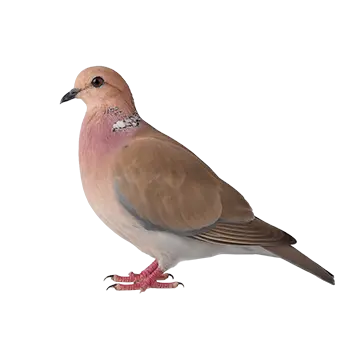

Successful Senegal Dove breeding begins well before eggs are laid, with the thoughtful selection of a compatible pair. Unlike some avian species that can be arbitrarily paired with reasonable success, Senegal Doves are pair-bonding birds whose breeding performance and parental reliability improve substantially when the pair has formed a genuine bond. Rushing a pairing or forcing incompatible birds together leads to infertile clutches, egg neglect, and stress-related health problems in one or both adults.
Sexual dimorphism in Senegal Doves is minimal, making visual sexing unreliable. Males tend to be very slightly larger than females and display more pronounced and frequent cooing and bowing displays, but these behavioral indicators overlap enough between the sexes that confident determination requires either DNA sexing from a blood or feather sample, or surgical sexing by an experienced avian veterinarian. DNA sexing is noninvasive, affordable, and highly accurate, and should be performed before any breeding attempt to confirm you have a true pair.
Once a confirmed male and female are identified, introduce them gradually. Place their cages adjacent to each other so they can see and hear one another without physical contact. Over a period of one to two weeks, observe their reactions. Signs of mutual interest include sustained visual attention toward each other, synchronized cooing, and calm, relaxed body posture when in proximity. Signs of incompatibility include persistent aggression from either bird, such as lunging, pecking through the cage bars, or one bird cowering and avoiding the side of the cage nearest the other.
When both birds appear comfortable and interested, allow supervised cohabitation in a neutral enclosure that neither bird has previously occupied. Monitor closely for the first several hours. Compatible pairs will begin mutual preening, perching side by side, and the male will intensify his courtship displays, including the characteristic bowing coo. If aggression persists beyond the initial adjustment period of a day or two, separate the birds and consider alternative pairing. Not every pair will bond, and forcing the issue causes harm that outweighs any breeding objective.