
Tiffanie Cat Breed Guide - Furry Critter Network

Tiffanie

Quick Facts

🏆 Breed Group
Hybrid
📊 Size Category
Medium
⚖️ Weight
8-14 pounds
⏱️ Life Expectancy
12-16 years
✨ Coat Type
Semi-long, fine, silky
📏 Coat Length
Medium-Long
🎨 Coat Colors
Black, Blue, Chocolate, Lilac, Caramel, Red, Cream, Apricot; in solid, shaded, smoke, tabby, and tortoiseshell patterns
👁️ Eye Colors
Gold, Yellow, Amber, Green
😊 Temperament
Affectionate, gentle, sociable, intelligent, playful
🔊 Vocalization
Moderate
👶 Good With Children
Yes
🐾 Good With Other Pets
Yes

Tiffanie - Names & Recognition

The Tiffanie is a name that has caused considerable confusion within the international cat fancy, primarily because it is easily conflated with the entirely unrelated American breed known as the Tiffany or Chantilly-Tiffany. The British Tiffanie, which is the subject of this page, is the semi-longhaired variant of the Asian cat group, a collection of breeds developed in the United Kingdom that share Burmese body type but exhibit coat patterns and lengths not found in the Burmese itself. The distinctive spelling with the terminal "ie" rather than "y" was adopted specifically to differentiate this British breed from its American namesake, though the two continue to be confused in casual discussion and even in some less careful publications.

The Governing Council of the Cat Fancy (GCCF) in the United Kingdom is the primary registry that recognizes the Tiffanie as a distinct breed. Under GCCF classification, the Tiffanie sits within the Asian Group alongside the Burmilla, the Asian Smoke, the Asian Tabby, and the Asian Self, all of which share a common ancestry rooted in the original Burmese-Chinchilla Persian cross. The GCCF granted the Tiffanie breed recognition in 1999, formalizing its status after years of development and refinement by dedicated British breeders. The Australian Cat Federation (ACF) also recognizes the breed within its Group 3 classification.

Major international registries including The International Cat Association (TICA), the Cat Fanciers' Association (CFA), and the Federation Internationale Feline (FIFe) do not currently recognize the Tiffanie as a separate breed. This limited international recognition reflects both the breed's relatively small population outside the United Kingdom and the complexities of navigating nomenclature conflicts with the American Tiffany breed. Some European registries classify cats fitting the Tiffanie phenotype under broader Asian or Burmilla longhair categories rather than granting a separate breed designation.

The name "Tiffanie" itself carries associations with elegance and refinement, qualities that the breed embodies through its silky coat and graceful bearing. Within the Asian Group nomenclature, the breed is sometimes referred to simply as the "Asian Semi-Longhair," a descriptive label that accurately conveys its position within the group but lacks the distinctive charm of the Tiffanie name. Breed enthusiasts in the United Kingdom strongly prefer the Tiffanie designation, viewing it as integral to the breed's identity and its differentiation from both the shorthaired Asian breeds and the unrelated American Tiffany.

Cat Registry Recognition

  • Governing Council of the Cat Fancy (GCCF): Recognized in 1999, Asian Group
  • acf: Recognized, Group 3

Tiffanie Physical Description

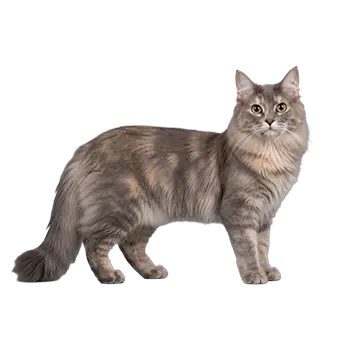
The Tiffanie is a medium-sized cat with the elegant, gently rounded body type characteristic of the Asian Group, reflecting its Burmese foundation. Males typically weigh between 10 and 14 pounds, while females range from 8 to 11 pounds. The body is muscular and well-proportioned, with a broad chest, a straight back, and a build that conveys strength without heaviness. The legs are proportionate to the body length, slender but firm, ending in neat oval paws. The overall silhouette is one of refined athleticism, a cat built for graceful movement rather than bulk or raw power.

The head follows the gently rounded, short-wedge shape typical of the Asian breeds, broader at the cheekbones and tapering to a blunt muzzle. The profile shows a distinct nose break, and the chin is firm without being prominent. The ears are medium to large, set wide apart on the skull, and tilt slightly forward, giving the face an alert, attentive expression. They are broad at the base and rounded at the tips, with sparse interior furnishing. The overall facial impression is open, sweet, and expressive, reflecting the breed's affable temperament in its very bone structure.

The eyes are large, lustrous, and set well apart with a slightly oblique orientation. Eye color ranges from gold through amber to green depending on coat color and pattern, with a preference in the show ring for richness and depth of color. The lower lid follows a rounded curve while the upper lid has a straighter line, creating a shape that is neither fully round nor sharply almond. This distinctive eye setting, combined with the breed's expressive gaze, gives the Tiffanie a look of gentle intelligence that many owners find particularly captivating.

The coat is the feature that distinguishes the Tiffanie from its shorthaired Asian Group siblings. It is semi-long, fine, and silky in texture, lying close to the body rather than standing away from it. Unlike breeds with heavy double coats, the Tiffanie's fur has a light, flowing quality that moves with the cat and lacks the dense woolly undercoat that contributes to matting in other longhaired breeds. A well-developed neck ruff frames the face in mature adults, and the tail is long, elegant, and fully plumed, tapering from a moderately thick base to a fine tip that displays the fur to full advantage. The britches on the hind legs and the ear tufts complete the semi-longhaired presentation.

The tail deserves particular mention as one of the breed's most expressive features. Long and carried with a graceful upward curve during movement, the plumed tail serves as a barometer of the Tiffanie's mood and adds visual drama to an already attractive cat. In full coat, the tail plume can extend several inches beyond the tail itself, creating an elegant fan that catches the light and draws the eye. The overall impression of a Tiffanie in mature coat is one of flowing refinement, a cat whose physical beauty is enhanced rather than obscured by its semi-long fur.

Affectionate With Family
The Tiffanie is an exceptionally devoted companion that thrives on close contact with its family. These cats form deep, lasting bonds with their household members and express their affection through persistent companionship, gentle head-butting, and a willingness to settle into any available lap. They are not aloof observers but active participants in family life, seeking involvement in daily routines and becoming visibly distressed when excluded from household activities for extended periods.
Good With Young Children
Tiffanies possess the patience and gentle disposition needed to coexist well with children. Their tolerant nature allows them to handle the sometimes unpredictable behavior of younger family members without resorting to aggression, and their moderate energy level makes them willing playmates. They are sturdy enough in build to withstand enthusiastic handling, though supervision with very young children remains advisable to ensure interactions remain respectful for both the child and the cat.
Good With Other Cats
The Tiffanie's sociable temperament extends comfortably to other felines, and most individuals welcome the company of a compatible cat companion. Their Burmese heritage contributes a gregarious quality that makes them natural candidates for multi-cat households. They tend to establish amicable relationships without excessive dominance displays, and many Tiffanies benefit significantly from having a feline housemate that provides companionship during hours when human family members are away.
Shedding Level
Despite its semi-long coat, the Tiffanie sheds at a moderate level thanks to the fine, silky texture of its fur, which lacks the dense undercoat found in heavier-coated breeds. Seasonal shedding increases occur during spring and autumn as the coat adjusts to temperature changes, but the overall volume of loose hair remains manageable with regular grooming. Owners accustomed to heavily double-coated breeds are often pleasantly surprised by the Tiffanie's comparatively restrained shedding.
Coat Grooming Frequency
The Tiffanie's silky semi-long coat requires regular but not burdensome grooming to maintain its lustrous appearance. Two to three brushing sessions per week with a wide-toothed comb or slicker brush prevent tangles and remove loose hair before it accumulates on furnishings. The coat's fine texture is less prone to severe matting than coarser longhaired breeds, but neglected areas around the armpits, behind the ears, and along the belly can develop knots if grooming is skipped for extended periods.
Coat Type
The Tiffanie's coat is its crowning feature: a semi-long, fine, silky mantle that flows over the body with an elegant drape. The fur lacks the woolly undercoat of many longhaired breeds, giving it a lighter, more airy quality that moves with the cat and catches the light beautifully. A pronounced neck ruff frames the face, and the plumed tail adds a finishing flourish. The overall texture is smooth and pleasant to touch, contributing to the breed's reputation as a particularly tactile and visually appealing companion.
Playfulness Level
Tiffanies maintain an enthusiastic playfulness throughout their lives, engaging readily with interactive toys, feather wands, and games that involve their human companions. Their play style is animated but not frenetic, reflecting a cheerful energy that balances activity with composure. They are particularly responsive to games that involve pursuit and pouncing, and many individuals develop favorite toys that they carry about the house. Their intelligence means they appreciate variety in play and can become disinterested in repetitive activities.
Adaptability Level
The Tiffanie adapts reasonably well to changes in environment and routine, provided its core need for companionship continues to be met. Moves to new homes, alterations in household schedules, and the introduction of new family members are generally managed without prolonged distress. Their primary vulnerability during transitions is social rather than environmental; a Tiffanie whose access to human interaction is disrupted will show more stress than one whose physical surroundings have changed but whose social bonds remain intact.
Trainability Level
The Tiffanie's intelligence and desire to please make it one of the more trainable semi-longhaired breeds. These cats learn their names quickly, respond to recall, and can master simple tricks and routines when positive reinforcement is used consistently. Their Burmese ancestry contributes an eagerness to interact that supports training efforts, though they retain enough feline independence to lose interest in sessions that become overly repetitive or lack adequate reward. Short, varied, and treat-motivated training sessions yield the best results.
Vocalization Level
Tiffanies are moderately vocal cats that communicate with their owners through a varied repertoire of soft meows, chirps, and purring commentary. Their voice is generally gentler and less insistent than the Burmese, reflecting the tempering influence of their Persian-Chinchilla ancestry. They will vocalize to request attention, announce mealtimes, or comment on household activities, but they are not typically prone to the persistent, loud calling that characterizes some of their more vocal relatives.

Tiffanie History & Origins

The Tiffanie owes its existence to an accidental mating that took place in London in 1981, the same event that gave rise to the entire Asian Group of cat breeds. Baroness Miranda von Kirchberg's lilac Burmese female, Bambino Lilac Faberge, escaped her quarters and mated with a silver Chinchilla Persian male, Domus Donadieu Donatello, belonging to the same household. The resulting litter of four kittens displayed a striking appearance that combined the Burmese body type with the shaded silver coat of the Chinchilla, and these kittens became the foundation of the Burmilla breed. Among the descendants of subsequent generations, longhaired kittens began to appear, carrying the recessive longhair gene contributed by the Chinchilla Persian parent.

These longhaired offspring were initially an unexpected byproduct of the Burmilla breeding program, but their beauty and temperament quickly attracted the interest of breeders who recognized their potential as a distinct breed. Rather than discarding or neutering all longhaired kittens, several British breeders began working deliberately to develop and refine the semi-longhaired type, selecting for the silky coat texture, correct body type, and the gentle temperament that blended the best qualities of both parent breeds. The name Tiffanie was chosen to evoke the elegance that these cats embodied, with the deliberate spelling variant serving to distinguish them from the American Tiffany breed.

The breed development process was methodical and closely tied to the broader Asian Group breeding program. Because the Tiffanie shares its genetic foundation with the Burmilla and the other Asian breeds, its development benefited from the work being done simultaneously on those related varieties. Breeders could draw upon the expanding gene pool of Asian Group cats, outcrossing to Burmese and to shorthaired Asian varieties to maintain body type and temperament while selecting specifically for the longhair gene and the desired coat quality. This collaborative approach within the Asian Group framework gave the Tiffanie a genetic diversity advantage that standalone breed development programs often lack.

The GCCF granted the Tiffanie preliminary recognition in the 1990s, leading to full Championship status in 1999. This recognition validated years of careful breeding work and provided the framework of breed standards against which Tiffanies could be evaluated in competition. The breed remains most firmly established in the United Kingdom, where the Asian Group has its deepest roots and where the GCCF provides the primary governance structure. Small breeding populations exist in other countries, particularly in Australia and parts of continental Europe, but the Tiffanie remains a rare breed by global standards, with annual registrations numbering in the low hundreds rather than thousands.

The Tiffanie's history illustrates a recurring theme in cat breed development: the emergence of a new breed from an existing breeding program through the expression of recessive genes and the vision of breeders who recognize potential where others might see only an off-type specimen. The longhaired kittens that appeared in early Burmilla litters could easily have been placed as pets and forgotten, but the foresight of the breeders who preserved and developed them has given the cat fancy a breed of genuine distinction.

Tiffanie Temperament & Personality

The Tiffanie's temperament is a harmonious blend of its Burmese and Chinchilla Persian heritage, producing a cat that is sociable and affectionate without being overwhelmingly demanding. These cats form strong bonds with their families and prefer to be in the company of their people, often positioning themselves in whatever room is currently occupied and adjusting their location as household members move about. They are not typically one-person cats; while they may develop a slight preference for one family member, they distribute their affection generously across the entire household and are welcoming toward regular visitors once a period of initial assessment has passed.

Intelligence is a hallmark of the breed, inherited primarily from the Burmese side of the pedigree. Tiffanies learn household routines rapidly, anticipate events such as feeding times and their owner's return from work, and demonstrate problem-solving abilities when motivated by curiosity or the prospect of a treat. They enjoy interactive toys that challenge them mentally and can be taught to fetch small objects, respond to their names, and follow simple commands. This intelligence, combined with their sociable nature, makes them responsive companions that engage actively with their environment rather than passively occupying it.

The Tiffanie's demeanor is noticeably calmer than that of the purebred Burmese, reflecting the moderating influence of the Chinchilla Persian temperament in the breed's ancestry. While Burmese cats are often described as boisterous, demanding, and intensely active, the Tiffanie tempers these qualities with a layer of composure and gentleness. The result is a cat that is playful and engaged without being hyperactive, vocal without being relentless, and affectionate without being clingy in a way that becomes oppressive. This balanced temperament is one of the Tiffanie's greatest assets and a key reason why owners of the breed tend to become dedicated advocates.

Despite their generally amiable disposition, Tiffanies do not thrive in isolation. They are social animals that require regular interaction and can develop behavioral issues including excessive grooming, vocalization, and withdrawal if left alone for long periods on a consistent basis. Households where at least one person is frequently home, or where another compatible pet provides companionship during human absence, are best suited to the Tiffanie's emotional needs. The breed's sociability also extends to other animals; most Tiffanies coexist happily with other cats, and many form companionable relationships with cat-friendly dogs.

A distinctive personality trait often noted by Tiffanie owners is the breed's expressive communication style. These cats use a varied vocabulary of soft meows, chirps, trills, and purrs to convey their needs and moods, engaging their owners in what often feels like genuine conversation. Their voice is typically melodious and moderate in volume, lacking the piercing intensity sometimes associated with their Burmese relatives. This communicative nature, combined with their attentive responsiveness to human speech and body language, creates a depth of interspecies interaction that many owners describe as uniquely satisfying.

Care Requirements

Caring for a Tiffanie requires attention to the breed's social, physical, and grooming needs, all of which are moderate in their demands and well within the capabilities of most attentive cat owners. The most fundamental care requirement is companionship. Tiffanies should not be left alone for extended periods regularly, and prospective owners who work long hours should seriously consider whether their lifestyle can accommodate a breed that depends on daily social interaction for its emotional wellbeing. Providing a compatible feline companion is an effective strategy for meeting this need when human availability is limited during working hours.

Environmental enrichment is important for maintaining the Tiffanie's mental health and preventing the boredom that can lead to behavioral problems in intelligent breeds. Cat trees with multiple platforms, window perches with views of outdoor activity, puzzle feeders, and a rotating selection of interactive toys provide the stimulation these cats require. The Tiffanie's moderate energy level means that environmental enrichment does not need to be as elaborate as that required for hyperactive breeds, but a completely unstimulating environment will not satisfy a cat of this intelligence. Vertical space is particularly valued, as Tiffanies enjoy surveying their territory from elevated positions.

Litter box management follows standard best practices: one box per cat plus one additional, scooped daily, with complete litter changes performed weekly. Tiffanies are typically fastidious about litter box cleanliness and may refuse to use a box that does not meet their standards. Fine-grained, unscented clumping litter is generally well accepted. The litter box area should be quiet, accessible, and located away from food and water stations. Any sudden deviation from established litter box habits warrants a veterinary consultation to rule out urinary tract issues or stress-related conditions.

Nail trimming every two to three weeks, weekly ear checks for wax buildup or signs of infection, and regular dental care round out the routine maintenance requirements. The Tiffanie's semi-long coat requires grooming attention that is discussed in detail in the Coat Color and Grooming section, but it is worth noting here that establishing a consistent grooming routine during kittenhood creates an adult cat that accepts and even enjoys the process. Indoor housing is strongly recommended, as the Tiffanie's trusting, sociable nature provides little defense against the hazards of outdoor life including traffic, predators, parasites, and theft.

Feeding & Nutrition

The Tiffanie's nutritional needs are best served by a high-quality, protein-rich diet that supports lean muscle maintenance, coat health, and sustained energy. As obligate carnivores, cats require animal-derived proteins as the primary component of their diet, and the Tiffanie is no exception. Premium commercial foods that list a named animal protein such as chicken, turkey, or fish as the first ingredient provide an appropriate nutritional foundation. Foods that rely heavily on plant-based proteins, cereal fillers, or artificial additives should be avoided in favor of formulations that reflect feline biological requirements.

A combination of wet and dry food typically offers the best balance of nutrition, hydration, and dental benefit for the Tiffanie. Wet food contributes significantly to daily fluid intake, which supports kidney and urinary tract health, while quality dry food provides a crunchy texture that can modestly benefit dental hygiene. Many veterinary nutritionists recommend that wet food constitute at least half of the daily diet to ensure adequate moisture consumption. The Tiffanie's semi-long coat benefits particularly from adequate omega-3 and omega-6 fatty acid intake, which supports skin health and contributes to the silky luster that defines the breed's appearance.

Portion control is essential for preventing the weight gain to which this breed can be susceptible. An average adult Tiffanie requires approximately 200 to 300 calories per day, with individual needs varying based on age, activity level, metabolism, and reproductive status. Neutered cats typically require fewer calories than intact individuals. Measured meals served at consistent times, generally twice daily for adults, align with the breed's appreciation for routine and prevent the overconsumption that free-feeding encourages. Treats should be limited to no more than ten percent of total daily caloric intake, despite the Tiffanie's persuasive ability to solicit them.

Kittens require a nutrient-dense, kitten-formulated diet with higher protein and fat content to fuel their rapid growth. Tiffanie kittens should receive three to four meals daily until approximately six months of age, transitioning to twice-daily feeding thereafter. The switch from kitten to adult food should occur around twelve months. Senior Tiffanies, typically those over twelve years, may benefit from a senior-formulated diet that addresses declining kidney function, reduced metabolic rate, and changes in nutrient absorption. Any dietary transitions should be implemented gradually over seven to ten days, mixing increasing proportions of the new food with the old to prevent gastrointestinal upset.

Fresh, clean water should be available at all times from multiple sources positioned throughout the home. Some Tiffanies prefer moving water provided by pet fountains, which can encourage increased fluid intake. Stainless steel or ceramic dishes are preferable to plastic, which can harbor bacteria and occasionally cause chin acne through contact irritation. Regular monitoring of food intake, body condition, and weight provides early warning of nutritional imbalances or developing health issues that might manifest through changes in appetite or body composition.

Tiffanie Health & Lifespan

The Tiffanie is generally a robust breed with a lifespan typically ranging from twelve to sixteen years, though well-cared-for individuals not uncommonly reach their late teens. The breed benefits from the genetic diversity introduced through the Asian Group breeding program, which draws upon Burmese, Chinchilla Persian, and domestic outcross lines. This broader genetic base provides some protection against the concentration of deleterious recessive genes that can occur in more intensively inbred pedigree populations. Nevertheless, the Tiffanie inherits specific health predispositions from both sides of its ancestry that responsible owners and breeders must understand and manage.

Polycystic kidney disease represents the most significant inherited health concern traceable to the Tiffanie's Chinchilla Persian ancestry. PKD is an autosomal dominant condition, meaning that a single copy of the affected gene is sufficient to cause disease. The condition produces fluid-filled cysts within the kidneys that enlarge progressively over the cat's lifetime, eventually compromising renal function. Fortunately, a reliable DNA test exists for PKD, and responsible breeders screen all breeding cats to ensure they are negative for the mutation. Prospective owners should request documentation of PKD testing for both parents before acquiring a Tiffanie kitten.

From the Burmese side of the pedigree, the Tiffanie may carry a predisposition to flat-chested kitten syndrome and hypokalaemic polymyopathy. Flat-chested kitten syndrome involves abnormal development of the thoracic cavity in neonatal kittens, which can range from mild and self-resolving to severe and life-threatening. Hypokalaemia, characterized by dangerously low potassium levels causing episodic muscle weakness, is manageable with dietary supplementation once diagnosed. Genetic testing is available for hypokalaemia and should be incorporated into breeding program health protocols.

Hypertrophic cardiomyopathy remains a concern for the Tiffanie as it does for the domestic cat population broadly. Regular cardiac screening through echocardiography is advisable, especially for breeding cats, as early detection enables pharmaceutical management that can slow disease progression and maintain quality of life. Dental health also warrants proactive attention, as the breed can develop periodontal disease and tooth resorption without regular dental care. Annual dental assessments with professional cleanings as needed complement at-home brushing routines.

Preventive healthcare underpins longevity for the Tiffanie. Annual comprehensive examinations for adults and biannual visits for seniors provide opportunities to detect emerging conditions before they become critical. Baseline blood chemistry, complete blood counts, urinalysis, and thyroid panels establish reference values that enable veterinarians to identify subtle trends preceding clinical illness. Maintaining current vaccinations, year-round parasite prevention, consistent dental care, and a healthy body weight collectively give the Tiffanie every advantage in reaching the full extent of its naturally generous lifespan.

Common Health Issues

  • Polycystic Kidney Disease - PKD is an inherited condition that can appear in the Tiffanie due to its Persian-Chinchilla ancestry. The disease causes fluid-filled cysts to develop within the renal tissue, gradually impairing kidney function over time. Genetic screening via DNA testing and ultrasonographic examination of breeding cats has significantly reduced the incidence of PKD in responsible breeding programs, but prospective owners should confirm that their kitten's parents have been tested negative.
  • Hypertrophic Cardiomyopathy - HCM, the most prevalent form of heart disease in domestic cats, involves progressive thickening of the left ventricular wall that reduces the heart's ability to pump blood efficiently. While not specific to the Tiffanie, the condition can occur in any breed and warrants regular cardiac screening, particularly for cats used in breeding programs. Early detection through echocardiography allows for medical management that can extend quality of life.
  • Dental Disease - Tiffanies can be susceptible to periodontal disease, gingivitis, and feline tooth resorption if dental hygiene is neglected. Chronic oral infections allow bacteria to enter the bloodstream and may contribute to secondary damage in the kidneys, liver, and heart. Regular dental examinations, at-home tooth brushing, and professional cleanings as recommended by a veterinarian help prevent these conditions from developing.
  • Obesity - The Tiffanie's moderate activity level and enthusiastic appetite can predispose it to weight gain if food intake is not carefully managed. Excess weight places additional strain on joints, increases the risk of diabetes mellitus, and can exacerbate any underlying cardiac conditions. The breed's semi-long coat can conceal gradual weight gain, making regular weigh-ins and body condition scoring essential components of ongoing health monitoring.
  • Flat-Chested Kitten Syndrome - This developmental condition, which causes compression of the thoracic cavity in young kittens, has been observed occasionally in breeds with Burmese ancestry. Affected kittens may show difficulty breathing and reduced growth rates. Mild cases often resolve as the kitten matures and the ribcage expands, but severe presentations require veterinary intervention. Responsible breeders monitor litters closely during the first weeks of life for signs of thoracic compression.
  • Hypokalaemia - Burmese-related breeds including the Tiffanie may carry a predisposition to hypokalaemic polymyopathy, a condition characterized by episodic muscle weakness due to low potassium levels in the blood. Affected cats may display a stiff gait, reluctance to move, or episodes of generalized weakness. The condition is manageable with potassium supplementation once diagnosed, and genetic testing can identify carriers within breeding programs.

Preventive Care & Health Monitoring

  • Regular Veterinary Examinations - Schedule comprehensive wellness examinations annually for adult Tiffanies and biannually for seniors over ten years of age. These visits should include thorough physical assessment, weight monitoring, dental evaluation, and age-appropriate blood work to establish baseline values and detect developing conditions before they produce clinical symptoms.
  • Core Vaccinations and Parasite Prevention - Maintain current vaccinations for feline panleukopenia, herpesvirus, calicivirus, and rabies as recommended by your veterinarian. Implement year-round flea, tick, and intestinal parasite prevention suited to your geographic region and the cat's lifestyle, even for exclusively indoor Tiffanies, as parasites can be introduced on shoes and clothing.
  • Dental Hygiene Program - Establish a dental care routine that includes brushing the teeth several times per week using a veterinary-approved enzymatic toothpaste. Supplement with dental-specific treats and water additives that help reduce plaque and tartar accumulation. Schedule professional dental cleanings as advised by your veterinarian to address subgingival tartar that home care cannot reach.
  • Weight Management and Genetic Screening - Monitor your Tiffanie's body condition score regularly and adjust food portions based on age, activity level, and metabolic changes. Ensure that breeding cats are screened for PKD via DNA testing and cardiac health via echocardiography. Request documentation of parental health testing when acquiring a kitten from a breeder.

Coat Color & Grooming

The Tiffanie's coat comes in a remarkably wide range of colors and patterns, reflecting the genetic diversity contributed by both its Burmese and Chinchilla Persian ancestors. The base colors include black, blue, chocolate, lilac, caramel, red, cream, and apricot, and these can appear in several pattern categories: solid (self), shaded (tipped), smoke, tabby (in classic, mackerel, spotted, and ticked variations), and tortoiseshell. This extensive palette means that no two Tiffanies need look alike, and the breed offers an aesthetic variety that appeals to a wide range of preferences while maintaining the consistent body type and coat texture that define the breed.

The shaded and smoke varieties are among the most visually striking presentations in the breed. In shaded Tiffanies, each hair shaft is tipped with color while the base remains silver or golden, creating a luminous, shifting effect as the cat moves. Smoke varieties display a similar principle but with heavier pigmentation, so the colored portion extends further down the hair shaft, producing a deeper effect that reveals a pale undercoat when the fur is parted. These optical effects are enhanced by the semi-long coat length, which provides more surface area for light to play across than the equivalent pattern in a shorthaired Asian breed.

Grooming the Tiffanie's coat requires consistent but manageable effort. The semi-long, silky fur should be brushed two to three times per week with a wide-toothed comb followed by a slicker brush to remove loose hair and prevent tangles. The coat's fine texture means it is less prone to the severe matting that plagues breeds with dense, woolly undercoats, but neglected areas can still develop knots, particularly behind the ears, in the armpits, and along the belly where friction from lying down compresses the fur. During spring and autumn shedding seasons, daily brushing helps manage the increased volume of loose hair.

Bathing is rarely necessary for a well-maintained Tiffanie and should be reserved for instances of genuine soiling. The coat's natural oils contribute to its silky texture and luster, and frequent washing strips these oils, leaving the fur dry and lackluster. If bathing is required, a gentle cat-specific shampoo followed by thorough rinsing and careful drying is essential. The semi-long coat retains moisture longer than a short coat and should be dried in a warm, draft-free area to prevent chilling.

The Tiffanie's coat matures gradually, with kittens born with shorter, less defined coats that develop their full length, texture, and ruff over the first two years of life. Young Tiffanies may appear somewhat unremarkable compared to their fully coated adult counterparts, and show judges familiar with the breed take this developmental timeline into account when evaluating junior classes. The full adult coat, with its flowing neck ruff, plumed tail, and silky drape, represents the culmination of a slow maturation process that rewards patient owners with a companion of genuine visual distinction.

Children & Other Pets

The Tiffanie's gentle, sociable temperament makes it a well-suited family cat that interacts positively with children across a range of ages. These cats possess the patience to tolerate the sometimes clumsy handling of younger children and the playful energy to engage with older children in interactive games. Their moderate activity level means they are willing participants in play sessions without becoming overstimulated or aggressive, and their sturdy medium build provides resilience against the occasional inadvertent rough handling that occurs in homes with small children. Many Tiffanies develop particularly close bonds with the children in their families, greeting them after school and settling near them during homework or quiet activities.

As with any breed, teaching children appropriate interaction with the cat is essential for maintaining a positive relationship. Children should be shown how to handle the cat gently, support its body properly when lifting, and recognize behavioral signals that indicate the cat has had enough interaction and wishes to withdraw. Providing the Tiffanie with elevated retreats and quiet spaces where it can rest undisturbed gives the cat control over its social engagement and prevents the stress that develops when an animal cannot escape unwanted attention. Families that establish these boundaries early find that the relationship between children and cat deepens into a genuinely affectionate partnership.

Tiffanies integrate well into multi-cat households, particularly when introductions follow a structured, gradual protocol. Their sociable nature and moderate assertiveness allow them to establish comfortable relationships with both dominant and submissive cats without generating significant conflict. A structured introduction involving scent exchange, visual contact through a barrier, and supervised face-to-face meetings over one to two weeks produces the best outcomes. Many Tiffanies actively benefit from feline companionship, and a bonded pair can provide each other with the social interaction the breed requires during periods of human absence.

Cohabitation with dogs is entirely feasible when the dog is cat-experienced or at minimum cat-tolerant. The Tiffanie's confidence and curiosity typically lead it to investigate a resident dog with interest rather than fleeing in panic, which can facilitate a smoother introduction than is typical with more timid breeds. Dogs with strong prey drives require careful management, and the Tiffanie should always have access to elevated escape routes and dog-free safe zones. Many Tiffanie-dog relationships develop into affectionate bonds characterized by shared sleeping spaces and companionable coexistence.

Small caged pets including birds, hamsters, and rodents should be securely housed and never left accessible to the Tiffanie without supervision. Despite its gentle domestic temperament, the Tiffanie retains natural predatory instincts that can be activated by the movement and sounds of small prey-sized animals. Aquariums should have secure lids, and caged animals should be kept in rooms that can be closed off from the cat when unsupervised. The fundamental principle governing multi-species households with a Tiffanie is that the breed's sociability toward humans and compatible companion animals does not override its instinctive responses to potential prey.