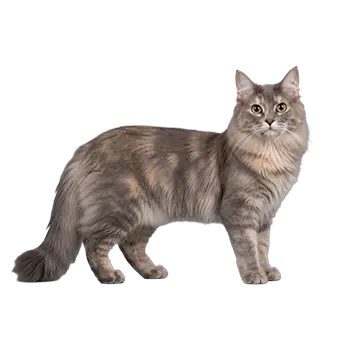

Space Requirements

The Tiffanie is not a particularly demanding cat when it comes to square footage, but she does require a thoughtfully arranged environment that offers both vertical exploration and quiet retreat options. As a moderately active breed with a strong attachment to her human companions, the Tiffanie tends to follow her owner from room to room rather than stake out a single territory, which means she benefits from having comfortable resting spots distributed throughout the home rather than concentrated in one area.

Vertical space is at least as important as floor area for any indoor cat, and the Tiffanie is no exception. Cat trees, wall-mounted shelves, and elevated perches give her the ability to survey her domain from above, which satisfies a deep feline instinct for security and control. A tall cat tree placed near a window combines the benefits of height, natural light, and visual stimulation from outdoor activity — a combination that most Tiffanies find irresistible.

Even in smaller living spaces like apartments and condos, a Tiffanie can thrive if vertical enrichment is prioritized. Wall-mounted climbing systems take up no floor space and can be configured to create pathways along walls and around corners, effectively multiplying the usable territory without expanding the footprint. The key is ensuring that every elevated surface is accessible via a logical route — cats dislike dead-end perches that require awkward jumps to exit.

For multi-room homes, consider creating a circuit that allows your Tiffanie to move through the space in a loop rather than retracing her steps. Cats feel more confident when they have multiple escape routes, and a layout that avoids bottlenecks reduces tension in multi-cat households.

Cat Trees & Climbing Structures

A quality cat tree is arguably the single most impactful housing investment for a Tiffanie. Look for structures with a solid, heavy base that will not wobble or tip when a twelve-pound cat launches herself from the top platform. Stability is non-negotiable — a cat tree that sways or topples even once will likely be permanently abandoned, and your Tiffanie will find her own elevated spots on bookshelves and refrigerators instead.

Platform size matters for a medium-to-large cat. Many budget cat trees feature platforms barely large enough for a kitten, leaving an adult Tiffanie hanging over the edges or avoiding them entirely. Each resting platform should be wide enough for the cat to stretch out fully and deep enough to provide a sense of security. Enclosed cubbies at mid-height offer a retreat option for cats that occasionally want to hide, which even the most sociable Tiffanie will appreciate during moments of overstimulation or household disruption.

Material durability determines the lifespan of the investment. Sisal-wrapped posts withstand scratching far better than carpet-covered alternatives, and they are easier to replace individually when they wear out. Plush or faux-fur coverings on platforms are comfortable and appeal to a Tiffanie's preference for soft surfaces, but they should be removable or replaceable because they will collect hair and eventually flatten under daily use.

Placement is as important as the tree itself. Position it near a window where your Tiffanie can watch birds, passing pedestrians, and weather changes. Avoid placing it in an isolated back room — a sociable cat like the Tiffanie wants to be where the family gathers, and a cat tree tucked away in a guest bedroom will go unused regardless of its quality.

Beds & Sleeping Areas

Tiffanies are enthusiastic sleepers who may log sixteen or more hours of rest per day, so the quality of their sleeping surfaces directly affects their comfort and joint health over time. Orthopedic beds with memory foam or high-density fill provide support that thin, pillow-style beds cannot match, which becomes increasingly important as your Tiffanie ages and joint stiffness becomes a concern.

Bed style preferences vary by individual, but many Tiffanies gravitate toward enclosed or hooded beds that offer a sense of privacy and warmth. Igloo-style beds, covered doughnuts, and cave beds satisfy the feline desire for a snug, den-like space while also helping to contain loose hair — a practical benefit with any semi-longhaired breed. Test a couple of styles before committing to multiple beds throughout the home, because a cat that prefers open beds will consistently ignore an enclosed one, and vice versa.

Washability is essential. The Tiffanie's silky coat sheds moderately year-round with seasonal increases, and her bedding will accumulate hair, dander, and occasional tracked litter faster than you might expect. Beds with removable, machine-washable covers save significant time compared to those that must be washed whole or spot-cleaned. Aim for covers that can tolerate warm water and tumble drying without shrinking or losing their shape.

Distribute sleeping options across the rooms where you spend the most time. A bed in the living room, another in the bedroom, and a third in a home office ensures that your Tiffanie always has a comfortable spot nearby without needing to retreat to a distant part of the house. Heated beds or self-warming pads are a worthwhile addition for drafty homes or older cats who seek warmth more actively.

Outdoor Enclosures

Outdoor access carries significant risks for any cat, including traffic, predators, disease exposure, and territorial conflicts. For Tiffanie owners who want to provide outdoor enrichment without free-roaming risks, enclosed catios and screened outdoor enclosures offer the best compromise. These structures allow your cat to experience fresh air, sunlight, and natural stimulation while remaining safely contained.

Catio designs range from simple window-box enclosures that attach to an existing window frame to elaborate walk-in structures that function as outdoor rooms. The right choice depends on your available outdoor space, budget, and climate. Window boxes suit apartment dwellers or those with limited yard space, while freestanding enclosures work well for homeowners who can dedicate a section of patio, deck, or yard. Tunnel connectors between the house and a freestanding catio allow the cat to move freely between indoor and outdoor spaces through a cat door.

Material quality determines both safety and longevity. Welded wire mesh is more secure than stapled screening, which can be torn by a determined cat or breached by wildlife. The frame should be weather-resistant — powder-coated steel, cedar, or marine-grade lumber all perform well in varied climates. Roofing is essential to protect against rain, excessive sun, and aerial predators, even in urban areas where hawks and owls may be present.

Furnish the catio with shelves at multiple heights, a scratching post, and at least one shaded resting area. Natural elements like cat-safe plants, a shallow water feature, or a patch of cat grass add sensory enrichment that makes the space more appealing for extended use. Avoid toxic plants — a surprising number of common garden species are dangerous to cats — and check any purchased plants against a reliable toxicity database before placing them in the enclosure.

Climate Considerations

The Tiffanie's semi-long coat provides moderate insulation but does not offer the same cold-weather protection as the denser double coats found on breeds like the Norwegian Forest Cat or Siberian. In cool climates or during winter months, ensure that sleeping areas are positioned away from drafts, exterior walls, and uncarpeted floors. Elevated beds lift the cat away from cold floor surfaces, and heated pads designed for pet use provide gentle warmth without overheating risk.

Heat is a greater concern than cold for most indoor Tiffanies. Cats regulate body temperature primarily through panting and seeking cool surfaces, and a semi-longhaired cat in a warm home may show signs of heat stress before a shorthaired housemate does. Air conditioning, fans positioned to create airflow without direct blasting, and access to cool tile or stone surfaces all help. During summer months, a cooling mat — either gel-filled or pressure-activated — offers relief in rooms that tend to run warm.

Humidity affects both your Tiffanie's comfort and her coat condition. Very dry air, common in heated homes during winter, can cause static in the coat, dry skin, and increased dander production. A room humidifier benefits both cat and human occupants. Conversely, excessively humid environments can promote bacterial and fungal skin issues, particularly in skin folds or areas where the coat is densest.

If your Tiffanie uses a catio or outdoor enclosure, seasonal adjustments are necessary. Provide shade structures and frozen water bottles or cooling pads in summer, and windbreaks, insulated shelters, and heated pads in winter. Monitor weather conditions and bring your cat indoors during temperature extremes — enclosed outdoor spaces can heat up or cool down faster than the ambient temperature suggests.

Multi-Cat Households

Tiffanies are generally sociable cats that coexist well with other felines, but successful multi-cat housing depends more on environmental design than on breed temperament. The fundamental rule is resource multiplication: every cat in the household should have access to her own food station, water source, litter box, and at least one preferred resting spot without needing to pass through another cat's claimed territory. The standard formula of one resource per cat plus one extra is a reliable starting point.

Vertical territory becomes even more critical in multi-cat homes. Cats establish social hierarchies partly through spatial positioning, and a cat that cannot access elevated perches may feel chronically stressed by a housemate who claims all the high ground. Multiple cat trees, wall shelves at varying heights, and tall furniture that cats are permitted to use all help distribute vertical territory equitably.

Sightline management reduces confrontation. Cats that can see each other across a long hallway or open floor plan are in a perpetual low-level standoff, even if they are not actively hostile. Strategic placement of furniture, room dividers, or cat tunnels breaks up sightlines and creates visual barriers that allow cats to coexist in shared spaces without feeling constantly monitored.

Introduction matters as much as ongoing arrangement. When adding a new cat to a household that includes a Tiffanie — or introducing a Tiffanie to an established group — use a gradual, scent-based introduction protocol. Separate the new arrival in a dedicated room with her own resources for at least a week, exchange bedding between the cats to familiarize scents, and allow supervised visual contact before progressing to shared-space access. Rushing introductions is the most common cause of long-term inter-cat tension.

Always consult a qualified professional before making any health-related decisions. This content is provided for informational reference only and should not replace professional guidance specific to your animal.