Bourke's Parakeet Species Guide - Furry Critter Network

Bourke's Parakeet

Quick Facts

🔬 Scientific Name
Neopsephotus bourkii
📊 Care Level
Beginner
😊 Temperament
Gentle, Calm, Peaceful, Sweet-natured
📏 Adult Size
7-9 inches
⏱️ Lifespan
10-15 years
🔊 Noise Level
Quiet
🗣️ Talking Ability
Limited
🍽️ Diet Type
Seed/Pellet
🌍 Origin
Central and Western Australia
🏠 Min Cage Size
24x18x24 inches
📐 Size
Small

Bourke's Parakeet - Names & Recognition

The Bourke's Parakeet derives its common name from General Sir Richard Bourke, who served as Governor of New South Wales from 1831 to 1837. The bird was named in his honor by John Gould, the renowned English ornithologist who first described the species during his Australian expeditions in the 1830s. This naming tradition was common during the colonial period when new species were often named after prominent figures and patrons of natural history.

The scientific name Neopsephotus bourkii reflects both the bird's classification and its namesake. The genus name Neopsephotus was established in 1832, with Neo meaning "new" and psephotus relating to "pebble" or "small stone," possibly referencing the bird's ground-feeding habits. The species name bourkii honors Governor Bourke directly. Historically, these parakeets were classified in the genus Neophema alongside the turquoise and elegant parrots, but modern genetic analysis moved them to their own genus in recognition of distinct evolutionary differences.

Common alternate names include Bourke's Parrot, Blue-vented Parrot (referencing the blue undertail), Pink-bellied Parakeet, and Sundown Parrot (acknowledging their crepuscular activity patterns). In Australia, they're sometimes called simply Bourkes or Bourkies in casual usage. Regional variations exist, with some older Australian texts referring to them as Night Parrots, though this name now properly belongs to the entirely different and critically endangered Pezoporus occidentalis. In aviculture, color mutations have created additional designations including Rosy Bourke's (intensified pink coloring), Lutino Bourke's (yellow replacing brown), and various combinations, though wild-type or normal coloration remains most common and closest to the natural form found throughout their native Australian range.

Bourke's Parakeet Physical Description

The Bourke's Parakeet is a small, elegantly proportioned parrot measuring approximately seven to nine inches in length from beak to tail tip, with most of this length attributable to their relatively long, tapering tail. Adults typically weigh between 1.5 to 2 ounces, making them substantially smaller and lighter than budgerigars despite similar body length. Their build is slender and graceful, with a small rounded head, gentle facial expression, and body proportions that appear delicate compared to the stockier build of many common parakeet species.

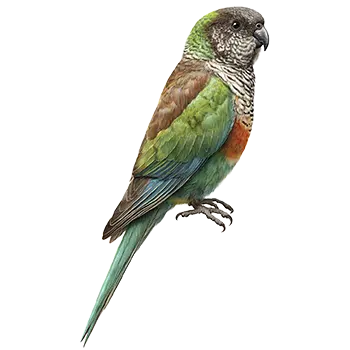
The wild-type coloration displays subtle beauty that has been described as dusty rose and powder blue. The face, throat, and underparts show soft pink to rose coloring, most intense on the breast and belly. The back, wings, and nape display brown to grayish-brown plumage that provides camouflage in their native scrubland habitat. The undertail coverts and lower back show striking blue coloring that becomes visible during flight. The feathers have a soft, almost powdery appearance without the high gloss of some parrot species, contributing to their gentle overall impression.

Sexual dimorphism allows visual sex determination in adult birds. Males display a distinctive blue band across the forehead above the cere, along with brighter overall pink coloring on the face and underparts. Females lack the blue forehead band and show more subdued pink tones overall, with the brown of the back extending further onto the breast. Juvenile birds resemble adult females regardless of sex, with males developing the blue forehead band as they mature between four to six months of age.

Color mutations developed through selective breeding have produced variations including Rosy Bourke's with intensified pink coloring throughout, Lutino forms showing yellow where wild-type birds display brown, and various combinations. These mutations are popular in aviculture but less common than wild-type coloring. The eye color is dark brown in normal birds, while some mutations display red eyes. The beak is pale horn-colored, small and delicate. Legs and feet are gray-brown. The overall impression is one of soft, harmonious coloring rather than bright, contrasting patterns, perfectly suited to their calm temperament and peaceful nature.

Affection Level
Bourke's Parakeets are affectionate without being demanding. Hand-raised birds bond closely with their owners and enjoy gentle head scratches and quiet companionship. They show affection through soft chirping, gentle preening, and contentedly sitting near their favorite people, though they're less physically demonstrative than some parrot species.
Sociability
These parakeets are naturally social birds that thrive with companionship, whether from humans or other Bourke's. They do well in pairs or small groups and enjoy peaceful interaction. While friendly with family members, they're not overly demanding of attention and can entertain themselves when their social needs are met through regular gentle interaction.
Vocalization
Bourke's Parakeets are exceptionally quiet, making them ideal for apartments and noise-sensitive environments. Their soft, pleasant chirping and twittering is barely audible and occurs primarily at dawn and dusk. They lack the loud screeching of many parrots, with vocalizations that are gentle, melodic, and rarely disruptive even in quiet households.
Intelligence
While not problem-solving geniuses like larger parrots, Bourke's Parakeets display moderate intelligence. They learn routines quickly, recognize their caregivers, and can master simple tricks with patient training. They understand their environment well and show good spatial awareness, though they're not known for complex puzzle-solving or extensive vocabulary development.
Exercise Needs
Bourke's Parakeets need moderate daily exercise through supervised out-of-cage time for flight. Their crepuscular nature means they're most active during early morning and evening hours. They enjoy flying short distances and exploring but aren't hyperactive. Daily flight time of 1-2 hours in a bird-safe room satisfies their exercise requirements adequately.
Maintenance Level
These parakeets are low-maintenance compared to most parrots. Their small size means manageable cage cleaning, and they produce minimal mess. They don't require extensive grooming beyond occasional nail trims. Their quiet nature and simple diet make daily care straightforward. Weekly cage maintenance and daily food and water changes constitute the primary care requirements.
Trainability
Bourke's Parakeets are moderately trainable with patience and gentle methods. They can learn to step up, recall to hand, and perform simple behaviors through positive reinforcement. Hand-raised birds tame easily and respond well to calm, consistent training. They're not natural performers but will learn basics willingly when training respects their gentle, calm nature.
Independence
These parakeets are pleasantly independent, able to entertain themselves for extended periods without becoming destructive or overly stressed. They appreciate companionship but don't demand constant attention. When provided with appropriate toys and a companion bird, they handle alone time very well, making them suitable for working owners who can provide morning and evening interaction.

Natural Habitat & Range

Bourke's Parakeets inhabit the arid and semi-arid interior regions of Australia, with their range centered in central and western portions of the continent. They are found across extensive areas of South Australia, western New South Wales, southwestern Queensland, and throughout much of inland Western Australia and the Northern Territory. Their distribution follows the availability of suitable habitat characterized by sparse vegetation, open woodland, and scrubland rather than dense forest, thriving in environments that many other parrot species cannot tolerate due to limited water and extreme temperature fluctuations.

The natural habitat consists primarily of mulga scrubland, acacia woodland, saltbush plains, and open grassland with scattered trees. These parakeets show strong affinity for areas dominated by Acacia species, particularly mulga (Acacia aneura), which provides both food sources and nesting sites. They prefer relatively flat terrain with low, sparse vegetation rather than mountainous areas or dense forests. Water availability is crucial, and populations concentrate near reliable water sources including natural springs, seasonal pools, and increasingly, human-provided water sources such as stock tanks and bores that have expanded available habitat in some regions.

Bourke's Parakeets are nomadic rather than truly migratory, moving in response to rainfall patterns and food availability rather than following predictable seasonal routes. During favorable conditions following good rains, they may settle and breed in an area for extended periods. During drought, they move to regions where food and water remain available. This nomadic behavior means population densities fluctuate considerably across their range depending on recent weather patterns. They roost in small trees and shrubs, often in loose groups, and feed primarily on the ground on grass seeds and other plant material during crepuscular hours.

Population status in the wild remains stable overall, though regional variations occur based on environmental conditions and habitat changes. The species is not considered threatened, benefiting from vast remote habitat with minimal human disturbance across much of their range. However, some local populations have declined due to habitat clearing for agriculture and grazing, particularly in southern portions of their range. The provision of artificial water sources has likely expanded their range in some areas while habitat degradation has contracted it in others, resulting in shifts in distribution patterns compared to pre-European settlement times but overall maintenance of healthy wild populations throughout Australia's interior regions.

Temperament

The Bourke's Parakeet is universally recognized as one of the gentlest and most peaceful parrot species in aviculture, displaying a calm, sweet-natured temperament that makes them ideal companions for those seeking a quiet, undemanding bird. Unlike many parrot species that display territorial aggression, loud vocalizations, or demanding behaviors, Bourke's maintain a consistently gentle disposition throughout their lives. Hand-raised individuals tame readily and remain docile even during breeding season, when many other parrots become defensive. This peaceful nature extends to interactions with other birds, humans, and their environment, creating harmonious household companions.

Their activity patterns differ markedly from most common pet birds, being naturally crepuscular rather than diurnal. Wild Bourke's Parakeets are most active during dawn and dusk hours, resting during the heat of midday and sleeping through the night. In captivity, this translates to increased activity and vocalization during early morning and evening hours, with relative quietness during midday. This pattern can actually benefit working owners, as the birds are naturally less active during typical work hours and become more interactive when people return home in the evening. Respecting this natural rhythm by providing interaction during their active periods and allowing rest during their quiet times supports their wellbeing and natural behaviors.

Social needs are moderate and flexible. Bourke's Parakeets appreciate companionship and do exceptionally well in pairs or small groups, often becoming devoted to a mate and maintaining lifelong pair bonds. However, single birds also thrive when provided adequate human interaction, particularly birds hand-raised from a young age. They form strong bonds with their caregivers without becoming overly dependent or demanding constant attention. When properly socialized, they enjoy gentle interaction including head scratches, talking softly to their person, and simply being near family members without requiring constant direct engagement. This balance between social connection and independence makes them adaptable to various household situations.

Their demeanor with children is generally excellent, as they rarely bite even when startled or handled clumsily. Their small size and gentle nature make them less intimidating for young people learning to interact with birds. However, their delicate build requires teaching children to handle them carefully to prevent accidental injury. Bourke's typically tolerate gentle petting and handling better than many parakeet species, though they may initially be skittish if not properly socialized. With patient, calm interaction, even initially shy birds usually develop trust and accept handling willingly.

In multi-bird households, Bourke's Parakeets are peaceful neighbors that rarely create conflict with other species. They can coexist successfully with finches, canaries, cockatiels, and other peaceful species in appropriately sized aviaries, though housing with more aggressive species should be avoided. Their quiet, non-confrontational nature means they may be bullied by more assertive birds, requiring monitoring when introducing them to established groups. The combination of gentle disposition, quiet vocalizations, moderate social needs, and peaceful coexistence with other species makes Bourke's Parakeets exceptional choices for first-time bird owners, apartment dwellers, seniors, and anyone seeking a low-key avian companion that brings beauty and gentle companionship without the challenges associated with many parrot species.

Care Requirements

Caring for Bourke's Parakeets is relatively straightforward due to their small size, peaceful nature, and moderate needs. These adaptable birds thrive in various housing situations from indoor cages to outdoor aviaries, though their specific requirements must be met to ensure optimal health and wellbeing. Understanding their crepuscular activity patterns, social needs, and environmental preferences allows owners to provide appropriate care supporting natural behaviors while accommodating their gentle disposition and quiet nature.

Cage size should be generous relative to the bird's small size, with minimum dimensions of 24 inches wide by 18 inches deep by 24 inches high for a single bird, though larger is always preferable. Bourke's Parakeets are relatively active flyers despite their calm demeanor, benefiting from horizontal space for short flights between perches more than vertical height. For pairs, increase minimum dimensions to 36 inches wide by 24 inches deep by 24 inches high. Bar spacing should not exceed 1/2 inch to prevent escape or injury. Choose cages constructed from powder-coated metal or stainless steel, avoiding galvanized metal that may contain toxic zinc. Ensure multiple perch levels at varying heights, with perches of natural wood branches providing varying diameters for foot health.

Outdoor aviaries provide excellent housing allowing flight, fresh air, and natural sunlight when climate permits. Minimum aviary dimensions should be 6 feet long by 3 feet wide by 6 feet high for a pair, with larger dimensions supporting natural flight better. Ensure at least partially covered areas protecting from rain, wind, and excessive sun. In regions with cold winters, provide heated shelter or bring birds indoors during extreme weather, as Bourke's tolerate heat better than cold. Double-door entry systems prevent escapes. Ensure predator-proof construction including buried wire and secure roofing. Position to receive natural sunlight while providing shaded retreat areas.

Cage placement within the home should consider their crepuscular nature and sensitivity to disturbance during rest periods. Place cages in quiet areas away from high-traffic zones during midday when they naturally rest. Ensure placement provides natural light cycles supporting their dawn and dusk activity patterns, or supplement with full-spectrum lighting. Avoid kitchens due to cooking fume dangers, and locations with drafts, direct heating/cooling vents, or excessive temperature fluctuations. Position at comfortable viewing height (4-5 feet) where they feel secure without being placed so high they become difficult to interact with or so low they feel threatened.

Temperature requirements are moderate, with Bourke's comfortable in typical household temperatures between 65-80°F. They tolerate somewhat higher temperatures due to their Australian desert origins but require ventilation and shade during hot weather. They're more sensitive to cold and drafts, requiring protection from temperatures below 50°F. Humidity should be moderate, around 40-60%, with good air circulation preventing both excessive dryness and damp conditions that promote respiratory problems and mold growth.

Perch variety supports foot health and provides enrichment. Include natural wood branches of varying diameters (1/4 to 1/2 inch) from safe species like apple, ash, or manzanita. Position perches at different heights and orientations, ensuring they don't cross over food and water dishes. Avoid sandpaper perches that damage feet. Include one cement or sandy perch specifically for nail maintenance. Rotate perch configurations periodically for mental stimulation.

Toys and enrichment should be provided but needn't be extensive, as Bourke's are less destructive than many parrots. Offer small foraging toys, natural wood chews, small bells, and simple puzzle toys. Avoid loud toys that may startle their gentle nature. Rotate toys weekly to maintain interest. Natural branches with bark provide both perching and gentle chewing enrichment. A bird-safe mirror may provide companionship for single birds, though actual avian companionship is strongly preferred.

Cleaning requirements are straightforward with daily spot cleaning removing droppings and discarded food, weekly complete cage cleaning including perches and toys, and monthly deep cleaning of all cage components. Use bird-safe cleaning solutions or diluted vinegar, rinsing thoroughly and drying completely before returning birds. Their small size and relatively clean habits make maintenance less demanding than larger parrots. Providing appropriate housing respecting their natural behaviors, gentle temperament, and moderate needs allows Bourke's Parakeets to thrive as peaceful, charming companions in diverse household situations.

Feeding & Nutrition

Bourke's Parakeets require a varied, nutritionally balanced diet supporting their small size, moderate activity level, and overall health throughout their ten to fifteen year lifespan. As granivorous birds in the wild, they naturally consume primarily grass seeds along with some green vegetation, requiring similar variety in captivity. Modern nutritional understanding recognizes that seed-only diets lack essential nutrients, making a combination of high-quality pellets, seeds, fresh foods, and supplements the optimal approach for maintaining these charming parakeets in peak condition.

High-quality pellets formulated specifically for small parrots or parakeets should comprise approximately 60-70% of the diet. Pellets provide complete, balanced nutrition including vitamins, minerals, and amino acids that seeds alone cannot supply. Choose pellets specifically sized for small birds to encourage consumption. Introduce pellets gradually if transitioning from seed-based diet, mixing increasing proportions with familiar seeds over several weeks. Some Bourke's initially resist pellets, requiring patience and persistence. Once accepting pellets, they typically consume appropriate amounts without overeating. Brands formulated specifically for Australian parakeets align well with Bourke's nutritional needs.

Seeds provide natural enrichment and psychological satisfaction but should comprise only 20-30% of total diet due to nutritional limitations and high fat content. Offer high-quality small parakeet or budgie seed mixes containing canary grass seed, millet varieties, and small amounts of oats and other grains. Avoid mixes heavy in fatty seeds like sunflower and safflower, which are inappropriate for small parakeets and promote obesity. Some owners prefer providing individual seed types in separate dishes, allowing birds to select variety while monitoring consumption of different types. Sprouted seeds increase nutritional value and provide enrichment, though require careful preparation preventing bacterial contamination.

Fresh vegetables should be offered daily, comprising approximately 10-15% of diet. Suitable options include leafy greens (romaine lettuce, kale, spinach in moderation), carrots, broccoli, bell peppers, and peas. Chop vegetables into small pieces appropriate for their delicate beaks. Introduce variety gradually to encourage acceptance. Some Bourke's eagerly consume fresh foods while others require patient encouragement. Attach vegetables to cage sides using clips or provide in separate shallow dishes. Remove uneaten fresh foods within 2-3 hours preventing spoilage.

Fruits may be offered occasionally as treats rather than daily staples due to high sugar content. Suitable options include small amounts of apple, pear, berries, and melon. Remove seeds and pits from fruits before offering. Limit fruit to 1-2 times weekly in small quantities preventing excessive sugar intake that may contribute to obesity and other health issues. Most Bourke's enjoy fruit as special treats when offered sparingly.

Supplementation supports optimal health, particularly for breeding birds and those not consuming balanced pellet-based diets. Provide cuttlebone or mineral block constantly for calcium and beak maintenance. Most Bourke's nibble these regularly, with increased consumption during breeding season indicating elevated calcium needs. Powder supplements may be added to soft foods for birds refusing cuttlebone, though mineral blocks remain preferable. Vitamin supplements are generally unnecessary when high-quality pellets comprise the diet base, though may benefit birds refusing pellets or during stressful periods.

Fresh, clean water must be available at all times in clean dishes changed at least daily, more frequently if soiled. Some Bourke's enjoy bathing in water dishes, requiring multiple changes when this occurs. Position water away from perches preventing contamination with droppings. Ensure water bottles function properly if using instead of dishes, as some birds fail to drink adequately from bottles.

Feeding schedule can follow free-choice availability or scheduled meals. Most owners provide constant access to pellets and seeds while offering fresh vegetables during morning and evening active periods. This approach accommodates their crepuscular feeding patterns while ensuring nutrition is always available. Monitor consumption ensuring adequate intake, as some birds may prefer seeds and ignore healthier pellets without encouragement. Adjust quantities based on individual bird maintaining healthy body condition with easily palpable but not prominent keel bone.

Avoid toxic foods including avocado, chocolate, caffeine, alcohol, salt, and anything containing xylitol. Many common household foods are unsafe for birds. When uncertain about food safety, research thoroughly before offering. With proper variety, attention to nutritional balance, and respect for their natural feeding patterns, Bourke's Parakeets maintain excellent health throughout long lives as gentle, beautiful companions.

Bourke's Parakeet Health & Lifespan

Bourke's Parakeets are generally hardy, healthy birds with relatively few species-specific health concerns when provided appropriate care, housing, and nutrition. Their natural adaptation to harsh Australian interior conditions contributes to robust constitutions that serve them well in captivity. With proper preventive care and attention to environmental conditions, Bourke's typically enjoy lifespans of ten to fifteen years, with some individuals reaching eighteen years or more under optimal conditions. Establishing care with an avian veterinarian familiar with small parrots and maintaining annual wellness exams supports early detection of potential health issues before they become serious.

Respiratory infections can affect Bourke's Parakeets, particularly when housed in damp, poorly ventilated environments or exposed to sudden temperature changes and drafts. Symptoms include nasal discharge, labored breathing, tail bobbing, reduced activity, and fluffed appearance. Dusty conditions from inadequate cage cleaning or inappropriate bedding materials can irritate respiratory systems. Prevention requires maintaining clean, well-ventilated housing with stable temperatures between 65-80°F, avoiding drafts and sudden temperature fluctuations, and ensuring cage placement away from cooking fumes, aerosols, and other airborne irritants. Prompt veterinary attention for respiratory symptoms prevents progression to serious pneumonia.

Feather plucking and self-mutilation are relatively uncommon in Bourke's Parakeets compared to larger parrot species, but can develop due to boredom, stress, nutritional deficiencies, or underlying health problems. These peaceful birds rarely develop the severe psychological feather destruction seen in some species, but may over-preen when stressed by inadequate housing, lack of companionship, or environmental changes. Providing appropriate cage size, companionship (either another Bourke's or adequate human interaction), varied diet, and environmental enrichment prevents most cases. Medical causes including parasites, infections, and allergies should be ruled out through veterinary examination when feather problems develop.

Intestinal parasites including roundworms and giardia can affect Bourke's Parakeets, particularly birds kept outdoors or exposed to wild birds. Symptoms include weight loss despite good appetite, diarrhea, poor feather condition, and lethargy. Regular fecal examinations during wellness visits detect parasites before they cause serious problems. Prevention includes maintaining clean housing, preventing wild bird contact with aviaries, and quarantining new birds before introducing them to established collections. Treatment with appropriate antiparasitic medications prescribed by an avian veterinarian eliminates infestations effectively.

Egg binding can affect female Bourke's Parakeets, particularly those bred too young, lacking proper nutrition, or housed in suboptimal conditions. This potentially fatal condition occurs when an egg becomes lodged in the reproductive tract, causing straining, abdominal swelling, lethargy, and potentially death without intervention. Risk factors include calcium deficiency, obesity, first clutch, and breeding during cold weather. Prevention requires ensuring breeding females receive calcium supplementation, maintain healthy weight, and are at least one year old before breeding. Emergency veterinary care is essential if egg binding is suspected.

Overgrown beaks and nails occasionally develop when birds lack appropriate surfaces for natural wear. Providing cuttlebone, mineral blocks, and varied perch textures prevents most cases. Regular monitoring and veterinary trimming when necessary maintains proper length. Bumblefoot can develop on feet when perches are inappropriate diameter or material. Using natural wood branches of varying diameters as perches prevents this painful condition. Nutritional deficiencies may develop when diet consists exclusively of seed without supplementation. Providing high-quality pellets, fresh vegetables, and appropriate supplements prevents deficiency-related health problems. Regular wellness examinations, proper housing, balanced nutrition, and prompt attention to behavior changes support long, healthy lives for these charming Australian parakeets.

Bourke's Parakeets are generally hardy, healthy birds with relatively few species-specific health concerns when provided appropriate care, housing, and nutrition. Their natural adaptation to harsh Australian interior conditions contributes to robust constitutions that serve them well in captivity. With proper preventive care and attention to environmental conditions, Bourke's typically enjoy lifespans of ten to fifteen years, with some individuals reaching eighteen years or more under optimal conditions. Establishing care with an avian veterinarian familiar with small parrots and maintaining annual wellness exams supports early detection of potential health issues before they become serious.

Respiratory infections can affect Bourke's Parakeets, particularly when housed in damp, poorly ventilated environments or exposed to sudden temperature changes and drafts. Symptoms include nasal discharge, labored breathing, tail bobbing, reduced activity, and fluffed appearance. Dusty conditions from inadequate cage cleaning or inappropriate bedding materials can irritate respiratory systems. Prevention requires maintaining clean, well-ventilated housing with stable temperatures between 65-80°F, avoiding drafts and sudden temperature fluctuations, and ensuring cage placement away from cooking fumes, aerosols, and other airborne irritants. Prompt veterinary attention for respiratory symptoms prevents progression to serious pneumonia.

Feather plucking and self-mutilation are relatively uncommon in Bourke's Parakeets compared to larger parrot species, but can develop due to boredom, stress, nutritional deficiencies, or underlying health problems. These peaceful birds rarely develop the severe psychological feather destruction seen in some species, but may over-preen when stressed by inadequate housing, lack of companionship, or environmental changes. Providing appropriate cage size, companionship (either another Bourke's or adequate human interaction), varied diet, and environmental enrichment prevents most cases. Medical causes including parasites, infections, and allergies should be ruled out through veterinary examination when feather problems develop.

Intestinal parasites including roundworms and giardia can affect Bourke's Parakeets, particularly birds kept outdoors or exposed to wild birds. Symptoms include weight loss despite good appetite, diarrhea, poor feather condition, and lethargy. Regular fecal examinations during wellness visits detect parasites before they cause serious problems. Prevention includes maintaining clean housing, preventing wild bird contact with aviaries, and quarantining new birds before introducing them to established collections. Treatment with appropriate antiparasitic medications prescribed by an avian veterinarian eliminates infestations effectively.

Egg binding can affect female Bourke's Parakeets, particularly those bred too young, lacking proper nutrition, or housed in suboptimal conditions. This potentially fatal condition occurs when an egg becomes lodged in the reproductive tract, causing straining, abdominal swelling, lethargy, and potentially death without intervention. Risk factors include calcium deficiency, obesity, first clutch, and breeding during cold weather. Prevention requires ensuring breeding females receive calcium supplementation, maintain healthy weight, and are at least one year old before breeding. Emergency veterinary care is essential if egg binding is suspected.

Overgrown beaks and nails occasionally develop when birds lack appropriate surfaces for natural wear. Providing cuttlebone, mineral blocks, and varied perch textures prevents most cases. Regular monitoring and veterinary trimming when necessary maintains proper length. Bumblefoot can develop on feet when perches are inappropriate diameter or material. Using natural wood branches of varying diameters as perches prevents this painful condition. Nutritional deficiencies may develop when diet consists exclusively of seed without supplementation. Providing high-quality pellets, fresh vegetables, and appropriate supplements prevents deficiency-related health problems. Regular wellness examinations, proper housing, balanced nutrition, and prompt attention to behavior changes support long, healthy lives for these charming Australian parakeets.

Common Health Issues

  • Respiratory infections can affect Bourke's Parakeets - Particularly when housed in damp, poorly ventilated environments or exposed to sudden temperature changes and drafts.
  • Dusty conditions from inadequate cage cleaning or inappropriate bedding materials can irritate respiratory systems. - Dusty conditions from inadequate cage cleaning or inappropriate bedding materials can irritate respiratory systems.
  • Prompt veterinary attention for respiratory symptoms prevents progression to serious pneumonia. - Prompt veterinary attention for respiratory symptoms prevents progression to serious pneumonia.
  • Feather plucking and self-mutilation are relatively uncommon in Bourke's Parakeets compared to larger parrot species - But can develop due to boredom, stress, nutritional deficiencies, or underlying health problems.
  • Egg binding can affect female Bourke's Parakeets - Particularly those bred too young, lacking proper nutrition, or housed in suboptimal conditions.
  • Emergency veterinary care is essential if egg binding is suspected. - Emergency veterinary care is essential if egg binding is suspected.

Preventive Care & Health Monitoring

  • Bourke's Parakeets are generally hardy - Healthy birds with relatively few species-specific health concerns when provided appropriate care, housing, and nutrition.
  • Establishing care with an avian veterinarian familiar with small parrots and maintaining annual wellness exams supports early detection of potential health issues before they become serious. - Establishing care with an avian veterinarian familiar with small parrots and maintaining annual wellness exams supports early detection of potential health issues before they become serious.
  • Feather plucking and self-mutilation are relatively uncommon in Bourke's Parakeets compared to larger parrot species - But can develop due to boredom, stress, nutritional deficiencies, or underlying health problems.
  • Providing appropriate cage size, companionship - Either another Bourke's or adequate human interaction, , varied diet, and environmental enrichment prevents most cases.
  • Egg binding can affect female Bourke's Parakeets - Particularly those bred too young, lacking proper nutrition, or housed in suboptimal conditions.
  • Risk factors include calcium deficiency - Obesity, first clutch, and breeding during cold weather.

Training & Vocalization

Bourke's Parakeets present unique characteristics in both vocalization patterns and training potential that distinguish them from more commonly kept parakeet species. Their exceptionally quiet nature makes them apartment-friendly while their gentle temperament facilitates patient training approaches. Understanding their communication style and learning capabilities allows owners to develop realistic expectations and employ effective methods supporting positive interactions and basic training accomplishments while respecting their naturally calm, undemanding personality.

Vocalization characteristics make Bourke's Parakeets among the quietest parrot species in aviculture, producing soft chirping and twittering that rarely disturbs even noise-sensitive households. Their natural calls consist of gentle, melodic notes typically described as pleasant and musical rather than harsh or loud. These vocalizations occur primarily during dawn and dusk activity periods, corresponding to their crepuscular nature. During midday and evening hours, they remain relatively quiet, occasionally producing soft contact calls but rarely the loud, repetitive calling characteristic of budgerigars and many other parakeet species. Their volume rarely exceeds conversation level even during excited moments, making them ideal for apartments, condominiums, and situations where noise is a concern.

Talking ability is extremely limited in Bourke's Parakeets, with most individuals never developing any speech capability. Unlike budgerigars that often become proficient talkers, or cockatiels that whistle tunes, Bourke's lack strong mimicry instincts. Occasional individuals may learn to repeat one or two simple words with extensive patient training, but this is exceptional rather than expected. Males show slightly more potential for vocalization learning than females, though neither sex approaches the talking ability of species known for mimicry. Owners attracted to Bourke's should appreciate their natural soft vocalizations rather than expecting speech development.

Singing and natural vocalizations provide their own charm, with males producing soft warbling songs during courtship and bonding. These gentle melodies, while not loud, create pleasant background sounds many owners find soothing. Pairs often engage in quiet back-and-forth calling maintaining contact, and groups produce soft chatter during active periods. Their vocal repertoire includes gentle alarm calls when startled, soft contact calls to flock mates or human companions, and the melodic warbling of males. Learning to recognize these different vocalizations helps owners understand their birds' emotional states and needs.

Basic training proceeds successfully using positive reinforcement methods respecting their gentle nature. Bourke's Parakeets can learn fundamental behaviors including stepping onto a finger or hand, returning to their cage on command, and simple recall training. Hand-raised birds generally accept handling readily, requiring minimal training for basic interaction. Parent-raised birds may need more extensive taming but usually respond well to patient, gentle approaches. Training sessions should be brief (5-10 minutes), conducted during their active periods (early morning or evening), and always use positive reinforcement through favorite treats and soft verbal praise.

Step-up training forms the foundation of interaction, teaching birds to step onto an offered finger or hand perch on command. Begin training in a small, quiet space minimizing distractions and preventing extended chases if the bird flies away. Offer a finger at chest level while saying "step up," gently pressing against the lower chest if necessary to encourage stepping. Reward immediately with a small treat and soft praise. Practice consistently during calm moments until stepping up becomes automatic. Most Bourke's learn this within days to weeks of patient practice.

Recall training teaches birds to fly to their owner on command, useful for safe out-of-cage exercise and strengthening bonds. Begin with very short distances in a confined space, calling the bird's name followed by "come" while showing a favorite treat. Reward immediately when they fly to you. Gradually increase distance as reliability improves. Most Bourke's enjoy this game once understanding the concept, flying readily to trusted owners during their active periods. Their natural calm means they rarely become overexcited during training, maintaining focus better than more hyperactive species.

Trick training beyond basics is possible but not typical for this species. Some individuals learn simple tricks like turning in circles, ringing small bells, or retrieving objects through consistent positive reinforcement. However, their moderate intelligence and calm temperament means they generally show less enthusiasm for complex trick training than more playful parrot species. Owners seeking entertaining trick performers should consider more naturally mischievous species, while those appreciating gentle companionship and basic obedience find Bourke's perfectly suited to their preferences.

Socialization with multiple people prevents bonding exclusively to one person while maintaining their naturally friendly disposition. Encourage various family members to handle, feed, and interact with birds regularly from young age. Properly socialized Bourke's accept interaction from different people while still forming strong bonds with primary caregivers. Their gentle nature means they rarely develop the aggressive territoriality some parrots show, making multi-person handling generally unproblematic. Consistent positive experiences during youth establish confidence and friendly demeanor lasting throughout their lives. With realistic expectations, patient methods, and respect for their quiet, gentle nature, Bourke's Parakeets become cooperative, easily managed companions providing subtle charm through soft vocalizations and willing participation in basic training rather than flashy performances or extensive speech.

Children & Other Pets

Bourke's Parakeets can integrate successfully into family environments including children and other household pets when appropriate supervision, education, and precautions are implemented. Their small size, gentle temperament, and quiet nature present both advantages and special considerations when introducing them to younger family members and other animals. Understanding these factors allows families to create safe, positive relationships benefiting both the birds and other household members while preventing stress, injury, or behavioral problems that can arise from inappropriate interactions.

Interactions with children can be very positive when supervised and guided appropriately. Bourke's Parakeets are less likely to bite defensively than many parrot species, showing gentle tolerance even when handled somewhat clumsily. Their quiet nature prevents the startling loud noises that may frighten young children, while their small size makes them less physically intimidating than larger parrots. However, their delicate build requires teaching children to handle them carefully, using gentle touches and supporting their bodies properly to prevent accidental injury. Young children (under age 6-7) should interact only under direct adult supervision, as their developing motor control may result in gripping too tightly or dropping birds. Older children can learn appropriate handling with proper instruction.

Teaching children proper bird care provides educational opportunities developing responsibility and empathy. Bourke's straightforward care requirements make them suitable for older children learning pet care basics. Children can participate in daily feeding, water changing, and supervised playtime under adult oversight. Their peaceful nature and moderate needs create manageable responsibilities without overwhelming young caregivers. However, adults must ensure consistent care occurs even when children lose interest, as birds require daily attention regardless of children's changing enthusiasms. The combination of gentle temperament and educational value makes Bourke's excellent family birds when adults maintain ultimate responsibility.

Noise sensitivity considerations favor Bourke's Parakeets in households with babies and young children. Unlike loud parrot species that may startle infants or disturb nap times, Bourke's quiet chirping rarely creates problems even in homes with noise-sensitive family members. Their crepuscular activity pattern means they're naturally quieter during typical children's nap times. However, conversely, households with very loud, chaotic environments may stress these peaceful birds, requiring cage placement in quieter areas where they can retreat from excessive commotion during rest periods.

Interactions with other pet birds generally proceed peacefully when species compatibility is considered. Bourke's Parakeets coexist successfully with finches, canaries, cockatiels, and other peaceful aviary birds in appropriately sized enclosures. They rarely show aggression toward other species and integrate well into community aviaries housing compatible birds. However, more aggressive species including lovebirds, some conure species, and territorial parrots may bully gentle Bourke's, requiring separate housing. When introducing Bourke's to established bird groups, monitor closely for signs of aggression from other birds, intervening if harassment occurs. Their non-confrontational nature means they're more likely to be bullied than to bully others.

Dog interactions require extreme caution and constant supervision, as even friendly dogs may injure or kill small birds through predatory instinct or rough play. Never allow direct contact between Bourke's Parakeets and dogs regardless of the dog's temperament. Ensure cages are positioned where dogs cannot reach or disturb them. Some bird-savvy dogs learn to ignore bird cages, while others remain fixated, requiring careful management. Training dogs to "leave it" around bird cages prevents stress to birds from constant canine attention. The small size and fluttering movements of Bourke's may trigger prey drive in dogs with high hunting instincts.

Cat interactions present serious danger, as cats are natural predators with strong hunting instincts triggered by bird movements and sounds. Never allow cats access to rooms containing free-flying Bourke's Parakeets. Ensure cages are sturdy and positioned where cats cannot reach through bars to injure birds. Even declawed cats pose serious risks through stress caused by stalking behavior and potential disease transmission through scratches or bites. Some cats obsessively watch bird cages causing chronic stress, while others show no interest. Evaluate individual cat personalities but always maintain physical separation preventing direct contact.

Small mammal interactions (rabbits, guinea pigs, hamsters) generally pose minimal direct danger but should still involve separation preventing disease transmission and stress. Different species have different care requirements, housing needs, and potential pathogens making cohabitation inappropriate. Maintain separate cages and supervised interaction times if introducing birds to small mammals, though direct contact is unnecessary and potentially risky.

Establishing household rules protects Bourke's Parakeets while allowing family enjoyment. Designate bird-safe rooms for supervised out-of-cage time, closing doors and windows preventing escapes. Teach all family members to check bird locations before sitting down or walking to prevent accidental injury. Create quiet zones where birds can rest undisturbed during their natural rest periods. With appropriate education, supervision, and safety measures, Bourke's Parakeets thrive in family environments, bringing gentle beauty and calm companionship to households including children and other pets while teaching valuable lessons about respecting the needs of other species.