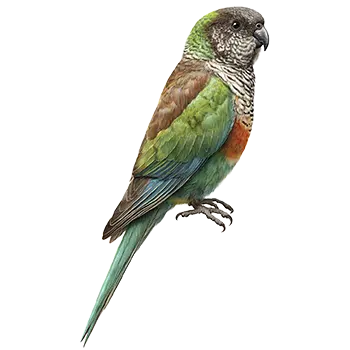

The juvenile phase in Bourke's Parakeets begins around four to five weeks of age when the chick fledges from the nest box. At this point, the young bird has a full set of feathers, though its plumage will appear slightly duller and less defined than that of a mature adult. The characteristic soft pink wash across the chest and the brown tones on the wings and back are present but will continue to deepen and refine over the coming months.
During the first few weeks after fledging, the young Bourke's Parakeet is still somewhat clumsy in flight. It will make short, uncertain flights around the cage or aviary, often crash-landing on perches or cage walls as it builds coordination and flight muscle strength. This is entirely normal, and providing a safe environment with multiple perches at varying heights allows the fledgling to practice without risk of injury from hard surfaces or sharp objects.
Weight gain stabilizes during this period, and the bird reaches close to its adult weight of approximately 40 to 50 grams by around eight weeks of age. The beak and feet harden, and the eyes take on their full adult coloration. In the rosy variety, the distinctive pink plumage intensifies noticeably between two and four months of age, giving keepers their first clear look at the bird's mature color pattern.
The juvenile molt, which typically occurs between three and six months of age, replaces the first set of body feathers with adult plumage. During this molt, the bird may appear slightly ragged or patchy, and it is common for birds to be more subdued in energy and appetite. This is a nutritionally demanding period, and supporting the bird with a high-quality diet rich in protein and calcium is essential for healthy feather growth.