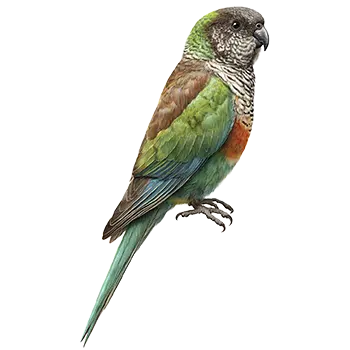

Bourke's Parakeets are active fliers that benefit enormously from horizontal cage space. Unlike some climbing parakeet species that use cage height extensively, Bourke's tend to fly back and forth in level flight paths, making cage width and length more important than height. A minimum cage size of 30 inches long by 18 inches wide by 18 inches tall is generally recommended for a single bird, though larger is always better. Pairs should have proportionally more space — at minimum 36 inches in length.
The bar spacing on any cage intended for Bourke's Parakeets should be no wider than half an inch. Wider spacing creates a risk of head entrapment or escape, both of which can result in serious injury or death. Horizontal bars on at least two sides of the cage are preferable, as they allow the bird to climb and grip comfortably, providing exercise opportunities beyond flight.
Cage placement within the home matters as much as the cage itself. Bourke's Parakeets are sensitive to drafts, direct sunlight exposure, and sudden temperature changes. Position the cage against a solid wall in a room with consistent temperature and moderate household activity. Avoid kitchens entirely, as fumes from overheated nonstick cookware, cleaning products, and cooking smoke are potentially lethal to birds. A partial cage cover or positioning one side against a wall gives the bird a sense of security.
Free-flight time outside the cage is an important supplement to even the most spacious enclosure. Bourke's Parakeets that receive supervised out-of-cage time in a bird-safe room tend to be healthier, more socialized, and less prone to behavioral issues. Ensure windows are covered, ceiling fans are off, and other pets are secured before allowing flight time.