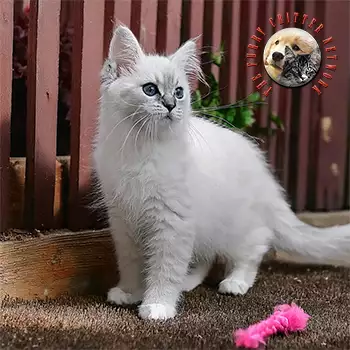

The juvenile period for a Burmilla typically spans from around three months to approximately one year of age, though some individuals continue filling out until eighteen months. During this phase, the kitten undergoes a remarkable transformation from a round, soft-featured baby into a sleek, muscular young cat. Growth is rapid but not always linear—many Burmillas experience growth spurts interspersed with plateau periods, which is entirely normal.
One of the most visually striking changes during this stage is the maturation of the Burmilla's signature coat. The silver tipping or shading that defines the breed becomes increasingly pronounced as juvenile fur is replaced by the denser, more luminous adult coat. The undercoat fills in and the overall texture shifts from the soft fluffiness of kittenhood to the silky, close-lying feel characteristic of mature Burmillas. Eye color also continues to develop, typically settling into shades of green that range from chartreuse to deep emerald.
Physically, the Burmilla develops a moderately muscular body with a gently rounded chest and strong, medium-length legs. The breed standard calls for a balanced, elegant build—neither cobby like the Burmese nor as elongated as some other oriental types. You can expect your Burmilla to reach most of its adult height by nine to ten months, with continued weight gain and muscular development extending beyond the first birthday.
Regular weigh-ins remain useful during this period, though they need not be daily as they were in the neonatal stage. Monthly weight checks help you confirm that growth is proceeding steadily and that your kitten is neither underweight nor gaining excessive fat. Your veterinarian can provide breed-appropriate weight ranges at each wellness visit to keep you on track.