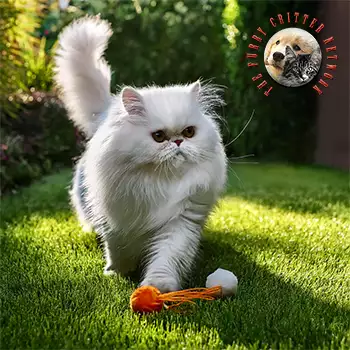
The Persian is a medium-sized cat with a distinctive, compact, cobby body type that's immediately recognizable. Females typically weigh 7-10 pounds, while males reach 9-12 pounds. Despite their substantial appearance due to their massive coat, Persians are surprisingly solid and heavy when picked up—'bricks wrapped in silk' describes their feel. The body is short, deep in the chest, with a level back and massive across the shoulders and rump. The overall structure is low on the legs, appearing grounded and substantial.
The body type is described as 'cobby'—short, compact, and rounded with no hint of length or ranginess. Everything about the Persian is round—round head, round eyes, round body, short rounded legs. This round, compact build creates the impression of a cat designed for comfort and beauty rather than hunting or athleticism. The bone structure is substantial with well-developed musculature, creating a solid, heavy feel despite the breed's moderate size.
The head is the breed's most distinctive and controversial feature—round and massive with great breadth of skull. In modern show Persians, the face is extremely flat (brachycephalic) with the nose, eyes, and forehead forming nearly a vertical plane. The ideal show face is as flat as possible, with the nose leather positioned between the eyes rather than projecting forward. The cheeks are full and prominent, the jaws broad and powerful. When viewed in profile, the forehead, nose, and chin appear to fall in a nearly vertical line.
This extreme facial structure represents significant change from early Persians, which had more moderate faces with visible noses. Breeding for increasingly flat faces throughout the 20th century created the ultra-type seen in modern show cats. This extreme structure, while prized in shows, creates significant health concerns including breathing difficulties, dental problems, eye issues, and eating challenges. Traditional or 'Doll Face' Persians have less extreme faces with longer noses, more closely resembling the original breed type.
The nose is short and snub in all Persians, but in show-type cats, it's extremely abbreviated with a pronounced 'break' between the eyes. The nose leather is broad and in extreme type, positioned nearly between the eyes. The muzzle is very short and broad, contributing to the flat-faced appearance.
The eyes are large, round, and full, set far apart with a sweet, open expression. Eye color is brilliant and depends on coat color—brilliant copper in most colors, green in chinchillas and some silvers, blue or copper in whites, blue in Himalayans. The large, round eyes are one of the breed's most appealing features, creating the sweet, baby-like expression that Persian admirers love. However, the facial structure often causes tearing and eye drainage requiring daily cleaning.
The ears are small, round-tipped, tilted forward, and set far apart and low on the head. They're well-furnished with long hair (ear tufts). The small ears contribute to the round head appearance and make the head appear even larger. The ears are positioned wide on the skull, emphasizing breadth.
The coat is the Persian's crowning glory and most labor-intensive feature—long, thick, flowing, and fine-textured. The coat is extremely long all over the body (4-6 inches), flowing when the cat moves. Unlike some long-haired breeds with coarse or harsh outer coats, the Persian coat is soft and silky throughout. A massive ruff around the neck frames the face, a frill extending between the front legs, and long tufts on the ears and toes complete the luxurious appearance. The coat has a dense, woolly undercoat under the long outer coat, creating the thick, plush texture.
This coat is both the Persian's beauty and burden—it requires daily grooming to prevent matting. The fine texture and dense undercoat cause the coat to mat easily, particularly under the arms, behind the ears, and on the britches. Without daily brushing, painful mats form within days. The coat also sheds profusely, covering everything with long hair.
Persians come in an extraordinary array of colors and patterns—literally dozens of recognized combinations divided into seven color divisions by CFA: Solid Color (white, black, blue, red, cream, chocolate, lilac), Silver and Golden (chinchilla, shaded, and tabby patterns in silver or golden), Shaded and Smoke (shell and shaded cameo, smoke patterns), Tabby (classic, mackerel, patched patterns in various colors), Particolor (tortoiseshell, blue-cream, chocolate tortie, lilac-cream), Bicolor (any solid color with white), and Himalayan (pointed pattern with blue eyes).
The variety is astounding. Solid colors should be even and sound to the roots. Silver and golden varieties show tipped hairs creating shimmering effects. Smoke patterns show colored tips with white undercoats, revealed when the cat moves. Tabbies show distinctive markings. Tortoiseshells blend red and black (or dilutions). Bicolors combine white with any color. Himalayans show Siamese-style pointing. This color diversity allows extensive choice while maintaining consistent type.
The legs are short, thick, and heavily boned with large, round paws. The toes are tufted, with long hair growing between them. The short legs combined with the long, flowing coat often create the impression that the cat is floating on a cloud of fur. The tail is short but proportionate to the body, carried without a curve at an angle lower than the back. It's thickly covered with long, flowing hair.
The overall impression of a Persian is of a heavily boned, well-balanced cat with a sweet expression and soft, round lines. The coat flows and moves beautifully, creating an impression of extreme luxury and beauty. They appear as living decorative objects—beautiful, ornamental, designed for admiration and companionship rather than function. Their appearance perfectly matches their role as the ultimate lap cat and companion breed.
Affection Level
★★★★★
Persians are exceptionally affectionate and devoted lap cats who form deep bonds with their families. They crave companionship and love spending time on laps or beside their people. Their affection is expressed through gentle purring, contentment in their owners' presence, and desire for physical closeness. They're classic companion cats who live to be with their people.
Friendliness
★★★★☆
These cats are friendly with family members and generally accepting of familiar people. They're less immediately outgoing with strangers than some breeds, preferring to observe before approaching. Their friendliness is calm and dignified rather than exuberant. Once comfortable, they're warm and welcoming, though they maintain their characteristic reserve and grace.
Child-Friendly
★★★☆☆
Persians can do well with gentle, calm children who understand delicate handling. Their quiet, sedentary nature suits calmer households better than highly energetic environments. They're patient but prefer peaceful interaction over rough play. They do best with older children who appreciate their gentle, quiet companionship and can treat them respectfully without overwhelming them.
Pet-Friendly
★★★☆☆
Persians can coexist with other pets when properly introduced, though they're neither particularly social nor territorial. They prefer calm, gentle companions over energetic or aggressive animals. Their quiet, non-confrontational nature means they avoid conflicts but can be overwhelmed by boisterous pets. They do best with similarly calm, gentle animals or as only pets.
Exercise Needs
★☆☆☆☆
Persians have very low exercise needs and are among the most sedentary cat breeds. They're content with minimal activity, preferring lounging to playing. Brief, gentle play sessions suffice for their limited energy. Their preference for rest over activity makes them ideal for quiet households and people seeking calm, low-energy companions.
Playfulness
★★☆☆☆
These cats have low playfulness, showing occasional interest in gentle play but preferring rest and observation. They're not driven to play like many breeds and often decline invitations to games. When they do play, it's brief and sedate. Their lack of intense playfulness suits people who want peaceful companions rather than active entertainers.
Energy Level
★☆☆☆☆
Energy levels are very low—Persians are famously calm and sedentary. They spend most of their time resting, grooming, or simply sitting peacefully. They're not active cats and don't seek stimulation or excitement. This extremely low energy makes them perfect for apartments, quiet households, and people who appreciate serene, peaceful companions.
Intelligence
★★★☆☆
Persians have moderate intelligence, learning basic routines and understanding their environment adequately. They're not as quick to learn as some breeds and aren't particularly problem-solving oriented. Their intelligence is sufficient for normal cat functions without being remarkable. Their calm nature means they're content without constant mental challenges, preferring comfort to complexity.
Tendency to Vocalize
★☆☆☆☆
Persians are among the quietest cat breeds, rarely vocalizing. They have soft, pleasant voices used extremely sparingly for specific needs. They're not chatty or conversational, preferring to communicate through gentle presence and expression. This near-silence makes them ideal for people who appreciate peaceful, quiet companionship without constant noise.
Amount of Shedding
★★★★★
Persians shed heavily year-round due to their extremely long, dense coat. They shed constantly with dramatic increases during seasonal changes. Their abundant hair covers furniture, clothing, and floors without daily grooming. The shedding is extreme and requires significant commitment to manage through daily brushing and cleaning. Anyone considering a Persian must accept substantial shedding.