
The First 24 Hours

Zebra Finch chicks hatch after an incubation period of approximately 12 to 16 days, emerging as tiny, nearly translucent creatures weighing less than one gram. They are altricial at birth, meaning they arrive blind, naked, and entirely helpless. The hatchling's skin is a deep pink, almost reddish tone, and its limbs are disproportionately large relative to its body. Within the first hour, a healthy chick will begin making faint begging calls and stretching its neck upward in search of food, driven purely by instinct.

In nearly all cases, Zebra Finch chicks are parent-raised. Unlike larger parrot species, hand-feeding Zebra Finch hatchlings is exceptionally difficult due to their minuscule size and rapid metabolism. The parent birds, both the hen and the cock, typically begin feeding the chicks within one to two hours of hatching. The food they provide consists of partially digested seed, egg food, and any soft supplements available in the cage. This first feeding is critical because the chick's energy reserves from the yolk sac are extremely limited, and delays in feeding can lead to rapid dehydration and metabolic collapse.

The nest box environment serves as the chick's brooder during this period. Parent Zebra Finches are generally attentive sitters, and the hen will spend the majority of her time on the nest keeping the chicks warm. The cock bird often joins her on the nest, particularly at night. Ambient room temperature should be kept between 70 and 78 degrees Fahrenheit, as the parents' body heat does the rest of the work. Drafts, sudden temperature swings, and proximity to air conditioning vents or windows should be avoided, as these can chill the chicks even under parental care.

Resist the urge to inspect the nest box frequently during the first 24 hours. While curiosity is natural, excessive disturbance can stress the parent birds and may cause them to abandon the nest or trample the chicks. A single, brief check to confirm hatching and count the chicks is acceptable, but this should be done quickly and calmly. If a parent bird becomes visibly agitated during the check, withdraw immediately and try again later.

Feeding & Nutrition

Zebra Finch chicks grow at an astonishing rate, and their nutritional demands during the first two weeks of life are intense relative to their body size. The parent birds bear the full responsibility of feeding, and the quality and variety of food available to the adults directly determines the health outcomes of the chicks. Providing the breeding pair with an enriched diet well before hatching, and maintaining it throughout the rearing period, is one of the most impactful things a keeper can do.

A high-quality seed mix forms the dietary foundation, but seed alone is insufficient for rearing chicks. Egg food, either commercially prepared or homemade from hard-boiled egg mashed with fine breadcrumbs, should be offered fresh every morning and removed before it spoils. Egg food provides the concentrated protein and fat that growing chicks require for muscle development, feather growth, and organ maturation. Many experienced breeders consider egg food non-negotiable during the rearing phase, and chick mortality rates are measurably higher in nests where it is not provided.

Fresh greens and sprouted seeds add essential vitamins and micronutrients to the rearing diet. Sprouted millet, in particular, is highly palatable to Zebra Finches and is easier for them to digest and regurgitate to chicks than dry seed. Leafy greens such as romaine lettuce, dandelion greens, and spinach can be offered in small quantities. A cuttlebone and mineral block should remain available at all times, as the hen's calcium demands are elevated from egg production and she needs to replenish her reserves while simultaneously feeding calcium-rich food to her growing chicks.

Monitor the chicks' crops visually during your daily nest checks. A well-fed chick will have a visibly full crop that appears as a rounded bulge at the base of the neck, often with the yellowish tinge of egg food visible through the translucent skin. An empty or only partially filled crop during the middle of the day suggests the parents may not be feeding adequately. Before intervening, ensure the food supply is abundant and varied. If crop fullness does not improve within a day, consult an avian veterinarian or experienced breeder, as supplemental feeding of Zebra Finch chicks requires specialized technique and equipment.

Developmental Milestones

The developmental trajectory of a Zebra Finch chick is remarkably compressed compared to larger bird species. From a helpless, featherless hatchling to a fully feathered fledgling takes roughly three weeks, a timeline that demands everything go right in terms of nutrition, warmth, and parental attentiveness. Understanding the normal progression helps keepers identify problems early and intervene before they become critical.

During the first three to four days, the chick remains essentially immobile, lying in the nest cup with its head tucked. Growth is rapid but largely internal, with organ systems maturing and the digestive tract adapting to process the food delivered by the parents. By day four or five, the first wisps of pin feathers begin to emerge along the wings and spine. The chick's skin, initially translucent, becomes more opaque as subcutaneous fat stores increase and feather follicles activate.

The eyes begin to open between days five and seven, initially as narrow slits that gradually widen over the next two to three days. This milestone marks a shift in the chick's behavior. It becomes more responsive to stimuli, reacting to light, movement, and sound rather than solely to the vibrations of a parent landing on the nest. Begging behavior intensifies, with the chick gaping widely and vocalizing more forcefully when it detects a parent's presence.

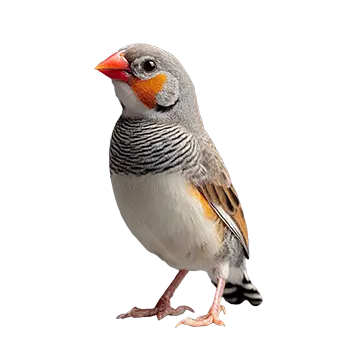
By the end of the second week, feather development has progressed dramatically. The chick is largely covered in emerging contour feathers, though the head and face may still show patches of down. The characteristic Zebra Finch markings, including the distinctive cheek patches in males, are not yet visible at this stage but will emerge during the juvenile period. The chick begins to move more actively within the nest, exercising its legs and occasionally flapping its stubby wings. Around day 18 to 21, the chick is ready to fledge, making its first tentative exits from the nest box. Fledging is a gradual process, with the chick returning to the nest for warmth and parental feeding for several more days before becoming fully independent of the nest site.

Temperature & Environment

Environmental management for Zebra Finch chicks is less labor-intensive than for hand-raised parrot chicks, primarily because the parent birds handle thermoregulation naturally. However, the keeper's role in maintaining appropriate ambient conditions is still essential. The parents can only compensate so much for a poorly managed environment, and extreme temperatures or other stressors can overwhelm their ability to keep the chicks safe.

Room temperature should be maintained between 70 and 78 degrees Fahrenheit throughout the rearing period. Temperatures below 65 degrees can be dangerous, particularly during the first week when the chicks have no feather insulation. At the other extreme, temperatures above 85 degrees can cause overheating, especially in a closed nest box where heat and humidity can build up quickly. If your breeding room lacks climate control, a thermostat-controlled space heater provides a reliable safety net during cooler months, while good ventilation and fans, directed away from the cage, help during warmer periods.

The nest box itself is the chick's microenvironment, and its condition matters enormously. Zebra Finches are not fastidious nest cleaners, and droppings accumulate quickly as the chicks grow. While some buildup is normal and even provides insulation, excessive soiling creates a breeding ground for bacteria, mold, and parasites. Beginning around day seven to ten, a careful partial cleaning of the nest box, replacing the most soiled nesting material while leaving the nest cup intact, helps maintain hygienic conditions without overly disturbing the family.

Light cycles play an underappreciated role in chick development and parental behavior. Zebra Finches benefit from a consistent photoperiod of 12 to 14 hours of light per day during the breeding and rearing season. Abrupt changes in lighting schedules can disrupt the parents' feeding rhythm and stress the chicks. If artificial lighting is used, a gradual dawn and dusk simulation is preferable to a sudden on-off switch. Position the cage so that it receives indirect natural light during the day but is shielded from direct sunlight, which can overheat the nest box.

Early Socialization

Socialization of Zebra Finch chicks differs fundamentally from the process used with parrots. Zebra Finches are flock birds rather than bonding companions, and the goal of early socialization is not to create a deeply attached hand-tame pet but rather to produce a bird that is comfortable around humans and tolerant of routine handling for health checks, cage maintenance, and transport. That said, the degree of tameness achievable with early handling can be surprisingly high for a species often considered purely ornamental.

The optimal window for socialization begins around day ten to twelve, once the chick's eyes are fully open and it is responsive to visual stimuli. Brief, gentle handling sessions of two to three minutes per day allow the chick to become accustomed to human hands without causing undue stress. Cup the chick gently in your palm, supporting its body fully, and speak softly during the interaction. The chick will initially gape and beg, mistaking your warmth for a parent. Over successive days, it will begin to recognize human handling as a distinct experience and gradually relax during sessions.

Avoid removing chicks from the nest for extended periods, as prolonged separation from the parents and nest warmth can cause chilling and feeding disruptions. Sessions should always be brief, and the chick should be returned to the nest promptly. If the parent birds become highly agitated during handling, reduce the frequency or duration of sessions. Chronic parental stress can lead to feeding refusal or nest abandonment, outcomes that are far worse than producing a slightly less tame bird.

As the chicks approach fledging age around day 18 to 21, socialization naturally shifts from nest handling to environmental exposure. Newly fledged chicks will spend increasing amounts of time out of the nest, exploring the cage floor, perches, and food dishes. Their interactions with cage mates, the parent birds, and any other finches housed in the same enclosure form the foundation of their social behavior as adults. A well-socialized Zebra Finch is one that is confident in its flock, calm in the presence of humans, and adaptable to changes in its environment.

Health Screening & Vet Visits

Veterinary care for Zebra Finch chicks is often overlooked because of the species' reputation as hardy and inexpensive. This is a mistake. While Zebra Finches are indeed more robust than many exotic bird species, chicks are vulnerable to a range of health problems that can escalate quickly given their tiny body mass and rapid metabolism. Establishing a relationship with an avian veterinarian before breeding begins ensures that expert advice is available when it is needed most.

A post-fledging health check is advisable for all chicks, ideally within the first week after they leave the nest. The veterinarian will assess body condition, check for congenital abnormalities such as splayed legs or beak malformations, and examine the chick's plumage development for signs of nutritional deficiency. A fecal analysis can screen for common parasites including coccidia and air sac mites, both of which are relatively prevalent in finch collections and can spread rapidly through a flock.

Daily monitoring by the keeper supplements professional veterinary care. Weigh chicks daily using a gram-accurate digital scale, recording the results in a log. Healthy Zebra Finch chicks gain weight steadily during the first two weeks, roughly doubling their hatch weight by day three and reaching approximately 10 to 12 grams by the time they fledge. A weight plateau lasting more than one day or any weight loss warrants immediate attention. Check the chick's crop fullness, skin turgor, and overall alertness during each weighing session.

Be aware of the most common health threats to Zebra Finch chicks. Air sac mites, caused by the parasite Sternostoma tracheacolum, can cause respiratory distress, tail bobbing, and audible clicking or wheezing. Candidiasis, a yeast infection of the crop and digestive tract, is common in chicks whose parents are stressed or whose diet lacks variety. Bacterial infections, particularly those caused by Escherichia coli or Enterococcus species, can enter through contaminated nest material or spoiled food. Early detection and treatment of any of these conditions dramatically improves the prognosis.

When to Worry

Learning to recognize warning signs in Zebra Finch chicks is essential because these tiny birds decline rapidly once illness takes hold. A chick that appeared healthy in the morning can be critically ill by evening, and waiting overnight to seek help often means losing the bird. Developing a mental checklist of normal versus abnormal behaviors and physical indicators allows keepers to act swiftly when something goes wrong.

The most reliable early indicator of trouble is feeding behavior, or more precisely, the lack of it. A chick that stops begging, lies flat in the nest without responding to the parent's arrival, or has a persistently empty crop during daylight hours is in distress. Check the parents' behavior as well. If both adults are feeding normally but one particular chick is being bypassed, it may already be too weak to beg competitively, or the parents may be detecting illness and instinctively redirecting resources to healthier siblings. In either case, the neglected chick needs immediate evaluation.

Respiratory signs demand urgent attention. Any audible breathing, including clicking, wheezing, squeaking, or rasping sounds, is abnormal in a Zebra Finch chick. Tail bobbing, where the tail pumps with each breath, indicates the bird is working harder than normal to breathe and suggests air sac involvement. Open-mouth breathing at rest is a late-stage sign that the chick is in severe respiratory compromise. These signs can indicate air sac mites, aspergillosis, bacterial pneumonia, or other infections, all of which require veterinary diagnosis and treatment.

Physical abnormalities should be addressed as early as possible. Splayed legs, where one or both legs splay outward instead of tucking under the body, can sometimes be corrected if caught within the first few days of life using gentle hobble splints fashioned from soft material. Beak malformations, crossed or undershot mandibles, may affect the chick's ability to feed independently after weaning and should be assessed by a veterinarian. Any swelling, discoloration, or discharge around the eyes, nares, or vent is abnormal and warrants professional evaluation.

Finally, be alert to nest-level problems that affect all chicks simultaneously. If multiple chicks in the same nest show signs of illness, the cause is more likely environmental or infectious rather than individual. Contaminated nest material, spoiled food, temperature extremes, or a contagious pathogen circulating through the parents can affect the entire clutch at once. In these situations, address the environmental factors immediately while seeking veterinary guidance for treatment of the affected chicks.

Always consult a qualified professional before making any health-related decisions. This content is provided for informational reference only and should not replace professional guidance specific to your animal.