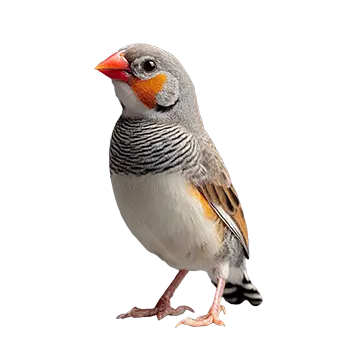

Daily Care & Husbandry

An adult Zebra Finch in its prime years thrives on consistency. These small, active birds organize their days around predictable cycles of feeding, bathing, singing, socializing, and resting, and the keeper who respects and supports those rhythms will be rewarded with healthy, vibrant birds. Daily care should follow a reliable routine that covers the essentials without overcomplicating what is, at its core, a straightforward species to maintain.

Begin each morning by refreshing all food and water. Zebra Finches are hull-feeders, meaning they crack seeds and discard the husks back into the dish, creating the illusion of a full bowl when much of the visible material is actually empty hulls. Blow gently across the seed dish to remove husks, then top off with fresh seed. Water dishes or bottles should be emptied, rinsed, and refilled with clean water every morning without exception. Finches frequently bathe in and defecate near water sources, and stagnant water becomes a bacterial incubator within hours in a warm room.

Cage cleaning is a daily necessity. Remove soiled paper or substrate from the cage floor each morning and replace it with fresh material. A more thorough cage cleaning, including washing perches, wiping down bars, and scrubbing food and water dishes with a bird-safe disinfectant, should occur at least once a week. Monthly deep cleans, where the birds are temporarily relocated while the entire cage is disassembled, scrubbed, rinsed, and dried, prevent the gradual buildup of bacteria, mold, and dust that can compromise respiratory health.

Spend time observing your birds each day, even if only for ten to fifteen minutes. Watching their behavior provides a continuous health check that no periodic veterinary exam can replicate. Note which birds are active and singing, which are eating and drinking normally, and whether any individuals are sitting fluffed, isolated, or showing changes in their droppings. Over time, this daily observation becomes second nature, and deviations from the norm will stand out immediately.

Nutrition & Dietary Management

The nutritional needs of an adult Zebra Finch in its prime years are stable but specific, and a diet that falls short in any major category will eventually manifest as health problems. The most common dietary mistakes keepers make are relying exclusively on dry seed, which is energy-dense but nutritionally incomplete, and offering too few fresh foods, which provide the vitamins, minerals, and phytonutrients that seed alone cannot supply.

A high-quality finch seed mix forms the dietary base and should make up approximately 60 to 70 percent of the total diet by volume. Look for mixes that include a variety of small seeds such as white and red millet, canary grass seed, and niger seed. Avoid mixes padded with large quantities of oat groats or sunflower chips, as these are too fatty for Zebra Finches and can contribute to obesity, a surprisingly common and underdiagnosed problem in captive finches. Store seed in a cool, dry place and check for signs of insect infestation, mold, or musty smell before offering it.

Fresh foods should be offered daily and rotated for variety. Dark leafy greens such as kale, dandelion greens, and romaine lettuce provide calcium, beta-carotene, and other micronutrients. Grated carrot, broccoli florets, and cucumber slices are generally well accepted. Sprouted seeds, prepared by soaking seed in water for 24 hours, rinsing, and allowing the sprouts to emerge, bridge the nutritional gap between dry seed and fresh produce, offering elevated levels of protein, enzymes, and vitamins. Introduce new foods gradually and do not be discouraged if the birds ignore them initially. Zebra Finches can be conservative eaters, but persistent, consistent exposure to new items usually results in acceptance over time.

Calcium supplementation is essential, particularly for hens, even outside of active breeding. A cuttlebone or calcium block should be available at all times. Mineral grit, offered in a separate small dish, aids digestion by providing the grinding medium the bird's gizzard uses to break down whole seeds. While the necessity of grit for finches that hull their seeds is debated among aviculturists, a small amount of mineralized grit contributes trace minerals and appears to be used voluntarily by most birds. Clean, fresh water is the final pillar of good nutrition, and its importance cannot be overstated. Dehydration in a bird this small can become critical within hours.

Social Needs & Flock Management

The Zebra Finch is one of the most intensely social passerine species kept in captivity, and an adult bird's psychological wellbeing is inseparable from its social environment. A solitary Zebra Finch, even one housed in a large cage with abundant food and enrichment, will typically display signs of stress and behavioral dysfunction. These birds evolved in large, dynamic flocks in the arid grasslands of Australia, and their neurobiology is wired for constant social interaction. The minimum social unit for captive Zebra Finches is a pair, but small groups of four to six individuals provide a richer, more natural social experience.

Flock dynamics in captive Zebra Finches are generally peaceful but not without hierarchy. Dominant birds claim preferred perching spots and first access to food dishes, while subordinate individuals adapt their behavior accordingly. Aggression is rare in the species but can emerge in overcrowded conditions, in poorly designed enclosures with insufficient perching or feeding stations, or when breeding hormones are elevated. Signs of aggression include persistent chasing, feather plucking directed at cage mates, and displacement from perches or food. If aggression becomes chronic, the most common remedies are increasing the number of feeding and perching stations, enlarging the enclosure, or removing the aggressor temporarily to reset the social dynamic.

Male Zebra Finches sing throughout their adult lives, and song serves critical social functions beyond courtship. Males sing to maintain pair bonds, to assert territory within the flock, and apparently for their own enrichment, as isolated males continue to sing even when no audience is present. Hens do not sing but produce a range of contact calls, alarm calls, and begging calls that maintain communication across the flock. A flock of Zebra Finches is never truly silent during daylight hours, and the continuous background of soft calls and song is a sign of a healthy, well-adjusted social group.

Mixed-species housing is possible with careful species selection. Zebra Finches generally coexist well with other small, non-aggressive finch species such as Society Finches, Star Finches, and Owl Finches, provided the enclosure is large enough to support the combined population without crowding. Avoid housing Zebra Finches with significantly larger or more aggressive species, as competitive imbalances can lead to chronic stress in the smaller birds. Each species' dietary and environmental needs must also be compatible for mixed-species housing to succeed long-term.

Environmental Enrichment

Enrichment for adult Zebra Finches is less about novelty toys and more about replicating the complexity and variability of the natural environment. In the wild, Zebra Finches spend their days foraging across diverse terrain, navigating varying vegetation structures, bathing in available water sources, and interacting dynamically with a large flock. A captive environment that offers only a cage, two perches, and a seed dish provides for survival but not for behavioral fulfillment. Thoughtful enrichment reduces stereotypic behaviors, promotes exercise, and supports long-term psychological health.

Foraging enrichment is arguably the most impactful category for finches. In the wild, Zebra Finches may spend several hours each day searching for and processing food. In captivity, an open dish of seed reduces this complex behavioral sequence to seconds. Scatter-feeding, where seed is sprinkled across the cage floor or into a shallow tray of clean soil or coconut fiber, encourages the bird to forage actively rather than eating passively. Millet sprays hung at various points in the cage or clipped to the bars provide another foraging challenge, requiring the bird to work for each seed rather than simply dipping into a bowl.

Bathing is a high-priority enrichment activity for Zebra Finches. Most individuals are enthusiastic bathers and will vigorously splash in a shallow dish of clean, room-temperature water. Offering a bath dish daily, or at minimum three to four times per week, satisfies this behavioral need and helps maintain feather condition. Remove the bath after an hour or so to prevent the water from becoming contaminated. Some keepers use dedicated clip-on bath houses that attach to the cage door, keeping bathwater separate from the main enclosure and reducing the mess.

Cage furniture and vegetation contribute to environmental complexity. Natural branches of varying diameters, secured safely within the cage, provide perching variety and tactile stimulation. Non-toxic plants, either live or artificial, create visual barriers that allow birds to establish micro-territories and retreat from cage mates when desired. Swings, while not universally used by finches, appeal to some individuals and add a dynamic element to the cage environment. Rotate enrichment items periodically to maintain their novelty, as birds habituate to static environments over time and derive less behavioral benefit from unchanging furnishings.

Common Health Conditions

Adult Zebra Finches in their prime years are generally robust, but several health conditions occur with enough frequency that every keeper should recognize their signs. Finches are masters of concealing illness, a survival strategy inherited from wild ancestors for whom visible weakness attracted predators. By the time a finch looks obviously sick, the condition is often advanced, which makes early recognition of subtle signs critically important.

Air sac mites caused by Sternostoma tracheacolum remain the most significant parasitic threat to Zebra Finches at any age. Adult birds can carry low-level infections asymptomatically for extended periods, making them reservoirs of infection for cage mates and offspring. When the mite burden increases, symptoms include a distinctive clicking or wheezing sound during breathing, open-mouth breathing at rest, tail bobbing, decreased singing in males, and a gradual decline in body condition. Treatment with ivermectin-based antiparasitic medications prescribed by an avian veterinarian is effective, but the entire flock must be treated simultaneously to prevent reinfection.

Gastrointestinal disorders, including bacterial enteritis and candidiasis, are common in finches housed in conditions of poor hygiene or fed a diet deficient in variety. Symptoms include changes in droppings, particularly loose, discolored, or foul-smelling feces, decreased appetite, fluffed posture, and weight loss. Maintaining clean cages, providing fresh food and water daily, and ensuring a nutritionally complete diet are the most effective preventive measures. When gastrointestinal illness is suspected, prompt veterinary diagnosis is important because bacterial and fungal infections require different treatments, and an incorrect guess can worsen the condition.

Scaly face and leg mites, caused by Knemidokoptes species, produce distinctive crusty, raised lesions around the beak, cere, eyes, and feet. The condition is uncomfortable and, if left untreated, can deform the beak and restrict leg movement. Treatment is straightforward, typically involving topical or oral ivermectin, and the prognosis is excellent when the condition is caught early. Overgrown beaks and nails can occur in captive finches that lack the abrasive surfaces available in the wild. Regular monitoring and veterinary trimming as needed prevent these overgrowths from interfering with eating, perching, and normal activity.

Obesity is an underrecognized problem in captive Zebra Finches, particularly those housed in small cages with unlimited access to high-fat seed. An obese finch will develop visible fat deposits on the chest and abdomen, and its overall body shape will appear rounded rather than sleek. Obesity predisposes the bird to fatty liver disease (hepatic lipidosis), a potentially fatal condition in which fat accumulates in the liver and progressively impairs its function. Prevention through diet management, providing adequate flight space, and encouraging foraging activity is far more effective than attempting to reverse established obesity.

Molting Cycles & Feather Maintenance

Adult Zebra Finches undergo one to two major molts per year, during which worn feathers are systematically shed and replaced. Molting is a normal, essential process that keeps the plumage in optimal condition for insulation, flight, and social signaling. However, molting is physiologically demanding, and a bird in active molt requires increased nutritional support and a stable, low-stress environment to produce healthy replacement feathers.

The timing of molts is influenced by photoperiod, temperature, and the bird's overall health and hormonal cycles. In captive birds exposed to artificial lighting, molting patterns may not align neatly with seasonal expectations. The onset of a molt is typically signaled by an increase in loose feathers on the cage floor and a slightly disheveled appearance as old feathers loosen in their follicles. The bird may appear less active than usual and may reduce its singing, as the metabolic demands of feather production redirect energy away from non-essential activities.

Nutritional support during molting should emphasize protein and specific amino acids. Egg food offered three to four times per week provides the concentrated protein needed for keratin synthesis. Dark leafy greens supply beta-carotene, which is converted to vitamin A and supports the vibrant pigmentation of new feathers. A cuttlebone or mineral block ensures adequate calcium and phosphorus availability. Some keepers add a small amount of flaxseed or chia seed to the diet during molting to provide omega-3 fatty acids that contribute to feather sheen and suppleness.

Distinguish between normal molting and pathological feather loss. A molting bird sheds feathers symmetrically and gradually, with new pin feathers visible growing in behind the shed feathers. Asymmetric feather loss, bare patches that do not regrow feathers, broken or chewed feather shafts, or excessive feather loss accompanied by other signs of illness such as weight loss or lethargy are not normal molting and require veterinary evaluation. Causes of abnormal feather loss include external parasites, bacterial or fungal folliculitis, nutritional deficiency, liver disease, and in some cases, behavioral feather plucking by cage mates.

Long-Term Housing & Environment

The housing provided to an adult Zebra Finch during its prime years sets the stage for its quality of life over the remainder of its lifespan. While Zebra Finches are adaptable birds that can survive in a range of conditions, thriving requires an environment that meets their physical, social, and behavioral needs comprehensively. Investing in appropriate housing from the outset prevents many of the health and behavioral problems that arise from substandard conditions.

Cage dimensions should prioritize horizontal flight space. A minimum cage size for a pair of Zebra Finches is 30 inches long by 18 inches wide by 18 inches high, but larger is always better. Flight cages measuring 36 to 48 inches in length provide substantially more room for exercise and allow for more complex internal arrangements of perches, feeding stations, and enrichment items. Bar spacing should not exceed half an inch to prevent the bird from squeezing through or trapping its head between bars. Horizontal bar orientation on at least two sides of the cage facilitates climbing, which finches do less frequently than parrots but still enjoy.

Cage placement within the home matters considerably. Position the cage in a room where the family spends time, as Zebra Finches are stimulated by visual activity and ambient household sounds. Avoid placing the cage in direct sunlight, which can overheat the enclosure rapidly, or in kitchens, where cooking fumes, non-stick cookware off-gassing, and aerosolized oils pose serious respiratory hazards. The cage should be at eye level or slightly above, against a wall on at least one side to provide a sense of security. Avoid high-traffic areas where the cage may be bumped or where sudden movement could startle the birds repeatedly.

Lighting and photoperiod management influence hormonal cycles, molt timing, and overall wellbeing. A consistent light cycle of 10 to 12 hours of light per day is appropriate for non-breeding adults. Longer photoperiods stimulate breeding hormones and may trigger unwanted nesting behavior. If the cage is in a room that receives artificial light in the evening, covering the cage with a breathable cloth at the desired lights-out time helps establish a consistent dark period. Sudden transitions from full light to complete darkness can startle finches and cause night frights, so a gradual dimming or a small night light near the cage during the first minutes of the dark period can ease the transition.

Air quality is a frequently overlooked component of the captive environment. Zebra Finches, like all birds, have highly efficient respiratory systems that make them disproportionately sensitive to airborne toxins. Scented candles, air fresheners, incense, cigarette smoke, and fumes from non-stick cookware coated with polytetrafluoroethylene are all potentially lethal. An air purifier with a HEPA filter in the bird room reduces ambient dust and dander, benefiting both the birds and any allergic household members. Ensure adequate ventilation without creating drafts that blow directly on the cage.

Always consult a qualified professional before making any health-related decisions. This content is provided for informational reference only and should not replace professional guidance specific to your animal.