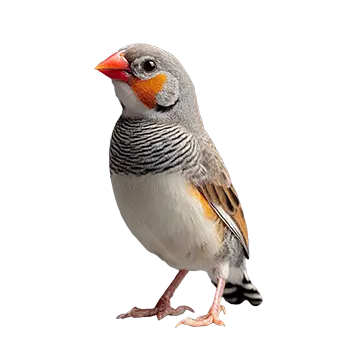

Zebra Finches are considered senior birds once they reach approximately five years of age, though individual variation is considerable and some birds show signs of aging earlier or later depending on genetics, diet, and lifetime care quality. Unlike mammals that gray or slow down in obvious ways, aging in finches manifests through a collection of subtle changes that may be easy to overlook if the keeper is not attuned to them. Learning to read these signs allows for timely adjustments to care that can significantly extend the bird's quality of life in its later years.
One of the earliest indicators of aging is a decline in activity level. A senior Zebra Finch will spend more time perching quietly and less time in active flight. The bird may fly shorter distances, preferring to hop between closely spaced perches rather than launching across the full length of the cage. Singing frequency in males often decreases, and the songs may become shorter or less complex. These behavioral changes occur gradually, sometimes so slowly that they are only apparent when the keeper consciously compares the bird's current behavior to its activity level a year or two earlier.
Physical changes accompany the behavioral slowdown. Feather quality may diminish, with plumage becoming slightly duller, less tightly held against the body, or slower to regrow after a molt. The beak and nails may grow faster relative to natural wear as the bird becomes less active, requiring more frequent monitoring and potential trimming. Some senior finches develop a slight thickening or scaliness of the skin on the legs and feet, which can be normal age-related keratinization but should be distinguished from pathological mite infestation. The bird's overall body condition should remain stable, though some loss of pectoral muscle mass is common in elderly finches.
Weight monitoring becomes increasingly important as a bird ages. Weigh the bird weekly at minimum, as senior finches are more vulnerable to weight fluctuations that would be inconsequential in a young adult. Unexplained weight loss can indicate developing organ disease, dental problems that make eating uncomfortable, or reduced competitive ability in a flock setting where younger birds dominate food access. Conversely, weight gain in a less active bird suggests the diet may need adjustment to prevent obesity-related complications.