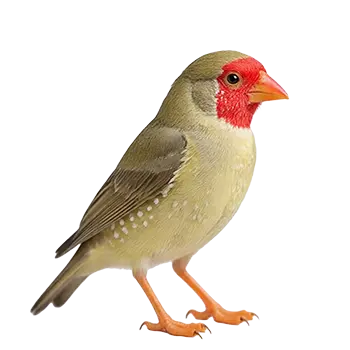

The juvenile period for a Star Finch begins at fledging, typically around 17 to 21 days after hatching, and extends through the weeks of gradual weaning until the young bird is entirely self-sufficient. This transition is one of the most delicate phases in a Star Finch's life, as the fledgling must simultaneously master flight, learn to locate and consume food independently, and navigate an increasingly complex social environment, all while its body continues to grow and develop at a rapid pace.
Immediately after leaving the nest, Star Finch fledglings are clumsy and uncertain fliers. They tend to flutter downward from the nest, landing on the cage or aviary floor before gradually gaining the strength and coordination to reach low perches. During these first days out of the nest, the floor must be kept clean and free of hazards. Shallow water dishes should be replaced with very small, shallow containers or removed temporarily in favor of offering moisture through fresh greens and misted food, as newly fledged finches can drown in water dishes designed for adult birds.
The parents continue to feed the fledglings for approximately two to three weeks after they leave the nest, but the frequency of feedings gradually decreases as the young birds begin experimenting with food on their own. Place seed, egg food, and sprouted seeds in low, easily accessible dishes where the fledglings can observe their parents eating and begin to imitate the behavior. This observational learning is the primary mechanism by which young Star Finches acquire feeding skills, and a visible, well-stocked feeding station accelerates the process.
Weaning is complete when the juvenile is consistently cracking and consuming seed on its own and no longer begging from the parents. This typically occurs between five and six weeks of age. Premature separation from the parents before weaning is fully established can lead to weight loss, stress, and developmental setbacks. Monitor the juvenile's crop at the end of the day; a crop that is visibly full with self-consumed food indicates the bird is ready for independence. An empty crop in a bird that is no longer being parent-fed signals a problem that needs immediate attention.