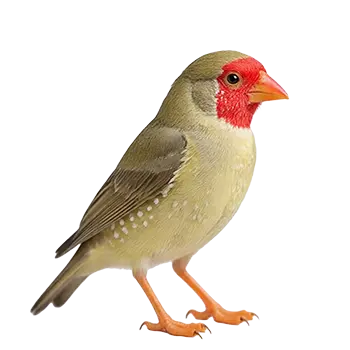

Star Finch chicks hatch after an incubation period of approximately 12 to 14 days, emerging as tiny, nearly helpless creatures that weigh barely two grams. The hatchlings are altricial, arriving blind, naked, and entirely reliant on their parents for warmth, food, and protection. Unlike larger parrot species where hand-rearing from day one is more common, Star Finch chicks are almost always parent-raised because their diminutive size makes hand-feeding extraordinarily difficult and risky during the first hours and days of life.
In the immediate aftermath of hatching, the primary role of the keeper is observation without interference. The parent birds will instinctively begin feeding the chicks within the first few hours, offering regurgitated seed and any available live food such as small insects or egg food. This initial feeding is essential because the chick's crop must begin processing food promptly to sustain the rapid metabolic rate that characterizes these small passerines. Disturbing the nest during this critical window can cause the parents to abandon feeding or, in extreme cases, abandon the chick entirely.
The nest environment itself serves as the chick's brooder during the first day. Star Finches typically construct enclosed, domed nests from dried grasses, and the insulating properties of this structure combined with the body heat of the brooding parent maintain the temperature necessary for the chick's survival. If you are managing the breeding environment, ensure the ambient room temperature remains stable between 72 and 78 degrees Fahrenheit, which supports the parents' ability to regulate nest temperature without undue metabolic stress on their own bodies.
During this first day, resist the temptation to open or disturb the nest to check on the chicks. Excessive nest inspections are one of the leading causes of nest abandonment in small finch species. Instead, observe feeding behavior from a distance. If the parents are making frequent trips to and from the nest and you can hear faint begging calls from inside, the chicks are almost certainly being fed. If after 12 to 18 hours you observe no parental activity around the nest at all, a careful, brief inspection may be warranted to confirm the chicks are alive, but this should be a last resort.