
Physical Maturity & Identification

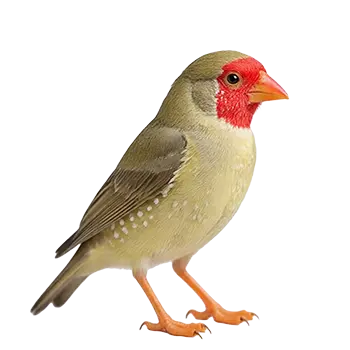
A Star Finch reaches full physical maturity at approximately six to eight months of age, once the first juvenile molt is complete and the adult plumage has fully grown in. At this point, the bird displays the distinctive coloring that makes the species one of the most attractive of the Australian grass finches. The body is predominantly olive-green on the upperparts with a yellowish wash on the underparts, and the face is marked with a vivid red mask that extends from the forehead through the lores and across the cheeks. The flanks and sides are adorned with small white spots, the feature that gives the species its common name, as these markings resemble tiny stars scattered against the olive-green background.

Sexual dimorphism in adult Star Finches is present but can be subtle, particularly in some color mutations. In the nominate wild-type form, males typically display a more extensive red facial mask that extends further down onto the upper throat, while females show a smaller, more neatly defined patch of red confined largely to the forehead and lores. The white flank spotting also tends to be more abundant and more sharply defined in males. However, individual variation exists, and in cases of uncertainty, behavioral observation during the breeding season, specifically the male's courtship song and display, provides the most reliable confirmation of sex.

Several color mutations have been established in aviculture, including the yellow or fawn mutation, which replaces the olive-green body color with warm golden tones, and the pied mutation, which introduces irregular patches of white or pale coloring across the plumage. These mutations can complicate visual sex determination because the red facial markings may be reduced, altered in hue, or distributed differently than in wild-type birds. Keepers working with mutant forms should familiarize themselves with the specific phenotypic characteristics of each mutation to avoid misidentification.

An adult Star Finch in prime condition has smooth, tightly feathered plumage with a slight natural sheen, bright and fully colored facial markings, clear and alert eyes, clean nares, smooth and evenly scaled legs and feet, and a body condition that is neither prominently keeled nor excessively rounded. This baseline appearance should be committed to memory, because deviations from this norm are frequently the earliest indicators that something in the bird's health or husbandry requires attention.

Daily Nutrition & Diet Management

The dietary needs of an adult Star Finch during its non-breeding prime years are less intense than during the juvenile growth phase or the breeding season, but the foundation of health remains a varied, species-appropriate diet. The common misconception that finches can thrive on seed alone persists among some keepers, but seed-only diets are nutritionally incomplete and predispose birds to fatty liver disease, vitamin A deficiency, calcium depletion, and a shortened lifespan. A properly managed adult diet balances seed, greens, protein supplements, and mineral sources.

The core seed mix for adult Star Finches should be a high-quality blend formulated for small Australian finches. Key components include white millet, Japanese millet, canary seed, panicum, and small amounts of niger seed and linseed. Avoid mixes that contain large or hard-shelled seeds designed for larger finch species, as Star Finches have relatively small bills and will waste energy attempting to hull seeds that are too large. Fresh seed should be offered daily, and empty husks should be blown off the surface of the seed dish to prevent the illusion of a full dish that is actually depleted.

Sprouted seeds should be offered several times per week even outside the breeding season. The sprouting process converts starches into more digestible sugars and increases the vitamin and enzyme content of the seed. Soak a small portion of the seed mix in clean water for eight to twelve hours, rinse thoroughly, and allow it to germinate for an additional twelve to twenty-four hours before offering. Discard any sprouted seed that develops an off odor or visible mold. This supplement bridges the nutritional gap between dry seed and the green seed heads that Star Finches would consume extensively in their wild Australian grassland habitat.

Fresh greens and vegetables should be part of the daily routine. Dandelion leaves, chickweed, seeding grasses collected from pesticide-free areas, endive, cos lettuce, and finely grated carrot are all excellent choices. These foods provide vitamins A, C, and K, as well as dietary fiber and moisture. Introduce variety gradually if the birds are unaccustomed to fresh foods, as some individuals can be reluctant to try unfamiliar items. Persistence pays off; most Star Finches can be converted to enthusiastic greens eaters within a few weeks of consistent offering.

Mineral supplementation is non-negotiable. A cuttlebone should be mounted in the cage at all times, providing a self-serve source of calcium and serving as a beak-conditioning tool. A separate dish of mineralized grit, which aids in the mechanical digestion of seeds in the gizzard, should also be available. Some keepers provide a liquid vitamin and mineral supplement added to the drinking water once or twice per week, though this should be done judiciously and preferably on the advice of an avian veterinarian, as over-supplementation can cause toxicity.

Housing & Environment

The quality of the housing environment directly impacts the health, behavior, and longevity of an adult Star Finch. These birds are active fliers that spend a significant portion of their day in motion, and an enclosure that restricts flight leads to obesity, muscle atrophy, boredom, and behavioral problems. The minimum recommended cage size for a pair of Star Finches is 30 inches long by 18 inches deep by 18 inches high, though larger is always better. A flight cage measuring four feet or more in length provides space for sustained horizontal flight, which is the primary mode of exercise for this species.

Cage design matters as much as overall dimensions. Horizontal bar spacing should not exceed half an inch to prevent escape or entrapment. Rectangular cages are preferable to round or novelty-shaped designs because they provide unobstructed flight paths along the length of the cage and allow the bird to retreat to a corner for security. The cage should be positioned at or slightly above eye level, against a wall or in a corner to provide a sense of security from at least one or two directions. Avoid placing the cage in direct sunlight, near kitchen fumes, in drafty locations, or adjacent to windows where the temperature fluctuates significantly.

Aviary housing offers the ideal environment for Star Finches, particularly when the climate permits outdoor or semi-outdoor setups. An aviary planted with grasses, small shrubs, and live plants closely approximates the natural habitat of the species and encourages a full range of natural behaviors including foraging, bathing, nesting exploration, and extended flight. Outdoor aviaries in temperate climates must include a sheltered section where the birds can retreat from rain, wind, and temperature extremes. Star Finches are not cold-hardy and should not be exposed to temperatures below 50 degrees Fahrenheit for extended periods. In cooler climates, heated indoor flights or bird rooms with controlled temperature and lighting offer a reliable year-round housing solution.

Perch selection and arrangement influence foot health and overall comfort. Provide a variety of natural wood perches in different diameters, ranging from approximately one-quarter inch to one-half inch, to exercise the foot muscles and prevent pressure sores that develop when a bird grips the same diameter surface continuously. Avoid sandpaper perch covers, which abrade the plantar surface of the feet. Position perches so that droppings do not contaminate food, water, or other perches below, and leave the longest axis of the cage free of obstructions to allow uninterrupted flight.

Social Behavior & Flock Dynamics

Star Finches are gregarious birds that derive significant well-being from social interaction. In the wild, they live in small flocks that forage together across the grasslands and savannas of northern Australia, maintaining cohesion through soft contact calls and close physical proximity. In captivity, this social nature means that a solitary Star Finch, even in the most elaborately furnished cage, is a stressed and incomplete animal. The minimum social unit should be a pair, and small groups of four to six birds are ideal for most keepers.

Within a group of adult Star Finches, a subtle social hierarchy develops, but it is maintained through body language and spatial negotiation rather than overt aggression. A dominant bird may claim a preferred perching spot and displace a subordinate with a slight lean or a brief hop toward them, but physical confrontation involving biting or sustained chasing is unusual in this species outside of breeding-related territorial behavior. This peaceable nature is one of the Star Finch's greatest assets in community aviary settings, where they coexist successfully with a wide range of other small, non-aggressive finch species.

Compatible aviary companions for Star Finches include other Australian grass finches such as Gouldian Finches, Owl Finches, and Long-tailed Finches, as well as many African waxbills and mannikins. Species to avoid housing with Star Finches include larger or more aggressive finches such as Java Sparrows and Cutthroat Finches, which can bully or injure the more docile Star Finch. Also exercise caution with species that are similar enough in appearance that hybridization could occur, though the Star Finch's distinctive plumage makes accidental hybridization relatively unlikely in a well-managed mixed collection.

Pair bonding in adult Star Finches is moderately strong but not lifelong in the way seen in some parrot species. Bonded pairs perch together, mutual preen, and often synchronize their activities throughout the day. If a pair member is lost to illness or death, the surviving bird may show signs of distress for a period but will generally accept a new companion within a few weeks. Keepers should be attentive to the dynamics of their group and intervene if any individual appears consistently isolated, excluded from roosting clusters, or unable to access food due to social pressure.

Exercise & Enrichment

Physical activity and mental stimulation are inseparable components of Star Finch welfare. Unlike parrots, which interact extensively with manipulable toys, finches engage with their environment primarily through flight, foraging, and social interaction. Enrichment strategies for adult Star Finches should therefore focus on encouraging these natural behaviors rather than introducing puzzle feeders or foot toys designed for psittacine species.

Flight is the single most important form of exercise for a Star Finch, and the enclosure must be designed to maximize flying opportunities. Long, horizontal flight paths are more valuable than tall cages that encourage climbing or hopping, as Star Finches are horizontally oriented fliers. Rearranging perch positions every few weeks introduces novelty and forces the birds to recalculate their flight routes, which provides mild cognitive stimulation alongside the physical benefit. Avoid making changes too frequently or too drastically, as this can be stressful for birds that prefer predictability in their core environment.

Foraging enrichment replicates the seed-seeking behavior that occupies a large portion of a wild Star Finch's daily activity budget. Scatter a portion of the daily seed ration on the cage floor among clean substrate material so the birds must search for individual seeds rather than simply eating from a filled dish. Hang small bundles of seeding grass heads, millet sprays, or fresh herb branches from the cage bars or aviary roof, creating opportunities for the birds to extract food from naturalistic sources. These simple interventions significantly increase the time birds spend in active, purposeful behavior and reduce the idle perch-sitting that contributes to obesity and boredom.

Bathing is both a maintenance behavior and a form of enrichment that most Star Finches engage in enthusiastically. Provide a shallow bathing dish filled with clean, lukewarm water daily. Many Star Finches will bathe multiple times per day, splashing vigorously and then spending considerable time preening and drying their feathers afterward. The entire bathing and preening sequence is a complex behavioral routine that occupies time, promotes feather health, and appears to be inherently pleasurable for the birds. Remove the bathing dish after a few hours to prevent the water from becoming soiled and to maintain cage hygiene.

Auditory enrichment deserves mention, as Star Finches are vocally active birds that communicate constantly with their flock mates through a repertoire of soft calls, trills, and songs. The male's courtship song, a quiet but complex series of notes delivered while holding a grass stem in the bill, is one of the most charming behaviors in the Estrildid finch family. Playing recordings of wild Star Finch calls or other natural soundscapes at low volume can stimulate vocal activity and social interaction in captive flocks, though this should be used judiciously and never at volumes that cause startle responses.

Routine Health Maintenance

Maintaining the health of adult Star Finches over the long term requires a combination of consistent husbandry practices, regular observational monitoring, and periodic veterinary input. Small finches are masters of masking illness, an evolutionary adaptation that prevents them from being singled out by predators, which means that by the time clinical signs become obvious to a keeper, the disease process may already be advanced. Routine health maintenance is therefore oriented toward prevention, early detection, and minimizing exposure to common pathogens.

Daily health checks should be integrated into the normal husbandry routine rather than treated as a separate task. Each time you service the cage, take a moment to observe each bird's posture, plumage condition, breathing pattern, and activity level. Check the droppings on the cage floor for normal consistency and color. Note whether each bird is eating, drinking, and interacting normally with its flock mates. These observations take only a few minutes but provide a running health narrative that makes deviations immediately apparent.

Hygiene is the cornerstone of disease prevention in a finch collection. Clean and refill water dishes at least once daily, more often in warm weather or if the birds bathe in their drinking water. Remove uneaten soft foods, sprouted seeds, and greens within a few hours of offering to prevent bacterial proliferation. Replace cage floor substrate regularly, and perform a thorough cage disinfection with an avian-safe cleaning product on a weekly basis. Rinse all surfaces thoroughly after disinfection, as residual chemical traces can irritate the respiratory systems of small birds.

Parasite management is an ongoing concern for finch keepers. Intestinal parasites including roundworms and coccidia can be transmitted through contaminated food, water, or substrate, and air sac mites are a persistent threat in Estrildid finch populations. Work with your avian veterinarian to establish an appropriate parasite screening and treatment schedule based on the size of your collection, whether the birds are housed indoors or outdoors, and the local disease prevalence. Annual fecal examinations are a reasonable minimum for indoor collections, while birds housed outdoors or in large mixed-species aviaries may benefit from more frequent screening.

The annual molt, which occurs in adult Star Finches once per year typically in late summer or autumn, is a period of increased vulnerability that warrants heightened nutritional support and environmental stability. Molting birds have elevated protein and mineral requirements, and their immune function may be temporarily suppressed by the metabolic demands of feather replacement. Maintain optimal nutrition, minimize stressors, and avoid introducing new birds or making significant changes to the housing environment during the molt. A smooth, complete molt is one of the best indicators of overall good health in a finch.

Recognizing Illness in Adult Birds

Despite the best preventive care, adult Star Finches can develop illness, and the keeper's ability to recognize the early signs of disease often determines the outcome. The challenge with small passerine birds is that their instinct to conceal weakness is powerful, and subtle behavioral changes may be the only indicators available before the bird reaches a point of critical decline. Developing a practiced eye and acting swiftly on suspicions can save lives.

The most universally reliable early sign of illness in a Star Finch is a change in posture and demeanor. A healthy bird is sleek-feathered, alert, and positioned with its body held at a slight upward angle on the perch. A sick bird often sits lower on the perch with its feathers slightly fluffed, its eyes partially closed, and its head tucked toward its shoulder. This posture reduces heat loss and conserves energy, and while it is normal during sleep, it is abnormal during the active daylight hours. If you notice a bird adopting this posture while its flock mates are active and feeding, isolate it in a warm hospital cage and contact your avian veterinarian.

Weight loss is another critical indicator, but it is difficult to detect visually in a fully feathered bird until it is quite advanced. Regular weighing using a small gram-scale provides objective data that catches weight changes long before they become visible. Weigh each bird at the same time of day, ideally first thing in the morning before feeding, and record the weights in a log. A loss of more than ten percent of body weight over a period of days warrants investigation. Many experienced finch keepers weigh their birds weekly as a matter of routine, and this practice has prevented countless cases of undetected illness from progressing to irreversible stages.

Specific disease presentations to be aware of include Macrorhabdus ornithogaster, formerly known as megabacteria or avian gastric yeast, which is common in finch species and causes progressive weight loss, undigested seed in the droppings, and eventual emaciation. Canary pox, transmitted by mosquitoes, causes crusty lesions on the feet, legs, and around the eyes and beak. Scaly face mite infestation produces a characteristic crusty, honeycomb-like buildup on the beak and cere. Egg binding in females causes sudden lethargy, abdominal straining, and an inability to perch normally. Each of these conditions is treatable if caught early and addressed by a qualified avian veterinarian.

A hospital cage is an essential piece of equipment for any finch keeper. This is a small, clean enclosure that can be heated to approximately 85 to 90 degrees Fahrenheit using a ceramic heat emitter or hospital cage heater, providing supplemental warmth that supports the immune system and reduces the metabolic cost of thermoregulation in a sick bird. Keep the hospital cage stocked and ready to deploy at a moment's notice, because the speed of response in a finch emergency often determines whether the bird survives long enough to receive veterinary care.

Always consult a qualified professional before making any health-related decisions. This content is provided for informational reference only and should not replace professional guidance specific to your animal.