Star Finch Species Guide - Furry Critter Network

Star Finch

Quick Facts

🔬 Scientific Name
Neochmia ruficauda
📊 Care Level
Beginner
😊 Temperament
Peaceful, Social, Shy
📏 Adult Size
4-4.5 inches
⏱️ Lifespan
5-8 years
🔊 Noise Level
Very Low
🗣️ Talking Ability
None
🍽️ Diet Type
Seed-based
🌍 Origin
Australia (Northern regions)
🏠 Min Cage Size
24x18x18 inches (for a pair)
📐 Size
Small

Star Finch - Names & Recognition

The Star Finch, scientifically classified as Neochmia ruficauda, derives its common name from the distinctive pattern of small white spots adorning the red facial area, resembling delicate stars scattered across a crimson sky. This species is also known by several alternate names including Red-faced Finch, emphasizing the prominent red facial coloration that distinguishes adults, and Rufous-tailed Finch, referencing the rufous or reddish-brown tail coloration visible in good lighting. In Australia, it may be called simply Star or Star Grass-Finch, reflecting its grassland habitat preferences.

Taxonomically, Neochmia ruficauda belongs to the family Estrildidae, the estrildid finches which includes waxbills, munias, and numerous other small finch species. Within this family, Star Finches are placed in the genus Neochmia, which also includes the Crimson Finch (Neochmia phaeton) and Plum-headed Finch (Neochmia modesta), all Australian endemics showing similar body structure and habitat preferences. The order is Passeriformes, the perching birds or passerines, the largest order of birds containing more than half of all avian species worldwide.

Three subspecies of Star Finch are currently recognized, though some authorities debate subspecies validity: Neochmia ruficauda ruficauda (the nominate subspecies from northern Australia), N. r. subclarescens (from northeastern Australia showing slightly paler coloration), and N. r. clarescens (from inland areas showing the palest coloration). These subspecies show subtle differences in color intensity and extent of red facial markings, though differences are minor and difficult to distinguish in captive populations where subspecies interbreeding has likely occurred extensively.

The scientific name Neochmia ruficauda provides descriptive information about the species. "Neochmia" derives from Greek roots "neos" meaning new and "chmia" possibly related to color or mixture, though exact etymology is debated. "Ruficauda" combines Latin "rufus" meaning red or reddish and "cauda" meaning tail, directly referencing the rufous-red tail coloration characteristic of the species. The species was formally described by Gould in 1837 during his extensive work documenting Australian avifauna.

Star Finches have been kept in aviculture since the late 19th century when Australian finches began being exported internationally. They quickly became favorites among finch enthusiasts due to their striking appearance, peaceful temperament, and relatively straightforward breeding in captivity. However, Australian export bans implemented in the 1960s prevented further wild-caught birds from entering international trade, making all Star Finches currently in aviculture outside Australia descended from captive-bred populations established before export bans. Within Australia, keeping native species requires appropriate permits and regulations vary by state.

The common name "Star Finch" is universally recognized and used consistently across aviculture worldwide. Unlike some species with numerous competing common names causing confusion, Star Finch clearly identifies this species and is rarely confused with other birds. The distinctive facial pattern making the name immediately obvious to anyone observing the birds contributes to naming consistency.

Star Finch Physical Description

The Star Finch is a small, delicate finch measuring approximately 4 to 4.5 inches in length from beak to tail tip, making it notably smaller than Java Sparrows and similar in size to other small Australian grass-finches. Adults typically weigh between 10 to 15 grams (approximately 0.35 to 0.5 ounces), making them extremely lightweight and delicate birds requiring gentle handling if handling is necessary at all. The body structure is compact and well-proportioned with relatively short, rounded wings, a short tail, and proportionally large head giving them a charming, almost round appearance.

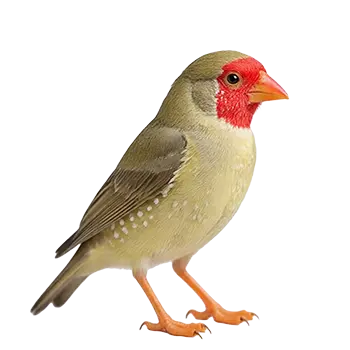
The most striking and immediately recognizable feature of adult Star Finches is the brilliant red facial area adorned with small, perfectly round white spots. In males, this red extends across the forehead, crown, face, and upper throat, creating an extensive crimson mask. The white spots are scattered across this red area like stars in the night sky, varying somewhat in number and arrangement between individuals but typically numbering 10-20+ spots. Each white spot is precisely defined and contrasts beautifully with the red background. The sides of the face show the red extending behind the eyes, creating dramatic facial appearance. The bill is bright coral-red to orange-red, adding to the colorful facial display and providing beautiful contrast.

The body plumage displays beautiful olive-green coloration covering the back, wings, and upper breast. This olive-green appears almost yellowish in good lighting and provides lovely contrast with the red face. The intensity of green varies somewhat between individuals and subspecies, with some showing brighter, more yellow-toned green while others display deeper, more olive tones. The breast and flanks show the olive-green gradually transitioning to paler yellowish or buff coloration on the belly and undertail coverts.

The wings show the body's olive-green coloration with slightly darker flight feathers. When wings are spread during flight or stretching, subtle barring or scaling may be visible on the wing coverts, though this is not prominent. The tail is relatively short and squared, displaying the rufous or reddish-brown coloration that gives the species its scientific name "ruficauda." This rufous tail color is most visible during flight or when the tail is spread, contrasting with the olive-green body.

The rump and uppertail coverts are bright yellow, creating a flash of color visible during flight and adding to the bird's colorful appearance. This yellow rump is a diagnostic feature helping identify Star Finches in the wild and in mixed-species aviaries.

The legs and feet are pale pink to flesh-colored, relatively small and delicate. The feet display the anisodactyl toe arrangement (three toes forward, one back) typical of perching birds, adapted for gripping grass stems and small branches rather than the zygodactyl arrangement of parrots.

The eyes are dark brown to black, appearing as bright, alert beads. Eye rings are minimal, showing only very narrow bare skin around the eyes, less prominent than in some other finch species.

Sexual dimorphism in Star Finches is moderate and provides relatively reliable visual sexing once birds reach maturity. Males display the extensive bright red facial coloration described above, with red covering the forehead, crown, face, and throat extensively. The white spots are numerous and clearly defined. Females show substantially less red facial coloration, typically restricted to smaller patches around the lores (area between eye and bill), with red much less extensive than males and often appearing more orange-red than the brilliant crimson of males. Female faces show more olive-green extending into facial areas that are red in males. Females have fewer white spots, and those present are less prominent. The body coloration is similar between sexes, though females may appear slightly duller overall. These differences become apparent as birds mature, making adult sexing relatively straightforward through careful observation.

Juvenile Star Finches appear substantially different from adults, lacking the distinctive facial markings that make adults so striking. Young birds display dull brownish-gray to olive-brown plumage overall, without the bright olive-green body coloration or red facial markings of adults. The bill is initially black or very dark, gradually developing adult coral-red coloration as birds mature. The overall appearance is quite nondescript, easily confused with juvenile stages of other grass-finch species. This juvenile plumage is retained for approximately 2-4 months before birds begin molting into adult plumage, with males developing red facial coloration before females. Full adult plumage is typically achieved by 6-8 months of age, though some individuals may take slightly longer.

Color mutations of Star Finches exist in aviculture though are substantially less common than in species like Zebra Finches or Society Finches. The most established mutation is the yellow or fawn variant, where the normal olive-green body coloration is replaced with softer yellow or cream tones while retaining red facial markings (though possibly paler). Other mutations including white or pied variants occasionally appear but are rare and not well-established. Normal wild-type coloration remains by far the most common and readily available form in aviculture. The mutations that do exist retain the basic Star Finch body structure, size, and temperament regardless of color variation.

Affection Level
Star Finches show minimal affection toward humans, preferring the companionship of other Star Finches over human interaction. They form devoted pair bonds with mates, displaying affection through mutual preening, soft contact calls, and staying close together constantly. While they may become accustomed to their keeper's presence and remain calm during routine care, they do not seek human touch or enjoy handling, making them ideal observation birds rather than interactive pets.
Sociability
Highly social birds that require the companionship of at least one other Star Finch or compatible finch species to thrive psychologically and physically. Star Finches should never be kept alone as solitary individuals become severely stressed, depressed, and may develop health problems or die prematurely. They are happiest in pairs or small peaceful colonies where they engage in natural flock behaviors, though they are less boisterous than some finch species, preferring calm, gentle social interactions.
Vocalization
Star Finches are among the quietest pet birds available, producing extremely soft, gentle chirps and peeps that are barely audible beyond a few feet. Males sing very quiet, simple songs that are melodious but so soft they're often difficult to hear even in the same room. Their vocalizations consist primarily of whisper-soft contact calls creating barely noticeable background sounds. They are ideal for apartments, noise-sensitive households, or anyone requiring truly quiet birds.
Intelligence
Star Finches display basic intelligence typical of small finches, demonstrating ability to learn cage layouts, recognize feeding routines, navigate their environment, and remember locations of resources. They show problem-solving abilities when foraging and can distinguish familiar keepers from strangers. However, they lack the complex cognitive abilities of parrots and cannot learn tricks, respond to commands, or engage in interactive behaviors. Their intelligence is appropriate for their ecological niche as seed-eating grassland birds.
Exercise Needs
Active birds requiring substantial daily exercise through flight in appropriately-sized cages or aviaries. Star Finches are constantly moving despite their calm demeanor, hopping between perches, making short flights, and engaging in active foraging. They need spacious horizontal housing allowing flight rather than just vertical space, as they are true fliers spending much time in the air. Adequate exercise prevents obesity, maintains cardiovascular health, and supports their naturally active lifestyle.
Maintenance Level
Star Finches are low-maintenance birds requiring daily seed and water changes, weekly cage cleaning, and basic care without the extensive demands of parrots or even some other finch species. They do not require training, constant interaction, elaborate enrichment, or complex dietary preparation. Their primary needs are appropriate housing, companionship of other finches, clean environment, and proper seed-based nutrition. The modest time commitment makes them suitable for beginners or people seeking beautiful birds without intensive care requirements.
Trainability
Star Finches have essentially no trainability in the traditional sense and are completely inappropriate for training attempts. They cannot learn tricks, commands, or any trained behaviors, and they find hands-on interaction extremely stressful. Even basic taming is difficult as they remain naturally shy and fearful of human hands throughout their lives. They are strictly observation birds meant for appreciating natural behaviors, beauty, and gentle presence rather than interactive training or performance.
Independence
Star Finches are highly independent from humans once paired with appropriate companions and provided proper care. They entertain themselves through natural behaviors including foraging, flying, preening, and social interaction with other finches, requiring no human interaction beyond basic daily care. They do not demand attention, cannot be handled routinely, and are content with minimal direct human involvement. This complete independence makes them perfect for people wanting beautiful, peaceful birds without the demanding social needs of parrots.

Natural Habitat & Range

Star Finches are endemic to northern Australia, occurring across the tropical and subtropical regions of the northern portion of the continent. Their natural range extends across northern Queensland, the Northern Territory, and historically into northwestern Western Australia, though populations in Western Australia may be extirpated (locally extinct). The range covers tropical grasslands and savanna regions from approximately the eastern coast inland across the Top End and into western areas, representing a distribution spanning roughly 1,500 miles east to west but restricted to northern latitudes. This makes Star Finches one of many bird species endemic to Australia's unique northern grassland ecosystems.

Within their range, Star Finches inhabit specific habitats showing strong preferences for particular environmental conditions. They occupy tropical and subtropical grasslands dominated by tall grasses, particularly near water sources, grassy woodland edges and clearings rather than dense forest, areas with scattered trees providing shelter and nesting sites, wetland margins and floodplains with grass coverage, riparian areas along rivers and streams with associated grasslands, and occasionally agricultural areas and pastures if suitable grass species are present. They show strong association with areas where seeding grasses are abundant, as grass seeds form the overwhelming majority of their natural diet.

Star Finches display particular preference for areas with access to water, rarely occurring far from permanent or seasonal water sources. They require daily drinking and bathing access, making them dependent on reliable water availability. During dry seasons, they may concentrate around remaining water sources, while during wet season when water is abundant they disperse more widely through appropriate grassland habitat. This water dependency influences their distribution and local abundance significantly.

The climate throughout the Star Finch range is tropical to subtropical, characterized by hot temperatures year-round typically ranging from 75-95°F, though coastal areas may be slightly cooler and inland areas occasionally hotter. Humidity is high during the wet season (November-April) when the region receives the majority of its annual rainfall, often exceeding 40-60 inches concentrated in these months. The dry season (May-October) shows much lower rainfall, creating distinct seasonal patterns influencing grass seeding patterns and Star Finch breeding cycles. These marked wet and dry seasons characterize much of northern Australia and profoundly influence ecosystem dynamics.

Star Finches occur from sea level to approximately 2,600 feet elevation, though they are most common in lowland areas below 1,000 feet where extensive grasslands occur. They avoid mountainous regions and areas of dense forest, showing clear preference for open grassland habitats typical of the northern Australian landscape.

In their natural habitat, Star Finches are social, gregarious birds forming small flocks typically numbering 6-30 individuals, though larger aggregations may occur at particularly abundant food sources or water holes during dry season. They are less boisterous and demonstrative than some other Australian finches like Zebra Finches or Gouldian Finches, showing quieter, more reserved social behaviors. Flock members maintain contact through very soft calls that are difficult to hear even at close range. These quiet vocalizations help explain their near-silence in captivity.

The daily activity pattern begins shortly after dawn when small flocks leave overnight roost sites and move to feeding areas. Morning hours are spent foraging on the ground and in grass seed heads for their primary food - seeds of native grasses in various stages of ripeness. Wild Star Finches feed almost exclusively on small grass seeds, selecting seeds from numerous native Australian grass species. They show particular preference for certain grass types when available. Feeding occurs both on the ground where fallen seeds accumulate and in grass seed heads, with birds displaying acrobatic ability to balance on thin grass stems while extracting seeds.

During midday heat, particularly in the hot dry season, flocks retreat to shaded areas under trees or in dense grass, resting quietly and conserving energy. They may visit water sources for drinking and bathing during these rest periods. Late afternoon brings renewed feeding activity before flocks return to roosting sites at dusk. Star Finches roost communally in dense grass clumps, low bushes, or tree foliage, with flock members huddling close together for warmth and security.

Breeding biology in wild Star Finches is tied to seasonal rainfall patterns and grass seeding cycles. Breeding typically occurs during or shortly after the wet season (January-June in most areas) when grass seeds are most abundant and environmental conditions support successful reproduction. Pairs are monogamous during breeding attempts and often maintain pair bonds across multiple seasons. Both sexes participate in nest construction, building a distinctive ball-shaped nest with a side entrance constructed primarily from grass stems and blades woven together. Nests are typically placed relatively low (3-10 feet high) in dense grass clumps, low shrubs, or small trees offering concealment.

The female lays 4-6 eggs (typically 5) which both parents incubate for approximately 12-13 days. Both parents share incubation duties roughly equally and both feed chicks after hatching. Young birds fledge at approximately 19-21 days of age but remain dependent on parents for an additional 2-3 weeks while learning to forage independently. Multiple broods per season are possible when conditions remain favorable, with some pairs producing 2-3 successful broods during extended favorable periods.

The conservation status of Star Finches has declined significantly in recent decades, with the species currently experiencing serious population declines across much of its range. While not yet listed as globally threatened, the species is considered Near Threatened or of conservation concern in various assessments. Wild populations have declined substantially, with the species becoming much less common than historical accounts suggest. Some populations, particularly in Western Australia, may be extirpated (locally extinct). Primary threats include habitat loss and degradation from agricultural conversion, overgrazing by cattle and introduced species altering grass composition, changed fire regimes disrupting grassland ecology, predation by introduced species including cats and foxes, competition from introduced birds, and climate change potentially affecting rainfall patterns and grass seeding cycles.

Trapping for the cage bird trade historically impacted wild populations, though trade in wild-caught birds has been illegal in Australia for decades and export bans prevent international trade in wild-caught individuals. However, illegal trapping may continue in some areas. Within Australia, all Star Finches in captivity are now captive-bred, with wild populations receiving legal protection. Conservation efforts including habitat protection, fire management programs, control of invasive species, and monitoring of wild populations are important for ensuring long-term survival of wild Star Finches. The good news is that large captive populations exist in aviculture worldwide, providing insurance against extinction even if wild populations continue declining, though this is poor consolation for loss of wild populations and their ecological roles.

Temperament

Star Finches possess gentle, peaceful, somewhat shy temperaments that make them delightful observation birds for finch enthusiasts seeking beautiful, calm companions that thrive with minimal human interaction. Unlike parrots requiring extensive daily handling and social engagement, Star Finches are content being appreciated for their natural beauty, gentle behaviors, pleasant (though extremely quiet) vocalizations, and peaceful social interactions with other finches. Understanding Star Finch temperament requires recognizing they are naturally shy, somewhat timid birds whose primary social needs are met by other finches rather than humans, making them fundamentally different from parrots and even from more bold finch species like Zebra Finches or Society Finches.

The most defining aspect of Star Finch temperament is their gentle, peaceful nature. These finches are notably non-aggressive toward both their companions and their human keepers, creating harmonious atmospheres in aviaries or cages. They rarely engage in aggressive behaviors beyond brief minor disputes over preferred perches or food items, and these conflicts are mild compared to the territorial aggression shown by some other finch species. Even during breeding season when many birds become territorial and aggressive, Star Finches typically remain relatively docile, though breeding pairs do defend immediate nest areas from intrusion. This peaceful nature makes them excellent candidates for mixed-species finch aviaries, coexisting well with other peaceful finch species.

Shyness and timidity characterize Star Finch interactions with humans and novel situations. These birds are naturally wary and fearful of human hands, sudden movements, loud noises, and unfamiliar people or objects. They startle easily and will fly away rapidly if they feel threatened, sometimes injuring themselves if they panic in confined spaces. This innate shyness means Star Finches are completely inappropriate for handling or hands-on interaction. Unlike some finch species that become relatively tame with patience, Star Finches typically remain shy throughout their lives, viewing humans as potential threats to be avoided rather than sources of companionship or interaction. This characteristic must be understood and respected by prospective owners.

However, this shyness should not be mistaken for lack of personality or interest in their environment. Star Finches are alert, observant birds who carefully monitor their surroundings while maintaining wariness. They can become accustomed to their keeper's presence and routine, learning to associate specific people with feeding time and remaining calmer around familiar individuals compared to strangers. With patient, consistent, quiet care avoiding sudden movements or loud noises, Star Finches may become comfortable enough to continue natural behaviors when their keeper is nearby, though they will still avoid direct approach or handling attempts.

The absolute need for companionship with other finches defines Star Finch social requirements. These gregarious birds should never be kept as solitary individuals, as isolation causes severe psychological distress, depression, behavioral problems, and can contribute to health issues and premature death. Star Finches are happiest and healthiest in pairs (minimum) or small peaceful groups where they can engage in natural flock behaviors. A bonded pair will remain together constantly, sitting side-by-side with bodies pressed together, mutually preening each other's head and neck feathers with obvious affection, producing very soft contact calls maintaining their pair bond, and coordinating movements in beautiful synchrony as they hop and fly together.

Activity level in Star Finches is moderate to high despite their calm, gentle demeanor. They spend their days in near-constant motion through natural finch behaviors including hopping quickly between perches with precise, controlled movements, making short flights across available space demonstrating their agility, foraging actively by sorting through seed, scratching in substrate, and manipulating food items, bathing enthusiastically when water is provided, and engaging in social grooming and quiet interaction with companions. This constant gentle activity is entertaining to observe and indicates good health and appropriate conditions. Lethargic or inactive Star Finches are likely ill or stressed, making activity level a useful health indicator.

Social behaviors within Star Finch pairs or groups provide subtle but charming entertainment for patient observers. Bonded pairs display obvious devotion through mutual preening sessions where birds carefully groom each other's head and facial feathers inaccessible to self-preening, sitting pressed closely together for extended periods with obvious contentment, engaging in quiet courtship behaviors including soft vocalizations, gentle beak touching, and hopping displays, and maintaining constant proximity throughout the day. Even in larger groups, Star Finches maintain peaceful social harmony through frequent gentle interactions and coordinated movements showing flock cohesion.

Vocalizations in Star Finches are extraordinarily quiet, ranking among the softest of all commonly kept pet birds. Their natural calls are whisper-soft chirps and peeps that are barely audible even a few feet away, creating the barest hint of pleasant background sound rather than noticeable vocalization. Males produce simple, quiet songs particularly during breeding season - these songs consist of soft trills and warbles that are melodious but so quiet they're often difficult to hear even in the same quiet room. The overall noise level is essentially negligible, making Star Finches ideal for apartments, noise-sensitive households, or anyone requiring truly quiet birds. They are quieter than Zebra Finches, Gouldian Finches, Society Finches, and virtually all other commonly kept finches.

Interaction with humans in Star Finches is minimal and should remain observational rather than hands-on. They do not seek human attention or affection, cannot be trained to perform behaviors or respond to commands, and find handling attempts extremely stressful. They can learn their keeper's routine, associating specific people with feeding time and care activities, but this represents habituation rather than bonding or affection. Attempting to force interaction through repeated handling causes severe stress, can break fragile bones if birds panic, and damages their trust making them more fearful. Respecting their need to remain untouched observation birds is essential for their wellbeing.

Breeding behavior in Star Finches is relatively straightforward when conditions are appropriate. Established pairs in suitable environments often breed readily, showing increased activity, nest-building behaviors, and males singing more frequently though still very quietly. Females may lay eggs even without males present (these will be infertile). Many keepers housing opposite-sex pairs successfully raise young, though managing breeding requires providing appropriate nesting materials and locations, understanding breeding cycles, and planning for offspring placement.

Environmental sensitivity in Star Finches is moderate but notable. They require stable temperatures avoiding sudden changes, adequate humidity given their tropical origins, protection from drafts and temperature extremes, shielding from toxic fumes and household hazards, appropriate light-dark cycles supporting natural circadian rhythms, and reduction of sudden noises or movements that trigger panic responses. They are more sensitive than some hardier finch species but less demanding than many parrots.

Star Finches require owners who appreciate finches as observation birds rather than interactive pets, can provide companionship of at least one other Star Finch or compatible finch, can supply appropriate cage size allowing flight, maintain consistently clean environments through regular maintenance, and desire beautiful, peaceful, genuinely quiet birds with minimal demands for direct human interaction. They are inappropriate for anyone seeking birds to handle, train, or interact with extensively, those wanting vocal or entertaining performers, or people expecting bold, outgoing personalities. However, for people understanding and appreciating them for what they are - gentle, stunningly beautiful, peaceful finches perfect for quiet observation - Star Finches provide years of subtle enjoyment with minimal demands, making them excellent choices for beginners, apartment dwellers, noise-sensitive households, and anyone seeking lower-maintenance birds than parrots while enjoying beauty and natural behaviors.

Care Requirements

Star Finches require appropriate housing emphasizing horizontal flight space rather than vertical climbing space, as these are true fliers spending substantial time in flight rather than climbing like parrots. The absolute minimum cage dimensions for a pair of Star Finches are 24 inches long by 18 inches wide by 18 inches tall, though significantly larger is strongly preferred and provides dramatically better quality of life. Ideally, cages should measure at least 30-36 inches long by 18-24 inches wide by 18-24 inches tall for a pair, with length being the most critical dimension allowing horizontal flight across the cage. For small groups of 4-6 birds, minimum dimensions increase to 48 inches long by 24 inches wide by 24 inches tall or larger. Flight cages, walk-in aviaries, or outdoor aviaries providing even more extensive space are optimal for Star Finches, allowing them to fly longer distances, achieve faster speeds, and express natural flying behaviors fully.

Bar spacing must be appropriately narrow for these very small finches, measuring maximum 1/2 inch to prevent escape through wider bars or head entrapment. Many cages marketed for finches, canaries, or small birds feature appropriate bar spacing. Horizontal bars on at least two cage sides facilitate occasional climbing though this is less important for true fliers like Star Finches compared to perching birds or parrots. Cage construction can be powder-coated steel (most common and economical), stainless steel (most durable and easiest to clean but expensive), or appropriate wire mesh for aviary construction. Avoid zinc-coated or galvanized materials as zinc toxicity affects finches as severely as it affects parrots. The cage must feature secure door closures as small finches can be surprisingly adept at finding and exploiting escape routes if doors are improperly secured.

Cage location should provide safe, comfortable, low-stress environment. Position cages in quiet areas of the home away from high-traffic zones, as Star Finches are naturally shy and startle easily from sudden movements or loud noises. Provide natural light but avoid direct intense sunlight that could overheat small birds. Avoid drafty locations near windows, doors, or air conditioning vents. Keep cages away from kitchens where toxic fumes from non-stick cookware, smoke, grease, and other hazards pose serious risks. Place cages at comfortable viewing height allowing easy observation while ensuring birds feel secure - typically waist to eye level works well. Unlike parrots where cage height influences dominance behaviors, Star Finch placement is primarily about keeper convenience, bird safety, and minimizing stress from household activity.

Perches should vary in diameter from approximately 1/4 inch to 3/8 inch, sized appropriately for tiny finch feet substantially smaller than parrot feet. Natural wood branches from safe, pesticide-free tree species make excellent perches providing varied diameters, textures, and natural appearance. Position multiple perches at different heights and varying distances allowing birds to hop short distances and make flights of different lengths between perches. Avoid overcrowding the cage with excessive perches that impede flight paths - Star Finches need open flight space. Place perches away from food and water dishes preventing fecal contamination. Avoid sandpaper perch covers marketed for automatic nail trimming, as these can cause foot sores and are generally unnecessary and potentially harmful.

Star Finches require minimal enrichment compared to parrots but appreciate certain additions. Small swings hung from cage tops provide pleasant movement and perching variety. Natural branches including those with leaves or buds provide interesting perches and mild foraging opportunities. Scattered grass seed heads when available provide natural foraging enrichment. Shallow dishes for bathing are enthusiastically used and provide both hygiene and entertainment. Avoid excessive decorations that impede flight space - Star Finches need open areas more than elaborate furnishings. Substrate on cage bottom allows natural ground-foraging behaviors - appropriate options include plain paper, newspaper, paper towels for easy daily changes, or commercial corn cob bedding (changed frequently preventing mold).

Bathing opportunities are essential as Star Finches are enthusiastic bathers requiring regular access to water for hygiene, feather maintenance, and obvious enjoyment. Provide shallow bathing dishes (1-2 inches deep maximum) several times weekly, removing promptly after bathing to prevent soaking cage substrate. Many Star Finches bathe vigorously, splashing water extensively and creating considerable mess. Some keepers prefer attaching external bathing enclosures to cage door openings containing mess outside the main cage. Fresh bathing water should be clean and room temperature, changed after each bathing session.

Nest boxes or nesting materials should only be provided if breeding is specifically desired, as their presence strongly stimulates breeding hormones and egg laying. For non-breeding situations, avoid providing nest boxes, enclosed sleeping areas, or nesting materials that encourage inappropriate breeding behaviors and chronic egg laying causing health problems in females. If breeding is intended, provide appropriate woven grass nest boxes or allow pairs to build their own nests in provided dense foliage or grass bundles.

Cage cleaning requires consistent daily and weekly maintenance preventing disease transmission and maintaining hygienic conditions. Daily tasks include removing visible droppings and soiled substrate, replacing substrate completely if using paper-based materials or spot-cleaning if using other substrates, removing empty seed hulls and providing fresh seed (blowing gently to remove hulls hiding remaining seed), thoroughly washing and refilling water dishes with fresh clean water. Weekly, perform thorough comprehensive cage cleaning including removing birds to secure temporary housing, washing all bars and surfaces with hot water and bird-safe disinfectant, cleaning or replacing soiled perches, washing all dishes thoroughly, replacing substrate completely, and allowing cage to dry before returning birds. Monthly deep cleaning and structural inspection ensures cage remains in excellent condition without damage, rust, or wear requiring repair or replacement.

Environmental conditions significantly affect Star Finch health and comfort. These tropical/subtropical Australian birds tolerate temperatures between 65-80°F comfortably, though they prefer warmth toward the higher end of this range reflecting their northern Australian origins. Avoid sudden dramatic temperature changes and direct drafts from windows, doors, or HVAC systems. Maintain humidity levels between 40-60% supporting respiratory health and feather condition - Australian tropical grasslands have substantial humidity during wet season. Adequate natural light or full-spectrum lighting for 12-14 hours daily in summer reducing to 10-12 hours in winter supports natural circadian rhythms, breeding cycles, vitamin D synthesis, and overall health. Darkness at night allowing proper rest is equally important, requiring covered cages or birds in separate quiet rooms if household remains active late evenings.

Star Finches can potentially be housed in outdoor aviaries in appropriate climates, thriving in larger planted flight spaces allowing extensive natural behaviors. Outdoor housing requires protection from predators through secure wire mesh, protection from weather extremes through partially covered roofing, complete escape-proofing preventing even tiny gaps, and consideration of climate suitability. Many dedicated finch enthusiasts maintain beautiful planted aviaries where Star Finches coexist with compatible Australian finch species, providing optimal conditions approaching natural habitat. However, outdoor housing requires substantial commitment and is beyond basic pet keeping scope for most owners.

Feeding & Nutrition

Proper nutrition for Star Finches follows seed-based dietary principles similar to other small Australian grass-finches, as these specialized seed-eaters possess digestive systems adapted to process high volumes of small grass seeds efficiently rather than the diverse diets of parrots. In their natural Australian grassland habitat, Star Finches consume predominantly small seeds of native grasses in various stages of ripeness, with seeds comprising 95%+ of wild diet. Replicating appropriate nutrition in captivity requires understanding that Star Finches are obligate granivores (seed specialists) who thrive on properly formulated seed-based diets supplemented appropriately rather than the pellet-heavy diets optimal for parrots.

High-quality finch seed mix specifically formulated for Australian finches should comprise 70-80% of the captive Star Finch diet. Appropriate seed mixes contain various small grass seeds including white millet (should be primary component, most closely resembling natural grass seeds), panicum millet (red and Japanese varieties), canary seed in moderate amounts (some mixes overuse canary seed which is larger than optimal), niger seed in small amounts, and small amounts of other appropriately tiny seeds. Avoid mixes containing larger seeds like sunflower, safflower, or other seeds sized for larger birds, as these are too large for Star Finches and will be ignored. Many commercial finch mixes are available, though quality varies considerably between brands and products. Choose mixes from reputable brands specializing in finch foods, avoiding excessive filler seeds, dust, debris, or foreign material. Some experienced keepers prefer creating custom mixes ensuring optimal proportions and freshness. Seed should be fresh, properly stored in sealed containers in cool, dry conditions preventing mold development, rancidity from oxidized oils, or pest infestation. Discard old seed showing musty odors, discoloration, or any signs of mold immediately.

A critical aspect of seed feeding that cannot be overstated is the importance of daily removing empty hulls. Star Finches and all finches hull seeds before consuming the nutritious kernels inside, leaving empty hulls accumulating in seed dishes. These hulls pile up on top of remaining seed, creating deceptive appearance that dishes contain abundant food when actually all accessible seed has been consumed and only empty hulls remain. Birds can starve despite appearing to have full seed dishes if keepers fail to recognize this issue. Check seed dishes daily at minimum, gently blowing across the surface to remove hulls exposing remaining seed beneath, and adding fresh seed as needed. This simple practice prevents accidental starvation, a tragically common cause of finch death among inexperienced keepers.

Fresh greens and vegetables can supplement Star Finch diets, though these finches often show very limited interest in greens compared to seed. Appropriate greens offered in small amounts include various lettuce types (avoiding iceberg which lacks nutrition), spinach, kale, chickweed (a favorite when available), dandelion greens, fresh grass (pesticide-free), and other leafy greens finely chopped. Introduce greens gradually as many Star Finches resist unfamiliar foods, and some individuals never accept greens despite repeated offerings. Unlike parrots where vegetables are essential dietary components, greens are supplemental for Star Finches who can remain healthy on properly formulated seed-based diets with appropriate mineral supplementation. Don't be discouraged or concerned if your Star Finches ignore offered greens - this is normal and they can thrive without them if the seed diet is high-quality and balanced.

Fresh fruits are generally unnecessary for Star Finches and may cause digestive upset if offered, though tiny amounts of finely chopped apple (seeds removed) or berries can be offered occasionally as treats if birds show interest. Most Star Finches show little to no interest in fruit, reflecting their natural diet lacking substantial fruit consumption. Fruit should never comprise more than 5% of diet if offered at all.

Sprouted seeds offer excellent easily-digestible nutrition and are often more readily accepted than fresh greens by finches who evolved eating fresh seeds rather than mature dried seeds. Sprouting increases vitamin content, improves digestibility, and provides enzyme-rich fresh food many finches find appealing. To sprout seeds, soak seed mix or specific sprouting blends in clean water for 8-12 hours, drain very thoroughly, and allow to sprout for 1-2 days rinsing twice daily with fresh water. Sprouted seeds should show small white shoots emerging but not extensive root development. Offer in separate dish from dry seed, removing any uneaten sprouted seeds within 4-6 hours to prevent spoilage and bacterial growth. Many experienced finch keepers successfully use sprouted seeds as regular dietary staple, offering 2-3 times weekly.

Commercial finch pellets can supplement diets and some aviculturists recommend offering pellets formulated for finches, though many Star Finches stubbornly resist pellets strongly preferring their natural seed-based diet. If birds accept pellets, they can comprise 10-20% of diet providing balanced nutrition with appropriate vitamin and mineral supplementation. However, pellets are completely optional rather than essential for finches, fundamentally unlike parrots where pelleted diets are strongly recommended as primary nutrition. Don't stress or feel inadequate if your Star Finches refuse pellets entirely - they can thrive on properly supplemented seed-based diets reflecting their natural feeding ecology.

Calcium supplementation is absolutely essential, particularly for breeding females who require substantial calcium for eggshell production. Provide cuttlebone securely attached to cage bars allowing birds to chew and self-regulate calcium intake according to physiological needs. Alternatively or additionally, offer mineral blocks formulated for finches. Crushed oyster shell grit provides both calcium and digestive grit. Adequate calcium prevents egg binding, supports bone health, and enables proper eggshell formation in breeding birds.

Grit remains somewhat controversial in finch keeping with varying expert opinions on necessity. Grit consists of indigestible material potentially aiding seed digestion by grinding in the gizzard. Two grit types exist: soluble grit (crushed oyster shell, egg shell) that provides calcium while slowly dissolving, and insoluble grit (granite, quartz particles) remaining in the gizzard indefinitely. Many experienced keepers provide grit in separate small dishes allowing birds to self-regulate consumption, while others successfully maintain finches without grit. If providing grit, offer in small amounts in separate dishes, replacing regularly. Monitor to prevent excessive consumption as grit impaction rarely occurs from overconsumption.

Vitamin supplementation through water-soluble vitamins or powder sprinkled on moistened seed can benefit Star Finches, particularly those refusing fresh foods. Use products specifically formulated for finches following package directions carefully avoiding over-supplementation causing dangerous imbalances. Many successful breeders use vitamin supplements 2-3 times weekly rather than daily. However, high-quality varied seed mixes often provide adequate nutrition without supplementation.

Foods to strictly avoid include avocado (extremely toxic to all birds), chocolate and cocoa products, caffeine in any form, any alcohol, excessive salt, onions and garlic, and anything containing artificial sweeteners particularly xylitol. Additionally, avoid feeding exclusively one or two seed types as nutritional deficiencies result from inadequate dietary variety. Avoid old, musty, or moldy seed which can contain deadly toxins.

Fresh, clean water must be available constantly in clean dishes changed at least once daily minimum, more frequently in hot weather or if birds bathe in drinking water (common behavior in finches). Water bottles can maintain cleaner water though some birds prefer open dishes. Ensure whatever system is used provides adequate easy access to water.

Foraging enrichment providing mental stimulation can be offered by scattering seed on clean cage bottom encouraging natural ground-foraging behaviors, offering seed heads or sprays (spray millet is universally loved though should be treat only due to fat content), hiding seed in various locations, or providing natural grass clumps for exploration. These natural foraging behaviors keep birds mentally engaged and physically active.

Monitor Star Finch body condition regularly by observing body shape and gently feeling the keel (breastbone) if birds tolerate brief handling. Healthy birds show slightly rounded chest with keel bone palpable but not sharply prominent. Very prominent, sharp keel indicates underweight condition requiring increased food or veterinary evaluation. Inability to feel keel or very rounded body suggests obesity requiring reduced portions. A pair of Star Finches typically consumes approximately 1-2 teaspoons of seed daily combined, though individual requirements vary based on activity level, breeding status, and metabolism.

Star Finch Health & Lifespan

Star Finches are generally hardy, resilient finches capable of living 5 to 8 years with proper care, occasionally reaching 10 years in exceptional cases with optimal conditions, though their smaller size compared to Java Sparrows contributes to somewhat shorter average lifespans typical of the smallest finch species. Despite their fundamental hardiness when well-maintained, these delicate birds are susceptible to various health conditions requiring vigilant monitoring and appropriate preventive care throughout their lives. Air sac mites (Sternostoma tracheacolum) commonly affect finches including Star Finches, with these microscopic parasitic mites infesting the respiratory system causing breathing difficulties, audible clicking sounds during respiration, tail bobbing with each breath, open-mouth breathing in advanced cases, and potentially fatal respiratory compromise requiring prompt anti-parasitic medication under veterinary supervision. Scaly face and leg mites (Knemidocoptes species) can affect Star Finches causing crusty, scaly growths on legs, feet, and occasionally around the beak, requiring anti-parasitic treatment and potentially causing permanent deformity if left untreated long-term. Coccidiosis, a parasitic protozoal infection affecting the intestinal tract, occurs in finches causing diarrhea often with bloody droppings, rapid weight loss, fluffed feathers, severe lethargy, and potentially death without treatment, requiring antiprotozoal medication and strict hygiene preventing transmission between birds. Intestinal worms including roundworms and tapeworms can affect Star Finches particularly those housed outdoors or exposed to wild birds, causing weight loss despite good appetite, poor feather quality, and general poor condition, requiring fecal testing and appropriate deworming medication. Candidiasis (yeast infection) affects Star Finches particularly those stressed, on antibiotics, or with compromised immune systems, causing crop infections, white lesions in the mouth and throat, regurgitation, and digestive problems requiring antifungal medication and addressing underlying stress or health issues. Egg binding affects female Star Finches who produce eggs without adequate calcium, appropriate environmental conditions, or optimal physical health, creating life-threatening emergencies where eggs cannot be expelled requiring immediate veterinary intervention potentially including manual manipulation, calcium injections, or surgical removal. Obesity commonly affects captive Star Finches fed unlimited seed without adequate exercise space, leading to fatty liver disease, reduced lifespan, breeding problems in females, and general poor health, requiring dietary management through appropriate portions and providing larger flight cages or aviaries allowing substantial daily exercise. Overgrown beaks and nails occur in birds lacking appropriate surfaces and materials for natural wear, requiring periodic careful trimming to maintain proper length and function preventing eating difficulties or injury from excessively long nails catching on cage materials. Respiratory infections from bacteria, viruses, or fungi affect finches kept in poor conditions with inadequate ventilation, exposure to drafts, overcrowding, or chronic stress, causing labored breathing, nasal discharge, lethargy, and potentially death without prompt veterinary attention and appropriate antibiotic or antifungal treatment. Regular health monitoring by owners is absolutely essential as small finches instinctively mask illness until very advanced stages as survival mechanism in the wild, meaning by the time symptoms become obvious the bird may be critically ill requiring immediate intervention. While many general practice veterinarians lack specialized finch knowledge and experience, establishing relationships with avian veterinarians experienced with finches before emergencies occur ensures access to appropriate specialized care when needed. Annual wellness examinations are ideal though performed less commonly for small finches compared to parrots, but bringing new birds for initial checkups and consulting veterinarians when problems arise remains important. During health checks, veterinarians perform thorough physical examinations including careful weight assessment on gram scales detecting subtle changes, body condition evaluation assessing keel prominence and muscle mass, detailed examination for external parasites including mites, respiratory assessment listening for abnormal sounds, and may recommend fecal testing for internal parasites and disease screening when appropriate. Proper diet and nutrition for Star Finches follows seed-based principles similar to other Australian grass-finches. High-quality finch seed mix containing various small grass seeds, white millet, panicum millet, Japanese millet, canary seed in smaller amounts, and other appropriately-sized seeds should comprise 70-80% of diet. Fresh greens offered in small amounts including lettuce, spinach, chickweed, and grass provide vitamins though many Star Finches show limited interest in greens. Sprouted seeds offer excellent easily-digestible nutrition and are often more readily accepted than fresh produce. Commercial finch pellets can supplement diets though many birds resist pellets. Cuttlebone or mineral block provides essential calcium particularly critical for breeding females preventing egg binding. Clean, fresh water changed daily minimum is essential, with Star Finches requiring constant access to water for drinking and their beloved bathing activities. Environmental cleanliness prevents disease transmission and parasite problems, requiring daily removal of droppings and soiled substrate, weekly thorough cage cleaning with appropriate disinfection, regular cleaning of food and water dishes, and prompt removal of any spoiled fresh foods. Appropriate cage size allowing substantial horizontal flight provides essential exercise maintaining cardiovascular health, preventing obesity through calorie expenditure, and supporting their naturally active lifestyle. Social companionship with other Star Finches or compatible finches supports critical psychological wellbeing, reduces stress that compromises immune function, and prevents depression contributing to health problems.

Regular health monitoring by owners is absolutely essential as small finches instinctively mask illness until very advanced stages as survival mechanism in the wild, meaning by the time symptoms become obvious the bird may be critically ill requiring immediate intervention. While many general practice veterinarians lack specialized finch knowledge and experience, establishing relationships with avian veterinarians experienced with finches before emergencies occur ensures access to appropriate specialized care when needed. Annual wellness examinations are ideal though performed less commonly for small finches compared to parrots, but bringing new birds for initial checkups and consulting veterinarians when problems arise remains important. During health checks, veterinarians perform thorough physical examinations including careful weight assessment on gram scales detecting subtle changes, body condition evaluation assessing keel prominence and muscle mass, detailed examination for external parasites including mites, respiratory assessment listening for abnormal sounds, and may recommend fecal testing for internal parasites and disease screening when appropriate. Proper diet and nutrition for Star Finches follows seed-based principles similar to other Australian grass-finches. High-quality finch seed mix containing various small grass seeds, white millet, panicum millet, Japanese millet, canary seed in smaller amounts, and other appropriately-sized seeds should comprise 70-80% of diet. Fresh greens offered in small amounts including lettuce, spinach, chickweed, and grass provide vitamins though many Star Finches show limited interest in greens. Sprouted seeds offer excellent easily-digestible nutrition and are often more readily accepted than fresh produce. Commercial finch pellets can supplement diets though many birds resist pellets. Cuttlebone or mineral block provides essential calcium particularly critical for breeding females preventing egg binding. Clean, fresh water changed daily minimum is essential, with Star Finches requiring constant access to water for drinking and their beloved bathing activities. Environmental cleanliness prevents disease transmission and parasite problems, requiring daily removal of droppings and soiled substrate, weekly thorough cage cleaning with appropriate disinfection, regular cleaning of food and water dishes, and prompt removal of any spoiled fresh foods. Appropriate cage size allowing substantial horizontal flight provides essential exercise maintaining cardiovascular health, preventing obesity through calorie expenditure, and supporting their naturally active lifestyle. Social companionship with other Star Finches or compatible finches supports critical psychological wellbeing, reduces stress that compromises immune function, and prevents depression contributing to health problems. Owners must learn to recognize subtle signs of illness in Star Finches requiring immediate attention, as delayed treatment often proves fatal in birds this small with fast metabolisms. Warning signs requiring immediate veterinary consultation include fluffed feathers maintained for extended periods rather than briefly during rest indicating illness, hypothermia, or pain, labored breathing, rapid breathing, tail bobbing with each respiration, or audible clicking sounds suggesting respiratory distress, sitting on cage bottom rather than perching indicating severe illness or extreme weakness, loss of appetite or weight loss detected through observing prominent keel bone or reduced body mass, diarrhea or abnormal droppings suggesting digestive problems or parasitic infection, severe lethargy or sleeping during normally active daytime hours, discharge from eyes or nostrils indicating infection, visible swellings or lumps anywhere on body requiring evaluation, limping, inability to perch properly, or favoring limbs, and sudden dramatic behavior changes including increased aggression, severe depression, or self-mutilation. Small finches deteriorate extremely rapidly once symptoms appear, often progressing from appearing slightly unwell to critical condition or death within 24-48 hours, making immediate veterinary attention absolutely critical when any concerning symptoms are observed. With appropriate preventive care including proper seed-based nutrition with appropriate supplementation, consistently clean environment preventing parasite and disease transmission, companionship with other finches, adequate housing allowing flight and natural behaviors, and attentive daily monitoring for early health changes, Star Finches can live their full 5-8+ year lifespan as delightful, relatively low-maintenance companions bringing subtle beauty and gentle presence to their keepers' lives.

Common Health Issues

  • Air sac mites - Sternostoma tracheacolum, commonly affect finches including Star Finches, with these microscopic parasitic mites infesting the respiratory system causing breathing difficulties, audible clicking sounds during respiration, tail bobbing with each breath, open-mouth breathing in advanced cases, and potentially fatal respiratory compromise requiring prompt anti-parasitic medication under veterinary supervision.
  • Scaly face and leg mites - Knemidocoptes species, can affect Star Finches causing crusty, scaly growths on legs, feet, and occasionally around the beak, requiring anti-parasitic treatment and potentially causing permanent deformity if left untreated long-term.
  • Egg binding affects female Star Finches who produce eggs without adequate calcium - Appropriate environmental conditions, or optimal physical health, creating life-threatening emergencies where eggs cannot be expelled requiring immediate veterinary intervention potentially including manual manipulation, calcium injections, or surgical removal.
  • Obesity commonly affects captive Star Finches fed unlimited seed without adequate exercise space - Leading to fatty liver disease, reduced lifespan, breeding problems in females, and general poor health, requiring dietary management through appropriate portions and providing larger flight cages or aviaries allowing substantial daily exercise.
  • Respiratory infections from bacteria - Viruses, or fungi affect finches kept in poor conditions with inadequate ventilation, exposure to drafts, overcrowding, or chronic stress, causing labored breathing, nasal discharge, lethargy, and potentially death without prompt veterinary attention and appropriate antibiotic or antifungal treatment.\n\nRegular health monitoring by owners is absolutely essential as small finches instinctively mask illness until very advanced stages as survival mechanism in the wild, meaning by the time symptoms become obvious the bird may be critically ill requiring immediate intervention.
  • During health checks - Veterinarians perform thorough physical examinations including careful weight assessment on gram scales detecting subtle changes, body condition evaluation assessing keel prominence and muscle mass, detailed examination for external parasites including mites, respiratory assessment listening for abnormal sounds, and may recommend fecal testing for internal parasites and disease screening when appropriate.
  • Cuttlebone or mineral block provides essential calcium particularly critical for breeding females preventing egg binding. - Cuttlebone or mineral block provides essential calcium particularly critical for breeding females preventing egg binding.
  • Warning signs requiring immediate veterinary consultation include fluffed feathers maintained for extended periods rather than briefly during rest indicating illness - Hypothermia, or pain, labored breathing, rapid breathing, tail bobbing with each respiration, or audible clicking sounds suggesting respiratory distress, sitting on cage bottom rather than perching indicating severe illness or extreme weakness, loss of appetite or weight loss detected through observing prominent keel bone or reduced body mass, diarrhea or abnormal droppings suggesting digestive problems or parasitic infection, severe lethargy or sleeping during normally active daytime hours, discharge from eyes or nostrils indicating infection, visible swellings or lumps anywhere on body requiring evaluation, limping, inability to perch properly, or favoring limbs, and sudden dramatic behavior changes including increased aggression, severe depression, or self-mutilation.

Preventive Care & Health Monitoring

  • Egg binding affects female Star Finches who produce eggs without adequate calcium - Appropriate environmental conditions, or optimal physical health, creating life-threatening emergencies where eggs cannot be expelled requiring immediate veterinary intervention potentially including manual manipulation, calcium injections, or surgical removal.
  • Annual wellness examinations are ideal though performed less commonly for small finches compared to parrots - But bringing new birds for initial checkups and consulting veterinarians when problems arise remains important.
  • Proper diet and nutrition for Star Finches follows seed-based principles similar to other Australian grass-finches. - Proper diet and nutrition for Star Finches follows seed-based principles similar to other Australian grass-finches.
  • Fresh greens offered in small amounts including lettuce - Spinach, chickweed, and grass provide vitamins though many Star Finches show limited interest in greens.
  • Sprouted seeds offer excellent easily-digestible nutrition and are often more readily accepted than fresh produce. - Sprouted seeds offer excellent easily-digestible nutrition and are often more readily accepted than fresh produce.
  • Cuttlebone or mineral block provides essential calcium particularly critical for breeding females preventing egg binding. - Cuttlebone or mineral block provides essential calcium particularly critical for breeding females preventing egg binding.

Training & Vocalization

Star Finches have essentially no trainability in any traditional sense and attempting formal training is completely inappropriate and highly stressful for these naturally shy, timid finches who are meant to be appreciated purely for their beauty, gentle presence, and natural behaviors rather than any trained performance or interaction. Unlike parrots possessing remarkable cognitive abilities enabling complex learning of tricks, commands, and interactive behaviors, Star Finches are relatively simple small birds whose intelligence is specifically adapted to their natural ecological niche as seed-eating grassland birds rather than problem-solving, tool-using, or cognitively complex species. Understanding this fundamental difference between finches and parrots prevents unrealistic expectations and ensures appropriate appreciation of Star Finches for their actual characteristics rather than expecting impossible parrot-like behaviors.

The concept of training Star Finches to perform tricks, respond to verbal commands, step onto hands, or engage in any direct interaction is completely impractical, contrary to their nature, and harmful to attempt. These finches are naturally extremely shy and timid, perceiving human hands as dangerous predator-like threats triggering powerful instinctive escape responses. Even Star Finches raised from very young ages typically remain wary of human contact throughout their lives, though they may become somewhat more tolerant of their keeper's presence at a distance. Attempting to force interaction through repeated handling attempts causes severe acute stress, can result in panic causing birds to injure themselves flying into cage bars or walls, may cause broken bones in their delicate bodies, creates chronic stress compromising immune function and overall health, and damages any developing trust in the keeper making birds increasingly fearful and difficult to care for. Respecting their natural wariness and appreciating them strictly as observation birds rather than hands-on pets is absolutely essential for their physical and psychological wellbeing.

Star Finches do learn and adapt to their environment in basic, limited ways representing rudimentary learning rather than trainability. They quickly memorize cage layouts including locations of perches, food dishes, water sources, and bathing areas. They learn and anticipate daily routines including regular feeding times, associating their keeper's presence with food provision and often becoming slightly more active or vocal when their regular caretaker approaches at expected times. They learn to recognize and distinguish their primary keeper from unfamiliar people, typically showing measurably less fear and stress responses to familiar individuals compared to strangers. These basic learning abilities allow them to adapt successfully to captive conditions and develop predictable behavioral patterns providing sense of security, though this should never be confused with the sophisticated trainability characteristic of parrots or even more intelligent bird species.

Routine and consistency benefit Star Finches significantly by reducing stress and allowing them to anticipate and prepare for daily events. Maintaining regular feeding times at consistent hours, performing cleaning and maintenance tasks on predictable schedules, and providing stable light-dark cycles helps birds feel secure and reduces chronic stress. This predictability is particularly important for breeding pairs who require stable, low-stress conditions for successful reproduction and chick-rearing.

The vocalization characteristics of Star Finches represent one of their most remarkable and appealing features as pet birds, particularly for apartment dwellers, noise-sensitive households, or anyone requiring genuinely quiet birds. Star Finches are extraordinarily quiet, ranking among the very softest vocalizers of all commonly kept pet birds including being substantially quieter than most other finch species. Their natural vocalizations consist of extremely soft, barely audible chirps, peeps, and gentle contact calls that flock members use to maintain communication while feeding and moving together. These sounds are so soft they're often difficult to hear beyond a few feet away, creating the barest whisper of pleasant background ambiance rather than noticeable vocalization that could disturb anyone.

Male Star Finches produce songs, particularly during breeding season when courting females or defending territories. These songs consist of simple, repetitive trills, warbles, and whistles that are melodious and pleasant but extraordinarily quiet - so soft they're often difficult to hear even in the same quiet room. Males may sing for several minutes at a time, but the volume remains so low that even this extended singing creates essentially no disturbance. The songs lack the volume and complexity of true songbirds like canaries, and they're dramatically quieter than Zebra Finches, Gouldian Finches, or Society Finches. Singing indicates male birds and good health, providing gentle auditory interest without any noise concerns. Females do not sing, producing only occasional soft calls, making song presence a relatively reliable method for sexing mature birds.

The overall noise level of Star Finches is essentially negligible, making them ideal for apartments, condominiums, townhomes, or any situation where noise must be minimized. Their whisper-soft vocalizations are completely unlikely to disturb neighbors through shared walls or cause any noise complaints even in the most restrictive housing situations. Morning and evening periods when birds are most active may show very slight increases in soft chirping, but even these peak vocal times remain quieter than normal household conversation. This extraordinary quietness makes Star Finches perfect for people who want the pleasure of keeping beautiful, active birds without any noise concerns whatsoever - they are quieter than virtually any other pet bird species commonly available.

Star Finches absolutely cannot learn to talk, mimic sounds, or produce any vocalizations beyond their natural finch repertoire. They completely lack the specialized syrinx structure, neural pathways, and cognitive abilities required for speech or complex sound mimicry characteristic of parrots and certain other bird families. Their vocalizations remain strictly limited to natural finch sounds throughout their entire lives regardless of exposure to human speech, training attempts, or any other factors. People seeking talking birds must choose appropriate parrot species rather than finches, as finches including Star Finches will never develop speech abilities under any circumstances.

Socialization in Star Finches involves primarily their critical relationships with other Star Finches or compatible finch species rather than relationships with humans. Proper socialization means ensuring birds have appropriate companions of their own or compatible species, housing them in pairs or small peaceful groups allowing natural flock behaviors and social interactions essential for psychological wellbeing, and never isolating individuals causing severe psychological damage. Human socialization is extremely limited, consisting primarily of gradual habituation where birds slowly become somewhat accustomed to their keeper's presence and routine without showing extreme panic responses. This habituation occurs naturally and passively through regular, calm, quiet interaction during feeding and maintenance activities, without requiring or benefiting from forced handling or training attempts that only create stress and fear.

The behavioral enrichment Star Finches require differs fundamentally from parrots, emphasizing natural finch behaviors including flight, foraging, bathing, and social interaction rather than complex problem-solving, trick performance, or interactive play. Appropriate enrichment includes providing essential companionship of other Star Finches or compatible peaceful finches, offering adequate space for substantial horizontal flight allowing natural flying behaviors, providing appropriate foraging opportunities through scattered seed, seed heads, or grass clumps, allowing regular access to shallow bathing water which they enjoy enthusiastically, maintaining appropriate light-dark cycles supporting natural activity patterns and circadian rhythms, and creating peaceful, low-stress environment minimizing sudden noises or movements that trigger fear responses.

Owners should adjust expectations appropriately to genuinely appreciate Star Finches for their inherent qualities - stunning beauty enhanced by their brilliant red starred faces, graceful elegant movements and flight, extraordinarily pleasant near-silence making them ideal for noise-sensitive situations, gentle peaceful nature creating harmonious environments, and relatively low-maintenance care requirements - rather than expecting or attempting interactive, trainable, or highly intelligent behaviors characteristic of parrots that these finches can never provide. This appropriate perspective and realistic understanding allows genuine appreciation and enjoyment of these wonderful finches as the delightful birds they are rather than disappointment from completely unrealistic expectations of behaviors impossible for their species.

Children & Other Pets

Integrating Star Finches into households with children or other pets requires careful consideration of the birds' extremely small size, delicate fragile bodies, shy timid nature, strong flight responses when startled, and their appropriate role as strictly observation pets rather than hands-on companions. While Star Finches are completely non-aggressive gentle birds posing zero bite risk to anyone and are fundamentally safer than parrots in households with children, their tiny size, extreme fragility, and natural fearfulness create different serious concerns requiring appropriate education, supervision, and realistic expectations to ensure both children's and birds' safety and wellbeing.

Regarding children, Star Finches can be appropriate for family situations if children are properly educated about the birds' specific needs, limitations, and fragility before birds are acquired. These tiny finches are extraordinarily delicate and can be seriously injured or killed through even seemingly gentle handling, slight squeezing, dropping, or other accidents that would not harm larger more robust birds. Young children under age 8-10 years typically lack the fine motor control, impulse control, sustained attention, and understanding necessary to interact safely with such small fragile birds. Even apparently gentle touches from small hands can cause internal injuries, broken bones, or fatal stress in delicate finches, and dropped birds commonly suffer broken legs, broken wings, head trauma, or immediate death from impact or shock.

However, Star Finches offer several significant advantages for family bird keeping compared to parrots or even some other finch species. They absolutely cannot bite, lacking any ability whatsoever to cause injury through their tiny seed-adapted bills. They are relatively inexpensive to acquire initially and economical to maintain compared to parrots. Their extraordinary quietness won't disturb household routines, children's sleep or homework, or cause any noise complaints. Their independent nature from humans means that children's interest inevitably waning over time doesn't create serious welfare concerns as it would with parrots requiring daily handling and interaction. They teach children valuable lessons about responsibility through basic care tasks including feeding, water changes, and cage cleaning appropriate for supervised young people.

Families considering Star Finches should establish clear, absolutely non-negotiable rules before acquiring birds including strictly no handling of birds under any circumstances (observation only policy unless parents are directly present and have specifically trained older responsible children in extraordinarily careful finch handling for essential situations like emergency cage transfers), no opening cages without explicit adult permission and direct supervision, no loud noises, yelling, or sudden movements near cages that startle and stress extremely shy birds, no chasing or attempting to catch escaped birds if they somehow get out (this causes extreme stress and potential fatal injuries), immediate adult notification if birds escape, appear ill, or anything seems wrong, and clear understanding that birds are living creatures requiring respectful gentle treatment rather than toys for entertainment.

Older children and responsible teenagers often successfully enjoy maintaining Star Finches, taking appropriate responsibility for daily care under ongoing parental oversight and supervision. The relatively simple straightforward care requirements make finches substantially more manageable for young people compared to the extensive complex demands of parrots. Potential breeding projects can provide valuable educational opportunities teaching biology, reproduction, genetics, and animal husbandry principles, though parents must ensure appropriate oversight and advance planning for offspring placement in suitable homes.

Despite their potential suitability for families with appropriate education and supervision, Star Finches require adult supervision and primary care responsibility ultimately falling on parents. Children's enthusiasm almost invariably wanes over time as other interests develop and social activities increase, making parents the ultimate long-term caregivers ensuring consistent appropriate care throughout the birds' 5-8+ year lifespans. This reality must be fully accepted before acquiring birds, understanding they will likely outlast children's active interested involvement.

Integrating Star Finches with other household pets varies dramatically by species and individual animal temperaments. Cats represent the single most serious danger to Star Finches and virtually all avian experts unanimously and strongly recommend against keeping these species in the same household under any circumstances. Cats are natural obligate predators with powerful instinctive hunting drives automatically triggered by small, fast-moving prey including finches. Even well-fed, seemingly lazy or disinterested cats retain powerful predatory instincts and can suddenly attack, kill, and potentially consume finches within seconds. Cat saliva contains bacteria including Pasteurella multocida that is highly pathogenic and rapidly fatal to birds even from tiny scratches or minor bites that barely break skin. Cats' remarkable agility allows them to reach cages positioned on elevated surfaces, and they may knock cages over, reach paws through bars, or find other ways to access birds. The chronic stress of having a predator constantly in the environment seriously affects sensitive birds' health, behavior, immune function, and longevity even without any direct physical contact ever occurring.

Dogs present substantially less danger than cats though still require considerable caution and appropriate management. Some dogs show strong prey drives toward small animals including birds and may attack finches if given opportunity. Even gentle, well-trained dogs lacking predatory intentions can accidentally injure birds through overly enthusiastic or playful behavior. Dog saliva contains bacteria harmful to birds. However, many households successfully maintain dogs and finches together through completely secure bird caging the dog absolutely cannot access, disturb, or damage, consistent supervision whenever birds are out of cages for any reason, effective training teaching dogs to completely ignore bird areas and cages, and separation of species when direct supervision is impossible or impractical.

Small mammals including rabbits, guinea pigs, hamsters, rats, and mice can generally coexist with Star Finches housed in separate secure cages without significant concerns. These species pose minimal direct threat to finches and are not threatened by such small birds. However, some small mammals may be stressed by bird activity, and shared airspace could potentially facilitate disease transmission between species. Maintaining completely separate housing prevents any potential problems.

Regarding other birds, Star Finches often coexist very successfully with other peaceful finch species in mixed-species aviaries or large flight cages if appropriate conditions are met. Generally compatible species include Society Finches (Bengalese Finches), Gouldian Finches, Zebra Finches (though these are more aggressive and boisterous), various other peaceful Australian grass-finches, and certain peaceful waxbills and weavers. However, introductions require caution, adequate space preventing territorial disputes and allowing subordinate birds to escape dominant individuals, multiple feeding and water stations reducing competition and ensuring all birds can access resources, and careful monitoring for any aggression, bullying, or compatibility problems. Some individual finches of typically peaceful species may show unexpected aggression requiring separation. Housing Star Finches exclusively with other Star Finches rather than mixed species often works best, particularly for beginning finch keepers lacking experience managing mixed-species groups.

Star Finches should never be housed with parrots of any size whatsoever. Even the smallest parrots like budgies (parakeets) possess powerful hooked beaks capable of killing finches instantly with single bites. Parrots are naturally curious and may attack unfamiliar birds they perceive as intruders or threats. The dramatically different cage requirements, completely different dietary needs, and vastly different behaviors make mixed housing completely inappropriate. Additionally, disease transmission risks increase substantially with mixed-species housing between different bird families.

Successful multi-pet households with Star Finches share critical common characteristics including absolutely secure caging completely preventing predator access under all circumstances, appropriate separation and careful supervision of incompatible species, thorough education of all family members about species-specific needs and potential serious dangers, completely realistic expectations about which species can safely coexist and which cannot, and unwavering commitment to prioritizing bird safety over any desires for inter-species interaction or convenience. Star Finches' tiny size and inherent prey status make them extremely vulnerable requiring vigilant protection from potential threats whether from pets or household hazards.