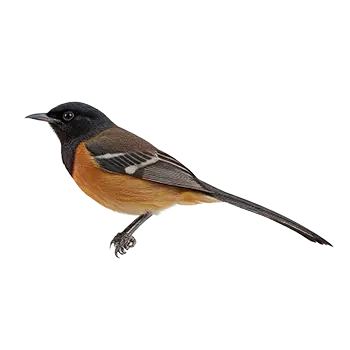

Pair Selection & Compatibility

Successful breeding of the Shama Thrush begins with the selection of a genetically suitable and behaviorally compatible pair. The White-rumped Shama is not a colonial nester, and pair formation in the wild is a selective process in which the female chooses a mate based on the quality of his song, the vigor of his display, and the desirability of his territory. In captivity, the breeder assumes the role of matchmaker, but the birds retain considerable agency in accepting or rejecting a proposed partnership.

Genetic considerations should guide pair selection before behavioral compatibility is assessed. Avoid pairing closely related individuals, as inbreeding increases the likelihood of congenital defects, reduced fertility, weakened immune function, and poor chick viability. If the birds' lineage is known, aim for a coefficient of inbreeding no higher than 6.25 percent, equivalent to the relatedness of first cousins. Where pedigree information is unavailable, source breeding stock from different breeders or geographic origins to maximize genetic diversity.

Age and condition are important selection criteria. Both the male and female should be in peak physical condition, fully molted, and free of any active health issues before breeding is attempted. Males typically reach full reproductive maturity by their second year, when the adult plumage is fully developed and the song has crystallized to its mature form. Females can breed successfully in their first full year but often produce more reliable results in their second season. Birds older than eight years may still breed, but fertility and egg viability tend to decline with age, and the physical demands of reproduction can be harder on older birds.

Introducing a prospective pair requires patience and careful observation. The standard approach is to house the male and female in adjacent cages where they can see and hear each other but cannot make physical contact. This period of visual and auditory introduction allows both birds to assess the other without the risk of aggression. A receptive female will respond to the male's singing with soft contact calls, begging postures, and wing quivering. She may also begin carrying nesting material if it is available in her cage. A male in breeding condition will intensify his song, fan his tail, and direct his display toward the female.

The duration of the introduction period varies. Some pairs show mutual interest within days, while others require weeks of gradual acclimation. If the female shows persistent fear, aggression, or avoidance toward the male after two to three weeks of visual contact, the pairing may not be compatible. Forcing a reluctant pair together risks injury and chronic stress for both birds. It is better to try a different pairing than to persist with a combination that shows clear signs of incompatibility.

Breeding Conditioning & Triggers

Bringing a Shama Thrush pair into breeding condition requires the manipulation of environmental cues that simulate the natural triggers for reproductive activity. In the wild, White-rumped Shamas breed during the monsoon season, when increasing day length, rising temperatures, and abundant insect prey converge to signal that conditions are favorable for raising young. In captivity, replicating these cues through controlled photoperiod, dietary enrichment, and environmental management brings the pair into synchronized reproductive readiness.

Photoperiod is the primary driver of reproductive conditioning. Begin extending the light period gradually, adding approximately 15 to 30 minutes per week until the birds are receiving 14 to 15 hours of light daily. This increasing photoperiod stimulates the hypothalamic-pituitary-gonadal axis, triggering the hormonal cascade that brings both sexes into breeding condition. The male's song output intensifies markedly as testosterone levels rise, and the female's oviduct begins to develop in preparation for egg production. Maintain the extended photoperiod consistently throughout the intended breeding season.

Dietary conditioning is equally critical. Increase the quantity and variety of live insects offered to both birds in the weeks leading up to breeding. High-protein, nutrient-dense food sources signal to the birds' physiology that environmental conditions can support the energy-intensive process of egg production, incubation, and chick rearing. Offer crickets, mealworms, waxworms, soldier fly larvae, and ant pupae in generous quantities. Supplement with a calcium source, such as finely crushed cuttlebone mixed into the softbill food or a liquid calcium preparation added to the water, to support eggshell formation in the female.

The breeding enclosure should be established and stabilized before the pair is united. A flight cage or small aviary measuring at least four feet long, three feet wide, and three feet tall provides adequate space for courtship, copulation, and nesting. Furnish the enclosure with dense plantings or leafy branches that create secluded areas, as Shamas prefer to nest in concealed locations that offer overhead cover. Install a half-open nest box or a small wicker basket in a sheltered corner at mid-height, and provide nesting material including dried grasses, coconut fiber, fine rootlets, and soft moss.

The decision to unite the pair should be based on clear behavioral indicators of mutual readiness. Both birds should be showing breeding-specific behaviors: the male singing intensely and displaying toward the female, and the female responding with solicitation postures, nest-material manipulation, and receptive vocalizations. When these signs are evident and sustained over several consecutive days, the pair can be placed together in the breeding enclosure. Supervise the initial meeting closely, watching for any aggression that exceeds normal courtship intensity. Brief chasing and mild dominance displays are typical, but sustained physical attacks, particularly the male targeting the female's head or back, require immediate separation.

Nesting & Egg Laying

Once the pair has been successfully united and courtship behaviors are progressing naturally, the focus shifts to supporting the nesting process through appropriate site provision, material supply, and environmental stability. The White-rumped Shama is a cavity and semi-cavity nester in the wild, selecting natural hollows in tree trunks, dense undergrowth, or sheltered rock crevices in which to construct its nest. Captive breeding success depends heavily on providing nest sites that satisfy the species' strong preferences for seclusion, overhead cover, and protection from disturbance.

The ideal nest box for a Shama Thrush is a half-open fronted box measuring approximately five inches wide, five inches deep, and six inches tall, with the open front partially screened by vegetation or a baffle that provides the female with a sense of enclosure without restricting access. Alternatively, a deep wicker basket lined with moss can serve effectively. Position the nest site at mid-height in the enclosure, shielded from direct light and away from the primary feeding area. Offer multiple potential nest sites if space permits, as the female may inspect and reject several locations before committing to one.

Nesting material should be plentiful and varied. Provide dried grasses, coconut fiber, fine strips of bark, small rootlets, moss, and soft plant down in a dish on the cage floor where the female can select what she needs. The female constructs the nest with minimal assistance from the male, building a cup-shaped structure with a foundation of coarser materials and a finer lining of soft fibers and plant down. Nest construction typically takes three to five days, during which the female should not be disturbed or her nest inspected. Excessive human interference during the nest-building phase is a common cause of nest abandonment.

Egg laying begins one to three days after nest construction is complete. The typical Shama Thrush clutch consists of three to five eggs, with four being the most common number. Eggs are laid at daily intervals, one per day, usually in the early morning hours. The eggs are pale blue-green to buff with brownish speckles concentrated at the larger end. They are small, measuring approximately 20 by 15 millimeters, and surprisingly fragile. Do not handle the eggs unless veterinary necessity requires it, as the risk of shell damage or contamination from skin oils is significant.

Incubation does not typically begin in earnest until the last or second-to-last egg is laid, which ensures that the clutch hatches relatively synchronously. However, some females begin partial incubation after the second or third egg, which can lead to staggered hatching and size disparity among the chicks. During the laying period, continue to provide the high-protein diet that supported conditioning, with particular emphasis on calcium supplementation to prevent egg-binding. Egg-binding, where an egg becomes lodged in the oviduct, is a medical emergency that can be fatal if not treated promptly. Signs include straining, a fluffed appearance, lethargy, and the female spending prolonged periods on the cage floor rather than at the nest.

Incubation & Hatching

The incubation period for the Shama Thrush lasts approximately 12 to 14 days from the onset of full incubation. The female performs the vast majority of incubation duties, sitting on the eggs for extended periods and leaving the nest only for brief feeding breaks. The male's role during incubation is to maintain territorial defense through singing, to bring food to the female at or near the nest, and to alert the female to any perceived threats. This division of labor is deeply ingrained and functions effectively when the breeding environment is stable and the pair's nutritional needs are met.

During incubation, the breeder's primary responsibility is to ensure that the female has continuous access to high-quality food and fresh water without needing to travel far from the nest. Place food dishes within easy reach of the nest site, and replenish them frequently with fresh live insects. Many experienced breeders also offer a dish of moistened softbill food immediately adjacent to the nest box, allowing the female to feed without fully leaving the eggs. Minimize all disturbances to the breeding enclosure during this period. Avoid unnecessary cage entry, loud noises, sudden movements near the enclosure, and the presence of unfamiliar people or animals. Breeding Shamas are highly sensitive to disturbance, and chronic disruption during incubation is a leading cause of egg abandonment.

Candling the eggs to assess fertility and embryonic development can be performed around day six or seven of incubation, but should only be attempted by experienced breeders who can complete the process quickly and with minimal disturbance to the female. Fertile eggs will show visible blood vessel networks and a developing embryo when held against a bright, focused light source. Infertile eggs appear clear and uniform. Removing infertile eggs from the nest is generally not necessary unless the clutch is large and the infertile eggs are preventing adequate contact between the female and the viable eggs.

As hatching approaches, typically on day 12 to 14, the eggs may show faint pipping marks where the chick's egg tooth has begun to score the shell from inside. The hatching process can take 12 to 24 hours from the first visible pip to complete emergence. Resist the temptation to assist, as premature intervention can injure the chick or separate it from the yolk sac before absorption is complete. The female will brood the newly hatched chicks closely, and the first feedings typically begin within a few hours of hatching.

Post-hatching management centers on supporting the parents' chick-rearing efforts rather than intervening directly. Dramatically increase the supply of live insects to the breeding enclosure, as the adults' food requirements escalate sharply once they are feeding a brood. Small, soft-bodied insects are particularly important during the first days, as the adults will select appropriately sized prey for the tiny chicks. Monitor the nest discreetly for signs that all chicks are being fed. In most cases, both parents share feeding duties, with the male bringing food to the nest and the female distributing it among the chicks.

Managing Multiple Clutches

Shama Thrushes are capable of producing multiple clutches in a single breeding season, and in captivity, where food is abundant and environmental conditions remain favorable, a prolific pair may attempt three or even four rounds of nesting. While the species' natural history supports multi-clutching, the breeder must carefully manage this reproductive drive to protect the health of both the breeding female and the developing chicks. Unrestricted breeding places enormous physiological demands on the female and can lead to calcium depletion, exhaustion, and premature aging.

The recommended maximum for captive Shama breeding is two clutches per season. After the second clutch has fledged, the breeding triggers should be gradually withdrawn to bring the pair out of reproductive condition. Reduce the photoperiod by 15 to 30 minutes per week until it returns to a maintenance level of 10 to 12 hours. Remove the nest box and nesting materials from the enclosure. Reduce the intensity of the diet, shifting from the enriched breeding ration back to a standard maintenance diet with moderate live insect supplementation. These environmental changes signal to the birds' endocrine systems that the breeding season has ended.

The interval between clutches should be carefully managed. After the chicks from the first clutch have fledged and are feeding independently, the female will often begin showing interest in nesting again within one to two weeks. Before allowing a second clutch, assess the female's physical condition. She should be at a healthy weight, fully feathered, and showing no signs of calcium depletion such as soft or thin-shelled eggs, leg weakness, or seizures. If the female's condition has deteriorated during the first round, delay or prevent the second clutch by removing nesting materials and reducing the photoperiod temporarily.

In some cases, the pair may double-brood naturally, with the female beginning a new clutch while the male assumes primary responsibility for feeding the fledglings from the first brood. This is a natural behavior that occurs in wild Shama populations, and it can be allowed in captivity provided that the enclosure is large enough to accommodate the nesting female and the mobile fledglings without conflict. The male's ability to feed fledglings while the female incubates is one of the reasons that the biparental care system of the Shama Thrush is so effective.

If the pair produces infertile clutches, investigate the cause before allowing repeated attempts. Common causes of infertility include male immaturity or reproductive dysfunction, pair incompatibility resulting in incomplete copulation, nutritional deficiencies particularly in vitamin E and selenium, and environmental stress that disrupts mating behavior. Two consecutive infertile clutches warrant veterinary examination of both birds, including cloacal swabs for infection and, if available, hormonal assays to confirm reproductive function.

Breeding Health & Complications

Breeding places unique physiological demands on the Shama Thrush that can expose or exacerbate health vulnerabilities in both the male and the female. Anticipating potential complications and monitoring for early warning signs is essential for protecting the breeding pair and ensuring the best possible outcomes for their offspring. A veterinary relationship established before the breeding season allows rapid intervention when problems arise.

Egg-binding is the most dangerous acute complication of the breeding process and requires immediate veterinary attention. A hen that is straining, sitting low on the perch or on the cage floor, panting, showing a swollen abdomen, or passing watery droppings without a fecal component may have a retained egg. Risk factors include calcium deficiency, obesity, cold temperatures during the laying period, and first-time breeding in young or undersized females. Emergency treatment may include warm soaking, calcium and oxytocin administration, and in severe cases, manual extraction or surgical intervention. Prevention centers on adequate pre-breeding calcium supplementation and ensuring that the female is in optimal body condition before breeding is attempted.

Soft-shelled or thin-shelled eggs indicate calcium insufficiency and are both a health risk for the female and a predictor of poor hatchability. If soft-shelled eggs are observed, immediately increase calcium supplementation and consult your veterinarian about injectable calcium preparations. The underlying cause may be dietary inadequacy, impaired calcium absorption due to vitamin D3 deficiency, or metabolic bone disease. Do not allow the female to continue laying without addressing the calcium imbalance, as progressive depletion can lead to hypocalcemic seizures, pathological fractures, and death.

Infectious diseases can disrupt breeding at any stage. Bacterial infections of the oviduct, known as salpingitis, can cause infertility, egg abnormalities, and systemic illness in the female. The male is not immune to breeding-related infections, as cloacal contact during mating can transmit pathogens between partners. Common bacterial culprits include Escherichia coli, Klebsiella, and Enterococcus species. A pre-breeding veterinary examination that includes cloacal cultures for both birds helps identify and treat infections before they compromise fertility or chick health.

Parental behavior complications, while not strictly medical, can have serious consequences for chick survival. Egg eating, egg abandonment, failure to brood, and chick aggression are all documented in captive Shama breeding. First-time parents are more likely to exhibit these behaviors, and experienced pairs generally become more reliable with successive clutches. If a pair consistently fails in parental duties despite adequate environmental conditions, the breeder may need to consider foster parenting under another Shama pair or hand-rearing as alternatives, both of which require additional expertise and resources.

Record Keeping & Breeding Ethics

Meticulous record keeping is the hallmark of responsible Shama Thrush breeding and the foundation upon which long-term breeding program success is built. Every breeding attempt generates data that informs future pair selection, environmental management, and health monitoring. Without organized records, the breeder is operating blind, unable to track genetic lines, identify patterns in fertility or chick survival, or demonstrate the provenance of birds offered for sale or exchange.

For each breeding attempt, record the identities and band numbers of both parents, the date of pair introduction, the date of first copulation observed, the date each egg was laid, the total clutch size, candling results and estimated fertility, the hatch date and number of chicks hatched, daily chick weights and development notes, the fledging date, and the weaning date. Note any complications such as egg-binding, infertile eggs, dead-in-shell embryos, parental neglect, or chick illness. Over multiple seasons, this data reveals patterns that may not be apparent from any single breeding cycle.

Genetic management becomes critically important as a breeding program matures. Maintain a studbook or pedigree database that tracks the lineage of every bird in your collection and every bird produced. Before making any pairing, consult the pedigree to verify that the prospective mates are not closely related. Where possible, coordinate with other breeders to exchange unrelated stock, expanding the genetic base of the captive population and reducing the accumulation of deleterious recessive alleles that accompanies repeated closed-population breeding.

Ethical breeding practice extends beyond genetics to encompass the welfare of every bird involved. Breed only from birds that are physically healthy, behaviorally sound, and of appropriate age and condition. Do not push breeding pairs beyond two clutches per season, and allow adequate recovery time between seasons. Screen all breeding stock for common infectious diseases before the season begins. Ensure that every chick produced has a secure placement, whether in your own collection or with a vetted, knowledgeable keeper. Overproduction of chicks without guaranteed homes is irresponsible and contributes to the problem of unwanted and poorly housed birds.

The legal framework governing Shama Thrush breeding varies by jurisdiction and may include regulations related to species protection, captive breeding permits, wildlife trade, and import and export controls. The White-rumped Shama is listed under CITES Appendix II in some range states, and domestic regulations may impose additional requirements. Before establishing a breeding program, research the laws applicable in your jurisdiction and ensure full compliance. Maintain documentation that demonstrates the legal provenance of your breeding stock, including purchase records, import permits, and veterinary health certificates. Operating within the legal framework protects both the breeder and the broader conservation interests of the species.

Always consult a qualified professional before making any health-related decisions. This content is provided for informational reference only and should not replace professional guidance specific to your animal.