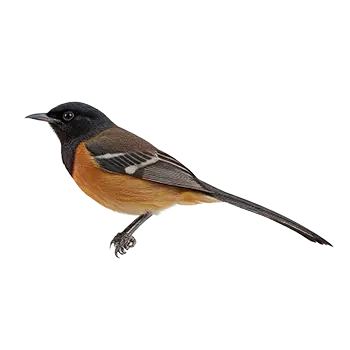

The First 24 Hours

Shama Thrush chicks hatch after an incubation period of approximately 12 to 14 days, emerging as tiny, altricial nestlings that are entirely helpless. The newly hatched chick weighs roughly 3 to 4 grams and is nearly naked, covered only in sparse tufts of natal down concentrated along the dorsal feather tracts. Its eyes are sealed shut, its limbs lack coordination, and its survival depends entirely on the attentive care of its parents or, in captive breeding situations, a skilled hand-rearer. The first day of life establishes the physiological foundation upon which all subsequent development is built.

In parent-raised clutches, the hen will begin feeding the chicks within the first few hours after hatching. Shama Thrushes are insectivorous birds, and the hen provides small, soft-bodied insects and larvae that she pre-processes before delivering to the chicks. This initial diet is rich in protein and moisture, both of which are critical for the rapid cellular growth that characterizes the neonatal period. The cock bird typically assists with food delivery, bringing insects to the hen at the nest or feeding the chicks directly as they grow stronger.

For hand-rearing situations, the first feeding should not occur until the yolk sac has been fully absorbed, which generally takes six to ten hours after hatching. Attempting to feed before absorption is complete risks serious digestive disturbance. The hand-rearing formula should be an insectivore-specific preparation rather than a generic parrot formula, as the nutritional profile of an insectivorous species differs substantially from that of a granivorous or frugivorous bird. The formula must be thin and watery for the first feedings, gradually thickening over subsequent days as the chick's crop and digestive tract mature.

The brooding environment must be established and stabilized before the chick hatches. Temperatures in the brooder or nest box should be maintained between 95 and 98 degrees Fahrenheit during the first 24 hours, with relative humidity between 55 and 65 percent. Shama Thrush chicks are exceptionally small compared to many commonly kept cage birds, which makes them disproportionately vulnerable to heat loss. Even a brief drop in ambient temperature can cause metabolic stress that compromises the chick's ability to digest food and grow. Monitor the brooder with a reliable digital thermometer and hygrometer, checking readings at least every two hours during the first day.

Feeding & Nutrition

Feeding newborn Shama Thrush chicks requires an understanding of the species' insectivorous dietary needs. Unlike seed-eating or fruit-eating parrots, Shamas rely almost entirely on animal protein during the nestling phase, and the quality and composition of their diet during the first weeks directly influence feather development, skeletal growth, immune competence, and the eventual quality of the adult song. Nutritional shortfalls during this period can produce lasting deficits that no amount of later supplementation can fully correct.

Parent-raised chicks receive a diet of live insects that the adults capture and deliver to the nest. In captivity, breeding pairs should be supplied with a generous and varied selection of live food including small mealworms, waxworms, fruit flies, and commercially bred crickets of appropriate size. Many experienced Shama breeders also offer ant pupae, which are a highly nutritious and easily digestible food source favored by the adults for feeding very young chicks. Supplementing the live food supply with a high-quality softbill food moistened to a crumbly consistency gives the parents additional options for provisioning the nest.

Hand-feeding a Shama Thrush chick is considerably more challenging than hand-feeding a comparably sized parrot chick because of the species' small size and the rapid feeding rhythm required. During the first week, feedings should occur every 30 to 45 minutes during daylight hours. The feeding instrument is typically a pair of blunt-tipped forceps or a very fine syringe fitted with a soft catheter tip. Each feeding delivers only a tiny volume, often less than half a milliliter, so precision is paramount. The formula or food must be warmed to approximately 100 to 104 degrees Fahrenheit, as cold food will slow crop motility and increase the risk of sour crop.

As the chick approaches the end of its first week and into the second week, feeding intervals can be extended to every 45 minutes to one hour. The volume per feeding increases gradually as the crop expands. By the second week, many hand-rearers begin introducing finely chopped insects alongside the formula, placing tiny pieces directly into the chick's gaping mouth. This transition mirrors what parent birds do naturally and helps the chick's digestive system adapt to whole food textures. Maintain a daily weight log to confirm that the chick is gaining consistently, as weight trajectory is the single most reliable indicator of nutritional adequacy.

Hygiene during feeding cannot be overemphasized. All feeding instruments must be sterilized between uses, and any uneaten formula must be discarded immediately. Shama Thrush chicks are susceptible to bacterial and fungal infections of the crop and gastrointestinal tract, particularly Candida and various gram-negative bacteria. A contaminated feeding instrument or spoiled formula is often the vector for these infections. Keep the chick's face and beak clean after each feeding, gently wiping away any residue with a damp cotton swab to prevent food from hardening around the commissures of the bill.

Developmental Milestones

The developmental timeline of a Shama Thrush chick is compressed compared to larger passerines and dramatically faster than that of psittacines. From hatching to fledging, the entire nestling period spans only 12 to 15 days, meaning that every day brings visible and significant changes. Caregivers must be observant and responsive, as the window for identifying and correcting developmental problems is narrow.

During the first three days, the chick's primary activities are feeding and sleeping. The skin is translucent enough to see the crop contents, which provides a useful visual check on feeding adequacy. The chick's gape reflex is strong and indiscriminate, triggered by vibrations in the nest or the shadow of a parent passing overhead. Limb movement is minimal, limited to slight repositioning within the nest cup. The chick's weight should roughly double during these first three days if nutrition is adequate.

By days four through six, the pin feathers begin to erupt along the wings, back, and head. The eyes start to slit open, typically between days four and five, and the chick becomes increasingly responsive to visual stimuli. Leg strength improves noticeably, and the chick begins to push itself into a more upright posture during feeding. Vocalizations diversify from a simple begging call to a slightly more complex repertoire that includes softer contact calls between feedings.

From day seven through day ten, feather growth accelerates rapidly. The pin feathers on the wings and tail begin to unfurl, revealing the characteristic dark plumage of the juvenile Shama. The chick's coordination improves dramatically during this period, and it can grip the nest material with its feet, shuffle its position within the nest, and preen the emerging feathers. The chick also begins producing formed fecal sacs, which in a parent-raised nest the adults remove to maintain hygiene. In a hand-rearing setup, the caregiver must ensure the brooder remains clean as the chick's output increases.

By days eleven through fourteen, the chick is substantially feathered and visibly restless, crouching and wing-fluttering in preparation for fledging. The flight feathers are not yet fully grown, but they are long enough to support short, clumsy flights. The chick may begin to perch on the rim of the nest or brooder, and in a parent-raised scenario, the adults will often reduce feeding frequency at the nest to encourage the chick to leave. This is the threshold of the juvenile stage, and the transition can happen suddenly, sometimes within a matter of hours on a single day.

Temperature & Environment

Controlling the thermal and physical environment is one of the most critical responsibilities when caring for newborn Shama Thrush chicks. Their diminutive size gives them an exceptionally high surface-area-to-volume ratio, which means they lose body heat far more rapidly than larger bird species. Without consistent external warmth, a Shama chick's core temperature will drop within minutes, triggering a cascade of metabolic dysfunction that can quickly become fatal.

For the first three to four days, the brooder temperature should be held at 95 to 98 degrees Fahrenheit. Because Shama chicks develop so rapidly, the temperature can begin to be reduced sooner than it would be for a slower-developing species. By the end of the first week, when pin feathers are emerging, the temperature can be lowered to approximately 90 to 92 degrees. During the second week, as contour feathers begin to cover the body, the temperature can be further reduced to 85 to 88 degrees. By the time the chick is approaching fledging age at around 12 to 14 days, it should be comfortable at room temperature, roughly 75 to 80 degrees, provided it is well feathered.

Humidity management is equally important, particularly for a species whose natural habitat is the humid tropical and subtropical forests of South and Southeast Asia. The White-rumped Shama evolved in environments where relative humidity commonly exceeds 70 percent, and chicks raised in overly dry conditions may experience dehydration, poor feather quality, and increased susceptibility to respiratory irritation. Maintain brooder humidity at 60 to 70 percent, using a shallow water dish, damp sponge, or commercial humidifier as needed. Monitor with a digital hygrometer placed at chick level.

The nest or brooder substrate should be soft, absorbent, and non-fibrous. Paper towels layered over a base of soft tissue paper work well for young Shama chicks. Avoid loose substrates such as wood shavings, vermiculite, or sand, as tiny chicks may ingest these materials. The substrate should be changed at least three times daily during the first week, as the warm, moist environment that supports chick survival also promotes rapid bacterial growth. Disinfect the brooder walls and floor daily with an avian-safe disinfectant, rinsing thoroughly to remove any chemical residue before returning the chick.

Lighting in the rearing area should follow a natural photoperiod appropriate to the season. Shama Thrushes are crepuscular in their activity patterns, most active during dawn and dusk, and chicks should not be subjected to constant bright light. A cycle of approximately 12 to 14 hours of light followed by 10 to 12 hours of darkness supports normal hormonal and metabolic rhythms. During the dark period, the brooder should remain undisturbed except for any necessary overnight feedings during the first few days of life.

Early Socialization

Socialization during the neonatal period shapes the Shama Thrush's long-term comfort with human interaction and its adaptability to a captive environment. The White-rumped Shama is a naturally wary and territorial species, and birds that receive no positive human contact during their formative days often develop persistent fearfulness that can be difficult to modify later in life. Conversely, chicks that are handled gently and consistently from an early age tend to become confident, engaged companion birds that tolerate routine husbandry with minimal stress.

For hand-raised chicks, every feeding session is a socialization opportunity. The chick quickly associates the caregiver's hands, voice, and presence with the comfort of being fed and warmed. Speak softly and consistently during each interaction, using a calm, low tone that does not startle the chick. Avoid abrupt movements, sudden noises, or passing the chick between multiple handlers during the first week. Consistency in the caregiver builds a secure attachment that forms the basis of the bird's trust in humans.

As the chick's eyes open during the fourth and fifth days, it begins to process visual information and form associations between sights and experiences. This is an ideal time to introduce gentle environmental enrichment. Allow the chick to hear the normal sounds of the household at a moderate volume, including conversation, soft music, and the ambient noises of daily life. These auditory experiences help the chick acclimate to the sensory complexity of a domestic environment and reduce the likelihood of noise-related fear responses in adulthood.

Parent-raised Shama chicks present a different socialization challenge. The adults are protective of the nest and may become agitated or aggressive if disturbed too frequently. Begin brief handling sessions around day five or six, limiting each session to one or two minutes and timing them to coincide with periods when the adults are away from the nest foraging. The goal is to familiarize the chick with human scent and touch without undermining the parents' confidence in the nest site. If the adults show signs of severe distress, such as abandoning the nest or refusing to feed, reduce the frequency and duration of handling sessions immediately.

It is worth noting that socialization during the newborn phase is only the first chapter in a longer process. The juvenile stage, when the fledged chick is learning to navigate its environment independently, offers additional and arguably more influential socialization opportunities. The newborn phase lays the groundwork, establishing a baseline comfort with human presence that can be built upon during the weeks and months that follow.

Health Screening & Veterinary Care

Proactive health monitoring begins the moment a Shama Thrush chick hatches. Because the nestling period is so brief, health problems that might take days to manifest in a larger species can develop and become critical within hours in a Shama chick. Establishing a relationship with a veterinarian experienced in passerine and softbill medicine is essential, ideally before the breeding season begins, so that expert guidance is available immediately if a problem arises.

The first veterinary assessment for a hand-raised chick should occur within the first two to three days of life. A physical examination at this age evaluates the chick's hydration status, body condition, umbilical healing, and the presence of any congenital abnormalities such as splayed legs, beak malformations, or unabsorbed yolk material. A crop swab may be taken to establish a baseline microbial profile and screen for early Candida overgrowth or gram-negative bacterial colonization, both of which are common in hand-reared softbills.

Daily health monitoring by the caregiver is equally important. Weigh the chick at the same time each day using a digital gram scale accurate to at least 0.1 grams. Record the weight alongside feeding data and observations about droppings, behavior, and physical appearance. A healthy Shama chick gains weight steadily and predictably, typically adding 10 to 15 percent of its body weight per day during the first week. Any plateau or decline lasting more than one day warrants investigation, as weight loss in a neonatal chick can indicate crop stasis, infection, inadequate feeding volume, or environmental stress.

Droppings are a valuable diagnostic window into a chick's health. Normal droppings in a young Shama consist of a small, well-formed fecal component, a white or off-white urate portion, and a small amount of clear liquid urine. Parent-raised chicks produce their droppings enclosed in a mucous membrane called a fecal sac, which the parents remove from the nest. In hand-reared chicks, droppings are deposited directly into the brooder substrate. Changes in color, consistency, volume, or odor can signal digestive dysfunction, infection, or dietary imbalance. Watery droppings, green or yellow discoloration, undigested food particles, or a foul smell should prompt an immediate veterinary consultation.

Common health issues in newborn Shama Thrush chicks include crop stasis, aspiration injuries from improper hand-feeding technique, bacterial enteritis, and fungal infections. Crop stasis, where the crop fails to empty at a normal rate, is often the first sign of an underlying problem such as infection, dehydration, or formula that is too thick or too cool. If the crop remains distended and firm more than two hours after a feeding, do not offer additional food. Instead, gently warm the chick, ensure adequate humidity, and seek veterinary advice. Attempting to resolve crop stasis without professional guidance can worsen the condition and endanger the chick.

When to Worry

Caring for a newborn Shama Thrush requires vigilance, particularly because the species' rapid development means that problems escalate quickly. Learning to distinguish between normal variations in chick behavior and genuine warning signs is a skill that develops with experience, but there are several red flags that should always prompt immediate action regardless of the caregiver's experience level.

A chick that fails to gape in response to feeding stimuli is a serious concern. The gape reflex is one of the strongest instinctive behaviors in a healthy passerine chick, and its absence or weakness suggests significant physiological compromise. Possible causes include hypothermia, sepsis, neurological dysfunction, or severe dehydration. Before assuming the worst, verify that the brooder temperature is correct and that the chick is adequately hydrated. If the chick remains unresponsive to feeding cues after environmental factors have been optimized, veterinary intervention is urgent.

Respiratory distress is another critical warning sign. A healthy Shama chick breathes quietly and regularly, with no visible effort. Open-mouth breathing, tail bobbing, audible clicking or wheezing, or nasal discharge all indicate respiratory compromise. In neonatal chicks, respiratory infections can progress from subtle symptoms to life-threatening illness within 12 to 24 hours. Aspiration, where formula or food enters the trachea during feeding, is a common cause of acute respiratory distress in hand-reared chicks and requires immediate veterinary treatment.

Skin color provides important clues about a chick's circulatory and metabolic status. A well-perfused, healthy chick has pinkish skin with good turgor. Skin that appears pale, grayish, or mottled suggests poor circulation, which may result from chilling, dehydration, or systemic illness. Conversely, skin that appears unusually red or flushed may indicate overheating or fever. Because Shama chicks have relatively transparent skin during the first few days, these color changes are easier to detect early on and become less visible as feathering progresses.

Weight loss or stagnation over more than one day is always cause for concern. In a species where normal daily weight gain is 10 to 15 percent of body weight, even a single day of no gain represents a significant deviation from the expected trajectory. Two consecutive days of weight loss constitute an emergency. Possible causes are numerous and range from inadequate feeding volume or frequency to subclinical infection, environmental stress, or congenital metabolic disorders. Begin troubleshooting with the most common and correctable factors, including feeding technique, formula preparation, and brooder conditions, but consult a veterinarian without delay if the trend does not reverse within a few hours of adjustment. Beyond weight, monitor the chick's overall demeanor and activity level relative to its age. A chick that was previously vigorous and vocal but becomes lethargic, silent, or unresponsive has undergone a meaningful change in condition. Similarly, a chick that suddenly becomes excessively restless, crying persistently despite having been recently fed, may be in pain or discomfort. Trust your observations and err on the side of seeking professional guidance, as in neonatal Shama care the cost of a false alarm is negligible compared to the cost of delayed intervention.

Always consult a qualified professional before making any health-related decisions. This content is provided for informational reference only and should not replace professional guidance specific to your animal.