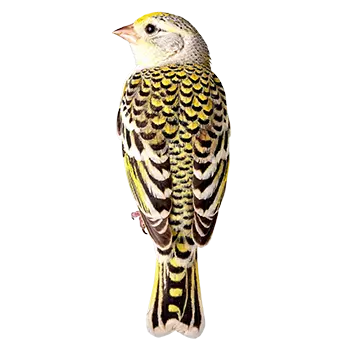

The First 24 Hours

Lizard Canary chicks hatch after an incubation period of approximately 13 to 14 days, emerging as tiny, virtually helpless creatures weighing roughly 1.5 to 2 grams. The hatchling is blind, nearly naked except for sparse tufts of natal down, and entirely dependent on the hen for warmth and nourishment. Unlike some larger psittacine species where hand-rearing from day one is common, canary chicks are almost always parent-raised, and the Lizard Canary hen is generally an attentive and capable mother when provided with a calm, well-provisioned environment.

Within the first few hours after hatching, the hen will begin feeding the chick a regurgitated mixture of softened seed and egg food. This initial feeding is critical because it introduces essential nutrients and beneficial gut flora that prime the chick's digestive tract for the rapid growth ahead. Breeders should ensure that a high-quality egg food supplement, along with soaked or sprouted seed, is available to the hen well before the anticipated hatch date so she can begin conditioning her crop contents. The cock bird often assists by feeding the hen during this period, allowing her to remain on the nest and keep the chick warm.

The nest environment must remain stable during these first hours. Room temperature should be maintained between 65 and 75 degrees Fahrenheit, and the nest box or cup should be positioned away from drafts, direct sunlight, and any sources of vibration or sudden noise. The Lizard Canary is a heritage breed with a temperament that tends toward the alert and sometimes skittish side, so the hen can be easily disturbed by environmental disruptions. A stressed hen may abandon the nest or fail to feed consistently, so minimizing disturbance is paramount during the hatching window.

Breeders should observe the nest discreetly during the first day, checking that the chick has been fed by looking for a visible crop fill, which appears as a small, rounded bulge at the base of the chick's neck. A chick whose crop remains flat and empty after six to eight hours post-hatch may not be receiving adequate parental feeding. In such cases, supplemental feeding with a dilute hand-rearing formula delivered via a fine-tipped syringe may be necessary to prevent dehydration and hypoglycemia, though this intervention should be viewed as a last resort given the risks of handling such a small bird.

Feeding & Nutrition

Nutrition during the first two weeks of a Lizard Canary chick's life sets the trajectory for its overall health, feather quality, and the development of the distinctive spangled plumage pattern that defines the breed. The hen does the vast majority of the feeding work, and the breeder's primary role is to ensure she has access to the best possible diet so that what she delivers to the chick is nutritionally complete. A deficient maternal diet translates directly into stunted, poorly feathered, or sickly chicks.

The cornerstone of the rearing diet is a high-protein egg food, which should be offered fresh at least twice daily. Commercial canary egg foods formulated for breeding season are widely available and provide a balanced amino acid profile, but many experienced Lizard Canary breeders supplement with finely grated hard-boiled egg mixed with crushed plain biscuit or bread crumbs. Soaked seed, particularly canary grass seed and rape seed that has been softened overnight, is also an essential component because it is easier for the hen to regurgitate and for the chick to digest than dry seed alone.

Greens and sprouted seeds add vital micronutrients and moisture to the rearing diet. Finely chopped dandelion greens, chickweed, broccoli florets, and sprouted mung beans or lentils provide vitamins A, C, and K along with trace minerals. Introduce these items gradually if the hen is not accustomed to them, as sudden dietary changes can cause loose droppings in both the hen and the chicks. A cuttlebone and a mineral block should be permanently available in the breeding cage to support the calcium demands placed on the hen during feeding.

As the chick grows during the first week, feeding frequency from the hen naturally increases. By around day five, the chick's crop should be visibly full at multiple points throughout the day. Breeders who weigh chicks daily using a precision gram scale can track growth curves and identify any stalls early. A healthy Lizard Canary chick should roughly double its hatch weight by day four or five and continue gaining steadily thereafter. Any plateau lasting more than 24 hours warrants closer observation of the hen's feeding behavior and may indicate a need for dietary adjustment or veterinary consultation.

Water quality is an often-overlooked element of the feeding equation. The hen's water should be fresh, clean, and changed at least twice daily during the rearing period. Some breeders add a small amount of apple cider vinegar to the water as a mild probiotic support, though this should be done cautiously and never in metal water dispensers. Contaminated water can introduce harmful bacteria that devastate a chick's underdeveloped immune system within hours.

Developmental Milestones

Lizard Canary chicks develop rapidly compared to many companion bird species, progressing from blind, nearly naked hatchlings to fully feathered fledglings in approximately three weeks. Understanding the normal developmental timeline is essential for breeders, as deviations from expected milestones can be early indicators of nutritional deficiencies, illness, or environmental problems. The Lizard Canary's unique spangled feather pattern also means that plumage development carries particular significance for this breed.

During the first three to four days, the chick's primary activities are feeding and sleeping. The eyes remain closed, and the chick relies entirely on tactile and auditory cues to orient toward the hen's beak for feeding. Natal down, which is typically pale and wispy, provides minimal insulation, making the hen's brooding warmth essential. By day four or five, the chick's legs have strengthened enough to allow it to shift position within the nest, and the first pin feathers begin to emerge along the wing and back tracts.

The eyes typically begin to open between days five and seven, gradually widening over the course of a day or two until the chick has full visual awareness. This milestone marks a noticeable behavioral shift, as the chick becomes more responsive to movement and light. Pin feather development accelerates during the second week, and by day ten to twelve, the emerging feathers begin to show the first hints of the dark melanin patterning that will eventually form the breed's characteristic spangled or rowel markings. In gold-ground Lizard Canaries, the feather tips begin to show warm, buff-toned edges, while silver-ground birds display cooler, paler fringing.

By day 14 to 16, the chick is substantially feathered and beginning to exercise its wings within the nest. The tail feathers are among the last to emerge and will not reach full length until after the chick has fledged. Around day 18 to 21, the chick makes its first attempts to leave the nest, perching clumsily on the edge before venturing to nearby perches. This fledging period is both exciting and perilous, as the chick's flight skills are rudimentary and it can injure itself on cage furnishings or by falling to the cage floor. Ensure all perches are positioned low enough to prevent dangerous falls and remove any objects that could trap or injure a clumsy fledgling.

Temperature & Environment

The environmental conditions in the breeding room play a decisive role in the survival and healthy development of Lizard Canary chicks. Unlike hand-raised parrot chicks that live in thermostatically controlled brooders, canary chicks depend on the hen for warmth during their first week to ten days of life. The breeder's responsibility is to ensure the ambient conditions in the room support the hen's ability to regulate nest temperature effectively without creating conditions that promote bacterial growth or respiratory stress.

Room temperature during the rearing period should be maintained between 65 and 75 degrees Fahrenheit. Temperatures below 60 degrees force the hen to spend excessive time brooding at the expense of feeding, which can slow chick growth. Temperatures above 80 degrees can cause the hen to leave the nest too frequently, exposing incompletely feathered chicks to dangerous heat loss through evaporation. Relative humidity should be kept between 50 and 60 percent. Excessively dry conditions can dehydrate the chicks and interfere with feather sheath development, while overly humid environments promote mold growth in the nest material and create favorable conditions for bacterial infections.

The nest itself requires regular maintenance. Lizard Canary hens typically build their nests in commercially available canary nest pans or cups lined with felt or burlap, which the hen then furnishes with soft nesting material such as cotton fiber, sisal, or coconut fiber. As the chicks grow, the nest accumulates droppings and food debris that can become a breeding ground for pathogens. Some breeders carefully replace soiled nesting material every two to three days, transferring the chicks briefly to a warm, clean surface while the nest is refreshed. Others prefer to minimize handling and simply add a clean layer of material on top. Either approach can work, but hygiene must not be neglected.

Lighting also influences chick development. A consistent photoperiod of 14 to 16 hours of light per day supports the hen's feeding activity and helps regulate the chicks' developing circadian rhythms. Avoid abrupt changes in lighting schedules, as sudden shifts can disrupt the hen's behavior. Natural light supplemented with full-spectrum artificial lighting is ideal, as it promotes vitamin D synthesis and supports healthy bone and feather development in the growing chicks.

Air quality is the final environmental factor that demands attention. The breeding room should be well-ventilated but free from direct drafts. Avoid using aerosol sprays, scented candles, non-stick cookware fumes, or strong cleaning chemicals anywhere near the breeding area. Canaries have highly efficient respiratory systems that make them acutely sensitive to airborne toxins. A hepa-grade air purifier can help maintain clean air without creating drafts that chill the nest.

Early Socialization

Socialization of Lizard Canary chicks follows a fundamentally different model than what is practiced with hand-raised parrots. Canaries are not companion birds in the same tactile, interactive sense as parrots, and excessive handling of young canary chicks can cause more stress than benefit. The socialization goal for a Lizard Canary chick is not to create a cuddly pet but rather to produce a bird that is calm, unafraid of normal household activity, and comfortable in the presence of humans. This distinction is important because well-socialized canaries sing more freely, exhibit fewer stress behaviors, and adapt more readily to new environments.

During the nest phase, socialization is largely passive. The chicks become accustomed to the breeder's presence through daily cage maintenance, feeding routines, and the brief handling required for health checks or nest cleaning. Speaking in a calm, consistent tone near the breeding cage helps the chicks associate human voices with safety rather than threat. Avoid sudden appearances at the cage, loud exclamations, or rapid hand movements, all of which can trigger panic responses in both the hen and the chicks.

Once the chicks have fledged and are beginning to explore the cage independently, typically around three weeks of age, gentle socialization opportunities increase. Offering small treats such as a sprig of millet spray or a leaf of chickweed by hand encourages the fledgling to approach voluntarily rather than being pursued or captured. These positive associations build a foundation of trust that makes future handling for cage transfers, veterinary exams, or show preparation far less stressful for the bird.

For Lizard Canaries destined for the show bench, early exposure to the show cage environment is a valuable form of socialization. Introducing the young bird to a standard show cage for brief periods starting around four to five weeks of age helps it acclimate to the confined space and the experience of being observed at close range. Birds that are caged-trained early typically settle more quickly at shows, display better posture, and present their distinctive spangled plumage to best advantage rather than cowering or fluttering anxiously against the cage bars.

Health Screening & Vet Visits

Proactive health management during the newborn phase lays the groundwork for a long and healthy life for a Lizard Canary. While canary chicks are less commonly subjected to the extensive neonatal veterinary protocols seen in parrot breeding, responsible breeders still maintain a structured approach to health monitoring and know when professional intervention is warranted. Finding an avian veterinarian with experience in passerine species, not just parrots, is an important first step that should be completed before the breeding season begins.

Daily visual health checks are the breeder's first line of defense. Observe each chick for signs of vigorous feeding response, steady weight gain, normal skin coloration, and properly developing feathers. The skin of a healthy canary chick is pinkish and slightly translucent, allowing visualization of the crop contents and developing internal structures. Skin that appears dusky, bluish, or mottled may indicate circulatory problems or chilling. Feather tracts should emerge symmetrically, and any bald patches, stunted pin feathers, or abnormal feather texture should be noted and investigated.

Common health threats to canary chicks include bacterial infections, particularly those caused by Escherichia coli and Staphylococcus species, which can enter through contaminated food, water, or nesting material. Candidiasis, a fungal infection of the crop and digestive tract, is another frequent concern, especially in chicks that are stressed or kept in overly warm, humid conditions. Symptoms include a slow-emptying crop, white patches visible through the crop wall, and a generally listless demeanor. Air sac mites, while more commonly a problem in older finches and canaries, can occasionally affect chicks and cause clicking or labored breathing.

A veterinary consultation is warranted if a chick fails to gain weight for more than 24 hours, develops abnormal droppings that persist beyond a single feeding cycle, shows signs of respiratory distress, or displays any swelling or deformity of the legs, feet, or beak. The veterinarian may perform a crop wash, fecal gram stain, or complete blood count depending on the presentation. For breeders maintaining larger flocks, establishing a routine post-season health screening protocol, including testing for common canary pathogens such as canary pox virus and Atoxoplasma, helps protect the entire collection and informs breeding decisions for subsequent seasons.

Record-keeping is an indispensable component of health management. Maintain a log for each clutch that includes hatch dates, daily weights, feeding observations, any medications administered, and veterinary findings. These records allow you to identify patterns across breeding seasons, trace the source of recurring health issues, and provide your veterinarian with the detailed history needed for accurate diagnosis.

When to Worry

Even experienced Lizard Canary breeders occasionally encounter situations where a chick's condition raises concern. Learning to differentiate between normal developmental variation and genuine warning signs is a skill that develops over time, but certain red flags should always prompt immediate attention regardless of a breeder's experience level. The small size and rapid metabolism of canary chicks mean that a deteriorating situation can become critical within hours, making early recognition essential.

A chick that is not being fed is the most urgent concern in the first days of life. If the crop remains persistently flat and empty, the chick will quickly become dehydrated and hypoglycemic. Visual signs of dehydration include dry, reddened skin, sunken eyes, and reduced skin turgor. A dehydrated chick may also become progressively weaker and less responsive to the hen's feeding solicitations, creating a vicious cycle. If the hen is neglecting one or more chicks, the breeder must decide quickly whether to attempt supplemental hand-feeding or to foster the chick under another hen with a clutch of similar age.

Respiratory distress in a chick presents as open-mouth breathing, tail bobbing, audible clicking or wheezing, or a persistent stretching of the neck. These symptoms can indicate air sac mites, bacterial pneumonia, aspergillosis, or even aspiration of food material. Respiratory conditions in canary chicks progress rapidly, and delaying treatment by even a day can be fatal. Isolate the affected chick in a warm, humid environment and contact your avian veterinarian immediately.

Abnormal droppings are another important warning sign. Healthy canary chick droppings consist of a small, formed fecal component surrounded by a white urate portion and a small amount of clear liquid. Droppings that are watery, discolored, blood-tinged, or foul-smelling suggest gastrointestinal infection, dietary problems, or internal parasites. Similarly, a chick whose vent area is persistently soiled or pasted over may be suffering from enteritis and requires gentle cleaning to prevent obstruction, along with veterinary evaluation to address the underlying cause.

Growth abnormalities that become apparent during the nest phase include splayed legs, where one or both legs extend laterally rather than tucking beneath the body, and beak deformities such as scissor beak or undershot mandible. Splayed legs can sometimes be corrected if caught early through the use of a small hobble device fashioned from soft material that gently repositions the legs, but this intervention requires guidance from an experienced breeder or veterinarian. Beak deformities are generally more difficult to address and may affect the bird's ability to feed independently after weaning. In all cases, early detection and prompt intervention give the chick the best chance of a successful outcome.

Always consult a qualified professional before making any health-related decisions. This content is provided for informational reference only and should not replace professional guidance specific to your animal.