
The Weaning Transition

Weaning is one of the most consequential transitions in a young Lizard Canary's life, marking the shift from complete parental dependence to nutritional self-sufficiency. The process typically begins around three weeks of age when the fledgling starts to show interest in the food sources within its cage, pecking tentatively at soaked seed, egg food, and soft greens. The hen continues to feed the chick during this period, but her contributions gradually decrease as the youngster becomes more proficient at cracking seed and consuming solid foods independently.

The timing of weaning varies between individual birds and should never be forced according to a rigid calendar. A chick is truly weaned only when it can maintain or gain weight without any parental feeding. Premature separation from the hen, before the chick has demonstrated consistent independent eating, can result in dangerous weight loss, stress-induced illness, and behavioral problems. Most Lizard Canary chicks achieve full weaning between 28 and 35 days of age, though some individuals may take a few days longer.

During the weaning period, ensure that food is presented in forms the young bird can easily access and manipulate. Scatter soaked seed and fine-textured egg food directly on the cage floor in a shallow dish, as fledglings often feed more readily from ground-level sources than from elevated feeders designed for adult birds. Millet spray hung at perch level provides both a food source and an engaging foraging activity that encourages the chick to practice the mechanical skills of seed husking. Fresh water should be offered in a shallow, stable vessel to prevent drowning, as newly fledged canaries can be clumsy around deep water containers.

Once the chick is eating consistently on its own, it can be separated from the parents and moved to a juvenile flight cage with other weaned youngsters of similar age. This transition should be done calmly and with minimal handling. Observe the newly separated bird closely for the first 48 hours, confirming that it continues to eat and drink in its new environment. A bird that sits fluffed on the cage floor, ignores food, or vocalizes persistently may not have been fully ready for separation and should be returned to the breeding cage for a few more days of parental support.

Nutrition for Growing Juveniles

The nutritional demands of a juvenile Lizard Canary are substantially higher than those of an adult bird because the young canary is simultaneously completing its skeletal growth, building muscle mass, developing its immune system, and preparing for the energetically demanding first molt. A diet that is adequate for a mature canary in maintenance mode is insufficient for a juvenile in this phase of rapid development.

The foundation of the juvenile diet remains a high-quality canary seed mix, but it should be supplemented generously with protein-rich foods during the first several months. Continue offering egg food at least once daily until the bird has completed its first molt. Sprouted seeds are particularly valuable during the juvenile phase because they provide elevated levels of vitamins, enzymes, and bioavailable protein compared to dry seed. Canary grass seed, rape seed, and niger seed sprout readily and are eagerly consumed by most juveniles.

Fresh greens and vegetables should be offered daily to provide vitamins, minerals, and dietary variety. Dandelion leaves, romaine lettuce, grated carrot, broccoli florets, and small slices of apple are all suitable options. Introduce new foods one at a time to monitor for any digestive sensitivity. Variety in the diet from a young age also reduces the likelihood of the bird becoming a rigid, single-food eater as an adult, a common and frustrating problem in canaries that were raised on an impoverished diet.

Mineral supplementation is critical during the juvenile growth phase. A cuttlebone should be available at all times for calcium, and a mineral grit or block provides trace elements that support bone density and feather quality. Some breeders also add a liquid vitamin and mineral supplement to the drinking water two or three times per week during the juvenile period, though this should be done according to the product's dosage instructions to avoid toxicity. Excess fat-soluble vitamins, particularly vitamin A and D, can cause serious health problems if oversupplemented.

Water intake increases notably during the juvenile period, especially as the bird approaches its first molt. Ensure fresh, clean water is always available, and consider offering a shallow bathing dish several times per week. Bathing helps condition the developing feathers and encourages natural preening behavior, both of which contribute to the optimal presentation of the Lizard Canary's intricate spangled plumage as it matures.

The First Molt

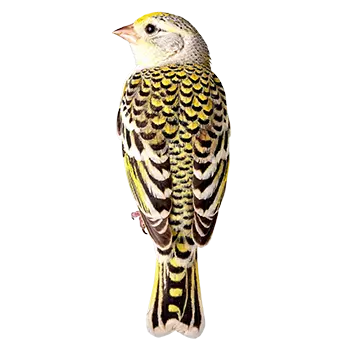
The first molt is arguably the single most defining event in a juvenile Lizard Canary's development, carrying consequences that are both physiological and, for breeders and exhibitors, aesthetic. Canaries undergo their first complete body molt at approximately eight to twelve weeks of age, replacing the juvenile plumage with their adult feather coat. For the Lizard Canary, this molt is uniquely significant because the spangled pattern that emerges in the adult plumage is the breed's hallmark characteristic, and its quality is influenced by genetics, nutrition, and environmental conditions during this critical window.

The molt begins with the shedding of body contour feathers, typically starting along the breast and flanks before progressing to the back, wings, and head. Pin feathers emerge in the follicles vacated by the shed juvenile feathers, and these gradually unfurl over the following days to reveal the new plumage. The process is energy-intensive, drawing heavily on the bird's protein and mineral reserves. A bird that enters the molt in poor nutritional condition may produce feathers that are thin, poorly colored, or lacking the crisp spangling that judges and breeders prize.

During the molt, increase the protein content of the diet by offering additional egg food, sprouted seeds, and, if accepted, small amounts of cooked egg or insect-based soft food. Some breeders add a molt-specific supplement containing sulfur-bearing amino acids such as methionine and cystine, which are direct building blocks of keratin, the structural protein of feathers. Adequate calcium and trace mineral intake remains important as well, since mineral imbalances can cause fault bars, stress marks, or fragile feather shafts.

Environmental conditions during the molt deserve careful attention. Maintain stable room temperatures and avoid exposing molting birds to drafts, abrupt photoperiod changes, or unnecessary stress such as cage relocations or introductions to unfamiliar birds. Stress during the molt can cause pin feathers to develop abnormally, producing permanent defects in the new plumage. For Lizard Canaries being prepared for exhibition, this is a period of particular vigilance, as the quality of the spangled pattern that emerges from the first molt determines the bird's show potential for the coming season.

The head cap, or clear area of unspangled feathering on the crown, is a distinctive feature of the Lizard Canary that also develops during the first molt. The size, shape, and clarity of the cap are genetically determined but can be affected by feather quality. A bird with a perfectly oval, clearly defined cap and richly spangled body feathering is the ideal toward which Lizard Canary breeders work, and the first molt is the moment when that ideal either materializes or reveals its shortcomings.

Song Development & Vocal Training

Song development in juvenile male Lizard Canaries follows a trajectory common to most domesticated canary breeds, beginning with a phase of subsong, progressing through plastic song, and ultimately crystallizing into the bird's mature repertoire. While the Lizard Canary is bred primarily as a type canary, judged on plumage pattern and conformation rather than song quality, a pleasing song remains an important attribute for pet owners and adds to the overall appeal of the breed. Understanding the mechanics of song learning helps keepers support this natural process.

Subsong typically begins when the male juvenile is around five to seven weeks old. This initial vocal experimentation sounds like quiet, rambling, almost conversational warbling with no discernible structure. The young bird is essentially practicing the muscular coordination of its syrinx, the avian vocal organ, much as a human infant babbles before producing recognizable words. During this phase, the bird is also actively listening to and memorizing the songs of adult males within earshot, building the acoustic template that will shape its mature song.

The presence of a skilled adult male singer, known as a schoolmaster or tutor bird, can significantly influence the quality and complexity of a juvenile's developing song. Placing a young male within hearing range of an accomplished adult during the subsong and plastic song phases allows the juvenile to incorporate elements of the tutor's repertoire into its own. Conversely, juveniles raised in isolation from adult singers or exposed only to birds with poor song quality will develop accordingly limited vocal abilities. Some breeders use recordings of exemplary canary song as an alternative to live tutors, though live interaction generally produces better results.

Plastic song emerges at roughly two to four months of age, characterized by longer, more structured passages interspersed with experimental notes and phrases. The bird is actively editing its repertoire during this phase, retaining elements it hears reinforced in its environment and discarding others. By approximately five to six months of age, the song begins to crystallize into its adult form, becoming more consistent and repeatable with each performance. Once crystallized, the song remains largely fixed for the bird's lifetime, though minor seasonal variations in intensity and frequency are normal.

Female Lizard Canaries do not typically develop a full song, producing instead soft, simple calls and chirps. However, distinguishing young males from females by song alone can be unreliable during the earliest weeks of subsong, as both sexes may produce similar quiet vocalizations. Vent sexing or DNA testing provides definitive identification if the bird's sex is important for breeding plans or sales.

Housing & Flight Development

Proper housing during the juvenile phase directly impacts a Lizard Canary's physical development, behavioral health, and long-term quality of life. Once weaned and separated from the parents, juveniles benefit enormously from being housed in a spacious flight cage or small indoor aviary where they can exercise their developing flight muscles, practice landing and perching skills, and engage in the social interactions that promote psychological well-being.

A juvenile flight cage should be at least 30 inches long to allow meaningful horizontal flight, which is the primary mode of locomotion for canaries. Height is less critical than length, but a cage that is too short vertically can cause tail damage as the bird turns in flight. Multiple perches of varying diameter, spaced to encourage short flights rather than mere hopping, support foot health and exercise. Natural wood perches with irregular surfaces are preferable to smooth dowels, as they promote grip strength and help prevent pressure sores on the feet.

Juvenile Lizard Canaries housed in groups generally thrive, as canaries are social birds that benefit from the stimulation of conspecific company. However, group housing requires monitoring for aggression, particularly as young males begin to develop territorial instincts around three to four months of age. If a specific bird is being persistently chased, excluded from feeding stations, or showing signs of stress such as feather plucking or prolonged fluffing, it should be separated into its own cage or moved to a more compatible group.

Environmental enrichment in the juvenile cage goes beyond perches and food dishes. Swings, small mirrors, and natural branches with leaves or seed heads provide mental stimulation and foraging opportunities that keep young birds engaged and active. A shallow bathing dish offered several times per week is almost universally appreciated by canaries and promotes feather conditioning and natural preening behavior. Remove the bath after an hour or two to prevent the water from fouling and to ensure the bird dries fully before the cooler evening hours.

For Lizard Canaries being prepared for show competition, early introduction to the standard show cage is an important element of the juvenile housing routine. Brief daily sessions in the show cage, gradually increasing in duration, teach the bird to perch calmly, move gracefully between the two perches, and present itself to an observer without panic. A bird that is cage-trained during the juvenile period is far more likely to display its spangled plumage to advantage under judging than one introduced to the show cage for the first time as an adult.

Health Monitoring & Common Juvenile Issues

The juvenile period presents its own set of health challenges distinct from those of the newborn phase. While the bird is no longer as fragile as a hatchling, its immune system is still maturing, and the physiological demands of rapid growth and the first molt can create vulnerabilities that an experienced keeper learns to anticipate and manage. Establishing a routine of regular health observation during the juvenile months catches problems early and prevents minor issues from becoming serious.

Weight monitoring remains a valuable diagnostic tool throughout the juvenile phase, though daily weighing can generally be relaxed to weekly measurements once the bird is fully weaned and eating independently. A healthy juvenile Lizard Canary should weigh between 15 and 22 grams, with gradual increases expected until the bird reaches its adult body condition around four to five months of age. Unexplained weight loss, even of a gram or two, is worth investigating in a bird this small.

Respiratory infections are among the most common health problems in juvenile canaries, particularly in birds housed in groups where pathogens can spread readily. Symptoms include tail bobbing, open-mouth breathing, nasal discharge, clicking or wheezing sounds, and reduced activity. Air sac mites are a frequent cause of respiratory symptoms in canaries and can be treated effectively with ivermectin administered by an avian veterinarian. Bacterial and fungal respiratory infections require culture-based diagnosis to identify the causative organism and determine appropriate antibiotic or antifungal therapy.

Gastrointestinal disorders also appear with some frequency during the juvenile months. Coccidiosis, caused by protozoan parasites of the genus Isospora, produces watery or bloody droppings, lethargy, and weight loss. Atoxoplasmosis, caused by the related organism Atoxoplasma serini, is particularly devastating in young canaries and can cause high mortality in affected flocks. Both conditions require veterinary diagnosis through fecal examination and are treated with specific antiprotozoal medications. Maintaining strict hygiene in the juvenile housing area, including daily cleaning of food and water dishes and regular disinfection of cage surfaces, is the most effective preventive measure.

Feather-related problems can emerge during the juvenile period, especially around the first molt. Cysts, which occur when a growing feather curls back on itself beneath the skin and forms a lump, are seen occasionally in canaries and may have a genetic predisposition. Soft feathered varieties appear slightly more susceptible. Small cysts may resolve on their own, but larger ones often require surgical removal by an avian veterinarian to prevent secondary infection. French molt, a condition associated with polyomavirus in which flight and tail feathers are lost prematurely and regrow abnormally, is another concern that warrants veterinary evaluation if observed.

Preparing for Adulthood

The final weeks of the juvenile phase represent a gradual transition toward adult status, during which the Lizard Canary's physical development stabilizes, its behavioral patterns mature, and decisions about its future role as a pet, show bird, or breeding candidate begin to crystallize. This preparatory period typically spans from the completion of the first molt, around four to five months of age, through approximately eight months, by which point the bird has reached its full adult conformation and plumage.

Physically, the young Lizard Canary should now display the breed's characteristic features in their emerging adult form. The spangled plumage pattern should be clearly visible across the back, flanks, and breast, with each feather showing a dark center surrounded by a lighter edge that creates the scale-like effect from which the breed takes its name. The head cap should be well-defined, and the overall body shape should be compact and well-proportioned. Evaluate the bird's conformation against the breed standard if you intend to show or breed it, noting both strengths and faults that will inform pairing decisions.

Behaviorally, juvenile males become increasingly vocal and territorial as they approach sexual maturity, which typically occurs around six to nine months of age in canaries. A young male may begin to display courtship behaviors, including sustained singing, wing-drooping displays, and attempts to feed nearby birds through the cage bars. These behaviors are normal indicators of hormonal maturation but can also trigger aggression if multiple males are housed together in close quarters. Reassess housing arrangements as these behaviors emerge, and be prepared to separate males into individual cages if conflicts arise.

Dietary adjustments at this stage begin to reflect the adult maintenance profile. While the elevated protein levels of the rearing and molting diet served the bird well during its growth phase, continuing them indefinitely can contribute to excess body condition and liver stress. Gradually reduce the frequency of egg food offerings from daily to two or three times per week, and ensure the base seed mix is balanced and not excessively high in oil-rich seeds like niger and hemp. Fresh greens and vegetables should remain a daily staple throughout the bird's life.

For birds entering the show circuit, the late juvenile period is the time to finalize show preparation routines. Regular, gentle handling sessions maintain the bird's comfort with human contact. Consistent show cage training ensures the bird presents calmly and confidently. Evaluate the spangled plumage under good lighting, noting whether the rowels are crisp and evenly distributed, whether the cap meets the standard for shape and clarity, and whether the ground color is rich and uniform. These assessments guide both exhibition entries and future breeding decisions, ensuring that the best representatives of the breed are the ones carrying the Lizard Canary's heritage forward.

Always consult a qualified professional before making any health-related decisions. This content is provided for informational reference only and should not replace professional guidance specific to your animal.