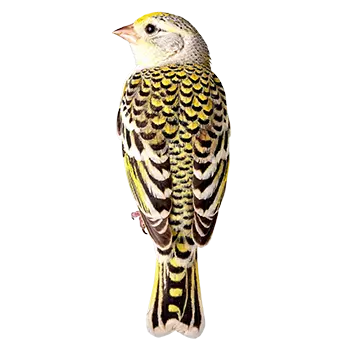

Understanding Terminal Decline

Terminal decline in a Lizard Canary may arrive as a gradual progression of the age-related conditions discussed in the senior care stage, or it may present suddenly as an acute illness or organ failure in a bird that had previously appeared stable. In either case, recognizing that a bird has entered a phase where recovery is unlikely and comfort becomes the primary care objective requires both veterinary guidance and the keeper's intimate familiarity with the individual bird's normal patterns. This recognition, while difficult, is an act of compassion that shifts the care focus from prolonging life to preserving dignity and minimizing suffering.

Gradual terminal decline often manifests as a progressive withdrawal from the activities that defined the bird's daily life. A male that once filled the room with song falls silent. A bird that eagerly greeted the keeper's approach now sits still, eyes partially closed, feathers loosely held. Food consumption drops despite the availability of favored items, and the bird may spend increasing amounts of time on the cage floor, unable or unwilling to perch. Droppings become scant, dark, or irregular. These changes, when they accumulate and resist all attempts at dietary adjustment, environmental modification, and veterinary treatment, collectively signal that the bird's body systems are failing.

Sudden decline can be precipitated by acute organ failure, stroke, or the rapid progression of an internal tumor. A bird that was apparently normal the previous day may be found severely weakened, unable to perch, or unresponsive. In these situations, the keeper must make rapid decisions about whether emergency veterinary intervention offers a realistic chance of meaningful recovery or whether the kindest response is to focus immediately on comfort care. An honest assessment by a trusted avian veterinarian is invaluable in this moment, as the keeper's emotional attachment can make objective evaluation extraordinarily difficult.

The distinction between treatable illness and terminal decline is not always immediately clear, and responsible keepers should not feel pressured to arrive at a definitive assessment without professional input. A veterinarian can perform a focused examination, potentially including imaging or blood work if the bird is stable enough to tolerate handling, to determine whether a reversible cause exists. When the veterinarian confirms that the condition is not treatable or that the available treatments carry a burden of stress and suffering that outweighs any realistic benefit, the transition to hospice care can proceed with the confidence that the decision is medically sound.

Comfort Care & Hospice Management

Hospice care for a Lizard Canary focuses on maximizing the bird's physical comfort and emotional security during its remaining time. The principles are straightforward: warmth, easy access to food and water, minimal handling stress, and a quiet, familiar environment. The practical implementation of these principles, however, requires thoughtful adjustments to the bird's housing and routine that acknowledge its diminished physical capacity without stripping away the environmental familiarity that provides psychological comfort.

Warmth is the most immediate physical need of a bird in terminal decline. A failing canary loses the ability to thermoregulate effectively, and even normal room temperatures can feel cold to a bird with compromised circulation or reduced metabolic output. Position a ceramic heat emitter or low-wattage infrared lamp above one end of the cage to create a thermal gradient, with the heated area reaching approximately 85 degrees Fahrenheit while the opposite end remains at room temperature. This arrangement allows the bird to move toward or away from the heat source according to its comfort. Never heat the entire cage uniformly, as an overheated bird with limited mobility cannot escape to a cooler zone.

Food and water must be placed within effortless reach. If the bird is floor-bound, use low-profile, weighted dishes placed directly next to its resting spot. Offer the bird's preferred foods in soft, easily consumed forms. Soaked seed, warm egg food, and small amounts of fruit provide both nutrition and moisture. A bird in terminal decline may eat very little, and the keeper must resist the urge to force-feed or syringe-feed a bird that has lost its appetite, as this intervention causes significant stress with little physiological benefit when the body is shutting down. Offering food is an act of care; consuming it is the bird's choice.

Minimize handling to what is strictly necessary for hygiene and medication administration. A bird that found handling tolerable during its healthy years may now experience it as distressing when its body is fragile and its energy reserves depleted. If the cage floor needs cleaning, work gently around the bird rather than removing it. If medication has been prescribed for symptom management, administer it as calmly and quickly as possible, and return the bird to its resting place immediately. Speak softly and move slowly in the bird's presence, maintaining the gentle, predictable interaction patterns it has known throughout its life.

The emotional environment matters as much as the physical one. Keep the cage in its familiar location, maintain the usual ambient sounds and lighting schedule, and spend quiet time near the bird without demanding interaction. Many keepers find that simply sitting near the cage, reading or working quietly, provides companionship that the bird finds comforting without the stress of direct handling. The goal of hospice care is not to extend life by days or hours but to ensure that the time remaining is spent in peace.

Recognizing Pain & Distress

One of the most challenging aspects of end-of-life care for a Lizard Canary is accurately assessing the bird's pain level. Birds are masters of concealment when it comes to suffering, an evolutionary adaptation that served their wild ancestors well but makes compassionate care of captive birds considerably more complex. The keeper must learn to read subtle behavioral and physical cues that indicate pain or distress, even when the bird's outward appearance gives the impression of calm acceptance.

Postural changes are among the most reliable indicators of pain in a canary. A bird in pain may adopt a hunched posture with its feathers puffed and its body drawn inward, creating a rounded silhouette distinct from the sleek, upright profile of a comfortable bird. It may tuck its head into its back feathers and keep its eyes partially or fully closed during hours when it would normally be active and alert. Shifting weight from foot to foot, reluctance to perch, and guarding of a specific body area by positioning it away from contact are additional postural indicators that the bird is experiencing discomfort.

Changes in breathing pattern signal either pain or respiratory compromise, both of which demand attention. Rapid, shallow breathing, tail bobbing with each breath, or open-mouth breathing in a bird that is not overheated all indicate significant distress. Audible breathing sounds such as wheezing, clicking, or gurgling suggest fluid accumulation in the air sacs or lungs and often accompany terminal respiratory decline. A bird exhibiting labored breathing is suffering, and this symptom alone is sufficient grounds for an urgent conversation with the veterinarian about whether medical intervention can provide relief or whether the breathing difficulty signals an irreversible process.

Behavioral withdrawal is a subtler but equally important sign of suffering. A bird that ceases all self-maintenance behaviors, stops preening, stops eating, and shows no reaction to stimuli that would normally provoke a response has likely progressed to a state where its capacity to engage with life has been overwhelmed by its physical condition. Similarly, a bird that vocalizes in an unusual pattern, producing repeated distress calls unlike its normal repertoire, may be communicating pain in the only language available to it.

When the cumulative evidence of pain and distress indicates that the bird's suffering is persistent and not being adequately managed by comfort measures or medication, the keeper faces the responsibility of considering whether continuing hospice care serves the bird's welfare or whether euthanasia has become the more compassionate option. This decision should never be made impulsively, but neither should it be postponed indefinitely while the bird endures unrelieved suffering. Consulting with the avian veterinarian about pain management options and their realistic limitations provides the information needed to make this decision from a place of informed compassion rather than reactive emotion.

The Euthanasia Decision

The decision to euthanize a beloved Lizard Canary is among the most difficult responsibilities a keeper faces, and it deserves the same thoughtfulness, compassion, and professional guidance that would accompany an end-of-life decision for any cherished companion animal. Euthanasia is not a failure of care. When performed at the right time and for the right reasons, it is the final act of stewardship that spares the bird from suffering that can no longer be meaningfully alleviated.

The timing of euthanasia is rarely obvious, and keepers should not expect a single dramatic moment that makes the decision self-evident. More commonly, the realization develops gradually as the bird's quality-of-life indicators trend consistently downward despite attentive comfort care. Revisit the quality-of-life assessment domains discussed in the senior care stage: appetite, mobility, physical comfort, and engagement with the environment. When the bird can no longer eat, can no longer perch, shows signs of unrelieved pain, and has withdrawn from all interaction with its surroundings, the weight of evidence supports the conclusion that the bird's experience has become one of suffering rather than living.

Discuss the decision openly with your avian veterinarian, who can provide a clinical perspective that complements your personal knowledge of the bird. A veterinarian experienced with small passerines can assess whether any further medical intervention is likely to improve the bird's comfort and can help you distinguish between a bad day, from which recovery is possible, and a sustained decline that represents the end stage of a terminal process. Many keepers find it helpful to set a specific quality-of-life threshold in advance, identifying particular benchmarks such as cessation of eating for 24 hours or inability to perch, beyond which they will proceed with euthanasia rather than waiting for further deterioration.

The procedure itself is performed by the veterinarian and is rapid and humane. For small birds, the most common method involves the administration of an injectable anesthetic overdose, which causes the bird to lose consciousness within seconds and stops cardiac activity shortly thereafter. Some veterinarians first administer isoflurane gas anesthesia to ensure the bird is fully unconscious before the injection, minimizing any handling stress during the final moments. The entire process is peaceful, and the bird experiences no pain.

Keepers who wish to be present during the procedure should communicate this preference to the veterinarian in advance. Being present allows you to provide a familiar voice and presence during the bird's final moments, which some keepers find comforting for both themselves and the bird. Others prefer not to be present, and this choice is equally valid. There is no single correct way to navigate this moment, and the keeper should choose whichever approach they feel will best serve both the bird's comfort and their own emotional needs.

After Death: Practical Considerations

Following the death of a Lizard Canary, whether through natural causes or euthanasia, there are practical matters that require attention even as the keeper processes the emotional impact of the loss. Handling these matters promptly and with forethought brings a measure of order to a difficult time and ensures the bird's remains are treated with the respect that a cherished companion deserves.

If the bird dies at home rather than at the veterinary clinic, the body should be handled gently and placed in a small box or wrapped in a soft cloth. If immediate disposition is not possible, the remains can be refrigerated for up to 24 hours. Do not freeze the remains if you intend to pursue necropsy, as freezing causes cellular damage that can compromise the pathologist's ability to identify the cause of death. Necropsy, while not emotionally easy to consider, can provide valuable information, particularly for breeders whose remaining birds may be at risk if the cause of death was an infectious disease.

Disposition options include burial, cremation, and, in some areas, pet cemetery interment. Home burial is a personal and traditional choice for many keepers. If you choose burial, select a location that is not in a flood zone and dig to a depth of at least 12 inches to prevent disturbance by other animals. Check local ordinances regarding pet burial, as some municipalities have specific regulations. Cremation services for small pets are widely available through veterinary clinics and pet cremation providers, with options for communal cremation or individual cremation with return of ashes. Individual cremation allows the keeper to retain the ashes in an urn or scatter them in a meaningful location.

Clean and disinfect the bird's cage and all accessories thoroughly before repurposing or storing them. Use an avian-safe disinfectant and allow all items to dry completely in sunlight if possible. If the bird died from a known or suspected infectious disease, consider discarding porous items such as wooden perches and nesting material that cannot be reliably sterilized. This precaution protects any future birds that may use the equipment.

If the deceased bird was part of a breeding collection, notify your breeding records accordingly. Update pedigree files to reflect the loss, and ensure that any offspring records are complete and accurate. For breeders involved in Lizard Canary specialty clubs or breed conservation programs, reporting the bird's death and cause of death, if known, contributes to the collective knowledge base that supports the breed's long-term viability.

Grieving & Coping with Loss

The grief that accompanies the death of a Lizard Canary can be surprisingly intense, particularly for keepers who have shared years of daily companionship with a bird whose song, personality, and distinctive spangled beauty became a familiar and treasured part of their home. Society does not always recognize the depth of bond that can form between a person and a small bird, which can leave grieving keepers feeling isolated or embarrassed by the strength of their emotions. This grief is legitimate, and it deserves acknowledgment and processing rather than dismissal.

The nature of the bond between a keeper and a canary is unique. It is built not on the interactive reciprocity of a parrot or dog relationship but on the quieter pleasures of daily routine, the beauty of plumage and song, and the satisfaction of providing excellent care for a creature that depends on human stewardship for its well-being. The absence of the bird's song in the morning, the empty cage in its familiar corner, and the disruption of the daily care routine all serve as constant reminders of the loss. Allow yourself to feel the sadness without judgment, and give yourself permission to grieve on your own timeline rather than according to others' expectations of how long or deeply the loss of a bird should affect you.

Memorializing the bird can be a meaningful part of the grieving process. Photographs, particularly those that capture the beauty of the spangled plumage, serve as lasting visual tributes. Some keepers create a small memorial display with a favorite photograph, the bird's leg band, and perhaps a feather naturally shed during the bird's life. Writing a brief account of the bird's history, including its lineage, show achievements, offspring, and the memorable moments of its life, preserves the individual's story and can bring comfort during the grieving period.

Connecting with others who understand the bond between keeper and bird can ease the isolation that pet loss sometimes brings. Fellow canary breeders, avian club members, and online communities dedicated to cage bird keeping provide spaces where the significance of the loss is understood and respected. Pet loss support resources, including hotlines and counseling services, are available for individuals whose grief is overwhelming or prolonged, and seeking support from these services is a sign of self-awareness, not weakness.

The question of whether and when to acquire a new bird is deeply personal and should not be rushed. Some keepers find comfort in welcoming a new Lizard Canary relatively soon, appreciating the return of song and life to their home while honoring the memory of the bird that came before. Others need a period of quiet before they are ready to open themselves to a new bond. There is no correct answer, only the one that feels right for the individual. A new bird is never a replacement for the one that was lost but rather a continuation of the keeper's commitment to the species and the breed, carrying forward the care and knowledge that the previous bird helped develop.

The Impact on Other Birds

When a Lizard Canary dies in a household that includes other birds, the remaining flock members may exhibit behavioral changes that reflect their awareness of the loss. While the social bonds between canaries are different in character from those observed in highly social parrot species, canaries are nonetheless social creatures that respond to changes in their flock composition, and keepers should be attentive to the reactions of surviving birds during the period following a companion's death.

A canary that was housed in visual or auditory proximity to the deceased bird may show increased vocalization, restlessness, or reduced singing in the days following the loss. These behavioral shifts may reflect the disruption of established social dynamics rather than grief in the human emotional sense, but they are genuine responses that warrant observation and accommodation. If the surviving bird appears persistently distressed, providing additional auditory stimulation through music or recorded canary song can help fill the acoustic void left by the absent bird.

In cases where the deceased bird was a mate or cage companion, the surviving partner may exhibit more pronounced behavioral changes. Hens that lose a bonded cock may become listless, reduce food intake, or show signs of hormonal disruption. Cocks that lose a hen may sing excessively or become agitated. These responses typically resolve within one to two weeks as the surviving bird adjusts to its new social circumstances, but persistent behavioral abnormalities warrant veterinary evaluation to rule out physical illness that may have been masked by the owner's focus on the dying bird.

If the deceased bird was euthanized or died from an infectious disease, consider the health implications for remaining birds. Consult your avian veterinarian about whether screening tests, prophylactic treatment, or environmental decontamination measures are advisable for the survivors. Common canary pathogens such as canary pox, Atoxoplasma, and Macrorhabdus can circulate within a collection, and the death of one bird from an infectious cause should prompt a review of the entire flock's health status.

Finally, consider the long-term housing and social needs of surviving birds. A single remaining canary may benefit from the eventual introduction of a new companion, particularly if it was accustomed to the company of other birds. However, any new introduction should follow a quarantine protocol of at least 30 days to protect the established bird from pathogens the newcomer might carry. The period of quarantine also allows the new bird to acclimate to the household environment and the keeper to observe it for any signs of illness before it joins the existing flock.

Always consult a qualified professional before making any health-related decisions. This content is provided for informational reference only and should not replace professional guidance specific to your animal.