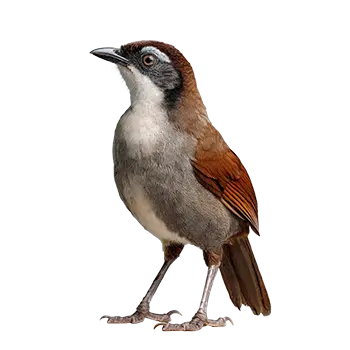

The First 24 Hours

Laughing Thrush chicks hatch after an incubation period of approximately 13 to 16 days, depending on the species within the genus. They emerge as altricial hatchlings, completely blind, nearly naked except for sparse tufts of natal down, and weighing between 4 and 7 grams. Unlike precocial species that can move and feed shortly after hatching, Laughing Thrush neonates are entirely dependent on parental care or a dedicated hand-rearer from the moment they leave the egg. The first day of life is a critical window during which the chick must receive warmth, its first nourishment, and protection from environmental stressors that could prove fatal.

In a parent-raised clutch, the hen typically begins feeding within the first few hours after the chick hatches. Both parents participate in feeding duties in most Laughing Thrush species, a trait that reflects the cooperative social structure these birds maintain throughout their lives. The initial meals consist of small, softened insects and invertebrate matter that the parents have partially processed before delivering to the chick's gape. This protein-rich first food is essential for jumpstarting the chick's metabolism and establishing healthy gut flora.

If you are hand-raising a Laughing Thrush chick, the first feeding should be delayed until the yolk sac has been fully absorbed, which generally occurs between six and ten hours after hatching. Offering food before this absorption is complete can overwhelm the chick's immature digestive system and lead to bacterial infections or crop complications. The first hand-feeding should consist of a thin, well-hydrated insectivore formula delivered in extremely small quantities using a fine-tipped syringe or a custom feeding tool sized appropriately for the chick's tiny gape.

During the first 24 hours, the chick's environment must be tightly controlled. A brooder temperature of 95 to 97 degrees Fahrenheit is necessary, as the chick has virtually no capacity for thermoregulation at this stage. Humidity should be maintained around 60 percent to prevent dehydration of the chick's delicate skin. Observe the chick for a healthy feeding response, characterized by the chick lifting its head, opening its gape wide, and emitting faint begging calls when it detects vibration or warmth near the nest. Absence of this response within the first several hours warrants veterinary attention.

Feeding & Nutrition

Feeding a newborn Laughing Thrush requires an understanding of the species' natural dietary profile, which differs substantially from that of parrots and other commonly kept hookbills. Laughing Thrushes are soft-billed omnivores whose wild diet centers on insects, larvae, spiders, small invertebrates, and soft fruits. The hand-feeding protocol must reflect this insectivorous foundation rather than relying on parrot-specific formulas, which are formulated for seed-eating and nut-eating psittacines and lack the amino acid profile that developing Laughing Thrush chicks require.

A high-quality insectivore hand-rearing formula serves as the base diet for hand-fed chicks during their first two weeks. This formula should be mixed fresh before every feeding session and heated to between 102 and 106 degrees Fahrenheit. Temperature control is non-negotiable: formula served too cool will sit undigested in the crop and become a medium for bacterial proliferation, while formula that is too warm can scald the crop lining and cause permanent tissue damage. Always verify the temperature with a calibrated digital thermometer rather than estimating by touch.

Feeding frequency during the first week should be approximately every 45 minutes to one hour during daylight hours, with a final feeding just before the caregiver's lights-out period. Laughing Thrush chicks have small crops relative to their body size, which means they process food quickly but cannot hold large volumes. By the second week, as the crop expands and the chick's digestive efficiency improves, intervals can be extended to every 90 minutes to two hours. Overnight feedings are generally not required after the first five to six days if the chick is gaining weight steadily and receiving adequate hydration through its formula.

Beginning around day seven to ten, finely chopped soft foods can be introduced alongside the formula. Tiny fragments of mealworm, waxworm, or commercially available insect paste, along with mashed blueberry or finely diced banana, provide textural variety and begin preparing the chick's digestive system for the solid food transition that will accelerate during the juvenile stage. These supplements should account for no more than 10 to 15 percent of the total daily intake initially, increasing gradually as the chick demonstrates the ability to process them without digestive upset.

Maintain a detailed feeding log that records the time, volume, and composition of every feeding, along with the chick's daily weight measured at the same time each morning before the first feed. A healthy Laughing Thrush chick should gain approximately 5 to 10 percent of its body weight per day during the first two weeks. Any stagnation or decline in weight over two consecutive days requires immediate evaluation to rule out crop stasis, infection, or formula intolerance.

Developmental Milestones

Laughing Thrush chicks develop rapidly compared to many psittacine species, a characteristic common among passerines that reflects their evolutionary strategy of reaching independence quickly to reduce vulnerability to predation. Understanding the normal developmental timeline for these birds allows caregivers to spot delays or abnormalities early and intervene before minor issues become serious health concerns.

During the first three to four days, the chick's activity is limited to feeding responses and slight postural adjustments within the nest cup or brooder. The skin appears dark pinkish to reddish, and the eyes are sealed shut beneath translucent lids. By day four or five, the first pin feathers begin erupting along the wing tracts and along the dorsal feather line running down the chick's back. These early pins are encased in waxy sheaths and give the chick a distinctly spiny appearance that belies the soft plumage to come.

The eyes begin to slit open around day five to seven, though full visual acuity takes several more days to develop. This is a significant behavioral milestone because the chick's awareness of its environment changes dramatically once vision comes online. Hand-raised chicks will begin visually tracking the caregiver's hand and the feeding instrument, and their begging behavior becomes more directed and purposeful rather than reflexive. Parent-raised chicks at this stage begin distinguishing their parents from other flock members and will respond more vigorously to the specific calls of the adults feeding them.

Between days 10 and 14, feather development accelerates noticeably. The pin feathers on the wings, tail, and body begin unfurling from their sheaths, and the chick starts to resemble a recognizable Laughing Thrush rather than a generic nestling. The legs strengthen considerably during this period, and the chick begins gripping the brooder substrate or nest material with increasing coordination. Vocalizations diversify beyond simple begging calls to include soft contact notes and early attempts at the chattering sounds that are precursors to the species' characteristic laughing calls.

By the end of the third week, the chick is substantially feathered and beginning to make its first exploratory movements beyond the nest cup. Wing fluttering exercises become frequent and vigorous as the flight muscles develop. The chick may begin picking at solid food items placed nearby, though it remains dependent on parental or hand-feeding for the majority of its caloric needs. This late-nestling period represents the transition point between the newborn phase and the fledging process covered in the juvenile care guide.

Temperature & Environment

Environmental management is the cornerstone of neonatal survival for Laughing Thrush chicks. As passerines adapted to the temperate and subtropical forests of Asia, these birds are somewhat more tolerant of moderate temperature ranges than many tropical species, but newborn chicks remain profoundly vulnerable to thermal stress until their plumage develops sufficiently to provide insulation. The brooder or nest box environment must compensate entirely for the chick's inability to regulate its own body temperature during the first two weeks of life.

Brooder temperatures should be maintained at 95 to 97 degrees Fahrenheit for the first five days. Beginning around day six, as pin feathers emerge and the chick's metabolic heat production increases, the temperature can be reduced by approximately two degrees every three days. By the time the chick reaches two weeks of age and has substantial feather coverage, the brooder temperature can typically be brought down to 82 to 85 degrees. The chick's behavior is the most reliable thermostat: a chick that is too cold will huddle tightly, tuck its head, and may tremble, while an overheated chick will pant with an open beak, hold its wings away from its body, and appear agitated.

Humidity control is particularly important for Laughing Thrush chicks because their skin is thin and prone to dehydration in dry environments. Maintain relative humidity between 55 and 65 percent throughout the brooder period. A calibrated digital hygrometer placed at the level of the chick provides accurate real-time readings. In dry climates or heated indoor environments, a shallow water dish placed near the brooder's heat source can help maintain adequate moisture levels, but it must be positioned so that the chick cannot access it directly and risk drowning or chilling.

The brooder substrate should be clean, non-abrasive, and free of loose fibers or particles that the chick could ingest. Paper towels layered two or three sheets deep provide a safe, easily replaceable surface during the first week. As the chick grows and begins moving more actively, a layer of soft cloth over a non-slip mat gives better footing and helps prevent splayed legs, a developmental deformity that can occur when chicks spend their early days on slippery surfaces. Change substrate at least twice daily, or immediately if soiled, to minimize bacterial exposure.

The brooder should be positioned in a quiet area of the home or facility, away from direct sunlight, drafts, and sources of sudden noise. Laughing Thrushes are naturally alert birds, and even at the nestling stage, chicks can be startled by unexpected stimuli. Chronic stress from environmental disturbances can suppress immune function and impair normal development. A consistent, calm environment with a predictable light cycle of approximately 12 to 14 hours of light and 10 to 12 hours of darkness supports healthy circadian rhythm development.

Early Socialization

Laughing Thrushes are among the most socially oriented birds kept in aviculture, and the foundations of their social behavior are laid during the newborn period. In the wild, these birds live in cohesive flocks that communicate constantly through an elaborate repertoire of calls, body language, and cooperative behaviors. A chick that does not receive appropriate social input during its formative weeks may develop behavioral problems ranging from excessive fearfulness to abnormal vocalizations and difficulty integrating with conspecifics later in life.

For hand-raised chicks, the primary social bond forms with the human caregiver during feeding sessions. Each feeding is an opportunity to establish trust and positive association. Speak to the chick in a calm, consistent voice during every interaction, and allow it to become familiar with your scent and the specific sounds and movements associated with feeding. Avoid wearing strongly scented products or handling the chick with cold hands, as negative sensory experiences during this period can create aversions that persist into adulthood.

Once the chick's eyes open, typically around day five to seven, socialization opportunities expand significantly. Begin exposing the chick to gentle variations in its environment: different quiet sounds, soft ambient music, the presence of other household members at a distance, and brief periods of handling that are separate from feeding sessions. These exposures should be short, positive, and never forced. If the chick shows signs of stress such as crouching, freezing, or alarm calling, reduce the intensity of the stimulus and try again later at a lower level.

If other Laughing Thrushes or compatible softbill species are present in the household, allowing the chick to hear their vocalizations from an early age is enormously beneficial. Auditory exposure to conspecific calls helps the chick develop species-appropriate vocal patterns and social recognition. This is particularly important if the chick will eventually be housed with other birds, as Laughing Thrushes rely heavily on vocal communication to establish and maintain social bonds within their flock.

Parent-raised chicks receive the advantage of natural social modeling from the adult birds, learning flock dynamics, alarm responses, and feeding behaviors through observation and interaction. However, these chicks still benefit from regular, gentle human contact to ensure they remain comfortable with human handling for veterinary care and routine management. Brief daily handling sessions beginning around day 10, limited to a few minutes per session, help parent-raised chicks accept human interaction without undue stress while preserving the primacy of their avian social bonds.

Health Screening & Vet Visits

Establishing veterinary care for a newborn Laughing Thrush should be treated as a priority rather than an afterthought. Because Laughing Thrushes are soft-billed passerines rather than psittacines, they require a veterinarian with specific experience in passerine medicine, which is a more specialized niche than general avian practice. Not all avian veterinarians are equally experienced with softbills, so seek out a practitioner who has worked with thrushes, mynahs, starlings, or similar insectivorous and omnivorous species.

The first veterinary examination should occur within the first few days of life, particularly for hand-raised chicks or those acquired from breeders whose flock health history is unknown. This initial assessment typically includes a physical examination evaluating the chick's hydration status, body condition, skin integrity, and any congenital abnormalities. A crop swab cultured for bacteria and yeast establishes a baseline of the chick's microbial environment and can catch early infections before they produce visible symptoms.

Fecal analysis is another standard component of the neonatal health screen. Passerine chicks can harbor intestinal parasites acquired from the parents or from contaminated nest material, including coccidia, roundworms, and tapeworm larvae. Identifying and treating parasitic infections early is important because a heavy parasite load in a rapidly growing chick can cause malabsorption of nutrients, stunted development, and in severe cases, fatal intestinal blockage. Your veterinarian may recommend a prophylactic deworming protocol based on the fecal results and the chick's origin.

Between veterinary visits, the caregiver's daily monitoring serves as the front line of health surveillance. Weigh the chick every morning at the same time using a gram-accurate digital scale, and record the measurement alongside notes on feeding volumes, droppings quality, and behavioral observations. Healthy Laughing Thrush droppings during the neonatal period should consist of a small, semi-formed fecal component surrounded by white urates and a small amount of clear liquid. Any shift toward watery, discolored, or unusually odorous droppings should prompt a same-day veterinary consultation.

Respiratory health warrants close attention in passerine chicks, as their small body size means that respiratory infections can escalate from mild to life-threatening within hours. Listen for any clicking, wheezing, or gurgling sounds during breathing, and watch for tail bobbing, which indicates labored respiration. Nasal discharge, even in small amounts, is abnormal in a healthy chick and should be investigated promptly. Aspergillosis, a fungal respiratory infection caused by Aspergillus spores in the environment, is a particular concern for hand-raised chicks kept in brooders where ventilation may be suboptimal.

When to Worry

The line between normal variation and genuine medical emergency can be difficult to discern in a newborn Laughing Thrush, particularly for first-time caregivers. These chicks are small, develop quickly, and can deteriorate with alarming speed when something goes wrong. Learning to recognize the warning signs that warrant immediate action is one of the most important skills a caregiver can develop, and erring on the side of caution is always the safer approach with neonatal passerines.

Weight loss or stagnation is the single most reliable early indicator of trouble. A healthy Laughing Thrush chick should gain weight every day during the first two weeks without exception. A single day of flat weight may reflect normal variation, particularly if the chick was weighed at a slightly different time or had recently passed a large dropping. However, two consecutive days without weight gain, or any single day of weight loss, should be treated as a red flag. Weigh the chick again several hours later to confirm the reading, and if the trend holds, contact your avian veterinarian without delay.

Crop function provides another critical window into the chick's health. The crop should empty completely between feedings, typically within 90 minutes to two hours for a formula-fed chick during the first week. A crop that remains distended, feels doughy or hard, or fails to empty within the expected timeframe may indicate crop stasis, a condition where the crop muscles stop contracting and the contents begin to ferment. Crop stasis can result from formula that was served too cold, bacterial or fungal infection of the crop lining, or a systemic illness that has slowed gastrointestinal motility. It requires prompt veterinary treatment, as the fermenting crop contents can produce gas, cause aspiration if regurgitated, or introduce toxins into the chick's bloodstream.

Behavioral changes often accompany physical illness and may be the first signs a caregiver notices. A chick that was previously vigorous in its feeding response but suddenly becomes lethargic, refuses to gape, or responds weakly to feeding cues is communicating distress. Similarly, a chick that vocalizes excessively and inconsolably, particularly in high-pitched or strained tones unlike its normal begging calls, may be experiencing pain or discomfort. Changes in posture, such as persistent head tilting, inability to hold the head upright, or legs splaying outward, can indicate neurological issues, metabolic deficiencies, or musculoskeletal problems that need professional evaluation.

Skin and feather abnormalities, while sometimes subtle, should not be dismissed. Bruising or discoloration of the skin, particularly around the abdomen, may indicate internal bleeding or organ dysfunction. Pin feathers that fail to emerge on the expected timeline, emerge malformed, or show stress bars — visible lines of weakness across the feather shaft — suggest nutritional deficiencies or systemic illness during the period when those feathers were actively growing. Any sign of external parasites, such as tiny moving specks on the skin or around the feather bases, requires immediate treatment, as even a mild infestation can overwhelm a chick's limited physiological reserves.

Always consult a qualified professional before making any health-related decisions. This content is provided for informational reference only and should not replace professional guidance specific to your animal.