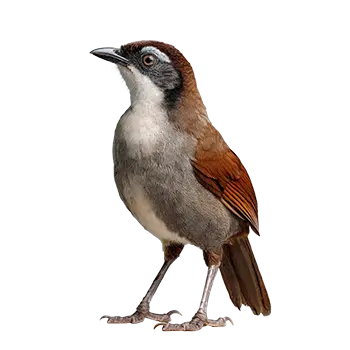

The Fledging Transition

The fledging period marks one of the most dramatic transitions in a Laughing Thrush's life, as the bird leaves the nest and begins navigating the physical world under its own power. In most Laughing Thrush species, fledging occurs between 14 and 18 days of age, which is notably rapid compared to psittacines of similar body size. This accelerated timeline is characteristic of passerine birds and reflects an evolutionary strategy that minimizes the period of nest-bound vulnerability to predators. For the caregiver, it means that the window between a helpless nestling and a mobile, demanding fledgling is surprisingly short.

The days immediately preceding fledging are marked by increasing restlessness within the nest or brooder. The chick will perch on the rim of its container, flap vigorously, and make short hopping or fluttering movements that test its developing flight muscles and coordination. These pre-fledging exercises are not random agitation but purposeful rehearsals, and the caregiver should not attempt to suppress them. Ensure that the environment around the brooder or nest is safe for an unexpected first flight by removing hazards such as open water containers, ceiling fans, exposed windows, and gaps behind furniture where a disoriented fledgling could become trapped.

The first flight itself is rarely graceful. Fledgling Laughing Thrushes typically launch from the nest with more enthusiasm than control, and the initial landing is often clumsy. This is entirely normal. The bird's flight muscles and neurological coordination require several days of practice before sustained, directed flight becomes possible. During this period, the fledgling will spend considerable time on the ground or on low perches, relying on hopping and short flutter-flights to move around. The caregiver must ensure that ground-level areas are safe, clean, and free of threats from household pets or other animals.

For hand-raised birds, the fledging transition also involves a psychological shift. The bird is discovering its physical autonomy for the first time, and its relationship with the caregiver begins to change. The fledgling may become more independent during some moments and then revert to begging behavior and seeking physical closeness during others. This vacillation between independence and dependence is normal and should be accommodated with patience. Continue offering hand-feedings on demand while encouraging the bird to explore solid foods and its environment at its own pace.

Weaning & Diet Transition

Weaning a juvenile Laughing Thrush is a gradual, bird-driven process that should never be forced or accelerated by withholding food. Unlike some psittacine species where weaning can extend over many weeks, passerine fledglings typically transition to independent eating relatively quickly, with most Laughing Thrushes becoming fully self-feeding between four and six weeks of age. However, the pace varies by individual, and attempting to rush the process by refusing hand-feedings can cause dangerous weight loss, chronic stress, and lasting behavioral damage.

The weaning diet should reflect the omnivorous nature of the species. Offer a varied selection of appropriate foods in shallow, easily accessible dishes placed at the bird's favored perching height and on the floor of the enclosure. Suitable items include finely diced soft fruits such as blueberries, grapes, papaya, and banana, along with live or freshly killed insects including small mealworms, waxworms, and fruit flies. A high-quality commercial softbill pellet, moistened slightly with water to soften it during the early transition period, provides a nutritionally balanced foundation that ensures the bird receives adequate vitamins and minerals even as its natural food intake fluctuates.

Observe the fledgling's eating behavior closely during this period. Early attempts at self-feeding involve considerable experimentation. The bird will pick up food items, manipulate them with its beak, drop them, and try again. It may scatter more food than it consumes initially. This exploratory behavior is a necessary part of the learning process and should not be interpreted as disinterest in food. Place food items directly in front of the bird or on a flat surface where they are easy to see and access. Avoid deep dishes that require the bird to reach down into a container, as fledglings are often reluctant to put their heads into enclosed spaces.

Continue offering hand-feedings alongside the weaning diet, but allow the bird to dictate the frequency and volume. As the fledgling eats more solid food independently, it will naturally reduce its demand for hand-fed formula. The last feedings to drop are typically the morning and evening sessions, which provide security and social connection as much as nutrition. When the bird consistently refuses hand-feeding and maintains stable or increasing body weight on its self-selected diet for five to seven consecutive days, the weaning process can be considered complete.

Monitor weight daily throughout the weaning transition. A weight loss of more than 10 percent from the bird's peak pre-weaning weight is a signal that the weaning process is moving too fast or that the bird is not consuming enough solid food to meet its caloric needs. Resume more frequent hand-feedings and reassess the weaning diet for palatability and accessibility. Dehydration is also a risk during weaning, as fledglings may not immediately recognize or use a water source. Offer water in a shallow, stable dish and consider providing water-rich foods such as melon or cucumber to supplement fluid intake.

Flight Development & Physical Conditioning

Flight competence develops rapidly in juvenile Laughing Thrushes, and providing appropriate space and opportunities for practice is essential to building the musculature, coordination, and confidence the bird needs. Unlike parrots, which are often kept flighted or clipped based on owner preference, Laughing Thrushes are active, agile fliers that rely on flight as their primary mode of locomotion. A Laughing Thrush that does not develop strong flight ability during the juvenile period will be physically and psychologically disadvantaged for the rest of its life.

During the first few days after fledging, flights are short, erratic, and frequently end with crash landings. The bird is calibrating its spatial awareness, learning to judge distances, and building the pectoral muscles that power sustained flight. Provide a safe, enclosed space where the bird can practice without risk of injury. A dedicated bird room or a large flight cage with padded walls and no exposed hazards is ideal. Avoid allowing unsupervised free-flight in rooms with windows, mirrors, or glass doors until the bird has demonstrated reliable flight control and the ability to identify transparent barriers.

As flight skills improve over the first two weeks post-fledging, the juvenile will begin landing with greater precision, executing turns and directional changes in mid-air, and sustaining flights over longer distances. Encourage this development by placing perches and feeding stations at varying heights and distances within the flight space, creating a natural incentive for the bird to fly between locations. Laughing Thrushes are naturally inclined to use elevated perches and will voluntarily engage in flight exercise when given the space and motivation to do so.

Ground agility is equally important for Laughing Thrushes, as many species spend considerable time foraging on the ground in the wild. The juvenile should have access to a floor area with natural or textured substrates where it can practice hopping, running, and the characteristic ground-foraging behavior of scratching through leaf litter with its feet. Providing a tray of clean leaf litter, shredded paper, or coconut fiber with hidden food items buried within encourages this natural behavior and provides both physical exercise and mental stimulation.

Perching ability develops alongside flight skills and is worth monitoring. The juvenile should be able to grip perches of varying diameters securely and maintain its balance during sleep. Natural wood perches of different thicknesses promote healthy foot development and prevent the pressure sores that can develop when a bird is limited to a single perch diameter. Watch for any signs of foot weakness, persistent favoring of one foot, or difficulty gripping, which could indicate a nutritional deficiency affecting bone or muscle development.

Behavioral Development & Vocal Learning

The juvenile period is when a Laughing Thrush's characteristic personality and vocal repertoire take shape, and the behavioral foundations established during these weeks influence the bird's temperament for the rest of its life. Laughing Thrushes are named for their loud, complex, and often raucous vocalizations, which serve essential social functions including flock cohesion, territory defense, pair bonding, and alarm communication. A juvenile bird is actively absorbing and practicing these sounds during this developmental window.

Vocal development in juvenile Laughing Thrushes follows a pattern loosely analogous to the babbling phase in human language acquisition. The young bird produces a stream of experimental sounds, incorporating elements from the calls it hears around it, environmental noises, and apparently spontaneous inventions. This vocal practice, known as subsong in ornithological terminology, is typically quieter and less structured than adult vocalizations and can be heard most frequently during calm, relaxed periods when the bird feels safe and unstimulated. Caregivers should not be concerned if the juvenile's early vocalizations sound nothing like the species' typical calls, as the refinement process continues over several months.

If conspecifics are present in the household, the juvenile will model its vocal development heavily on the calls and songs it hears from adult birds. This auditory learning is the primary mechanism through which Laughing Thrushes acquire their species-typical vocal repertoire. A juvenile raised without access to adult conspecific vocalizations may develop an atypical or impoverished call set, which can create difficulties if the bird is later introduced to a social group. Playing high-quality recordings of wild Laughing Thrush calls can partially substitute for live conspecific exposure, though recordings are not as effective as real-time social vocal interaction.

Beyond vocalizations, the juvenile period is marked by a surge in exploratory and play behavior. Young Laughing Thrushes are intensely curious and will investigate every object, texture, and space available to them. They manipulate items with their beaks, toss and retrieve small objects, and engage in exuberant physical play that includes hopping, wing-flicking, and mock-chasing if housed with other birds. This play behavior serves critical developmental functions, building physical coordination, cognitive flexibility, and social skills that the bird will rely on throughout adulthood.

Fear responses also consolidate during the juvenile period. A young Laughing Thrush that has positive, varied experiences with different people, objects, environments, and sounds during this stage will generally grow into a confident, adaptable adult. Conversely, a bird that is isolated, understimulated, or exposed to frightening experiences may develop entrenched phobias that are extremely difficult to modify later. Continue the graduated exposure approach begun during the neonatal period, steadily expanding the range of experiences while always respecting the bird's comfort level and providing a safe retreat when it shows signs of stress.

Housing & Enclosure Requirements

As the juvenile Laughing Thrush gains mobility and independence, its housing requirements change substantially from the confined brooder environment of the neonatal period. These are active, athletic birds that need space to fly, hop, forage, and explore. An enclosure that is adequate for a nestling becomes restrictive and psychologically damaging for a fledgling within a matter of days, and the transition to juvenile housing should occur promptly once the bird is mobile and substantially feathered.

The minimum enclosure for a single juvenile Laughing Thrush should be a flight cage or aviary section measuring at least 36 inches long, 24 inches deep, and 24 inches tall. Larger is always better for these birds, and if space permits, a walk-in aviary or dedicated bird room provides the ideal environment for developing flight skills and natural behavior. Bar spacing should be no greater than half an inch to prevent the bird from wedging its head through the bars, a risk that is more acute with slender-billed passerines than with the thicker-headed psittacines that most commercial cages are designed for.

Furnish the enclosure with natural wood perches of varying diameters placed at different heights. Avoid placing perches directly above food and water dishes, as droppings will contaminate these resources. Include at least one perch positioned high in the enclosure for roosting, as Laughing Thrushes instinctively seek elevated sleeping positions. A shallow bathing dish should be offered daily, as these birds are enthusiastic bathers and regular bathing is important for feather maintenance and skin health. Remove the bath dish after the bird has had an opportunity to bathe to prevent soiling of the water.

Environmental enrichment is not optional for a juvenile Laughing Thrush. These are intelligent, active birds that will develop stereotypic behaviors such as route-tracing, excessive preening, or repetitive vocalizations if they are bored or understimulated. Rotate toys and novel objects through the enclosure regularly. Foraging enrichment is particularly valuable: scatter food items among clean leaf litter on the enclosure floor, hide insects in crevices or wrapped in paper, and offer puzzle feeders that require the bird to work for its food. This mimics the foraging challenges the bird would face in the wild and keeps its mind engaged.

Cleanliness standards must be maintained rigorously in the juvenile enclosure. Remove soiled substrate, uneaten fresh food, and droppings from perches at least once daily. Disinfect food and water dishes every day with an avian-safe cleaner, rinsing thoroughly before refilling. A full enclosure cleaning, including substrate replacement and perch scrubbing, should occur at least weekly. Passerine birds are susceptible to bacterial and fungal infections that thrive in accumulated organic waste, and a juvenile's developing immune system is less equipped to combat these pathogens than an adult's.

Social Integration & Companion Considerations

Laughing Thrushes are fundamentally social birds that fare poorly in long-term isolation, and the juvenile period is the optimal time to begin thinking about the bird's social needs over the course of its lifetime. In the wild, these birds are rarely found alone. They live, forage, roost, and vocalize in cohesive groups, and their behavioral repertoire is built around constant social interaction. A solitary Laughing Thrush can survive, but it will not thrive in the way that a bird with appropriate social companionship will.

If the juvenile was hand-raised as a single bird, it has likely formed a strong primary bond with its human caregiver. This bond is valuable and should be maintained, but it does not substitute for conspecific social interaction in the long term. A hand-raised bird that is eventually paired or grouped with other Laughing Thrushes typically adapts well, particularly if the introduction is handled carefully and the bird had early auditory exposure to conspecific calls. The juvenile period offers the best window for initial introductions, as young birds are generally more socially flexible and less territorial than established adults.

Introductions between a juvenile and an adult or another juvenile should be conducted gradually. Begin by housing the birds in separate enclosures placed within visual and auditory range of each other. This allows both birds to observe and vocalize to each other without the pressure of shared space. Watch for signs of mutual interest, such as contact calling, approaching the side of the enclosure nearest the other bird, and relaxed body posture. Aggressive or fearful responses, including sustained alarm calling, wing-spreading threat displays, or persistent attempts to retreat from the other bird's line of sight, indicate that the introduction should proceed more slowly.

Once both birds appear comfortable with each other's presence over a period of several days to a week, supervised shared time in a neutral space can begin. A neutral space is important because it prevents territorial behavior that either bird might display in its established enclosure. Provide multiple food and water stations so that neither bird needs to compete for resources. Observe the interaction closely, watching for allopreening, food sharing, and coordinated movement, which are positive signs, as well as chasing, pecking, or cornering, which indicate that the birds are not yet ready for unsupervised cohabitation.

For caregivers who cannot house multiple Laughing Thrushes, providing enhanced human social interaction and environmental enrichment becomes essential. Spend extended time in the same room as the bird, engage it in vocal exchanges, and offer interactive play sessions daily. Some Laughing Thrushes also coexist peacefully with compatible softbill species such as mynahs, starlings, or certain other thrush species in a mixed-species aviary setting, which can provide social stimulation even in the absence of a conspecific companion. Any mixed-species housing arrangement must be researched carefully, as not all species are behaviorally or dietarily compatible.

Health Monitoring During Growth

The juvenile period is characterized by rapid physical growth, immune system maturation, and the metabolic demands of feather development and flight muscle conditioning. This combination of factors makes the juvenile Laughing Thrush both resilient in some respects and uniquely vulnerable in others. Consistent health monitoring during this stage helps caregivers catch problems early, when they are most treatable, and ensures that the bird enters adulthood with a strong physiological foundation.

Continue daily weight checks throughout the juvenile period, using a gram-accurate scale and recording the measurement at the same time each morning. The growth curve for a juvenile Laughing Thrush should show a steady upward trajectory through fledging, with a brief plateau or slight dip during the most active phase of weaning as the bird adjusts to self-feeding. After weaning is complete, weight should stabilize within a healthy range for the species and subspecies. Your avian veterinarian can help you identify the appropriate target weight range for your specific bird based on its body frame and condition.

The juvenile molt is a significant physiological event that typically begins between eight and twelve weeks of age, when the bird sheds its juvenile plumage and grows its first set of adult feathers. This process places heavy demands on the bird's nutritional reserves, particularly protein and amino acids for keratin production, as well as calcium and other minerals for bone consolidation that continues alongside feather replacement. During the molt, ensure that the diet is nutritionally robust, with increased access to high-protein foods such as insects and egg food, and consider supplementation under veterinary guidance if the bird's feather quality appears poor.

Parasitic infections remain a concern during the juvenile period, particularly for birds housed in outdoor aviaries or those that have contact with wild birds. Coccidia, roundworms, and external parasites such as feather lice and red mites can all affect juvenile Laughing Thrushes. Regular fecal examinations, ideally every four to six weeks during the juvenile growth period, allow your veterinarian to detect and treat parasitic infections before they compromise the bird's health. External parasites can be identified through visual inspection of the feathers, particularly around the vent, under the wings, and on the head, where mites and lice tend to concentrate.

Schedule a comprehensive veterinary examination at the completion of the juvenile period, typically around three to four months of age. This assessment should include a thorough physical examination, blood work to evaluate organ function and check for subclinical infections, and a fecal analysis. This visit establishes the bird's adult health baseline, against which all future veterinary assessments will be compared. Discuss vaccination protocols, parasite prevention strategies, and any species-specific health concerns with your veterinarian during this visit to create a proactive health management plan for the bird's adult years.

Always consult a qualified professional before making any health-related decisions. This content is provided for informational reference only and should not replace professional guidance specific to your animal.