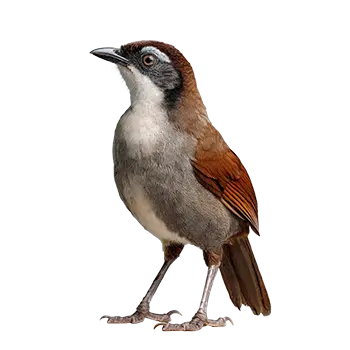

Pair Formation & Compatibility

Successful Laughing Thrush breeding begins long before the first egg is laid, with the careful selection and pairing of compatible adults. Unlike some avian species where any male and female of breeding age will pair readily, Laughing Thrushes form selective pair bonds based on individual compatibility, and placing two arbitrary birds together does not guarantee a productive breeding outcome. Pair compatibility involves behavioral temperament, vocal coordination, physical condition, and the subtle interpersonal dynamics that determine whether two birds will function as cooperative breeding partners.

Sexual dimorphism is minimal in most Laughing Thrush species, which makes reliable visual sexing difficult or impossible without diagnostic methods. DNA sexing from a blood sample or a plucked feather is the most reliable approach and should be performed before any breeding attempt to confirm that the intended pair consists of one male and one female. Surgical sexing through endoscopy is an alternative but is more invasive and carries procedural risks, making DNA analysis the preferred method for most breeders and keepers.

Introduce prospective breeding pairs gradually, housing them in adjacent enclosures where they can see and hear each other for a minimum of two to four weeks before sharing space. During this acclimation period, watch for mutual interest signals: contact calling directed specifically at the other bird, relaxed posture when near the shared barrier, and food begging or offering behavior performed at the dividing partition. Aggressive responses, persistent alarm calling, or avoidance of the side of the enclosure nearest the potential mate suggest poor compatibility and should not be forced through premature cohabitation.

Age and physical condition are important considerations in pair selection. Laughing Thrushes typically reach sexual maturity between one and two years of age, but most experienced breeders recommend waiting until birds are at least two years old before their first breeding attempt, as fully mature birds are more likely to be competent parents and less likely to abandon eggs or chicks. Both members of the pair should be in excellent physical condition, with healthy plumage, clear eyes, and a stable body weight within the normal range for their species. Birds that are underweight, recovering from illness, or in active molt should not be bred.

Genetic diversity is a critical consideration for anyone breeding Laughing Thrushes, particularly for species that are uncommon in aviculture. Inbreeding depression, the cumulative negative effects of mating closely related individuals, can manifest as reduced fertility, lower hatch rates, weaker offspring, and increased susceptibility to disease. If possible, obtain breeding stock from unrelated bloodlines and maintain records of the parentage and provenance of all birds in the collection. For species with managed breeding programs coordinated by avicultural organizations or species survival plans, participants are expected to follow pairing recommendations designed to maximize genetic diversity across the captive population.

Courtship Behavior & Breeding Condition

Laughing Thrush courtship is a complex behavioral sequence that serves multiple functions: it synchronizes the reproductive readiness of both partners, strengthens the pair bond, and confirms compatibility before the energetically expensive commitment of egg production and chick rearing begins. Recognizing the stages of courtship allows the breeder to assess whether a pair is progressing toward breeding and to identify potential problems before they result in a failed nesting attempt.

The onset of breeding condition is typically triggered by environmental cues, particularly changes in day length and the availability of protein-rich food. In the Northern Hemisphere, most Laughing Thrush species come into breeding condition during spring as day length increases, though the specific timing varies by species and can be influenced by the captive environment. Gradually extending the photoperiod from 10 to 12 hours of light up to 13 to 14 hours over a period of several weeks, combined with an increase in live insect offerings, stimulates hormonal changes that bring both birds into reproductive readiness.

Male courtship behavior in Laughing Thrushes typically includes intensified vocal displays, postural presentations, and food offerings to the female. The male may perform his most elaborate vocalizations while posturing with raised crest feathers, fanned tail, and slightly drooped wings, creating a visual display that accompanies the auditory one. Food offering, where the male selects a choice food item and presents it directly to the female's beak, is a particularly significant behavior because it demonstrates the male's ability to provision and foreshadows his role in feeding the hen during incubation and in delivering food to nestlings.

The female's receptivity is communicated through reciprocal vocal responses, acceptance of food offerings, and solicitation postures that signal readiness to mate. A receptive female will crouch on the perch with slightly spread wings and elevated tail when the male approaches, inviting copulation. The pair may copulate multiple times over a period of days before egg laying begins, and continued copulatory activity during the laying period ensures the fertilization of the full clutch. If the female consistently rejects the male's advances by fleeing, adopting aggressive postures, or vocalizing aggressively, the pair may be incompatible or the female may not yet be in full breeding condition.

Monitor both birds' physical condition closely as courtship progresses. The female's abdomen may become noticeably distended as ova develop in the ovary, and she may increase her food intake, particularly of calcium-rich items, in preparation for egg shell formation. Ensure that supplemental calcium is available in a readily absorbable form, such as liquid calcium added to drinking water or finely ground cuttlebone sprinkled over soft food, as egg production places enormous calcium demands on the hen's body and deficiency can lead to egg binding, a life-threatening emergency.

Nest Preparation & Site Selection

Providing appropriate nesting options is essential for triggering the transition from courtship to active nesting behavior. In the wild, Laughing Thrushes build cup-shaped nests in dense vegetation, typically within shrubs or low trees at heights ranging from three to fifteen feet depending on the species and available habitat. The nest is constructed from a variety of plant materials including grasses, rootlets, moss, bark strips, and leaves, and is often lined with finer materials such as hair, plant fibers, or soft moss to create a smooth interior surface for the eggs.

In captivity, offer the breeding pair a choice of nesting platforms or partially enclosed nest baskets placed in sheltered, semi-concealed locations within the enclosure. Providing two or three options at different heights and orientations allows the pair to select the site that best satisfies their instinctive preferences for cover, security, and accessibility. Wicker basket nests lined with a base layer of dry moss or coconut fiber are commonly accepted, as are purpose-built wooden nest boxes with an open front that provide overhead cover while allowing the birds to enter and exit freely.

Supply a generous quantity of nesting material in a readily accessible location, separate from the nest site itself, so the birds can select and transport materials as part of their natural building behavior. Suitable materials include dried grasses, coconut fibers, sisal strands, clean moss, soft leaves, and shredded paper. Avoid providing string, thread, or long fibers that could entangle the birds' feet or constrict circulation in a chick's leg. Both members of the pair typically participate in nest construction, with the male often gathering and delivering materials while the female shapes and arranges the interior of the nest cup.

The enclosure environment during the nesting period should be as stable and undisturbed as possible. Laughing Thrushes will abandon a nest if they feel the site is unsafe, and repeated disturbances such as enclosure cleaning near the nest, unfamiliar people approaching, or loud construction noise can trigger abandonment even after eggs have been laid. Minimize human activity near the nest, delay non-essential enclosure maintenance, and avoid introducing new birds or making significant environmental changes during the nesting period. If the enclosure is in a location with foot traffic, consider installing a visual barrier that blocks direct sightlines to the nest from the most trafficked direction.

Once the pair has selected a site and begun building in earnest, resist the urge to inspect the nest closely or frequently. Excessive inspection can cause the birds to abandon the site or delay egg laying. Brief visual checks from a distance, timed to coincide with periods when both adults are away from the nest feeding, are sufficient to monitor progress. Some breeders install a small, unobtrusive camera near the nest site to allow remote monitoring without physical proximity, which provides excellent observational data without the disturbance of direct inspection.

Egg Laying, Incubation & Candling

Laughing Thrush hens typically lay a clutch of three to five eggs, with one egg deposited per day in the early morning hours until the clutch is complete. The eggs are small, oval, and vary in color by species from pale blue-green to off-white, sometimes with fine brown or reddish speckles concentrated at the larger end. The hen may begin incubation after the first or second egg is laid or may wait until the clutch is nearly complete, a behavior that influences the synchrony of hatching. Clutches where incubation begins early tend to hatch asynchronously over several days, producing chicks of different sizes, while clutches where incubation is delayed until completion tend to hatch more synchronously.

Incubation is performed primarily by the female, though the male contributes by sitting on the eggs for short periods while the female leaves the nest to feed, bathe, and defecate. The incubation period for most Laughing Thrush species ranges from 13 to 16 days, with some variation depending on the species and the consistency of incubation. The hen's commitment to the nest typically intensifies as incubation progresses, with longer sitting bouts and shorter breaks during the final days before hatching.

Candling, the process of examining eggs with a bright light source to assess fertility and embryonic development, can be performed around day five to seven of incubation. Carefully remove one egg at a time from the nest during a brief period when the hen is off the nest, and hold it against a focused light source such as a small, bright LED flashlight in a darkened room. A fertile, developing egg will show a network of blood vessels radiating from a central dark spot, which is the developing embryo. An infertile egg will appear uniformly translucent with no vascular network, and a dead embryo will appear as a dark, irregularly shaped mass without organized blood vessel growth.

Remove confirmed infertile eggs from the nest after candling to allow the hen to concentrate her incubation effort on the viable eggs. Dead-in-shell embryos should also be removed, as they can become a source of bacterial contamination that threatens the remaining eggs. Handle all eggs with clean, dry hands and minimize the time each egg spends outside the nest, as prolonged exposure to temperatures below the incubation range of approximately 99 to 100 degrees Fahrenheit can damage developing embryos.

As the hatching date approaches, you may be able to detect faint chirping sounds from within the eggs, indicating that the chick has internally pipped the air cell and is beginning to vocalize. External pipping, where the chick breaks through the outer shell with its egg tooth, typically occurs 12 to 24 hours before the chick fully emerges. Do not assist the hatching process unless a chick has made no progress for more than 24 hours after external pipping, as premature intervention can cause fatal hemorrhage from blood vessels in the membrane that have not yet completed their natural resorption.

Parental Rearing & Chick Development

Laughing Thrushes are generally attentive and capable parents, and allowing the adult pair to rear their own offspring is the preferred approach whenever the parents demonstrate competent brooding and feeding behavior. Parent-reared chicks benefit from natural thermal regulation, species-appropriate feeding rhythms, and social learning that is difficult to replicate through hand-rearing. The breeder's role during the parental rearing phase is primarily observational, intervening only when clear signs of neglect, illness, or danger emerge.

Immediately after hatching, both parents begin feeding the chicks with small, soft food items, primarily tiny insects and larvae. The frequency of feeding bouts is highest during the first few days and gradually decreases as individual meal sizes increase and the chicks' crop capacity grows. Ensure that the breeding pair has constant access to a surplus of high-quality live insects, particularly small, soft-bodied species like fruit flies, pinhead crickets, and freshly molted mealworms that are appropriate in size for very young chicks. Insufficient food availability is the most common correctable cause of chick mortality in parent-reared clutches.

Monitor the chicks' development from a distance to the extent possible. Visual checks from outside the enclosure, timed to periods when the parents are away from the nest, allow you to assess whether all chicks are being fed. Well-fed chicks have visibly distended crops after parental feeding visits and display vigorous begging behavior when they detect the adults' approach. A chick that is consistently flat-cropped, lethargic, or noticeably smaller than its siblings may be outcompeted for food and may require supplemental hand-feeding or removal for dedicated hand-rearing if its condition does not improve within 24 hours.

Nest hygiene is managed naturally by the parent birds, which consume or remove the chicks' fecal sacs during the first week to ten days of nest life. This behavior keeps the nest clean and reduces the olfactory signature that could attract predators in a wild setting. As the chicks grow and their droppings increase in volume, the parents typically cease fecal sac removal, and the nest may become progressively soiled. If the nest condition deteriorates significantly, a careful substrate change can be performed by briefly removing the chicks to a warm, padded container, replacing the soiled nest lining with fresh material, and returning the chicks promptly. Perform this operation as quickly and calmly as possible to minimize disruption.

Fledging occurs at approximately 14 to 18 days of age, at which point the chicks leave the nest and begin moving through the enclosure under parental supervision. The parents continue to feed the fledglings for an additional two to three weeks while the young birds develop foraging skills and flight competence. During this post-fledging dependency period, ensure that the enclosure is safe for mobile but inexperienced juveniles, with no gaps, hazards, or access points through which they could escape or come to harm.

Troubleshooting Breeding Failures

Not every breeding attempt results in a successful clutch of healthy offspring, and understanding the common causes of breeding failure helps the breeder diagnose problems, make corrections, and improve outcomes in subsequent attempts. Breeding failure can occur at any stage, from pair incompatibility and failure to copulate through infertile eggs, embryonic death, chick abandonment, and neonatal mortality, and each stage has its own set of potential causes and remedies.

Infertile eggs are among the most common breeding setbacks and can result from a variety of factors. If all eggs in a clutch are infertile, the most likely causes include incorrect sexing of one or both birds, physical inability to copulate due to obesity or physical impairment, inadequate breeding condition resulting from insufficient photoperiod stimulation or nutritional deficiency, and incompatibility between the pair. DNA-confirm the sex of both birds if this has not already been done. Assess body condition and reduce weight if either bird is obese. Review the photoperiod and diet to ensure both are appropriate for breeding stimulation.

Early embryonic death, where eggs are fertile but the embryo dies during the first week of incubation, is often attributable to incubation problems. Inconsistent incubation, where the hen leaves the nest for prolonged periods or fails to maintain adequate temperature, can kill embryos at any stage but is most damaging during the first few days when the embryo is most vulnerable to thermal fluctuation. Environmental disturbances that cause the hen to flush repeatedly from the nest can produce this pattern. If early embryonic death is recurrent, evaluate the nesting environment for sources of disturbance and ensure the hen has undisturbed access to food and water close to the nest so her absences are minimized.

Late embryonic death, where the chick dies during the final days of incubation or fails to pip, can result from humidity problems, nutritional deficiencies in the hen's diet during egg formation, or bacterial contamination that penetrated the shell. Excessively low humidity during incubation can cause the egg membranes to become too tough for the chick to pip through, while excessively high humidity can cause the chick to drown in accumulated fluid within the egg. Review incubation humidity conditions and ensure the hen's diet included adequate calcium, vitamin E, and B-complex vitamins during the egg production period.

Chick abandonment or neglect by first-time parents is not uncommon and does not necessarily indicate that the pair will be poor parents in subsequent attempts. Many birds improve their parenting behavior with experience, and a pair that abandons its first clutch may rear subsequent clutches successfully. If abandonment occurs within the first 24 hours after hatching, the chicks can potentially be salvaged through hand-rearing if the breeder is prepared and equipped for the intensive care neonatal passerines require. Having a hand-rearing setup on standby during the anticipated hatching period is a prudent precaution for any breeding attempt.

Ethics & Responsible Breeding Practice

Breeding Laughing Thrushes in captivity carries ethical responsibilities that extend beyond the mechanics of pair management and chick production. Several Laughing Thrush species are threatened or endangered in the wild due to habitat loss, trapping for the cage bird trade, and other anthropogenic pressures. Responsible captive breeding has the potential to contribute meaningfully to species conservation, but only if it is conducted with genetic integrity, proper record-keeping, and a commitment to the welfare of every individual bird produced.

Before initiating any breeding program, research the conservation status of the specific Laughing Thrush species you are working with. Some species, particularly those listed under CITES appendices or protected by national legislation, may require permits or registrations for captive breeding. Compliance with all applicable laws and regulations is a non-negotiable prerequisite for any breeding activity. Breeding protected species without proper authorization not only carries legal penalties but undermines the credibility of legitimate conservation breeding efforts.

Genetic management should be a priority in every breeding program, regardless of scale. Maintain detailed records of every bird's provenance, parentage, hatch date, and reproductive history. Avoid repeated pairings of closely related individuals, and actively seek unrelated breeding stock to introduce fresh genetic material into your collection. For species with coordinated captive breeding programs managed by zoos or avicultural societies, participate in the program and follow pairing recommendations generated by population management software that optimizes genetic diversity across the entire captive population.

Every chick produced must have a secure, appropriate home arranged before the breeding attempt or very shortly after hatching. Overproduction of birds without confirmed placements contributes to a surplus of animals that may end up in substandard care, rehomed repeatedly, or relinquished to rescue organizations that are already stretched beyond capacity. Responsible breeders produce only as many offspring as they can place in appropriate homes and are willing to take back any bird they have produced if the new owner's circumstances change.

The welfare of the breeding adults must remain paramount throughout the breeding process. Limit the number of clutches per year to two at most, and ideally one, to prevent the physical depletion that results from continuous reproductive effort. Egg production and chick rearing place enormous demands on the hen's calcium reserves, protein stores, and overall energy budget. A hen that is bred continuously without adequate recovery time between clutches will decline in condition, produce lower-quality eggs, and have a shortened lifespan. After each breeding cycle, remove nesting materials and reduce the photoperiod to bring the pair out of breeding condition and allow a full physiological recovery before the next season.

Always consult a qualified professional before making any health-related decisions. This content is provided for informational reference only and should not replace professional guidance specific to your animal.