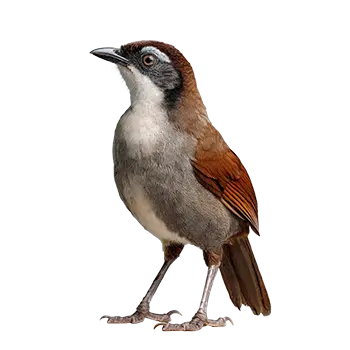

An adult Laughing Thrush in its prime years has demanding nutritional needs that reflect its high metabolic rate, active lifestyle, and omnivorous natural diet. Unlike seed-eating birds that can subsist on a relatively narrow range of foods, Laughing Thrushes require a diverse, carefully balanced diet that mirrors the insects, fruits, berries, and soft plant matter they would consume in the forests and scrublands of their native Asian range. Nutritional deficiencies are among the most common and most preventable health problems in captive softbills, and establishing a sound feeding regimen during the adult years is essential for long-term health.
The dietary foundation for an adult Laughing Thrush should be a high-quality commercial softbill pellet or crumble formulated for insectivorous and omnivorous passerines. This pellet provides a balanced baseline of vitamins, minerals, amino acids, and trace nutrients that are difficult to achieve through whole foods alone. Pellets should comprise approximately 40 to 50 percent of the total diet by volume. Select a product from a reputable manufacturer that lists whole insect meal or animal protein as a primary ingredient, and avoid pellets designed for seedeaters or parrots, as these have different protein-to-carbohydrate ratios and may lack nutrients critical for soft-billed species.
Live and prepared insect foods should make up 25 to 35 percent of the diet. Mealworms, waxworms, crickets, and commercially available insect blends provide the animal protein and fat that Laughing Thrushes need for feather maintenance, muscle condition, and reproductive health. Offer insects in a dedicated feeding dish or scattered through foraging substrates to encourage natural foraging behavior. Gut-loading live insects with nutritious foods such as leafy greens and commercial gut-load powder for 24 hours before offering them to the bird significantly enhances their nutritional value, transforming them from a moderate protein source into a delivery system for vitamins and minerals.
Fresh fruits and vegetables round out the diet at 20 to 30 percent of total intake. Laughing Thrushes readily accept a wide range of soft fruits including grapes, blueberries, papaya, mango, kiwi, and banana. Finely diced leafy greens, cooked sweet potato, and grated carrot add variety and micronutrients. Avoid citrus fruits in large quantities, as the acidity can cause digestive irritation in some individuals, and never offer avocado, chocolate, caffeine-containing foods, or raw onion, all of which are toxic to birds. Rotate the fruit and vegetable offerings regularly to prevent fixation on a single preferred item and to ensure a broad spectrum of phytonutrients.
Fresh, clean water must be available at all times in a dish that is large enough for the bird to drink from comfortably but stable enough to resist tipping. Laughing Thrushes will often dip food items into their water before eating, which means the water dish becomes contaminated rapidly and must be changed multiple times daily. Consider providing a separate, smaller water vessel for drinking and a wider dish for the food-dunking behavior, though some birds will use whichever container is nearest regardless of the caregiver's intentions.