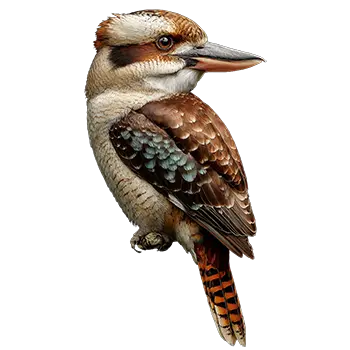

Kookaburra chicks hatch after an incubation period of approximately 24 to 26 days, emerging as blind, naked, and completely helpless altricial nestlings. The newly hatched chick weighs roughly 8 to 10 grams and is covered in bare pinkish skin with no trace of down feathering. Unlike many passerine species that hatch with at least a sparse covering of natal down, kingfisher chicks are entirely unfeathered at birth, making temperature regulation an immediate and critical concern for caregivers managing hand-raised birds or monitoring captive breeding pairs.
In a parent-raised nest, the adult birds will begin brooding the chick immediately. Kookaburras are cooperative breeders in the wild, meaning older offspring from previous seasons often assist the breeding pair with incubation and chick-rearing duties. In captivity, this cooperative dynamic is rarely available, so the full burden of brooding falls on the breeding pair alone. Caregivers should ensure the nest box remains undisturbed during the first day, limiting intervention to brief visual checks that confirm the adults are attentive and the chick appears responsive.
For hand-raised chicks, the first feeding should be delayed until the yolk sac has been fully absorbed, which typically occurs within eight to twelve hours of hatching. Attempting to feed before absorption is complete risks digestive complications and crop infections. The chick should be placed in a prewarmed brooder immediately after hatching, with the temperature set between 95 and 98 degrees Fahrenheit. The brooder substrate should be soft, non-fibrous material such as paper towels to prevent the chick from ingesting bedding.
During this initial period, observe the chick for basic vitality indicators. A healthy hatchling will respond to gentle tactile stimulation near the beak with a gaping feeding response, will exhibit slight movement when repositioned, and will have a pinkish skin tone indicating adequate circulation. Any signs of cyanosis, labored breathing, or failure to gape when stimulated should prompt an immediate consultation with an avian veterinarian experienced in kingfisher species.