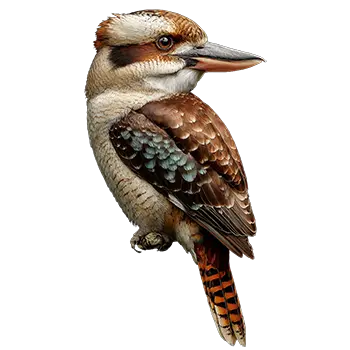

The juvenile stage of a Kookaburra's life begins with one of its most dramatic transitions: fledging. In the wild, Laughing Kookaburra chicks leave the nest hollow at approximately 33 to 37 days of age, though captive birds may fledge slightly earlier or later depending on their rearing conditions and individual development. Fledging is not a single event but a process that unfolds over several days, beginning with the chick perching at the nest entrance and making short exploratory flights before committing to life outside the cavity.
In captivity, caregivers must prepare for fledging by ensuring the enclosure is safe for a bird that is still mastering flight. Remove or pad any hard surfaces that the chick could collide with during clumsy early flights. Water dishes should be shallow to prevent drowning, as newly fledged Kookaburras lack the coordination and strength to extract themselves from deep containers. Perches should be placed at varying heights with secure footing to give the fledgling multiple landing options as it practices.
The emotional and behavioral shift during fledging is significant. A chick that was previously content in its brooder or nest box suddenly becomes restless, vocal, and driven to explore. This energy should be encouraged, not restricted. Attempting to delay fledging by confining the chick to a small space can lead to stress behaviors, feather damage, and weakened flight muscles. Provide the largest safe flight space available and allow the bird to build its aerial skills at its own pace.
Hand-raised Kookaburras that fledge in a home environment require careful management during this period. The bird will attempt to fly to anything that catches its attention, and its aim and braking ability are poor initially. Close windows and doors, cover mirrors and windows with curtains to prevent collisions, and remove any toxic plants, open containers of chemicals, or ceiling fans from the flight area. Supervise all out-of-enclosure time until the bird demonstrates consistent, controlled flight.