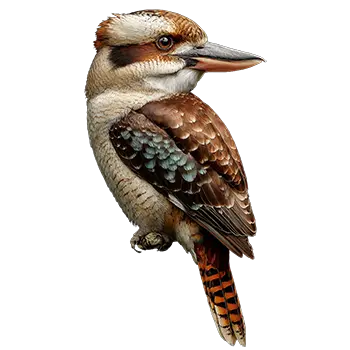

Understanding the Adult Kookaburra

A Kookaburra reaches full physical maturity at approximately two to three years of age, but the adult stage encompasses the longest and most stable portion of the bird's life, spanning from maturity through roughly twelve to fourteen years before the onset of age-related decline. During these prime years, the Kookaburra is at its peak in terms of physical capability, cognitive sharpness, and behavioral complexity. Understanding what a healthy, well-adjusted adult Kookaburra looks and acts like provides the baseline against which caregivers can detect subtle changes that may signal health or welfare concerns.

Adult Laughing Kookaburras are stocky, powerfully built birds with a distinctive large head and substantial beak that serves as their primary hunting tool. Males and females are similar in appearance, though females tend to be slightly heavier and may show less blue coloring on the rump and tail. A healthy adult in peak condition has bright, alert eyes, smooth and well-aligned plumage, strong foot grip, and a clean, symmetrical beak with no cracks, overgrowth, or discoloration.

Behaviorally, the adult Kookaburra is a creature of habit. These birds establish daily routines around feeding, bathing, preening, and vocalizing that remain remarkably consistent over time. A well-socialized adult Kookaburra is confident around its familiar caregivers, engages in interactive play, and responds to trained cues reliably. Significant deviations from established behavioral patterns, such as a normally interactive bird becoming withdrawn, or a calm bird becoming suddenly aggressive, almost always indicate that something has changed in the bird's physical health or environmental conditions.

The adult Kookaburra's territorial nature is fully established and must be respected by caregivers. These birds are not passive companions in the way that many domesticated species are. They are predators with strong instincts around territory, food, and social hierarchy. A successful long-term relationship with an adult Kookaburra is built on mutual respect, consistent boundaries, and an understanding that the bird's natural behaviors are not defects to be corrected but characteristics to be managed thoughtfully.

Nutrition and Diet Management

Feeding an adult Kookaburra correctly is both simpler and more consequential than feeding a juvenile. The frantic pace of growth-related nutritional demands has passed, but the cumulative effects of dietary choices during the adult years determine the bird's long-term health, plumage quality, reproductive fitness, and resistance to age-related disease. A poorly fed adult Kookaburra may appear healthy for years before the consequences of nutritional deficiency manifest as organ damage, immune compromise, or metabolic disorders.

The adult Kookaburra's diet should consist primarily of whole prey items that replicate the variety and nutritional completeness of a wild diet. Appropriate staples include day-old chicks, pinkie and fuzzy mice, large insects such as crickets and mealworms, earthworms, and occasional small pieces of lean raw meat. Whole prey items are vastly superior to butchered meat alone because they provide calcium from skeletal tissue, roughage from fur and feathers, and organ meats that are rich in essential vitamins. An adult Kookaburra fed exclusively on lean muscle meat will eventually develop calcium deficiency and vitamin A toxicity or deficiency depending on the meat source.

Feeding frequency for adults is typically twice daily, with the morning meal being the larger of the two. Some keepers offer a single large meal per day, but splitting the daily ration helps prevent gorging and gives the bird two positive interaction opportunities. The total daily food intake for an adult Laughing Kookaburra is approximately 50 to 80 grams of food, adjusted based on the bird's weight, activity level, and environmental temperature. Birds housed in outdoor aviaries in cooler climates may require increased rations during winter months to maintain body condition.

Obesity is an underappreciated health risk in captive Kookaburras. In the wild, these birds expend significant energy hunting, defending territory, and navigating their environment. Captive birds, even those in spacious aviaries, are far more sedentary and can easily consume more calories than they burn. Monitor body weight monthly and assess body condition by gently palpating the keel bone. The keel should be readily palpable but not prominent; if it cannot be felt beneath a layer of fat, the bird is overweight and its diet should be adjusted. Conversely, a sharply prominent keel indicates the bird is underweight.

Supplements should be continued in adulthood but adjusted based on the dietary composition and veterinary guidance. If the bird's diet consists primarily of whole prey items with good skeletal content, additional calcium supplementation may be minimal. However, vitamin D3 remains important for birds housed indoors without access to unfiltered sunlight, as glass and most plastics block the UVB radiation necessary for endogenous vitamin D3 synthesis. Full-spectrum UV lighting positioned over the bird's primary perching area and replaced on the manufacturer's recommended schedule helps address this need.

Enclosure and Environmental Enrichment

The adult Kookaburra's enclosure is its territory, and the quality of that territory directly impacts every aspect of the bird's physical and psychological health. An appropriately sized and thoughtfully designed enclosure allows the bird to express natural behaviors, maintain physical fitness, and experience the environmental variability that prevents the monotony-driven stress responses common in captive kingfishers.

For a single adult Kookaburra, the minimum recommended aviary size is eight feet long, four feet wide, and six feet tall, with larger dimensions strongly preferred. Pairs or groups require proportionally more space, with an emphasis on horizontal flight distance rather than additional height. The enclosure should include both sheltered and exposed areas so the bird can choose its level of sun exposure, wind protection, and visibility. A solid roof over at least one-third of the aviary provides rain shelter and shade, while open mesh sections allow access to natural sunlight and air circulation.

Perching remains critically important in the adult enclosure. Provide natural wood perches of varying diameters, including branches thick enough that the bird's toes do not fully wrap around them. This variation exercises the foot muscles and prevents the pressure sores that develop from prolonged contact with uniform surfaces. Include at least one elevated perch that gives the bird a commanding view of its surroundings, as Kookaburras strongly prefer high vantage points from which they can survey their territory.

Enrichment for adult Kookaburras should engage their intelligence, predatory instincts, and curiosity. Scatter-feeding, where food is hidden throughout the enclosure rather than presented in a single dish, encourages foraging behavior and extends feeding time in a way that mimics wild hunting activity. Puzzle feeders, frozen food items embedded in ice blocks during warm weather, and live insect releases within the enclosure all provide mental stimulation. Bathing opportunities are also important; provide a shallow dish or gentle water spray that the bird can use at will. Kookaburras bathe regularly in the wild and the absence of bathing opportunities can lead to poor feather condition.

Environmental complexity should extend beyond the physical enclosure to include auditory and visual stimulation. Kookaburras housed within earshot of household activity remain more socially engaged than those isolated in remote outbuildings. If the bird is in an outdoor aviary, positioning it where the bird can observe garden activity, visiting wildlife, and human movement provides passive enrichment that keeps the bird alert and mentally active.

Behavioral Management and Social Needs

An adult Kookaburra's behavioral profile is a product of its natural instincts, its early socialization experiences, and the ongoing quality of its relationship with its caregivers. Managing behavior in an adult bird is less about training new responses and more about maintaining established routines, respecting the bird's autonomy, and addressing behavioral changes promptly before they become entrenched problems.

Daily interaction with a tame adult Kookaburra should include handling, interactive play, and vocal exchange. These birds thrive on predictable social contact and can become distressed or develop attention-seeking behaviors if their caregiver's availability drops suddenly. If your lifestyle changes in ways that reduce the time you can spend with the bird, introduce enrichment and environmental changes gradually to compensate, rather than allowing the bird to experience an abrupt loss of social stimulation.

Territorial aggression is the most common behavioral challenge in adult Kookaburras. This aggression is typically directed at unfamiliar people, other animals, or perceived intrusions into the bird's established territory. It is instinctive and cannot be eliminated, but it can be managed through consistent handling, controlled introductions to new people, and clear spatial boundaries. Never punish territorial behavior, as this increases the bird's stress and often escalates aggression. Instead, manage the environment to prevent triggering situations and use positive reinforcement to reward calm behavior in the presence of perceived threats.

Seasonal behavioral changes are normal in adult Kookaburras, particularly during the breeding season. Even birds that are not being bred may exhibit increased vocalization, territorial defense, and hormonal behaviors such as regurgitation or mate-soliciting postures during the spring and early summer months. Understanding these seasonal patterns prevents caregivers from interpreting normal hormonal behavior as illness or behavioral regression. If hormonal behaviors become excessive or disruptive, consult with your avian veterinarian about environmental management strategies that can help moderate hormonal cycling without pharmaceutical intervention.

Preventive Health Care

The cornerstone of adult Kookaburra health management is a proactive preventive care program that catches problems early, maintains baseline health data, and addresses the specific vulnerabilities of captive kingfishers. Annual veterinary examinations are the minimum standard for a healthy adult, with twice-yearly visits recommended for birds over ten years of age or those with known health conditions.

The annual wellness examination should include a complete physical assessment, body weight and condition scoring, fecal parasite screening, and a crop or cloacal swab for bacterial and fungal culture. Blood work, including a complete blood count and basic biochemistry panel, provides valuable data on organ function, nutritional status, and immune health. Establishing a longitudinal health record with consistent annual data allows your veterinarian to identify trends, such as gradually declining kidney function or slowly rising liver enzymes, that would not be apparent from a single examination.

Beak and nail maintenance is a practical aspect of adult care that many keepers overlook until problems develop. In the wild, Kookaburras naturally wear down their beaks through the impact of striking prey against hard surfaces. Captive birds that eat pre-killed food from dishes may not receive this natural abrasion, leading to beak overgrowth that can interfere with feeding and cause jaw misalignment. Provide hard surfaces and branches that the bird can use for natural beak maintenance, and have your veterinarian assess beak length and alignment at each visit. Nail trimming may be necessary if perching surfaces do not provide adequate wear.

Parasite prevention is particularly important for birds housed in outdoor aviaries. Kookaburras that have access to soil, wild insects, or wild bird droppings are exposed to a range of internal and external parasites including roundworms, coccidia, mites, and lice. Regular fecal screening identifies internal parasites before they cause clinical disease, and visual inspection of the bird's plumage and skin during handling helps detect external parasites early. Preventive deworming protocols should be discussed with your avian veterinarian and tailored to your bird's specific exposure risks.

Oral cavity and beak health should not be neglected. The oral mucosa should be uniformly pink and moist, with no plaques, lesions, or abnormal growths. Trichomoniasis, a protozoal infection that causes caseous lesions in the oral cavity and crop, can affect Kookaburras that consume wild pigeons or doves. If your bird has any exposure to wild columbid species, discuss trichomoniasis screening with your veterinarian.

Common Health Conditions in Adults

While a well-managed adult Kookaburra can enjoy many years of robust health, several conditions occur with sufficient frequency in captive kingfishers that caregivers should be aware of their presentations and risk factors. Early recognition of these conditions dramatically improves treatment outcomes and reduces the suffering associated with delayed diagnosis.

Aspergillosis remains a significant risk throughout the Kookaburra's life, not only during the vulnerable newborn period. Adult birds housed in damp, poorly ventilated enclosures or exposed to moldy bedding, food, or organic debris can develop both acute and chronic forms of this fungal respiratory disease. Chronic aspergillosis is particularly insidious because it progresses slowly, and the bird may compensate for reduced respiratory capacity until the disease is far advanced. Weight loss, exercise intolerance, and a subtle change in voice quality may be the only early indicators.

Hepatic lipidosis, or fatty liver disease, is a common consequence of obesity and dietary imbalance in captive Kookaburras. Birds fed diets high in fat, particularly those receiving large quantities of rodents without adequate dietary variety, are at elevated risk. The condition develops gradually as fat infiltrates the liver tissue, eventually compromising liver function. Clinical signs include lethargy, loss of appetite, green-tinged urates from biliverdin spillover, and in advanced cases, ascites. Blood work showing elevated bile acids and liver enzymes prompts further investigation, and treatment involves dietary correction, supportive care, and sometimes hepatoprotective medications.

Pododermatitis, commonly known as bumblefoot, continues to be a concern in adult birds, particularly those housed on inappropriate perching surfaces. The condition begins as a small area of redness or callus formation on the plantar surface of the foot and can progress to a deep, infected ulcer that erodes into the bone if left untreated. Prevention through appropriate perch diversity, regular foot inspections, and maintenance of a healthy body weight is far more effective than treating established lesions.

Long-Term Commitment and Lifestyle Planning

Owning an adult Kookaburra is a commitment that extends well beyond daily feeding and cage cleaning. These are long-lived, intelligent birds that can remain active and healthy for 15 to 20 years in captivity, and the decision to keep one should be made with a full understanding of the time, financial resources, and lifestyle adjustments involved. The adult years are when the reality of this commitment becomes most apparent, as the novelty of a new bird gives way to the sustained responsibility of providing excellent care year after year.

Financial planning for a Kookaburra's care should account for routine veterinary expenses, food costs, enclosure maintenance, and an emergency fund for unexpected illnesses or injuries. Avian veterinary care, particularly from specialists experienced with kingfishers, is not inexpensive. A single diagnostic workup involving blood work, radiographs, and cultures can cost several hundred dollars, and treatment for serious conditions such as aspergillosis or bumblefoot may run considerably higher. Budget realistically and consider avian veterinary insurance if it is available in your area.

Contingency planning is an aspect of responsible bird ownership that many keepers do not consider until a crisis forces the issue. Identify at least one trusted person who can provide competent emergency care for your Kookaburra if you are hospitalized, must travel unexpectedly, or are otherwise unable to care for the bird. This person should be familiar with the bird, know its dietary needs and handling requirements, and have contact information for your avian veterinarian. Document your bird's care routine, dietary preferences, and medical history in a written care plan that can be handed to a caretaker on short notice.

The Kookaburra's social and environmental needs must be factored into lifestyle decisions such as relocating, renovating a home, or adding new pets to the household. Kookaburras are sensitive to environmental disruption and can respond to major changes with stress behaviors, refusal to eat, or aggression. If a significant life change is unavoidable, plan the transition carefully, maintaining as much routine consistency as possible and introducing changes incrementally rather than all at once.

Always consult a qualified professional before making any health-related decisions. This content is provided for informational reference only and should not replace professional guidance specific to your animal.