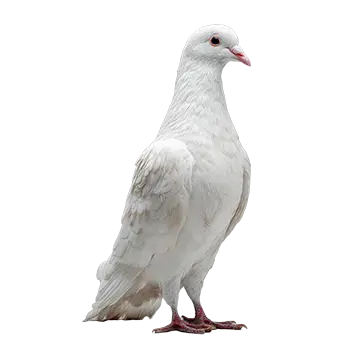

Weaning is the defining event of the King Pigeon's juvenile stage, marking the transition from complete dependence on parental or hand-fed nutrition to self-sufficient eating. For King Pigeons, this process typically begins around four weeks of age and extends through the fifth and sixth weeks, though individual variation is common. The breed's large body size means that the caloric demands during weaning are substantial, and caregivers must ensure that the young bird has consistent access to appropriate solid food throughout this transition rather than simply withdrawing formula or parental feeding abruptly.
In a parent-raised scenario, weaning occurs naturally as the parents gradually reduce feeding frequency and the squab increasingly supplements its diet by pecking at seeds and grains available in the loft. The parents may begin actively discouraging the squab from begging by turning away or gently pushing the youngster aside with their beaks. This behavioral shift is normal and should not be interpreted as rejection. The squab's crop will show a mix of formula-consistency material and intact seeds during this period, confirming that the transition is underway.
Hand-raised King Pigeons require a more deliberate weaning approach. Begin by placing a shallow dish of appropriately sized pigeon seed mix in the brooder or enclosure alongside the squab's regular hand-feeding schedule. Small seeds such as millet and canary seed are easier for a newly weaning squab to pick up than larger grains. As the squab begins eating measurable quantities of solid food, gradually reduce the number of daily hand-feedings. Most King Pigeon squabs can be weaned to two hand-feedings per day by five weeks and fully weaned by six to seven weeks, provided they demonstrate consistent independent eating and stable weight.
Never rush the weaning process based on an arbitrary timeline. Some squabs, particularly those that were slow to develop or experienced health setbacks during the newborn period, may need additional time. The key indicators of weaning readiness are consistent independent eating, stable or increasing body weight without supplemental feeding, a well-developed crop that empties normally after solid food meals, and active, alert behavior. A squab that loses more than ten percent of its body weight during weaning is being weaned too aggressively and needs supplemental feeding resumed.