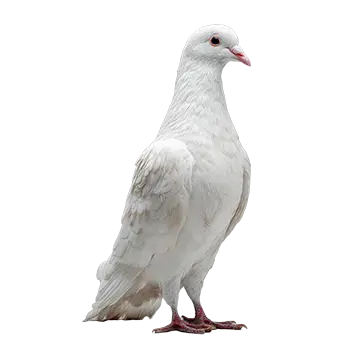

Recognizing when a King Pigeon is approaching the end of its life is one of the most difficult but necessary skills a caregiver can develop. Birds are instinctively adept at masking illness and weakness, a survival behavior inherited from wild ancestors for whom any visible vulnerability attracted predators. This means that by the time a King Pigeon shows unmistakable signs of decline, the underlying condition is often advanced. Understanding the spectrum of end-of-life indicators, from the earliest subtle shifts to the final stages, helps caregivers respond with appropriate compassion and timely decision-making.
Progressive weight loss that does not respond to dietary intervention is one of the most reliable indicators that a King Pigeon's body is failing. While weight fluctuations are normal throughout life, a sustained downward trend in an aging or ill bird, particularly when the keel bone becomes sharply prominent and breast musculature visibly wastes, signals that the body is consuming its own reserves. The bird may continue to approach food but eat less, or it may show interest in the food dish but struggle to pick up and process seeds effectively due to weakness or oral discomfort.
Behavioral withdrawal is another hallmark of end-of-life decline. A King Pigeon that was previously social, responsive to its caregiver's voice, and engaged with its environment may become increasingly quiet, spend prolonged periods with its feathers fluffed and eyes partially closed, and show diminished reaction to stimuli that would normally provoke interest or alertness. This withdrawal is not voluntary in any conscious sense but rather reflects the body redirecting its diminishing energy reserves away from social engagement and toward basic survival functions.
Changes in droppings often provide a window into the systemic processes occurring as organs fail. Droppings may become watery, discolored, or malodorous as kidney or liver function deteriorates. The urate component may shift from the normal white to yellow or green, indicating impaired uric acid metabolism. In some cases, droppings become scant or cease altogether as the bird stops eating and drinking. These changes should be documented and shared with your avian veterinarian, as they help clarify the clinical picture and inform decisions about palliative care or euthanasia.