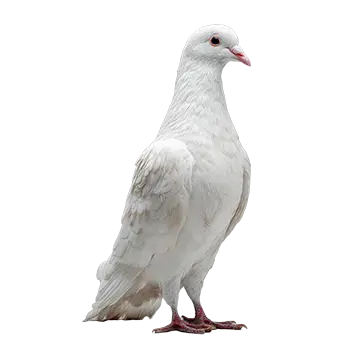

King Pigeon squabs hatch after an incubation period of approximately 17 to 19 days, emerging as small, nearly helpless creatures covered in sparse yellow down. Unlike many parrot species, pigeon squabs are altricial to an extreme degree, born with their eyes closed and virtually no ability to thermoregulate. A newly hatched King Pigeon squab typically weighs between 15 and 20 grams, which is modest given the substantial adult size this breed eventually reaches. The first hours of life are a critical window during which the squab must receive its first feeding of crop milk and establish a stable body temperature within the nest.
In a parent-raised setting, both the cock and the hen produce crop milk, a nutrient-dense secretion from the lining of the crop that is unique to the pigeon family. This substance is remarkably rich in protein and fat, containing concentrations that rival mammalian milk in caloric density. The parents will begin feeding crop milk within hours of hatching, and this first feeding is essential for delivering the immunoglobulins and beneficial microorganisms that prime the squab's developing immune and digestive systems. Interrupting or delaying this initial feeding can set the stage for failure to thrive.
If circumstances require hand-rearing from hatch, the caregiver faces a significant challenge. Pigeon crop milk cannot be replicated exactly, but commercial pigeon hand-rearing formulas offer the closest substitute. The first hand-feeding should occur once the yolk sac is fully absorbed, generally within six to ten hours of hatching. The formula must be warmed to approximately 104 to 106 degrees Fahrenheit and delivered with extreme care using a small syringe or a specialized pigeon feeding tube. Overfeeding at this stage is as dangerous as underfeeding, as the squab's crop is tiny and easily overwhelmed.
Monitor the squab closely during these first hours. A healthy newborn will have pinkish skin visible beneath the sparse down, respond to gentle touch with subtle movements, and display a feeding response when the beak area is stimulated. Any signs of cyanosis, where the skin takes on a bluish or grayish cast, suggest inadequate warmth or a circulatory problem and demand immediate intervention. The nest or brooder should be kept scrupulously clean, as newborn squabs are extraordinarily vulnerable to bacterial infections.