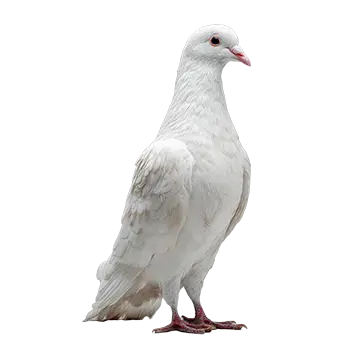

Recognizing the Senior Stage

King Pigeons do not announce their transition into the senior stage with a single dramatic change. Instead, aging manifests as a gradual accumulation of subtle shifts in energy, appearance, and behavior that an attentive caregiver learns to recognize over time. The typical King Pigeon begins showing signs of aging somewhere between seven and ten years of age, though the onset varies considerably based on genetics, lifetime nutrition, health history, and overall quality of care. Birds that have been well maintained throughout their adult years often enter the senior period later and with more physical reserves than those that experienced chronic health issues, poor nutrition, or high stress during their prime.

One of the earliest indicators of aging is a general reduction in activity level. A King Pigeon that once walked actively around its enclosure, engaged enthusiastically with enrichment items, and responded quickly to the caregiver's approach may become more sedentary, spending longer periods resting on a favored perch or in its nest area. This reduced activity is a normal part of aging and should not be mistaken for illness in isolation, though it can make distinguishing age-related slowing from early signs of disease more challenging. Tracking activity patterns over months rather than days provides the perspective needed to identify genuine trends.

Physical changes in the senior King Pigeon include subtle alterations in plumage quality. Feathers may become slightly duller, lose some of their tight structural integrity, and take longer to regrow during the annual molt. The molt itself may extend over a longer period than it did during the adult years, with some birds showing patchy feathering during the transition. The beak and nails may grow more slowly or more erratically, sometimes requiring trimming if they become overgrown due to reduced natural wear.

Muscle tone tends to decrease in senior King Pigeons, particularly in the breast and leg muscles. This loss of muscle mass, combined with the breed's naturally heavy build, can affect the bird's balance and mobility. A senior King Pigeon may be less steady on its feet, more hesitant to jump between perches of different heights, and more prone to slipping on smooth surfaces. These changes in mobility have important implications for housing modifications that will be discussed in subsequent sections.

Nutritional Adjustments

The nutritional needs of a senior King Pigeon differ from those of a bird in its prime, and dietary adjustments can meaningfully influence both the quality and length of the remaining lifespan. The fundamental challenge is balancing adequate nutrition to maintain body condition and immune function against the reduced caloric needs that accompany decreased activity, while also accounting for age-related changes in digestive efficiency and organ function.

Caloric intake should be carefully managed in the senior stage. Because the aging King Pigeon is typically less active than its younger self, continuing to feed adult maintenance quantities can lead to weight gain that places additional stress on aging joints, the cardiovascular system, and the liver. Reduce the daily seed ration modestly, by approximately 10 to 15 percent from the adult maintenance level, and monitor body weight weekly to ensure the bird maintains condition without gaining excess fat. Conversely, some senior pigeons lose weight as they age due to reduced appetite, declining digestive efficiency, or chronic disease, and these individuals may need caloric supplementation rather than restriction.

Protein quality becomes more important as the body's ability to assimilate nutrients diminishes with age. Rather than simply increasing protein quantity, focus on offering highly digestible protein sources. Smaller legumes such as lentils and mung beans are generally easier for older birds to process than larger field peas. Some caregivers add a small amount of finely chopped hard-boiled egg to the diet once or twice weekly as a concentrated, highly bioavailable protein source that supports muscle maintenance during the senior years.

Calcium and vitamin D3 supplementation should be reviewed with your avian veterinarian. Aging pigeons, particularly hens that have produced eggs during their lifetime, may have depleted calcium reserves that predispose them to osteoporosis and pathological fractures. A cuttlebone or mineral block should remain available at all times, and the grit mix should contain adequate oyster shell or limestone. For indoor birds with limited UV exposure, a vitamin D3 supplement may be necessary to support calcium absorption, but dosing should be guided by veterinary advice to avoid toxicity.

Water intake should be monitored closely in senior birds. Some aging pigeons drink less than they should, either due to reduced thirst drive, mobility limitations that make reaching the water source difficult, or discomfort from oral or esophageal conditions. Ensure the water dish is easily accessible, positioned at a height that does not require the bird to stretch or bend awkwardly, and filled with fresh water at all times. Adding an electrolyte supplement to the water periodically can help maintain hydration in birds that appear to drink insufficiently.

Mobility & Housing Modifications

As a King Pigeon ages, its mobility inevitably declines, and the living environment should evolve to accommodate these changes safely. The breed's already limited flight ability means that even a modest reduction in leg strength, balance, or coordination can have a disproportionate effect on the bird's ability to navigate its surroundings. Thoughtful housing modifications help the senior King Pigeon maintain independence and prevent injuries that could significantly impact quality of life.

Perch placement is the first priority for modification. Lower all perches to reduce the height the bird must navigate, minimizing the risk of falls. For birds with significant mobility limitations, a single low perch only a few inches above the floor, combined with a flat resting platform, may be more appropriate than the multi-level perching arrangement used during the adult years. Perch surfaces should be wide and cushioned. Wrapping flat perches with self-adhesive bandage wrap or placing a layer of fleece fabric over hard surfaces provides a padded, grip-friendly surface that reduces pressure on aging feet.

Bumblefoot risk increases with age as foot tissue becomes less resilient and the bird's weight presses more heavily on feet with diminished muscle padding. Inspect the feet at least twice weekly, looking for any redness, swelling, scabbing, or heat on the plantar surface. If early-stage bumblefoot is detected, immediate intervention with improved perching surfaces, scrupulous hygiene, and topical treatment under veterinary direction can prevent progression to the painful, invasive stages.

Floor surfaces in the bird's living area should provide secure footing. Smooth tile, laminate, or polished wood floors are slippery for pigeons under the best circumstances and become hazardous for senior birds with reduced coordination. Place textured mats, rubber shelf liner, or low-pile towels on walking surfaces to give the bird reliable traction. In cage or enclosure settings, ensure the floor substrate is level, soft enough to cushion the bird's weight, and changed frequently to maintain cleanliness.

Food and water placement should be adjusted so that the senior bird does not need to navigate obstacles, climb, or stretch to reach essential resources. Place dishes on the same level as the bird's primary resting area, and consider adding a second set of dishes if the bird has a preferred resting spot that is distant from the main feeding station. For birds with significant mobility decline, a padded enclosure at floor level with easy access to food, water, and a soft resting surface may ultimately replace the traditional cage or loft perch arrangement.

Age-Related Health Conditions

Senior King Pigeons are susceptible to a range of age-related health conditions that reflect the cumulative wear on organ systems, the waning immune response, and the physiological consequences of the breed's heavy build. Awareness of these conditions enables earlier detection and more effective management, even when the underlying aging process cannot be reversed.

Arthritis is one of the most common conditions affecting senior King Pigeons. The joints of the legs, feet, and wings stiffen and become painful as cartilage degrades with age. Affected birds may shift their weight from foot to foot, spend more time sitting or lying down, resist handling that involves leg or wing manipulation, or move with a noticeably stiff gait. Arthritis management in pigeons is largely palliative, focusing on environmental modifications to reduce joint stress, maintaining a healthy weight to minimize load on affected joints, and in some cases, anti-inflammatory medications prescribed by an avian veterinarian.

Renal disease becomes increasingly common in geriatric pigeons. The kidneys gradually lose functional capacity over time, and the bird may begin showing signs of increased water consumption, changes in urate color from white to yellow or green, general malaise, and weight loss. Renal gout, where uric acid crystals deposit in the joints or on organ surfaces, is a painful complication of advanced kidney dysfunction. Blood chemistry can reveal elevated uric acid levels before clinical signs become severe. Dietary modification, including reducing protein load and ensuring adequate hydration, can slow progression in some cases.

Cataracts and other age-related vision changes can affect senior pigeons, manifesting as a cloudiness in the lens visible on close inspection. Reduced vision may cause the bird to become more hesitant in its movements, startle more easily at sudden visual stimuli, or have difficulty locating food in the dish. While cataract surgery is performed in some avian species, it is not commonly undertaken in pigeons. Instead, management focuses on environmental consistency, keeping furniture and dishes in predictable locations, and providing adequate lighting.

Neoplasia, or tumor development, increases in frequency with age across all bird species. King Pigeons may develop both benign and malignant tumors affecting various organ systems. External tumors may be visible as lumps or masses beneath the skin, while internal tumors often present with nonspecific signs such as weight loss, lethargy, and changes in droppings. Any palpable lump or unexplained decline in a senior bird's condition warrants veterinary evaluation to determine the nature and extent of the growth.

Veterinary Care for Senior Birds

The frequency and scope of veterinary care should increase as a King Pigeon enters its senior years. While annual examinations are generally sufficient for healthy adults, senior birds benefit from biannual wellness checks that allow more frequent monitoring of age-related changes and earlier detection of developing conditions. The veterinary relationship becomes increasingly important as the bird ages, because the line between normal aging and treatable disease is often nuanced and requires professional assessment.

Biannual blood work provides objective data on organ function that cannot be obtained through physical examination alone. A senior panel typically includes a complete blood count to evaluate red and white blood cell populations, and a biochemistry profile assessing liver enzymes, kidney values including uric acid, calcium and phosphorus levels, total protein, and blood glucose. Trends in these values over time are often more informative than individual readings, which is why consistent, periodic testing builds a valuable longitudinal dataset for the managing veterinarian.

Medication management becomes more complex in geriatric birds. The liver and kidneys, the organs primarily responsible for metabolizing and excreting medications, may function less efficiently in senior pigeons. This altered pharmacokinetics can affect drug dosing, side effect profiles, and interactions between multiple medications. Always inform your veterinarian of all supplements, vitamins, and treatments the bird is receiving, including any remedies applied topically or added to the water, to prevent inadvertent interactions or overdosing.

Dental-equivalent care in pigeons involves monitoring the beak and oral cavity. The beak continues to grow throughout life and is normally worn down through eating and environmental contact. Senior birds with reduced activity or changes in eating behavior may develop overgrown beaks that require periodic trimming by a veterinarian. The oral cavity should also be inspected for canker lesions, as older birds with waning immune function may experience recurrence of trichomoniasis that had been suppressed during the healthier adult years.

Discuss a geriatric care plan with your veterinarian that addresses not only reactive treatment of conditions as they arise but proactive strategies for maintaining quality of life. This plan should include nutritional guidelines specific to the bird's current condition, an exercise and mobility plan appropriate to the bird's abilities, a pain management strategy for musculoskeletal conditions, and criteria for assessing quality of life as the bird continues to age.

Emotional & Social Needs

The emotional and social needs of a senior King Pigeon do not diminish with age. In many cases, the aging bird becomes more dependent on its established social relationships and familiar routines, and disruptions that might have been weathered easily during the adult years can cause significant stress in a geriatric bird. Understanding and accommodating the senior bird's emotional needs is an essential component of geriatric care that directly affects both psychological wellbeing and physical health.

Bonded pairs that have been together for years may show increased attachment behaviors in the senior stage. Partners spend more time in close physical contact, engage in prolonged mutual preening sessions, and become visibly distressed when separated. If one member of a bonded pair passes away or must be permanently separated due to illness, the surviving bird may exhibit signs of grief including reduced appetite, lethargy, increased vocalization, and searching behavior. Supporting a grieving pigeon requires patience, increased social contact from the caregiver, and monitoring for secondary health effects of the stress response.

For single companion birds bonded to a human caregiver, the senior years often deepen the relationship in rewarding ways. The bird's reduced activity level may translate into more relaxed, extended companionship time, with the pigeon content to sit quietly with its person for long periods. Maintain the quality and consistency of this social contact even when the bird's reduced energy level makes it seem less demanding. A senior King Pigeon that is gradually receiving less attention because it no longer actively seeks it may be experiencing social deprivation that manifests as depression or declining health.

Routine stability becomes critically important in the senior stage. Changes in the household, relocation of the bird's enclosure, introduction of new household members or pets, or alterations to the daily schedule can all trigger stress responses in an aging bird. When changes are unavoidable, introduce them as gradually as possible and provide extra reassurance through increased handling, familiar items placed in the new environment, and strict maintenance of feeding and care routines.

Environmental enrichment should be adapted rather than eliminated for senior birds. A King Pigeon that can no longer navigate complex perching arrangements may still enjoy a shallow bath, a foraging tray placed at floor level, gentle handling sessions, or simply observing household activity from a comfortable, secure vantage point. The goal is to provide appropriate stimulation that engages the bird's senses and social nature without demanding physical exertion beyond its current capabilities.

Quality of Life Assessment

Assessing quality of life in a senior King Pigeon is an ongoing process that requires honest observation, veterinary input, and a willingness to prioritize the bird's experience over the caregiver's understandable desire to extend the relationship. Quality of life is not a single measurement but a composite picture that includes physical comfort, mental engagement, social satisfaction, and the balance between good days and difficult ones.

Develop a simple daily scoring system to track quality of life over time. Evaluate categories such as appetite and eating ability, mobility and balance, comfort at rest, social engagement, grooming behavior, and droppings quality. Score each category on a consistent scale and record the results daily. This objective tracking reveals trends that subjective observation may miss, particularly the slow, incremental decline that characterizes many aging processes. A gradual downward trend across multiple categories is more significant than a single poor day.

Physical comfort is a primary quality of life indicator. A senior King Pigeon in reasonable comfort maintains a relaxed posture, sleeps in its normal position, eats and drinks with apparent ease, and shows no signs of persistent pain such as tooth-grinding movements, hunched posture, reluctance to be handled, or vocalizations during routine activities. Chronic pain that cannot be adequately managed through medication and environmental modification is one of the most important factors in quality of life decline.

Appetite and the ability to eat independently are closely tied to quality of life in pigeons. A bird that approaches food with interest and processes its seed ration normally is maintaining a fundamental life function. Declining appetite, difficulty picking up or swallowing seeds, or progressive weight loss despite available food suggests either pain, organ dysfunction, or a physical impediment that may or may not be treatable. Discuss these changes with your veterinarian to determine whether intervention can restore comfortable eating function.

The balance between good days and difficult ones is perhaps the most honest quality of life metric. When a senior King Pigeon has more days of comfort, engagement, and apparent contentment than days of pain, lethargy, and distress, the balance favors continued care. As the ratio shifts and difficult days begin to predominate despite appropriate medical management and environmental support, the caregiver faces the responsibility of considering whether continuing treatment serves the bird's interests or prolongs suffering. This assessment is deeply personal but should be guided by veterinary counsel and an unflinching commitment to the bird's welfare above all other considerations.

Always consult a qualified professional before making any health-related decisions. This content is provided for informational reference only and should not replace professional guidance specific to your animal.