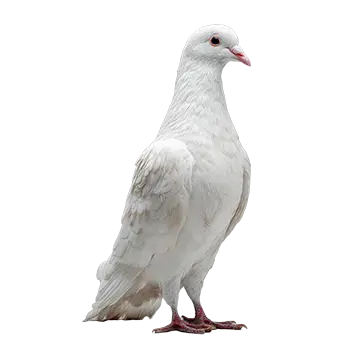

Pair Selection & Conditioning

Successful King Pigeon breeding begins well before the first egg is laid, with thoughtful pair selection and a deliberate conditioning period that prepares both birds physically and behaviorally for the demands of reproduction. The breed's history as a utility bird developed for squab production means that breeders have long paid careful attention to selecting mates that complement each other in conformation, health, and temperament. Even for those breeding King Pigeons as companions or for exhibition rather than production, applying sound selection principles produces healthier offspring and reduces breeding complications.

Select breeding birds that are at least seven to eight months old, physically mature, and in excellent health. Both the cock and hen should be at their ideal body weight, with well-developed breast musculature, clean and lustrous plumage, clear eyes, clean nares, and no signs of respiratory or digestive illness. Run a full health screening before pairing, including fecal analysis for parasites and a crop swab to rule out trichomoniasis and candidiasis. Breeding birds that carry active infections risk transmitting pathogens to their squabs during crop milk feeding, with potentially devastating consequences.

Conditioning for breeding involves optimizing nutrition in the weeks preceding pairing. Gradually increase the protein content of the diet by adding more legumes, and ensure abundant calcium and mineral supplementation. Hens in particular need robust calcium stores to support eggshell formation without depleting their own skeletal reserves. Begin conditioning at least three to four weeks before the intended pairing date. Some breeders also increase the photoperiod to 14 to 16 hours of light per day during conditioning to stimulate hormonal readiness, mimicking the long days of the natural breeding season.

Temperament should factor into pairing decisions alongside physical attributes. King Pigeons are generally calm and cooperative breeders, but individual personality affects pair compatibility. A highly assertive cock paired with a timid hen may result in excessive driving behavior that stresses the hen, while two very passive birds may be slow to court and mate. Observe the birds' interactions during the conditioning period for signs of mutual interest such as billing, proximity seeking, and cooing, which indicate compatibility. Forced pairings between incompatible individuals are less productive and more stressful than allowing birds to show natural preference where loft size and population permit.

Courtship & Mating Behavior

King Pigeon courtship follows the ritualized behavioral sequence characteristic of all Columba livia derivatives, though the breed's docile temperament often gives these displays a less frenetic quality than what one might observe in feral or racing pigeons. Understanding the stages of courtship helps breeders confirm that pairing is progressing normally and identify situations where intervention or re-pairing may be necessary.

The cock initiates courtship with the bowing display, inflating his crop, fanning his tail, and repeatedly dipping his head while turning in circles near the hen. This display is accompanied by a rhythmic cooing vocalization that is distinctly different from the bird's casual contact calls. A receptive hen will observe the display with interest, may respond with soft vocalizations of her own, and will not flee or aggressively rebuff the cock's approach. If the hen consistently avoids or attacks the displaying cock over several days, the pair is likely incompatible and should be separated.

Driving is the next phase of courtship, in which the cock follows the hen persistently, often pecking at her tail feathers or the back of her head to encourage her to move toward the nest site. Driving can appear aggressive to an unfamiliar observer, but it is a normal component of pigeon courtship when it occurs in moderation. Excessive driving, where the cock pursues the hen relentlessly, prevents her from eating and drinking, or causes visible feather damage or skin injuries, is not normal and indicates either an overly aggressive cock or a hen that is not ready to breed. In these cases, separating the pair and reconditioning before a second attempt is appropriate.

Billing, where the pair touch and interlock beaks in a motion that resembles kissing, signifies that the pair bond is forming. This behavior often leads to the hen inserting her beak into the cock's open beak, mimicking the crop-feeding motion used to nourish squabs, which reinforces the bond. Billing is one of the clearest indicators that a pair has accepted each other and is approaching readiness to mate. Copulation typically follows within days of sustained billing behavior.

Nest site selection proceeds concurrently with courtship. The cock identifies a potential nest location and calls the hen to it with a specific nest-calling coo while sitting in the chosen spot and flipping nesting material over his back. Once the hen accepts the site, both birds begin contributing nesting material, with the cock typically collecting and delivering twigs and straws while the hen arranges them in the nest bowl. Provide appropriate nesting bowls or platforms and a supply of clean nesting material such as short straw, pine needles, or commercial nesting fibers to support this process.

Egg Laying & Incubation

King Pigeon hens typically lay their first egg approximately eight to twelve days after successful mating, with the second egg following roughly 44 hours later. The standard pigeon clutch consists of exactly two eggs, and deviation from this pattern, either a single egg or three eggs, is uncommon but not unheard of in domestic pigeons. The eggs are white, smooth-shelled, and relatively large in proportion to body size, reflecting the breed's substantial build.

The hen will begin incubating in earnest after the second egg is laid, ensuring that both eggs develop at approximately the same rate and hatch within hours of each other. In some cases, particularly with experienced hens, light incubation may begin with the first egg, which can result in a slightly staggered hatch. Both parents share incubation duties on a predictable schedule, with the hen typically sitting from late afternoon through the night and the cock taking over during the midday hours. This shared responsibility allows each bird adequate time for eating, drinking, and exercise.

The incubation period for King Pigeon eggs is approximately 17 to 19 days, with 18 days being the most common duration. Maintain the loft or breeding room at a stable temperature, ideally between 65 and 80 degrees Fahrenheit, to support consistent incubation. Extreme temperature swings can affect embryo viability. Humidity levels should be moderate, and the nest area should be free from drafts that could chill the eggs during the brief moments when neither parent is sitting.

Candling the eggs at approximately seven to ten days of incubation provides valuable information about fertility and embryo development. Hold each egg gently against a bright, focused light source in a darkened room. A fertile, developing egg will show a network of blood vessels radiating from a dark central mass. An infertile egg will appear clear and uniformly translucent, while an egg with early embryonic death may show a dark ring or disorganized shadow without defined vascular development. Remove infertile eggs to prevent contamination if they spoil, but allow potentially viable eggs to continue unless development has clearly ceased.

Do not disturb the nesting pair unnecessarily during incubation. Limit nest inspections to the brief period when the sitting bird voluntarily leaves the nest for its daily break. Excessive handling of the eggs or prolonged displacement of the incubating parent can lead to egg abandonment, particularly in first-time breeders. If candling or egg inspection is necessary, perform it quickly and return the eggs to the nest promptly.

Fertility & Troubleshooting

Not every King Pigeon pairing produces fertile eggs on the first attempt, and experienced breeders understand that a degree of troubleshooting is a normal part of the breeding process. Identifying the cause of infertility or poor hatch rates requires systematic evaluation of the breeding pair, their environment, and the incubation conditions rather than simply discarding a pairing that fails to produce on the first round.

Infertility in the cock can result from age, obesity, poor nutrition, illness, or physical characteristics that impede successful copulation. King Pigeons' heavy body type can occasionally make mounting difficult, particularly with an inexperienced cock or an unusually large-bodied hen. Observe mating attempts to confirm that cloacal contact, the moment when sperm is actually transferred, is being achieved. If the cock consistently fails to achieve proper positioning, trimming the feathers around both birds' vent areas can improve contact. Ensure the breeding surface provides adequate traction, as slippery perches or nest platforms can cause the cock to lose his footing during mating.

Hen-side fertility issues include delayed reproductive maturity, calcium deficiency affecting egg quality, obesity interfering with ovulation, or reproductive tract infections. A hen that repeatedly lays soft-shelled or thin-shelled eggs likely has a calcium metabolism problem that must be corrected through dietary supplementation and possibly veterinary evaluation before breeding is attempted again. Egg binding, where a formed egg becomes stuck in the oviduct and cannot be laid, is a reproductive emergency more common in overweight, calcium-deficient, or first-time laying hens. Signs include straining, tail pumping, lethargy, a wide-legged stance, and inability to perch normally. Egg binding requires immediate veterinary attention.

Environmental factors that affect fertility include inadequate lighting, extreme temperatures, overcrowding, excessive disturbance, and stress from predator presence or aggressive flock mates. The breeding environment should be calm, secure, and provide each breeding pair with its own clearly defined nest space. Competition for nest sites is a major source of breeding stress in multi-pair lofts and can lead to egg destruction, squab trampling, and pair bond disruption.

If a pair produces infertile eggs on two consecutive clutches despite confirmed mating and adequate health and environmental conditions, consider testing both birds for subclinical infections that may be affecting reproductive function. Chlamydiosis, salmonellosis, and chronic trichomoniasis can all impair fertility without causing obvious clinical illness. Your avian veterinarian can guide the appropriate diagnostic workup.

Breeding Pair Nutrition & Health

The nutritional and health demands on a breeding pair of King Pigeons are substantially greater than those of non-breeding adults. Both the cock and hen contribute to every stage of the breeding cycle, from courtship through incubation to the energy-intensive period of crop milk production and squab rearing. Meeting these elevated demands through targeted nutritional support and vigilant health monitoring is essential for producing healthy squabs and maintaining the breeding pair's own long-term wellbeing.

During the laying and incubation phase, the hen's calcium requirements peak dramatically. Eggshell formation draws heavily on circulating calcium, and if dietary intake is insufficient, the hen's body will mobilize calcium from her own skeleton, leading to metabolic bone disease over repeated clutches. In addition to the standard oyster shell and grit supplementation, many experienced breeders provide a liquid calcium supplement during the laying period. Consult your avian veterinarian about the appropriate formulation and dosage, as excess calcium in the cock's diet can contribute to renal issues.

Crop milk production begins approximately two days before the expected hatch date, triggered by hormonal changes in both the cock and the hen. Producing crop milk is metabolically expensive, comparable in energy cost to lactation in mammals. The breeding diet during the crop milk phase should be the richest of the entire cycle, with protein content elevated to 18 to 20 percent and overall feed quantity increased by 30 to 50 percent above maintenance levels. High-quality legumes including peas, lentils, and vetches provide the protein density needed to support crop milk synthesis.

Monitor the breeding pair's body condition throughout the cycle, paying particular attention to the hen during laying and both birds during the squab-rearing phase. Weight loss of more than 10 to 15 percent of body mass during a breeding cycle suggests that the diet is not meeting demands. Chronic weight loss across multiple breeding rounds leads to declining fertility, reduced crop milk quality, poor squab growth, and long-term health deterioration in the breeding pair. If body condition cannot be maintained despite dietary optimization, reduce the breeding frequency by removing nest material and shortening the photoperiod between clutches to allow the pair to recover.

Health monitoring should be heightened during breeding. The physiological stress of reproduction suppresses immune function to a degree, making breeding birds more susceptible to flare-ups of chronic infections such as trichomoniasis and respiratory mycoplasmosis. Perform visual health checks daily during the breeding cycle, watching for nasal discharge, changes in droppings, declining appetite, or behavioral changes that might indicate developing illness. Any health concern in a breeding bird should be addressed promptly, as the risk of pathogen transmission to the squabs through crop feeding makes early intervention doubly important.

Managing Breeding Frequency

Pigeons are prolific breeders, and without deliberate management, a pair of King Pigeons will attempt to produce clutch after clutch throughout much of the year. While this reproductive drive served the breed's original purpose as a squab production bird, unmanaged continuous breeding places severe strain on the pair's health and can lead to declining clutch quality, parental neglect of later broods, and premature aging of the breeding birds. Responsible breeding management balances the desire for offspring against the physical welfare of the parent birds.

A reasonable breeding schedule for most King Pigeon pairs allows three to four clutches per year with enforced rest periods between rounds. After each clutch is weaned, remove nesting material and, if possible, reduce the photoperiod to discourage immediate re-nesting. Separating the pair into visual but not physical contact for two to four weeks provides a definitive break in the breeding cycle and allows both birds to recover body condition, complete any deferred feathering, and rebuild nutritional reserves.

Hens are at particular risk from excessive breeding. Each egg represents a significant investment of calcium, protein, and energy, and hens that lay continuously are prone to egg binding, reproductive tract infections, and severe calcium depletion. Chronic egg layers may develop oviductal prolapse, a condition where a portion of the oviduct protrudes from the vent, which requires veterinary intervention and often ends the hen's breeding career. Monitoring the hen's body weight and condition between clutches provides objective data for deciding whether she is fit for another round.

For caregivers who wish to prevent breeding altogether, whether because the birds are kept as companions, because additional offspring would be irresponsible, or because the birds have aged beyond safe reproductive capacity, several management strategies are available. Egg replacement is the simplest approach. When eggs are laid, remove them and substitute with dummy eggs of similar size and weight. The pair will incubate the dummy eggs for the normal period, satisfying their nesting instinct without producing squabs. After approximately three weeks, remove the dummy eggs, and the pair will typically abandon the nest and resume normal activity for a period before the cycle begins again.

Hormonal management through light cycle control is a complementary strategy. Reducing the daily photoperiod to 10 hours or fewer suppresses the hormonal cascade that drives breeding behavior. This approach is most effective in indoor settings where light can be fully controlled. Outdoor birds exposed to natural daylight are more difficult to manage hormonally, though loft shuttering and strategic light-blocking can reduce stimulatory long-day exposure.

Ethical Breeding Responsibilities

Breeding King Pigeons carries responsibilities that extend beyond the mechanics of pairing, incubation, and rearing. Every breeder, whether producing a single clutch for personal enjoyment or managing a larger program, bears an obligation to consider the welfare implications of bringing new birds into the world and to ensure that breeding decisions serve the animals' interests as well as the breeder's goals.

The foremost ethical responsibility is ensuring that every squab produced has a secure, appropriate home for the duration of its life. King Pigeons can live ten years or longer, and their gentle, flightless nature makes them poorly equipped for survival if released or abandoned. Before breeding, have a clear plan for every potential offspring. If keeping the squabs yourself, confirm that your housing, financial resources, and time can accommodate the additions. If placing squabs with other homes, vet prospective adopters carefully, providing them with accurate information about the breed's care requirements and lifespan.

Health-conscious breeding requires avoiding the propagation of known genetic problems. While King Pigeons are not as prone to inherited disorders as some heavily modified breeds, any bird that exhibits chronic health problems, congenital deformities, or temperament issues that suggest a genetic component should be removed from the breeding program. Breeding from unhealthy stock perpetuates suffering in subsequent generations and undermines the long-term viability of the breed.

Breeding age limits deserve careful consideration. Although King Pigeons may remain physically capable of reproduction into their senior years, the health risks associated with breeding increase with age. Hens older than six to seven years face elevated risks of egg binding, reproductive tract disorders, and calcium depletion with each additional clutch. Cocks generally retain fertility longer but may develop reduced sperm quality and mating efficiency. Retiring breeding birds at an appropriate age and transitioning them to a comfortable non-breeding companion life is a responsible practice.

Contributing positively to the King Pigeon population means breeding with intention rather than indifference. The breed's gentle temperament, beauty, and suitability as a companion bird make it a species worth preserving thoughtfully. Breeders who prioritize health, temperament, and breed-typical conformation, who limit production to what can be responsibly placed, and who provide lifetime care for birds that cannot be rehomed are stewards of the breed in the truest sense.

Always consult a qualified professional before making any health-related decisions. This content is provided for informational reference only and should not replace professional guidance specific to your animal.