Pigeons Species Guide - Furry Critter Network

Pigeons

Quick Facts

🔬 Scientific Name
Columba livia domestica
🦜 Breed Group
Pigeon
📏 Adult Size
29-37 cm (11-15 inches)
🦅 Wingspan
62-72 cm (24-28 inches)
⏱️ Lifespan
10-15 years (up to 20+ with excellent care)
😊 Temperament
Gentle, Loyal, Intelligent, Calm
🔊 Noise Level
Low (soft cooing)
🗣️ Talking Ability
None
🍽️ Diet Type
Granivore (seeds, grains, legumes)
🌍 Origin
Mediterranean and Middle East (wild rock dove)

Pigeons - Names & Recognition

The domestic pigeon (Columba livia domestica) descends from the wild rock dove (Columba livia), a species native to the coastal cliffs and rocky escarpments of the Mediterranean Basin, the Middle East, and Central Asia. The English word "pigeon" derives from the Old French pijon, itself from the Latin pipio, meaning a young chirping bird, while "dove" traces to the Old Norse dufa. In modern English, the two terms are largely interchangeable and carry no consistent taxonomic distinction: the same family Columbidae contains all species called either pigeons or doves, with larger species tending to receive the name pigeon and smaller species called doves, though exceptions abound. The rock dove was first formally described by Johann Friedrich Gmelin in 1789, and Columba livia remains the accepted binomial for both the wild species and its domestic descendants.

Pigeons hold the distinction of being one of the earliest domesticated animals, with archaeological evidence placing their association with humans at least 5,000 years ago in Mesopotamia and possibly earlier. Sumerian cuneiform tablets reference pigeon keeping, and pigeon remains have been found in Neolithic settlements across the Fertile Crescent. Ancient Egyptians, Greeks, and Romans all maintained pigeon flocks for food, message carrying, religious ceremony, and sport. The historical depth of this relationship is rivaled among birds only by the chicken and, arguably, the falcon, though the pigeon's range of uses has been uniquely diverse across cultures and centuries.

The family Columbidae to which pigeons belong is a large and successful group containing approximately 350 species distributed across every continent except Antarctica. Within this family, the domestic pigeon's genus Columba encompasses about 35 species of Old World pigeons, including the wood pigeon (Columba palumbus), the stock dove (Columba oenas), and the band-tailed pigeon (Columba fasciata). Charles Darwin devoted considerable attention to domestic pigeon breeds in "The Variation of Animals and Plants Under Domestication," using the extraordinary morphological diversity among pigeon breeds as evidence supporting his theory of natural selection. Darwin himself kept numerous breeds and conducted breeding experiments that demonstrated how artificial selection could produce dramatic physical variation within a single species.

Organized pigeon fancying is governed by a network of national and international organizations that maintain breed standards, organize exhibitions, and sanction racing competitions. The National Pigeon Association (NPA) in the United States and the Royal Pigeon Racing Association (RPRA) in the United Kingdom are among the most prominent national bodies. The Federation Internationale des Societes Pigeonieres (IFPS) coordinates international standards for fancy pigeon breeds, while racing pigeon organizations maintain separate pedigree and performance registries. The number of recognized domestic pigeon breeds exceeds 800 worldwide, organized into categories including flying and sporting breeds, fancy and exhibition breeds, utility breeds raised for squab production, and high-flyer and tumbler varieties bred for aerial performance.

Aviculture Registry Recognition

  • npa: Recognized, Pigeon
  • ifps: Recognized, Columba

Pigeons Physical Description

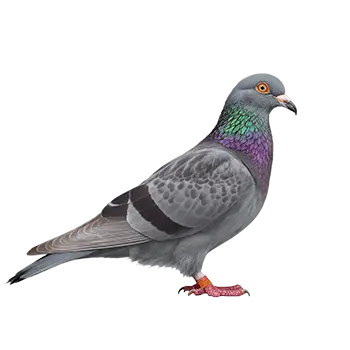
The wild rock dove, the ancestral form from which all domestic pigeons descend, is a medium-sized bird measuring approximately 29 to 37 centimeters in length with a wingspan of 62 to 72 centimeters and a body weight of 238 to 380 grams. Wild-type plumage is blue-gray on the head, neck, and body, with a distinctive iridescent green and purple sheen on the neck and upper breast. Two prominent black wing bars cross each wing, and the rump is white. The tail is dark with a black terminal band, the eyes are orange to red with a narrow gray orbital ring, the bill is dark with a white fleshy cere at the base, and the legs and feet are reddish-pink. This ancestral phenotype remains the most common coloration among feral pigeons worldwide, though feral populations display considerable variation due to ongoing gene flow from domestic escapees.

The morphological diversity among domestic pigeon breeds is arguably the most extreme of any domesticated bird species, exceeding even the variation seen among domestic chicken breeds. Breeds range in size from the diminutive African Owl, weighing as little as 170 grams, to the massive King pigeon, which can exceed 900 grams. Body shape varies from the tall, upright stance of the English Carrier with its elongated neck and prominent wattling to the round, compact form of the Modena. The Fantail carries its tail feathers in an erect, fan-shaped spread of 30 to 40 feathers, compared to the standard 12 to 14 tail feathers of wild-type birds. The Jacobin wears an elaborate hood of reversed feathers that frames the head in a feathered rosette so dense it can impair the bird's vision.

Plumage color and pattern in domestic pigeons span virtually every combination possible within avian pigmentation. The genetics of pigeon coloration have been studied extensively and involve interactions among multiple loci controlling base color (blue, brown, ash-red), pattern (bar, check, barless, T-pattern), spread factor, dilution, grizzle, and numerous modifying genes. Breeds have been selectively fixed for specific color and pattern combinations: the show-quality Racing Homer appears in ash-red bar, blue check, and mealy among many others, while the Saxon Fairy Swallow displays precise shield markings against a white ground. Some breeds carry extreme feather modifications, including the heavily muffed feet of the Trumpeter, whose leg and foot feathering can extend 15 centimeters or more from the tarsus, and the frill-feathered chest of the Old German Owl.

The pigeon's eye is a feature of particular importance in both exhibition and racing circles. Wild-type rock doves have orange to red irides, but domestic breeds display eye colors ranging from pearl white (bull-eyed in fancier terminology) through yellow, orange, red, and dark brown or black. Racing pigeon enthusiasts have long debated the relationship between iris color, pupil responsiveness, and racing performance, a practice known as eye-sign theory, though scientific evidence supporting predictive value of eye characteristics for performance remains limited. In exhibition breeds, eye color is a scored element of the breed standard, and incorrect eye color can disqualify an otherwise excellent specimen from competition.

Affection Level
Pigeons are remarkably affectionate birds that form deep, enduring bonds with their mates and, when hand-raised, with their human keepers. A bonded pigeon will seek out its person's company, coo softly when held, and nestle contentedly against a warm hand or chest. Mated pairs engage in extensive mutual preening, billing (touching beaks), and side-by-side roosting that reflects the intensity of their pair bond. Unlike many parrot species whose affection can tip into possessive aggression, pigeon affection tends to be gentle, steady, and uncomplicated.
Sociability
Pigeons are inherently social birds whose wild ancestors roosted, fed, and traveled in flocks numbering from a few dozen to several hundred individuals. In captivity, they thrive in the company of other pigeons and can become depressed or lethargic when housed alone without a mate or flock companions. Their social structure revolves around monogamous pair bonds maintained within a larger group, and established pairs coordinate nesting, incubation, and chick-rearing duties with remarkable teamwork. Pigeons also recognize and remember individual humans, other pigeons, and even other animal species they encounter regularly.
Vocalization
Pigeons are among the quietest of commonly kept birds, producing a soft, rhythmic cooing that is pleasant to most human ears and unlikely to disturb neighbors. Males coo more frequently and loudly than females, particularly during courtship displays when they puff their crops, fan their tails, and circle their mates while delivering deep, resonant coos. Alarm calls consist of sharp, clapping wing beats produced during takeoff rather than vocal sounds. The overall sound profile of a pigeon loft is a gentle murmur of coos, soft grunts, and occasional bill-clicking that most keepers find soothing rather than intrusive.
Intelligence
Pigeons possess cognitive abilities that have consistently astonished researchers across more than a century of scientific study. They can learn to categorize objects, distinguish between paintings by different artists, recognize all 26 letters of the English alphabet, understand concepts of time and space, and pass the mirror self-recognition test, a benchmark of self-awareness previously thought exclusive to primates and cetaceans. Their legendary navigational intelligence allows homing pigeons to return to their lofts from distances exceeding 1,800 kilometers using a combination of magnetic field sensing, olfactory mapping, infrasound detection, and visual landmark recognition.
Exercise Needs
Pigeons are moderately active birds that benefit from daily flight exercise but do not require the intensive activity schedules of high-energy parrot species. Racing and homing breeds are bred for sustained flight and benefit most from regular free-flight opportunities, while ornamental fancy breeds may have reduced flight capabilities due to exaggerated physical features and are content with spacious ground-level housing. All pigeons appreciate time outside their enclosure to stretch their wings, explore, and bathe, and supervised indoor or outdoor free-flight sessions significantly enhance their physical and psychological well-being.
Maintenance Level
Pigeon maintenance is moderate, falling between the minimal demands of finches and the intensive requirements of large parrots. Daily tasks include providing fresh food and water, spot-cleaning perches and nesting areas, and observing birds for signs of health problems. Weekly loft or cage cleaning, periodic bath provision, and nest management during breeding season round out the routine. Pigeons produce more droppings by volume than smaller birds, which means substrate management and cleaning frequency are important considerations, particularly for indoor housing arrangements.
Trainability
Pigeons are highly trainable birds with a long history of performing complex learned behaviors in both practical and experimental settings. Homing pigeons are trained to return to their lofts from progressively increasing distances through a systematic conditioning process. Racing pigeons learn to navigate unfamiliar landscapes and return home at speeds exceeding 150 kilometers per hour. In laboratory settings, pigeons have been trained to perform sophisticated discrimination tasks, operate mechanical devices, and even play simplified video games. Pet pigeons readily learn to come when called, step up on a hand, and perform simple tricks using positive reinforcement.
Independence
Pigeons occupy a middle position on the independence spectrum. They are deeply social and strongly prefer the company of a mate or flock, becoming noticeably distressed when isolated for extended periods. However, a well-paired duo or small flock housed in an appropriately enriched environment can manage contentedly during a keeper's working hours without developing the separation anxiety and destructive behaviors common in many parrot species. Their independence increases substantially when they have a bonded mate, as the pair provides each other with the social fulfillment that might otherwise depend entirely on human interaction.

Natural Habitat & Range

The wild rock dove is native to the coastal and inland cliff faces of the Mediterranean region, extending eastward through the Middle East, Central Asia, and the Indian subcontinent. True wild populations persist in relatively undisturbed coastal cliffs in parts of Scotland, Ireland, the Faroe Islands, Mediterranean islands, North Africa, and scattered locations across their Asian range, though genetic purity is increasingly compromised by interbreeding with feral domestic pigeons. The wild bird's preferred habitat is characterized by rocky ledges and crevices that provide sheltered nesting sites, combined with access to open ground or agricultural fields for foraging. This cliff-dwelling ecology directly predisposed the rock dove to colonizing human structures, as buildings, bridges, and other architecture provide virtually identical nesting substrate.

Feral domestic pigeons have established self-sustaining populations in cities and towns across every inhabited continent, making the rock dove lineage one of the most globally distributed bird species. Urban feral populations exploit the artificial cliff faces of building ledges, window sills, bridge girders, and architectural recesses for nesting, while feeding on a combination of spilled grain, food waste, bird seed from intentional feeding, and natural seeds and invertebrates found in urban parks and gardens. Feral pigeon populations are densest in city centers with abundant food resources and architectural nesting opportunities, and these populations have been established for centuries in many European and Asian cities.

The adaptability of pigeons to urban environments reflects a suite of biological characteristics that preadapt them for life alongside humans. Their flexible diet allows them to exploit virtually any available food source, from agricultural grain to fast-food remnants. Their year-round breeding capability, unusual among temperate-zone birds, allows rapid population growth when food and nesting sites are abundant. Their tolerance of human proximity, reinforced by thousands of years of association, means they are among the least disturbance-sensitive of urban wildlife species. These traits have made pigeons simultaneously one of the most successful urban colonizers and one of the most polarizing, with passionate advocates for their protection and equally passionate proponents of population control existing in virtually every major city.

Beyond urban environments, feral pigeons have colonized agricultural landscapes where grain storage and livestock feeding operations provide reliable food sources. In some regions, they have expanded into semi-natural habitats including sea cliffs, quarries, and cave systems that closely resemble the ancestral rock dove habitat. The genetic relationship between truly wild rock doves, long-established feral populations, and recently escaped domestic birds creates a complex continuum that challenges attempts to define clear population boundaries. Conservation geneticists working to preserve the genetic integrity of remaining wild rock dove populations face the ongoing challenge of feral domestic pigeon gene flow into wild flocks, particularly on islands where wild populations were historically isolated.

Temperament

The domestic pigeon's temperament is shaped by millennia of close association with humans and reflects a remarkably gentle, trusting, and socially oriented disposition that stands in contrast to the nervous wariness of many other bird species. Hand-raised pigeons develop deep bonds with their keepers, seeking out human company, cooing contentedly when held, and displaying visible excitement at their person's return. Even pigeons not handled from a young age typically habituate quickly to human presence and routine handling, rarely biting with intent to harm. When a pigeon does nip, it is a low-force, half-hearted pinch that poses no risk of injury, a stark contrast to the powerful bites that even small parrots can deliver.

The pair bond is the central organizing principle of pigeon social life, and understanding this bond is essential for anyone keeping pigeons as companions. Pigeons are strictly monogamous under normal conditions, with mated pairs maintaining their bond across multiple breeding seasons and often for life. Bonded pairs engage in elaborate mutual courtship displays, share incubation duties equally, and cooperate in feeding squabs with crop milk, a nutrient-rich secretion produced by both parents. The depth of the pair bond means that the loss of a mate is a genuinely distressing event for the surviving bird, which may show reduced appetite, decreased vocalization, and behavioral depression for days or weeks.

Male pigeons display more assertive and territorial behavior than females, particularly during breeding season. Courtship behavior includes puffing the crop, bowing and cooing repeatedly, tail-dragging, and driving, a behavior in which the male follows the female closely while cooing and strutting. Males will defend their nesting territory from rival males with wing-slapping, pecking, and postural threats, but these confrontations rarely result in serious injury. Female pigeons are generally more reserved, though breeding hens will vigorously defend their nest and eggs from perceived threats. Outside of breeding context, both sexes are peaceable birds that coexist in flocks with relatively little aggression compared to many other social bird species.

Pigeons exhibit a calm, observant intelligence that expresses itself through their keen awareness of environmental patterns and routines. They quickly learn the daily schedule of their loft, anticipating feeding times, flight release, and their keeper's arrival with quiet alertness rather than frantic excitement. Rescued and rehabilitated pigeons, including former racers and injured ferals, typically adapt to indoor companion life with surprising equanimity, settling into household routines and developing individual personality traits that their keepers come to know intimately. Some pigeons are bold and outgoing, volunteering to explore new spaces and investigate novel objects, while others are more cautious, preferring familiar perches and predictable schedules.

Care Requirements

Housing for domestic pigeons can take several forms depending on the number of birds, the keeper's available space, and whether the birds will be flown free or maintained in enclosed conditions. The traditional pigeon loft is an outdoor structure with individual nesting boxes, perching surfaces, and controlled access openings that allow trained birds to enter and exit freely. Loft design prioritizes ventilation, dry conditions, predator exclusion, and ease of cleaning. For keepers without outdoor space, large indoor flight cages or dedicated bird rooms can house small numbers of pigeons comfortably. A pair of pigeons requires a minimum enclosure size of approximately 120 centimeters wide by 60 centimeters deep by 90 centimeters tall, though larger accommodations are always preferable, particularly for more active breeds.

Ventilation is the single most critical environmental factor in pigeon housing. Pigeons produce fine feather dust and substantial droppings, both of which can create respiratory hazards if allowed to accumulate in poorly ventilated spaces. A well-designed loft provides constant air exchange without creating direct drafts on roosting birds. Indoor pigeon keepers should ensure the bird room has adequate airflow and consider air filtration to manage dust. Temperature tolerance in pigeons is broad, as the species has been adapted to climates ranging from tropical to subarctic through centuries of global distribution, but protection from extreme heat, freezing temperatures, and wet conditions is essential.

Nesting management is an important component of pigeon care, particularly for mated pairs. Pigeons are persistent breeders that will attempt to nest year-round if conditions allow, laying clutches of two eggs approximately every five to six weeks. Keepers who do not wish to breed their birds must manage this reproductive drive through egg replacement, substituting real eggs with dummy eggs that the pair will incubate for the standard 17 to 19 day period before losing interest. Allowing hens to lay and incubate dummy eggs satisfies the hormonal breeding cycle without producing unwanted squabs and avoids the health risks associated with chronic egg-laying suppression.

Bathing is greatly enjoyed by pigeons and should be offered at least several times per week. A shallow pan of clean water placed in the loft or enclosure will be enthusiastically used, with birds wading in, splashing vigorously, and sunning themselves afterward to dry. Regular bathing supports feather condition, helps control external parasites, and provides behavioral enrichment. Some keepers add a small amount of bath salts or mild avian disinfectant to the water to promote feather health and discourage parasites, though plain water is sufficient for routine bathing.

Pigeon-proofing the living environment is necessary for birds allowed free time outside their enclosure. Pigeons are ground-oriented birds that spend considerable time walking and foraging on the floor, so floor-level hazards including electrical cords, toxic plants, and small objects that could be ingested must be addressed. Unlike parrots, pigeons rarely chew destructively on furniture or woodwork, but they will explore surfaces with their beaks and can inadvertently ingest harmful substances. Their droppings, while not as corrosive as parrot droppings, are produced frequently and can stain soft furnishings, so many indoor pigeon keepers use flight suits (pigeon diapers) during supervised out-of-cage time.

Feeding & Nutrition

The foundation of a domestic pigeon's diet is a grain and seed mixture that reflects the species' granivorous natural feeding ecology. A well-balanced pigeon mix typically includes whole dried peas, corn (maize), wheat, milo (grain sorghum), safflower seed, barley, and small quantities of hemp seed, canary grass seed, and linseed. The proportions of these ingredients vary depending on the season, the bird's activity level, and the purpose for which the bird is kept: racing pigeons in active training receive higher-protein, higher-energy mixes heavy in legumes and oil seeds, while non-breeding companion pigeons do well on lighter mixes with more grain and less fat. Commercial pigeon feeds formulated by established manufacturers provide reliable baseline nutrition, though many experienced fanciers develop custom blends tailored to their birds' specific needs.

Grit plays an essential role in pigeon digestion that is not required by most other companion bird species. Unlike parrots and finches that hull seeds before swallowing the kernel, pigeons consume seeds whole and rely on muscular grinding action of the gizzard, aided by ingested grit particles, to break down the seed coats and release nutrients. Pigeon grit typically contains crushed granite for mechanical grinding action combined with crushed oyster shell, limestone, or cuttlebone for calcium supplementation. A grit mixture should be available at all times, either in a dedicated container or mixed into the feeding area. During breeding season, calcium demands increase dramatically for egg-laying hens, and supplementary calcium sources beyond standard grit may be necessary.

Fresh greens and vegetables should be offered regularly to supplement the seed-based diet with vitamins, minerals, and moisture. Pigeons readily consume chopped dark leafy greens including romaine lettuce, spinach, kale, and dandelion greens, as well as grated carrot, thawed frozen peas, and finely diced broccoli. Wild pigeons and feral populations supplement their seed diet with green plant material, berries, and occasionally invertebrates, and captive birds benefit from this dietary variety. Some keepers also offer sprouted seeds, which provide dramatically enhanced vitamin content and bioavailability compared to dry seed, and most pigeons accept sprouts enthusiastically.

Water quality and access are critical elements of pigeon nutrition that are sometimes underappreciated. Pigeons drink using a unique sipping method among birds, immersing their bills and drawing water upward by suction rather than scooping and tilting the head back. This drinking method means they require water containers deep enough to submerge their bills and clean enough to prevent ingestion of contaminated surface water. Fresh water should be provided daily in clean containers, and water vessels should be designed or positioned to minimize fecal contamination. Some keepers periodically supplement drinking water with apple cider vinegar, probiotics, or electrolyte solutions, particularly during hot weather, the molt, breeding season, or recovery from illness.

Pigeons Health & Lifespan

Domestic pigeons maintained under good husbandry conditions typically live 10 to 15 years, with many individuals reaching 15 to 20 years and exceptional birds occasionally surpassing two decades. Lifespan varies with breed, genetic background, and quality of care, and racing pigeons subjected to the physical demands of long-distance competition may have somewhat shorter average lifespans than birds kept purely as companions or exhibition specimens. Feral urban pigeons, facing predation, traffic hazards, disease, and nutritional inconsistency, have a significantly shorter average lifespan of 3 to 5 years, illustrating the substantial survival advantage conferred by competent domestic care.

The molt is an annual physiological event of significant importance in pigeon health management. Adult pigeons undergo a complete primary feather molt once per year, typically beginning in late summer and progressing over 10 to 14 weeks. During the molt, each primary flight feather is shed and replaced sequentially from the innermost to the outermost, with body feathers molting concurrently. The molt places substantial metabolic demands on the bird, requiring increased protein for feather synthesis, additional minerals for feather shaft formation, and elevated overall caloric intake. Birds in molt may appear subdued, reduce their activity levels, and show decreased interest in breeding. Providing enhanced nutrition through higher-protein seed mixes, egg food, and mineral supplements supports a healthy, complete molt.

Pigeon-specific diseases require keepers to maintain awareness of conditions that may be unfamiliar to those experienced primarily with psittacine or passerine birds. Trichomoniasis, paramyxovirus, pigeon pox, and salmonellosis represent the most significant infectious threats to domestic pigeon flocks and demand specific preventive protocols distinct from those used in parrot or finch husbandry. The pigeon fancier community has developed extensive practical knowledge about these diseases over centuries of breeding, and this accumulated expertise, combined with modern veterinary science, provides effective frameworks for disease prevention and treatment.

Recognizing illness in pigeons requires familiarity with the subtle behavioral and physical cues that indicate declining health. A healthy pigeon is alert, active, maintains smooth plumage, produces firm droppings with a white urate cap, and displays a full, rounded keel with good breast muscle coverage. Early signs of illness include fluffed plumage, reduced activity, sitting with eyes partially closed, watery or discolored droppings, tail pumping during breathing, nasal discharge, reduced crop motility, and weight loss detectable through keel bone palpation. Pigeons, like most prey animals, suppress outward signs of illness as a survival mechanism, so subtle changes in behavior or appearance should be taken seriously and investigated promptly.

Common Health Issues

  • Pigeon Paramyxovirus (PPMV-1) - Pigeon paramyxovirus type 1 is one of the most serious viral diseases affecting domestic pigeons worldwide. The virus attacks the nervous, digestive, and respiratory systems, producing symptoms that include twisted neck, circling, inability to fly or perch, watery green droppings, and respiratory distress. Mortality rates vary but can be devastating in unvaccinated flocks. Transmission occurs through direct contact with infected birds, contaminated droppings, and aerosolized respiratory secretions. Vaccination is the primary defense and is strongly recommended for all domestic pigeon flocks.
  • Trichomoniasis (Canker) - Trichomoniasis, commonly called canker in pigeon keeping circles, is caused by the protozoan parasite Trichomonas gallinae and is one of the most prevalent diseases in domestic and feral pigeon populations. The organism colonizes the upper digestive tract, producing yellowish-white caseous lesions in the mouth, throat, crop, and esophagus that can obstruct feeding and breathing. Parent birds transmit the parasite to squabs through crop milk during feeding. Mild infections may be subclinical, but severe cases cause weight loss, regurgitation, difficulty swallowing, and death if untreated.
  • Coccidiosis - Coccidiosis in pigeons is caused by Eimeria species protozoa that invade the intestinal lining, causing bloody or mucoid diarrhea, dehydration, weight loss, and ruffled plumage. The disease is most severe in young birds and immunocompromised adults, and outbreaks typically follow periods of stress, overcrowding, or poor sanitation. Oocysts shed in droppings are extremely resistant in the environment and require thorough disinfection to eliminate. Maintaining dry, clean loft conditions and avoiding overcrowding are the most effective preventive measures.
  • Pigeon Pox - Pigeon pox is a viral disease transmitted by biting insects, particularly mosquitoes, and through direct contact with infected birds or contaminated surfaces. The dry cutaneous form produces wartlike nodules on unfeathered skin around the eyes, beak, and feet, while the more dangerous wet diphtheritic form creates yellowish membranes in the mouth and upper respiratory tract that can obstruct breathing and feeding. Vaccination is available and recommended in regions with significant mosquito activity. Most birds recover from the dry form with supportive care, but the wet form carries a higher mortality risk.
  • Salmonellosis (Paratyphoid) - Salmonellosis caused by Salmonella typhimurium is a significant bacterial disease of pigeons that can affect virtually every organ system. Presentations include joint swelling and lameness, diarrhea with green-tinged droppings, weight loss, infertility, embryo death in eggs, and neurological signs. Chronically infected carrier birds shed the organism intermittently, maintaining the disease within a flock even when no overt clinical signs are present. The zoonotic potential of Salmonella makes strict hygiene practices essential when handling infected birds or cleaning contaminated environments.
  • Respiratory Mycoplasmosis - Mycoplasma infections cause chronic respiratory disease in pigeons, producing symptoms including nasal discharge, sneezing, swollen sinuses, conjunctivitis, and reduced exercise tolerance. The disease is often exacerbated by concurrent infections with other respiratory pathogens, environmental stressors such as dust, ammonia from droppings, and poor ventilation. Mycoplasma can be vertically transmitted from hens to squabs through the egg, establishing infection in chicks before hatching. Treatment with appropriate antibiotics can control symptoms, but complete elimination of the organism from a flock is difficult.

Preventive Care & Health Monitoring

  • Paramyxovirus vaccination - Annual vaccination against pigeon paramyxovirus type 1 is the single most important preventive health measure for domestic pigeon flocks. The killed vaccine is administered by injection, typically into the breast muscle or subcutaneously in the neck, and provides protection for approximately one year. Young birds should receive their first vaccination at four to six weeks of age, with a booster four weeks later, followed by annual revaccination. All new birds entering a flock should be vaccinated during quarantine before introduction to the main loft.
  • Quarantine protocols for new birds - All newly acquired pigeons should be quarantined in a separate facility for a minimum of 30 days before joining an established flock. During quarantine, birds should be observed daily for signs of illness, treated prophylactically for trichomoniasis and intestinal parasites, vaccinated against paramyxovirus if not already current, and ideally examined by an avian veterinarian. This protocol prevents the introduction of infectious diseases that could devastate an entire flock and allows new birds to adjust to the local environment and management routine.
  • Loft hygiene and sanitation - Maintaining a clean, dry, and well-ventilated loft is foundational to pigeon health. Droppings should be scraped from perches and floors regularly, with complete substrate replacement and disinfection performed weekly or more frequently in larger flocks. Water containers should be cleaned and refilled daily, and feeders should be designed to prevent fecal contamination of food. Adequate ventilation to control ammonia buildup from droppings is critical for respiratory health. Damp, poorly ventilated conditions promote fungal growth, bacterial proliferation, and parasite amplification.
  • Routine parasite management - Periodic prophylactic treatment for trichomoniasis, coccidiosis, and intestinal worms is standard practice in pigeon husbandry. Many experienced keepers administer anti-trichomonal medication such as ronidazole or metronidazole before breeding season and during the molting period, when stress increases susceptibility to clinical disease. Fecal examinations performed by an avian veterinarian help identify specific parasite burdens and guide targeted treatment protocols. External parasites including pigeon flies, feather lice, and red mites should be monitored and controlled through loft treatment and, when necessary, individual bird treatment.
  • Balanced nutrition and mineral supplementation - Providing a nutritionally complete diet with appropriate mineral supplementation supports immune function, feather quality, skeletal health, and reproductive success. A commercial pigeon mix supplemented with grit containing oyster shell, cuttlebone for calcium, and vitamin-mineral premixes ensures comprehensive nutrition. Breeding pairs require increased calcium and protein through supplementary egg food, legumes, and mineral mixtures. Fresh water with periodic addition of apple cider vinegar or probiotics supports digestive health and helps maintain a healthy gut microbiome.
  • Regular avian veterinary checkups - Annual wellness examinations by a veterinarian experienced in avian and specifically pigeon medicine allow early detection of subclinical conditions before they compromise flock health. A thorough pigeon examination includes body condition assessment, crop palpation, keel bone evaluation, fecal parasite screening, crop wash analysis for trichomoniasis, and respiratory evaluation. Breeders maintaining racing or exhibition flocks benefit from pre-season health assessments and post-season evaluations that track individual and flock health trends across breeding and competition cycles.

Training & Vocalization

Pigeon training has a history stretching back thousands of years, and the methods used to train homing and racing pigeons represent one of the oldest and most refined systems of animal conditioning in human culture. The fundamental principle of homing pigeon training is the bird's innate drive to return to its home loft, a behavior rooted in the rock dove's fidelity to its nesting cliff. Training begins by allowing young birds to familiarize themselves with the loft and its surroundings through trap training, in which birds learn to enter the loft through a one-way bob trap. Progressive releases from increasing distances, starting from a few hundred meters and eventually extending to hundreds of kilometers, develop the bird's navigational confidence and physical endurance.

The navigational abilities of homing pigeons have been the subject of intensive scientific investigation for over a century, and the emerging picture is one of extraordinary cognitive complexity. Pigeons navigate using a multimodal system that integrates information from the Earth's magnetic field detected through magnetite-containing cells in the upper beak, olfactory mapping of atmospheric odor gradients, infrasound perception that may provide landscape-scale acoustic landmarks, solar compass orientation calibrated by an internal circadian clock, and visual recognition of familiar terrain during the final approach to the home loft. The relative contribution of each navigational channel varies with distance, weather conditions, and individual experience, and trained birds develop increasingly efficient route strategies through accumulated flight experience.

Beyond homing and racing, pigeons have been trained for an impressive range of tasks throughout history and into the modern era. Military pigeon services operated by nearly every major army through both World Wars relied on trained pigeons to carry messages across enemy lines when electronic communications were disrupted, and several pigeons received military decorations for valor. In the mid-twentieth century, psychologist B.F. Skinner famously trained pigeons using operant conditioning to guide missiles toward targets, a project that was technically successful though never deployed. More recently, pigeons have been trained in laboratory settings to detect breast cancer in histology slides, identify contraband in X-ray images, and distinguish between benign and malignant tissue samples, demonstrating pattern-recognition abilities that rival automated systems.

Pigeon vocalization consists primarily of the soft, rhythmic cooing that is the species' signature sound. Males produce deeper, more resonant coos than females, and courtship cooing is accompanied by physical displays including crop inflation, tail fanning, bowing, and strutting. The male's advertising coo is a repeated two-syllable phrase delivered from a prominent perch to attract females and declare territorial ownership. Alarm is communicated not through vocal calls but through the loud clapping of wings during rapid takeoff, a sound produced by the downstroke of the wings striking together above the back. Nesting birds produce soft grunting sounds during incubation, and parent birds delivering crop milk to squabs make gentle murmuring vocalizations. The overall vocal profile of pigeons is among the quietest of commonly kept birds, making them suitable for apartment and townhouse environments where parrot-level noise would be unacceptable.

Children & Other Pets

Pigeons are exceptionally well-suited as family birds in households with children, offering a gentle, patient temperament that tolerates the unpredictable movements and sounds of young people far better than most parrot species. Their inability to inflict a painful bite removes the primary safety concern associated with keeping larger hookbill species around children, and their calm, ground-dwelling habits make them accessible to children who might be intimidated by the rapid, unpredictable movements of smaller flighted birds. Hand-raised pigeons can be genuinely affectionate companions for older children who learn to handle them gently, sitting contentedly on a lap or shoulder and cooing softly during quiet interaction.

Teaching children to interact appropriately with pigeons provides valuable lessons in animal care, empathy, and responsibility. Age-appropriate involvement might include helping with daily feeding and water changes, preparing fresh greens, assisting with gentle handling under supervision, and learning to read the bird's body language for signs of comfort or stress. Pigeons communicate their emotional state through clear physical cues: a relaxed pigeon holds its feathers smooth and sleek, while a stressed bird fluffs its plumage, turns its head away, and may attempt to walk or fly from the handler. Children who learn to recognize and respect these signals develop transferable skills in animal awareness that serve them well with any species.

The relationship between pigeons and household cats and dogs requires careful management rooted in a realistic assessment of predatory risk. Cats are natural predators of pigeons, and even a well-fed domestic cat can be triggered by the movements and sounds of a pigeon into predatory pursuit. Pigeons should never be allowed free in a room with an unsupervised cat, regardless of the cat's apparent disinterest, as feline predatory drive can activate without warning and a single paw strike can fatally injure a pigeon. Dogs, particularly those with high prey drives or herding instincts, also pose risks, though many dogs can be trained to coexist peacefully with pigeons under controlled conditions. The critical principle is physical separation unless direct, attentive supervision is maintained.

Pigeons can coexist with other bird species in sufficiently large aviary environments, though species compatibility requires careful consideration. They generally live peacefully alongside similarly sized doves such as diamond doves and ringneck doves, provided adequate space, nesting sites, and feeding stations are available. However, pigeons should not be housed with significantly smaller birds such as finches or budgerigars, as the pigeon's larger size and ground-foraging habits can inadvertently injure or intimidate smaller species. Mixing pigeons with parrots is generally inadvisable, as the parrot's powerful beak presents an injury risk to the pigeon, and the two groups have fundamentally different social, dietary, and environmental needs that make shared housing impractical for optimal care of either species.