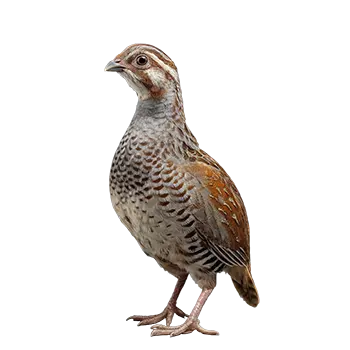

The juvenile phase in Coturnix Quail begins around the third week of life and extends through approximately the eighth week, encompassing one of the most dramatic transformations in the avian world. During this compressed window, a downy chick weighing barely an ounce becomes a fully feathered young adult capable of reproduction. No other commonly kept poultry species matures at anything approaching this pace, and the speed of the transition demands that keepers stay ahead of their birds' rapidly changing needs rather than reacting after problems appear.
The most visible marker of the juvenile phase is the complete replacement of natal down with juvenile and then adult plumage. By week three, the chicks are a patchwork of remaining down and emerging contour feathers. By week four, most of the down is gone, and the characteristic plumage patterns of the species are clearly visible. This feathering process is metabolically expensive, demanding both high protein intake and adequate trace minerals including sulfur-containing amino acids such as methionine and cystine that are direct building blocks of feather keratin.
Behaviorally, the juvenile phase brings a marked increase in activity, curiosity, and social complexity. The loose aggregations of the brooder phase give way to more structured social interactions. Chasing, displacement from preferred resting spots, and early mounting behavior all appear during this period. These behaviors are normal components of social development and do not require intervention unless they escalate to the point of injury, which is uncommon in properly managed groups with adequate space and resources.
The juvenile phase is also when the keeper must make several management decisions that will shape the birds' adult lives. Housing configuration, group composition, lighting schedules, and the transition from starter to grower or layer feed all happen during these weeks. Making these decisions proactively based on the birds' developmental stage rather than reactively when problems emerge is the difference between a smooth transition and a stressful one for both the birds and their keeper.