
Coturnix Quail Species Guide - Furry Critter Network

Coturnix Quail

Quick Facts

🔬 Scientific Name
Coturnix japonica
📊 Care Level
Beginner
😊 Temperament
Nervous, Active, Productive
📏 Adult Size
6-8 inches
⏱️ Lifespan
2-4 years
🔊 Noise Level
Low
🗣️ Talking Ability
None
🍽️ Diet Type
Seed/Grain-based
🌍 Origin
East Asia (domesticated)
🏠 Min Cage Size
2 sq ft per bird (ground area)
📐 Size
Small

Coturnix Quail - Names & Recognition

The Coturnix Quail, scientifically classified as Coturnix japonica, is most commonly known as Japanese Quail, referencing the species' origin in East Asia where it was first domesticated in Japan approximately 1,000-1,200 years ago. The name "Coturnix" is the genus name for Old World quail, derived from Latin referring to quail in general. "Japonica" indicates Japanese origin. This species is also known by several alternate names including Coturnix Quail emphasizing the genus name and distinguishing it from other quail species like Bobwhite Quail (New World species) or Button Quail (unrelated tiny species), Japanese Quail the most common alternate name particularly in scientific and agricultural contexts, Pharaoh Quail particularly when referring to wild-type colored birds (the brown speckled pattern), and Asian Quail in some older literature. In aviculture and small-scale farming, "Coturnix" alone often suffices as these are the most commonly kept quail species for eggs and meat.

Taxonomically, Coturnix Quail belong to the family Phasianidae, which includes all pheasants, partridges, and Old World quail - a large diverse family of ground-dwelling gamebirds. Within this family, the genus Coturnix contains several small quail species distributed across Europe, Asia, Africa, and Australia, with Coturnix japonica being one of the most widespread in domestication. Other Coturnix species include the Common Quail (Coturnix coturnix) of Europe and Asia, which is closely related and sometimes considered conspecific with Japanese Quail, and various other species. The order is Galliformes, containing all chickenlike birds including chickens, turkeys, pheasants, partridges, and quail. These birds share characteristics including ground-dwelling habits, grain and seed-based diets, precocial young (chicks that hatch fully feathered and mobile), and strong scratching feet for foraging.

The scientific name Coturnix japonica was established by Temminck and Schlegel in 1849 based on Japanese specimens. However, the relationship between Coturnix japonica and the closely related Common Quail (Coturnix coturnix) of Europe and western Asia is complex, with some authorities considering them subspecies of a single species while others treat them as separate species. Current consensus generally maintains them as distinct species though they can interbreed where ranges overlap or in captivity. For practical purposes in domestication, Coturnix japonica represents the primary domesticated quail with all commercial and pet varieties derived from this species or closely related forms.

Within domesticated Coturnix Quail, numerous color varieties and strains have been developed through selective breeding, analogous to chicken breed diversity though less extreme. These varieties include Wild-type or Pharaoh (the original brown and buff cryptic coloration resembling wild birds, with females showing spotted breasts and males showing rufous breasts), Range (similar to wild-type but lighter), Tuxedo (dark head and breast with white belly creating striking pattern), Tibetan (cinnamon-colored variety), White or Texas A&M White (pure white plumage, developed for meat production to avoid dark pinfeathers), Fawn (dilute brown coloration), Silver (dilute version showing silver-gray tones), Golden (yellow-based coloration), Rosetta (patterned variety), and numerous other mutations and combinations. These color varieties are purely aesthetic, not affecting productivity, hardiness, or temperament, though white varieties are preferred commercially for meat production due to clean appearance of dressed carcasses.

Strain differences also exist based on selection emphasis including Layer strains selected for maximum egg production (Japanese strains often excel, producing 250-300+ eggs annually), Meat strains selected for rapid growth and meat yield (Jumbo Coturnix varieties weighing 20-30% more than standard), Dual-purpose strains balancing egg production and meat characteristics, and Pet/Aviary strains maintained for appearance or hobby purposes without intensive production selection. These strain differences significantly affect productivity and management requirements.

The domestication history of Coturnix Quail began in Japan approximately 1,000-1,200 years ago during the Kamakura period (12th-14th centuries), with records indicating Japanese nobility kept quail for their song and eggs. Initially kept as songbirds and pets, selective breeding gradually emphasized productivity. By the early 20th century, Japanese breeders had developed highly productive strains laying substantially more eggs than wild ancestors. After World War II, Coturnix Quail were introduced to the United States and Europe for research purposes, with scientists recognizing their value as laboratory animals due to short generation times, small size, and prolific reproduction. From research populations, domestic Coturnix spread to commercial production and hobby keeping, with worldwide distribution by the late 20th century.

Today, Coturnix Quail are raised globally for commercial egg and meat production particularly in Asia, increasingly popular in small-scale and backyard poultry keeping for personal egg production, used extensively in research due to short generation times and ease of management, kept in aviaries as active ground birds adding diversity to mixed collections, and occasionally raised for dog training or hunting purposes. The combination of productivity, small size, quiet nature, and simple care has made Coturnix among the most successful small domestic fowl, with millions raised annually worldwide.

The distinction between Coturnix Quail and other quail species is important as care requirements and characteristics differ. Bobwhite Quail (Colinus virginianus) are New World quail native to North America, larger and requiring different management. Button Quail (genus Turnix) are tiny unrelated species from the family Turnicidae (buttonquails or hemipodes), much smaller and with different biology. Gambel's, California, and other North American quail species are also distinct from Coturnix with different requirements. When people reference "quail" in agricultural or backyard contexts, they typically mean Coturnix unless specified otherwise.

Coturnix Quail Physical Description

The Coturnix Quail is a small, compact, ground-dwelling gamebird measuring approximately 6 to 8 inches in length from beak to tail tip, making them substantially smaller than chickens but larger than Button Quail. Adults typically weigh between 90 to 150 grams (3.2 to 5.3 ounces) for standard varieties, with males averaging slightly lighter than females and jumbo varieties reaching 180-250+ grams. The body structure is characteristically round and plump with small rounded head, short thick neck, compact rounded body carried horizontally, short rounded wings, very short tail appearing almost absent, and strong legs and feet adapted for ground scratching and walking. The overall silhouette is squat and dumpy, optimized for ground living rather than flight, though wild-type birds are capable of rapid burst flight when threatened.

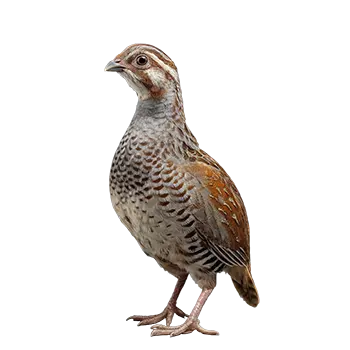
The plumage coloration varies dramatically depending on color variety. In wild-type or Pharaoh coloration (the original pattern), the overall impression is cryptic brown, buff, and black creating camouflage. Detailed description of wild-type coloration shows the head with brown crown streaked with darker brown and buff, pale supercilium (eyebrow stripe) over the eyes, dark eye line creating facial striping, buff to cream throat and face. Males show distinctive rufous-brown breast and throat contrasting with lighter belly, while females show buff breast heavily spotted with black creating distinctive spotting pattern allowing sex identification. The back, wings, and rump show complex patterns of brown, buff, black, and cream creating intricate barred and spotted appearance providing camouflage. Flight feathers are dark brown with buff edges. The belly and flanks show buff to cream with variable spotting or barring depending on sex and individual.

Color varieties show completely different patterns. Tuxedo varieties display dark chocolate brown to black head, neck, and upper breast with crisp white belly and flanks creating striking contrast. White varieties are pure white throughout with possible scattered dark ticking. Fawn varieties show soft cinnamon-buff throughout. Silver, golden, and other mutations create various color combinations. Despite color variation, body structure and size remain consistent across varieties.

The eyes are dark brown to black, relatively large for the head size, and positioned laterally providing wide field of view typical of prey species watching for predators. The bill is short, slightly curved, dark gray to black, adapted for pecking seeds and insects. The cere (area at bill base) is subtle compared to pigeons.

The wings are short and rounded, designed for rapid vertical burst flight rather than sustained soaring. Wild Coturnix can fly explosively upward when threatened, though domesticated varieties have reduced flight ability through generations of selection for docility and reduced fear responses. Most domestic Coturnix rarely fly more than a few feet vertically, though individuals vary with some retaining stronger flight ability.

The tail is extremely short and square, barely visible beyond the body feathers, giving quail their characteristic tailless appearance. This short tail reflects their ground-dwelling ecology where long tails would be impractical in dense vegetation.

The legs are relatively short and yellowish to pinkish in color depending on variety and pigmentation. The feet show four toes - three forward and one small hind toe elevated, typical of ground-dwelling gamebirds. The toes have sharp claws used for scratching substrate while foraging. The legs are not spurred like some gamebirds, lacking the sharp defensive weapons found in chickens or pheasants.

Sexual dimorphism in wild-type and some colored varieties allows visual sexing in adults. Males show rufous-brown breast without spotting, more uniform coloration, slightly smaller size averaging 10-20% lighter, and foam gland development around the cloaca (used for producing foam during breeding). Females show heavily spotted breast with black markings on buff background, slightly larger size, no foam gland, and overall more cryptic coloration. In white and some other color varieties, these visual differences are obscured making sexing difficult without cloacal examination or behavioral observation. Males produce crowing calls while females do not, providing reliable behavioral sexing.

Juvenile Coturnix Quail hatch covered in down showing brown and buff striping creating camouflage. They are precocial, meaning they hatch fully mobile with eyes open, capable of walking, running, and feeding themselves within hours. Chicks grow extremely rapidly, achieving adult size by 6-8 weeks and sexual maturity by 6-8 weeks in females (beginning egg production) and 8-10 weeks in males (beginning crowing and breeding behavior). Juvenile plumage with softer, less defined patterns is replaced through molt by 4-6 weeks, with birds achieving full adult plumage and coloration by 8-10 weeks.

The overall impression of Coturnix Quail is small, plump, active ground birds constantly in motion, walking rapidly with jerky head bobs characteristic of gamebirds, scratching substrate vigorously while foraging, and periodically freezing motionless when alarmed. Their nervous, alert demeanor reflects prey species biology with constant vigilance for threats. When multiple birds are housed together, they create lively active groups with constant movement, feeding, dust bathing, and social interactions, though they scatter and freeze when startled by sudden movements or loud noises.

Affection Level
Coturnix Quail show minimal to no affection toward humans, being nervous, flighty birds that view people as potential threats rather than companions. They do not bond with keepers, seek attention, or enjoy handling. Even hand-raised quail remain cautious and skittish, responding to human approach with alarm and flight attempts. They are purely utilitarian or observation birds appropriate for people wanting productive egg layers or active ground birds to watch, not interactive pets. Their complete lack of affection makes them unsuitable for anyone seeking emotional connection with birds.
Sociability
Coturnix Quail are highly social birds that should be kept in groups, naturally living in coveys (flocks) showing complex social dynamics. They greatly benefit from conspecific companionship, showing less stress, more natural behaviors, and better productivity in groups than when isolated. Recommended ratios are one male to 3-5 females, or female-only groups avoiding male aggression. Multiple males together cause fighting requiring careful management. Their high sociability makes them excellent for small flock keeping but inappropriate for isolation, though they bond with other quail rather than humans.
Vocalization
Coturnix Quail are very quiet birds producing minimal vocalizations, making them ideal for urban settings and close-neighbor situations where louder poultry would be prohibited. Males produce soft, distinctive crowing calls described as a rapid 'crow-crow-cree' or whistling sound, much quieter than chicken roosters and not carrying far. Females produce soft chirping and contact calls. The overall noise level is very low, often barely audible outside housing, making quail among the quietest domestic poultry. They cannot talk or mimic speech, producing only natural quiet calls.
Intelligence
Coturnix Quail demonstrate basic intelligence typical of small gamebirds, showing ability to recognize food sources, learn simple routines, navigate their environment, and display basic problem-solving for accessing food or shelter. However, they lack the cognitive complexity of parrots, corvids, or even pigeons, showing minimal capacity for learning, no trainability, and simple behavioral repertoires. Their intelligence is sufficient for their ecology as ground-foraging seed and insect eaters but does not extend to complex interactions, making them straightforward, uncomplicated birds requiring minimal mental enrichment.
Exercise Needs
Coturnix Quail have moderate exercise needs requiring adequate ground space for walking, foraging, and short flights or jumps but being less demanding than flying birds. They spend most time walking on the ground scratching for food with characteristic rapid movements, occasionally making short vertical flights or jumps when startled. Domesticated varieties have reduced flight ability compared to wild ancestors, being ground-oriented. Adequate horizontal floor space is more important than height. They need room to move actively but not extensive flight space, making them suitable for relatively compact housing compared to flying birds.
Maintenance Level
Coturnix Quail require low to moderate maintenance, being hardy birds with straightforward care requirements and minimal special needs. Daily tasks include feeding, watering, and egg collection, while regular cleaning maintains sanitation. Their small size means waste production is manageable, droppings are relatively small and dry, and cleaning is straightforward. They lack complex dietary needs, require simple housing, and are generally healthy with basic care. Their productivity and hardiness make them forgiving of minor husbandry variations, ideal for beginners seeking low-maintenance productive birds or easy additions to existing aviaries.
Trainability
Coturnix Quail have essentially no trainability, being nervous, instinct-driven birds completely inappropriate for any training attempts. They cannot be tamed, do not respond to commands, show no capacity for learning tricks or behaviors, and remain perpetually wary of humans regardless of handling frequency. Even habituation is minimal - quail always respond to human presence with alarm and flight attempts. They cannot learn speech or any form of interaction. They are meant purely for egg production and observation, not training or bonding, making them fundamentally different from trainable species like parrots or even pigeons.
Independence
Coturnix Quail are extremely independent from humans, requiring absolutely no social interaction or attention beyond basic care. They entertain themselves through natural behaviors including foraging, dust bathing, preening, and social interactions with other quail, showing zero interest in human companionship. This extreme independence is ideal for people wanting productive, self-sufficient birds for eggs or active ground birds for aviaries without any interactive demands. Their complete lack of need for human bonding makes them appropriate for busy keepers or those wanting livestock rather than pets.

Natural Habitat & Range

Wild Coturnix japonica (Japanese Quail) are native to East Asia, inhabiting regions including Japan, Korea, eastern China, southeastern Russia, and parts of Mongolia, with migratory populations moving between breeding and wintering grounds. The natural range encompasses diverse habitats from coastal areas to inland grasslands and agricultural regions. However, it is important to note that virtually all Coturnix Quail in captivity are domesticated birds that have been selectively bred for approximately 1,000 years, substantially diverging from wild ancestors in behavior, productivity, and physical characteristics. Understanding wild ecology provides context for domestic husbandry, but captive birds show significant differences from wild populations.

Within their natural range, wild Coturnix Quail show strong preferences for open grasslands, agricultural areas including rice paddies and grain fields, meadows and pastures with dense ground cover, scrublands with grasses and low vegetation, and forest edges where open areas meet woodland. They avoid dense forests lacking open ground, completely barren areas without cover, and heavily urbanized regions. Their ecology centers on ground-dwelling life in grasslands providing both food (seeds, insects) and cover (dense vegetation for hiding from predators). They are highly cryptic, relying on camouflage and freezing behavior to avoid predators, exploding into rapid vertical flight only when directly threatened.

Wild Coturnix are partially migratory in northern portions of their range, with populations breeding in Japan, Korea, and northern China during summer before migrating south to southern China, Southeast Asia, and occasionally southern Japan for winter. Migration occurs at night in small flocks flying considerable distances. Southern populations may be year-round residents. This migratory behavior is largely absent in domestic birds who lack the instinctive drive for migration.

The climate across the wild range varies from temperate to subtropical, with seasonal temperature variation from cold winters in northern breeding areas to hot summers. Wild birds tolerate diverse conditions including temperature ranges from below freezing to over 90°F, though they avoid extreme heat by seeking shade and extreme cold through shelter. Domestic Coturnix inherit broad temperature tolerance though they prefer moderate conditions (65-75°F optimal).

In their natural habitat, wild Coturnix live in small groups or coveys particularly outside breeding season, providing anti-predator benefits through multiple vigilant individuals. During breeding season, pairs separate somewhat though they are not highly territorial, with multiple pairs nesting in relatively close proximity in favorable habitat. The social structure is less rigidly organized than in chickens, with flexible grouping based on conditions.

The daily activity pattern in wild Coturnix begins at dawn when birds emerge from dense cover where they roosted overnight, moving to feeding areas where they forage actively. Morning and late afternoon are peak activity periods for foraging. The diet consists of seeds from grasses and weeds (comprising 50-70% of diet), insects including beetles, grasshoppers, caterpillars, and other invertebrates particularly important during breeding season providing protein, fresh plant material including tender shoots and leaves, and grain spilled in agricultural areas. They forage by walking rapidly through vegetation, pecking at seeds on the ground or plucking them from low plants, scratching substrate to expose buried seeds, and catching insects opportunistically. Midday hours during peak heat are spent resting in shaded areas under vegetation, preening, and dust bathing if appropriate substrate is available. Late afternoon brings renewed intense foraging before returning to roosting cover at dusk.

Water requirements are met through moisture in food, dew, and drinking when water sources are available. Wild Coturnix can survive with minimal drinking water if diet provides adequate moisture, though they drink readily when water is accessible.

Breeding behavior in wild Coturnix begins in spring when photoperiod lengthens stimulating reproductive hormones. Males establish small territories or display sites through calling (distinctive crowing vocalizations) and aggressive displays toward rival males. Females are attracted to calling males, with pairs forming monogamous bonds lasting through the breeding season. The nest is a simple scrape in the ground lined with grass and concealed under vegetation. Females lay clutches of 7-12 eggs, incubating alone for approximately 17-18 days. Males do not participate in incubation or chick rearing. Chicks hatch precocial and follow the mother foraging independently almost immediately. Female quail provide protection and guidance but chicks feed themselves from hatching. Young reach independence by 3-4 weeks and sexual maturity by 8-12 weeks, allowing multiple broods per season in favorable conditions.

Predators of wild Coturnix include raptors (hawks, falcons, owls), terrestrial predators (foxes, weasels, cats, snakes), and various other carnivores. Their cryptic coloration, freezing behavior, and explosive escape flight provide anti-predator defenses. High reproductive output compensates for substantial predation pressure.

The conservation status of wild Japanese Quail populations is complex. Coturnix japonica is listed as Near Threatened by the IUCN due to population declines in parts of their range from habitat loss (conversion of grasslands to intensive agriculture), hunting pressure in some regions, pesticide exposure reducing insect prey and directly poisoning birds, and climate change potentially affecting migratory patterns. However, populations remain substantial in some areas. The enormous captive-bred domestic population has no conservation relevance to wild populations, as domestic birds have diverged substantially and cannot contribute to wild conservation.

The domestication process has created profound changes including drastically increased egg production (wild birds lay 7-12 eggs per clutch 1-2 times annually, domestic layers produce 200-300+ eggs annually), reduced fear and flight responses making birds more docile and manageable, color mutations eliminating cryptic camouflage, increased body size and meat yield in some strains, earlier sexual maturity supporting rapid reproduction, and behavioral changes including reduced broodiness (domestic hens rarely incubate eggs, requiring artificial incubation). These changes make domestic Coturnix fundamentally different from wild ancestors, optimized for captive production rather than wild survival.

Temperament

Coturnix Quail possess nervous, skittish, active, non-interactive temperaments that make them fundamentally different from companion birds like parrots or even tame pigeons. These are essentially micro-livestock or production birds that happen to be kept in small-scale settings, more analogous to chickens than cage birds, though their small size, quiet nature, and productivity make them popular for urban and backyard settings. Understanding Coturnix temperament prevents disappointment from unrealistic expectations while allowing appropriate appreciation for their unique characteristics and utility.

The nervous, flighty nature of Coturnix Quail is profound and unchangeable regardless of handling or habituation attempts. These are prey species with deeply ingrained fear responses, viewing humans and other large animals as potential threats. They respond to approach with alarm including freezing motionless, scattering in panic, attempting vertical flight (jumping or flying upward), and emitting alarm calls. Even birds raised from hatching with daily human contact never become truly tame in the sense of calmly accepting handling or showing trust. This is fundamental biology, not poor socialization. They are appropriate only for people understanding and accepting this lack of tamability, wanting productive birds or active ground birds to observe rather than handle or bond with.

The activity level in Coturnix is high within their ground-oriented lifestyle. They spend virtually all waking hours in motion including walking rapidly with characteristic jerky head movements, vigorous scratching with both feet simultaneously to expose buried seeds, pecking constantly at substrate searching for food items, running quickly when alarmed or pursuing food items, occasional short vertical flights or jumps, and constant environmental scanning for threats and food. This perpetual activity creates lively engaging displays in housing, with groups of quail constantly moving and foraging. However, they channel activity into ground-based behaviors rather than flying or climbing, making them suitable for horizontal floor-space-oriented housing rather than tall aviaries.

The social dynamics in Coturnix flocks are complex though less rigidly hierarchical than chickens. Groups establish dominance orders with dominant birds (usually males) displaying priority access to food, dust bathing areas, and females. Subordinate birds defer to dominants but conflicts are usually brief, resolved through displays and brief pecking rather than sustained fighting. Multiple males housed together frequently fight, sometimes severely, making male-to-female ratios of 1:3-5 recommended or female-only groups preferable for peaceful coexistence. Females show less aggression though pecking order exists. Overall, groups of properly balanced quail coexist peacefully most of the time, showing social preference for group living over isolation.

Pair bonding in breeding groups shows males courting females through distinctive strutting displays, low calling, and attempting to mate. Bonds are not intensely monogamous - males will mate with multiple females if available. Females show preference for dominant males. These social behaviors are interesting to observe but don't involve human interaction in any form.

Vocalization in Coturnix is minimal compared to most poultry. Males produce distinctive crowing calls described as rapid 'crow-crow-cree' or multi-syllable whistling sounds, substantially quieter than chicken roosters and not carrying far. Crowing occurs throughout the day but peaks during dawn, dusk, and when males are establishing dominance or courting. The volume is low, often barely audible from inside housing to outside, making Coturnix legal in many urban areas prohibiting roosters. Females produce soft chirping and peeping contact calls. Alarm calls include sharp peeps when startled. Overall noise production is very low, among the quietest domestic fowl, making them ideal for close neighbors.

Curiosity in Coturnix is minimal and focused purely on food-seeking. They investigate substrate through scratching and pecking but show little interest in novel objects, environmental changes, or exploration beyond finding food. This simplicity makes enrichment straightforward - providing appropriate substrate for foraging satisfies their needs without requiring toys or complexity.

Aggression varies with sex and stocking density. Males show significant aggression toward other males particularly when females are present, fighting sometimes severely enough to injure or kill rivals. Proper ratios (one male to multiple females) reduce male aggression. Overcrowding increases all forms of aggression including pecking, chasing, and fighting. Adequate space with recommended stocking densities (minimum 1-2 square feet floor space per bird) prevents most aggression problems. Females rarely show serious aggression though pecking order disputes occur.

Messiness in Coturnix is moderate. They produce numerous small droppings that accumulate quickly given constant defecation, though individual droppings are smaller and drier than chicken droppings. Substrate becomes heavily soiled requiring frequent changes. Dust bathing creates fine dust coating surfaces. Spilled food from vigorous scratching creates mess. Overall, maintenance is manageable with daily spot cleaning and weekly complete litter changes, less demanding than large poultry but more involved than caged birds not scratching substrate.

Hardiness is excellent in Coturnix, contributing to their success as domestic fowl. They tolerate diverse conditions including temperature ranges from 40-85°F with protection from extremes, adapt to varied housing systems, resist common poultry diseases better than chickens in many cases, and generally thrive with basic care. This hardiness combined with their forgiving nature regarding minor husbandry variations makes them ideal for beginners. However, they are sensitive to stress and overcrowding which can cause health problems and reduced productivity.

Productivity represents the primary appeal of Coturnix for many keepers. Females begin laying at 6-8 weeks of age, producing approximately one egg daily (200-300 eggs annually) in peak layers. Eggs are small (approximately 1/5 the size of chicken eggs) but nutritious and delicious. This prolific production from such small birds in compact housing makes them efficient for small-scale egg production. Meat production is also viable with rapid growth to market weight (10-12 ounces) by 6-8 weeks.

Coturnix require owners who want productive egg-laying birds for personal consumption, appreciate active ground birds for observation without interaction, accept nervous temperament and lack of tamability, can provide proper housing with adequate floor space, commit to daily care and cleaning, understand these are essentially micro-livestock rather than pets, and potentially want to process birds for meat. They are appropriate for urban homesteaders, backyard egg producers, small-space poultry keepers, aviculturists adding ground diversity to aviaries, people teaching children about agriculture and food production, and anyone wanting quiet, compact, productive birds. However, they are inappropriate for people seeking affectionate interactive pets, those wanting trainable or tameable birds, anyone expecting bonding or companionship, children as primary caretakers without understanding limitations, and people uncomfortable with livestock-style keeping. For appropriate owners accepting their nature - Coturnix provide remarkable egg production, engaging active behaviors to observe, and efficient utilization of small spaces with minimal noise and straightforward care creating rewarding micro-livestock keeping.

Care Requirements

Coturnix Quail require ground-oriented housing emphasizing horizontal floor space rather than vertical height, reflecting their ground-dwelling ecology. Unlike flying birds requiring tall cages or aviaries, quail need adequate floor area for walking, foraging, and social behaviors with moderate height preventing injury from panicked vertical jumps. Housing options include dedicated quail cages, wire-bottom or solid-bottom cage systems, rabbit hutches converted for quail, aviary floor sections in mixed aviaries, or custom-built quail pens. The minimum floor space per bird is 1 square foot though 1.5-2 square feet is strongly preferred providing better welfare and reducing stress and aggression. For a small breeding group of 1 male and 3-4 females, minimum dimensions are approximately 2 feet by 2 feet (4 square feet total), though 3 feet by 2 feet or larger is better. Scale proportionally for larger flocks.

Height requirements are moderate - 12 to 18 inches provides adequate space for quail's limited vertical movement while preventing excessive upward jumps that can cause head injuries when frightened birds hit cage tops. Taller housing works if ceiling is padded with fabric, foam, or netting preventing injury. Avoid very tall housing (24+ inches) without padding as panicked quail may injure themselves jumping.

Flooring options significantly affect management and welfare. Wire mesh flooring (1/2 by 1/2 inch or 1/2 by 1 inch welded wire) allows droppings to fall through to collection trays below, maintaining cleaner environment and reducing disease exposure. However, wire can cause foot problems including bumblefoot if exclusively used without soft areas. Many successful systems use primarily wire with sections of solid floor covered with soft substrate allowing birds choice. Solid flooring (wood, plastic, metal) covered with appropriate substrate (pine shavings, sand, straw) provides comfortable surface for natural scratching and dust bathing but requires more frequent cleaning as droppings accumulate in substrate. Deep litter systems with several inches of shavings work well for larger floor pens though require management preventing excessive moisture accumulation.

Walls and ceilings typically use wire mesh (1/2 to 1 inch spacing) providing ventilation while containing birds and excluding predators. Solid walls on one or more sides provide wind protection and sense of security. Front access doors sized for daily maintenance should be secure with good latches.

Substrate for solid floors should be absorbent, dust-free when possible, and safe if ingested. Pine or aspen shavings work well absorbing moisture and allowing scratching. Sand provides excellent dust bathing medium and natural feel though requires frequent raking to remove droppings. Straw or hay can work though becomes dirty quickly and may mold if damp. Avoid cedar shavings (aromatic oils may harm respiratory systems) or dusty materials exacerbating respiratory problems. Change substrate weekly or as needed maintaining dry clean conditions.

Nest boxes or sheltered areas for laying are optional as many quail hens lay eggs wherever they happen to be when the urge strikes, but providing secluded areas may encourage some hens to use preferred locations making egg collection easier. Simple nest boxes 6-8 inches square filled with soft substrate work. However, don't expect consistent nest use - quail are not like chickens and often lay randomly.

Water sources must provide fresh clean water in shallow containers preventing drowning particularly for chicks. Quail waterers, shallow dishes with rocks preventing full submersion, or nipple waterers work well. Change water daily minimum or more if soiled. Position multiple waterers for flocks ensuring all birds access water.

Feeding stations using quail or small poultry feeders, shallow dishes, or simply scattering feed on clean floors provide access to food. Free-choice feeding works well given high metabolism and productivity. Separate dishes for grit and calcium supplements should be available.

Dust bathing areas with fine dry sand or dust allow natural maintenance behaviors. Quail dust bathe enthusiastically if appropriate substrate is provided, fluffing feathers and rubbing dust into plumage for feather conditioning and parasite control. A shallow tray or section of floor with fine sand serves this purpose.

Environmental enrichment for quail is minimal given their simple behavioral repertoires. Appropriate substrate for scratching and foraging satisfies most needs. Hiding spots like small shelters or plants provide security. Avoid complex toys as quail show no interest and may be frightened by hanging or moving objects.

Cleaning routines maintain health. Daily tasks include removing droppings from heavily soiled areas if using solid floors, refreshing water, refilling feed, collecting eggs. Weekly deep clean includes completely changing substrate if solid floors, thoroughly cleaning and disinfecting waterers and feeders, removing all debris, inspecting for damage or needed repairs. Monthly comprehensive cleaning and disinfection maintains sanitation.

Environmental conditions should provide temperature control maintaining 65-75°F optimal range, though quail tolerate 40-85°F if acclimated with protection from extremes. Provide supplemental heat for chicks requiring 95°F initially, reduced 5°F weekly until feathered. Excellent ventilation reduces ammonia and dust without creating drafts directly on birds. Natural or artificial lighting (14-16 hours daily) stimulates egg production though some keepers use natural photoperiods. Protection from weather in outdoor housing includes covered sections preventing rain and wind exposure.

Predator protection requires secure construction with wire mesh small enough excluding rats, snakes, and weasels (1/2 inch maximum), hardware cloth around perimeter if ground level, elevated housing reducing rodent access, secure latches preventing raccoons and other intelligent predators, and covering on outdoor housing protecting from aerial predators.

Location considerations include placing housing in quiet low-traffic areas reducing stress from constant disturbance, protection from temperature extremes with shelter from direct sun and wind, good drainage preventing water accumulation, and convenient access for daily care.

Feeding & Nutrition

Proper nutrition for Coturnix Quail requires balanced gamebird feed formulated specifically for quail or multi-purpose gamebird feed supporting their high metabolism, rapid growth, and prolific egg production. Commercial gamebird feeds are readily available from feed stores and agricultural suppliers, formulated to meet quail nutritional requirements through life stages. Understanding and providing appropriate nutrition is essential for health, productivity, and longevity.

Gamebird starter feed with 24-30% protein supports chicks from hatching to 6 weeks of age, providing the high protein necessary for rapid growth. Coturnix chicks grow extremely quickly, reaching near-adult size by 6-8 weeks, requiring nutrient-dense feed supporting this development. Starter feed typically comes as fine crumbles sized appropriately for tiny chicks. Feed starter free-choice allowing constant access supporting fast metabolism and growth. Transition gradually to grower or layer feed around 6 weeks.

Gamebird layer or breeder feed with 18-20% protein supports adults 6+ weeks through laying and maintenance. Layer feeds contain balanced protein for egg production, calcium for shell formation, and energy for maintenance and activity. Feed comes as crumbles or small pellets sized for quail consumption. Offer free-choice allowing birds to self-regulate intake supporting high egg production. Average adult quail consumes approximately 20-30 grams (roughly 1-1.5 tablespoons) of feed daily depending on size, productivity, and activity level, though individual variation exists.

Some keepers use turkey or pheasant feeds as alternatives when quail-specific feeds are unavailable, though quail feeds are preferred when available. Avoid chicken layer feeds containing excessive calcium potentially harmful to quail not actively laying. Non-medicated feeds are preferred for adult quail. Medicated chick starter containing coccidiostats can be used for young chicks if coccidiosis is a concern, though many keepers successfully use non-medicated feeds with good management.

Calcium supplementation through crushed oyster shell or ground limestone offered free-choice in separate containers allows laying hens to self-regulate calcium intake supporting shell formation and preventing egg binding. Laying quail consume substantially more calcium than non-layers through self-selection.

Grit including granite or quartz grit in appropriate small size aids digestion by grinding feed in the gizzard. Offer grit free-choice in separate containers. Quail eating commercial complete feeds in confinement have less grit requirement than birds eating whole grains or seeds, though providing grit is beneficial.

Clean fresh water must be constantly available as quail drink frequently particularly when laying or in warm weather. Water consumption increases substantially during egg production and heat. Change water daily minimum, more frequently if soiled. Use shallow containers preventing drowning (critical for chicks) or specialized quail waterers. Position multiple water sources for flocks preventing competition.

Treats and supplements in limited amounts (10% maximum of total diet) can provide variety and enrichment though base diet should be complete commercial feed. Appropriate treats include mealworms or other insects providing protein and enrichment (offered 1-2 times weekly in limited quantities), finely chopped greens including lettuce, kale, spinach, providing vitamins, finely chopped vegetables including carrot, bell peppers, cucumbers, small amounts of fruits including berries, melon, apple (seeds removed), and scratch grains including cracked corn, millet, wheat in very limited amounts as treats not primary feed. Avoid overfeeding treats which can cause nutritional imbalances or reduce consumption of balanced feed. Never feed avocado (toxic), chocolate, caffeine, alcohol, excessive salt, onions, garlic, moldy or spoiled foods, or anything toxic.

Vitamin and mineral supplementation is typically unnecessary if feeding complete commercial gamebird feed formulated for quail, though some keepers provide poultry vitamins in drinking water during stress, illness, or extreme weather following product directions. Oversupplementation can cause toxicities, making balanced feed without additional supplements the safest approach for most situations.

Feeding methods include free-choice feeding where feed is constantly available in feeders allowing birds to eat whenever hungry, supporting high metabolism and productivity, or timed feeding where specific amounts are offered once or twice daily (less common for quail given high feed consumption and productivity). Most successful quail keepers use free-choice feeding.

Foraging enrichment can be provided by scattering some feed in clean substrate encouraging natural scratching and foraging behaviors, hiding mealworms in substrate requiring searching, or offering greens in clips or whole allowing pecking. These activities provide mental stimulation and natural behavior expression.

Monitor body condition and productivity regularly. Healthy productive laying quail maintain good body weight with well-muscled breasts, active behavior, bright eyes, and consistent egg production (approximately one egg daily). Weight loss, reduced laying, lethargy, or poor feather condition may indicate nutritional deficiencies, health problems, or inadequate feed access requiring investigation. Obesity is uncommon in active quail with appropriate stocking density though can occur in overfed confined birds.

Coturnix Quail Health & Lifespan

Coturnix Quail are generally hardy birds but have relatively short lifespans of 2 to 4 years in typical keeping situations, occasionally reaching 5-6 years in exceptional cases though productivity declines substantially after 1-2 years. Their abbreviated lifespan compared to parrots, pigeons, or even chickens reflects their biology as small, fast-maturing, highly productive birds essentially bred for short productive lives. Commercial birds are often processed at 6-8 weeks for meat or maintained 8-12 months for egg production before replacement. Pet and hobby birds may be kept longer though egg production declines significantly after first year. Understanding realistic lifespan prevents disappointment while allowing appropriate management. Common health issues affecting Coturnix Quail include respiratory infections from bacteria (Mycoplasma), viruses, or fungi affecting birds kept in cold, damp, dusty, or poorly ventilated conditions, causing nasal discharge, labored breathing, wheezing, reduced activity, and requiring antibiotic or antifungal treatment with excellent ventilation critical for prevention. Coccidiosis, a protozoal disease particularly affecting young birds in crowded or damp conditions, causes bloody diarrhea, weight loss, lethargy, fluffed feathers, and high mortality requiring anticoccidial medications and improved hygiene. Ulcerative enteritis (quail disease), a bacterial infection caused by Clostridium colinum specific to quail, causes sudden death often without prior symptoms, requires antibiotic treatment, prevented through sanitation and reduced stress. Marek's disease, a viral disease causing paralysis, tumors, and death, can affect quail though less commonly than chickens, with no treatment requiring prevention through obtaining birds from disease-free sources. Newcastle disease and avian influenza can affect quail though they are less susceptible than chickens, requiring biosecurity preventing exposure. External parasites including mites and lice cause feather damage, skin irritation, anemia in severe cases, requiring antiparasitic treatment. Internal parasites including worms affect quail with access to contaminated substrate, requiring fecal testing and deworming. Egg binding affects laying hens lacking adequate calcium or having reproductive abnormalities, creating emergencies requiring immediate intervention. Bumblefoot (pododermatitis) develops in birds housed on abrasive wire mesh or rough surfaces without soft areas, causing infected foot lesions requiring treatment and improved flooring. Cannibalism and feather pecking can develop in overcrowded, stressed, or improperly managed flocks, with birds pecking at others causing injuries requiring addressing root causes (overcrowding, inadequate protein, boredom). Injuries from panicked flight including head trauma when birds jump vertically hitting cage tops or walls occur in inadequately designed housing requiring proper ceiling height or soft padding. Heat stress during extreme heat causes panting, wing spreading, reduced activity, and potentially death requiring shade, ventilation, and cooling. Nutritional deficiencies from inadequate diet cause various problems including poor growth, reduced laying, weak bones, requiring balanced nutrition. Regular health monitoring involves observing flock for signs of illness as individual examination is stressful for these nervous birds. Many quail health issues can be managed by experienced keepers using established poultry medications though serious cases require veterinary attention from poultry or avian veterinarians. Quarantine of new birds for 30 days before introducing to existing flocks prevents disease transmission. Proper diet and nutrition requires balanced gamebird or quail feed. High-protein gamebird starter feed (24-30% protein) for chicks from hatching to 6 weeks supports rapid growth. Layer or breeder feed (18-20% protein) for adults 6+ weeks supports egg production and maintenance, offered as crumbles or small pellets quail can easily consume. Commercial gamebird feeds formulated specifically for quail provide balanced nutrition. Free-choice feeding allowing constant access to feed supports high metabolism and productivity. Calcium supplementation through crushed oyster shell or limestone grit offered free-choice supports egg production and bone health particularly for laying hens. Grit including granite or quartz grit aids digestion by grinding food in gizzard, offered free-choice. Treats in limited amounts (10% maximum of diet) including mealworms, greens, fruits, vegetables provide variety though base diet should be complete feed. Clean fresh water must be constantly available as quail drink frequently, changed daily minimum or more often if soiled. Use shallow waterers preventing drowning (quail chicks are particularly vulnerable) or specialized quail waterers. Environmental management prevents disease through adequate ventilation reducing ammonia and dust without creating drafts, appropriate stocking density (1-2 square feet floor space per bird minimum), clean dry substrate changed weekly or as needed, temperature control maintaining 65-75°F optimal range with protection from extremes, predator-proof housing preventing access by rats, snakes, cats, raptors, and other predators, and biosecurity limiting exposure to wild birds and contamination. Appropriate housing providing adequate floor space, proper substrate for scratching and dust bathing, appropriate height preventing injury from flight attempts (12-18 inches height for housing preventing excessive vertical jumps), nest boxes or sheltered areas for laying though many hens lay wherever they happen to be, and perches though quail are ground-dwellers and don't perch extensively maintains health.

Regular health monitoring involves observing flock for signs of illness as individual examination is stressful for these nervous birds. Many quail health issues can be managed by experienced keepers using established poultry medications though serious cases require veterinary attention from poultry or avian veterinarians. Quarantine of new birds for 30 days before introducing to existing flocks prevents disease transmission. Proper diet and nutrition requires balanced gamebird or quail feed. High-protein gamebird starter feed (24-30% protein) for chicks from hatching to 6 weeks supports rapid growth. Layer or breeder feed (18-20% protein) for adults 6+ weeks supports egg production and maintenance, offered as crumbles or small pellets quail can easily consume. Commercial gamebird feeds formulated specifically for quail provide balanced nutrition. Free-choice feeding allowing constant access to feed supports high metabolism and productivity. Calcium supplementation through crushed oyster shell or limestone grit offered free-choice supports egg production and bone health particularly for laying hens. Grit including granite or quartz grit aids digestion by grinding food in gizzard, offered free-choice. Treats in limited amounts (10% maximum of diet) including mealworms, greens, fruits, vegetables provide variety though base diet should be complete feed. Clean fresh water must be constantly available as quail drink frequently, changed daily minimum or more often if soiled. Use shallow waterers preventing drowning (quail chicks are particularly vulnerable) or specialized quail waterers. Environmental management prevents disease through adequate ventilation reducing ammonia and dust without creating drafts, appropriate stocking density (1-2 square feet floor space per bird minimum), clean dry substrate changed weekly or as needed, temperature control maintaining 65-75°F optimal range with protection from extremes, predator-proof housing preventing access by rats, snakes, cats, raptors, and other predators, and biosecurity limiting exposure to wild birds and contamination. Appropriate housing providing adequate floor space, proper substrate for scratching and dust bathing, appropriate height preventing injury from flight attempts (12-18 inches height for housing preventing excessive vertical jumps), nest boxes or sheltered areas for laying though many hens lay wherever they happen to be, and perches though quail are ground-dwellers and don't perch extensively maintains health. Owners must recognize illness signs including lethargy or huddled fluffed appearance, reduced appetite or water consumption, respiratory sounds or nasal discharge, diarrhea or abnormal droppings, reduced egg production in laying hens, limping or inability to walk, neurological signs like head twisting or circling, sudden deaths in flock indicating disease outbreak, and feather loss or damage. Acting quickly improves outcomes as small birds deteriorate rapidly. With appropriate gamebird feed supporting productivity, clean water preventing disease, adequate housing preventing stress and injury, proper ventilation maintaining air quality, appropriate stocking preventing overcrowding, and attentive flock health monitoring, Coturnix Quail can live their productive 2-4 year lifespan providing reliable egg production and engaging active presence with straightforward manageable care appropriate for beginners learning small-scale poultry management while experienced keepers appreciate their efficiency and productivity in compact systems.

Common Health Issues

  • Common health issues affecting Coturnix Quail include respiratory infections from bacteria - Mycoplasma, , viruses, or fungi affecting birds kept in cold, damp, dusty, or poorly ventilated conditions, causing nasal discharge, labored breathing, wheezing, reduced activity, and requiring antibiotic or antifungal treatment with excellent ventilation critical for prevention.
  • Egg binding affects laying hens lacking adequate calcium or having reproductive abnormalities - Creating emergencies requiring immediate intervention.
  • Appropriate housing providing adequate floor space, proper substrate for scratching and dust bathing, appropriate height preventing injury from flight attempts - 12-18 inches height for housing preventing excessive vertical jumps, , nest boxes or sheltered areas for laying though many hens lay wherever they happen to be, and perches though quail are ground-dwellers and don't perch extensively maintains health.\n\nOwners must recognize illness signs including lethargy or huddled fluffed appearance, reduced appetite or water consumption, respiratory sounds or nasal discharge, diarrhea or abnormal droppings, reduced egg production in laying hens, limping or inability to walk, neurological signs like head twisting or circling, sudden deaths in flock indicating disease outbreak, and feather loss or damage.

Preventive Care & Health Monitoring

  • Egg binding affects laying hens lacking adequate calcium or having reproductive abnormalities - Creating emergencies requiring immediate intervention.
  • Nutritional deficiencies from inadequate diet cause various problems including poor growth - Reduced laying, weak bones, requiring balanced nutrition.\n\nRegular health monitoring involves observing flock for signs of illness as individual examination is stressful for these nervous birds.
  • Proper diet and nutrition requires balanced gamebird or quail feed. - Proper diet and nutrition requires balanced gamebird or quail feed.
  • Commercial gamebird feeds formulated specifically for quail provide balanced nutrition. - Commercial gamebird feeds formulated specifically for quail provide balanced nutrition.
  • Calcium supplementation through crushed oyster shell or limestone grit offered free-choice supports egg production and bone health particularly for laying hens. - Calcium supplementation through crushed oyster shell or limestone grit offered free-choice supports egg production and bone health particularly for laying hens.

Training & Vocalization

Coturnix Quail have essentially zero trainability and are completely inappropriate for any training attempts, being among the least trainable of all commonly kept birds. Their nervous, instinct-driven nature, lack of cognitive capacity for complex learning, and perpetual wariness of humans make them fundamentally unsuitable for training, taming, or behavioral modification. Understanding these limitations prevents frustration and inappropriate expectations while allowing proper appreciation for their actual characteristics and utility.

Habituation attempts, which can succeed with many wild or nervous bird species through patient consistent handling, fail with Coturnix Quail regardless of effort. Even birds hatched in captivity, handled daily from birth, and raised entirely around humans remain nervous, skittish, and frightened by handling throughout their lives. This is not poor socialization or inadequate effort - it is fundamental biology. Quail are prey species with deeply ingrained fear responses that cannot be overridden through habituation. They never become comfortable with human presence, always responding to approach with alarm behaviors. Attempting to tame or handle quail causes them significant stress without achieving meaningful results, making such efforts counterproductive and potentially harmful to bird welfare.

The only "training" relevant to Coturnix involves management practices making care easier, not actual behavioral training. These include establishing consistent routines where feeding, watering, and care occur at similar times daily, allowing quail to anticipate and adjust slightly to keeper presence though never becoming truly calm, minimizing stress during necessary handling by moving slowly, using dim lighting during catching sessions, and working calmly, and accepting that quail will always scatter and panic during any human interaction rather than trying to change this response.

Handling should be minimized to only when absolutely necessary for health checks, sexing, moving birds, or processing. Use gentle but secure techniques preventing escape or injury. Dim lighting calms birds somewhat during catching. Never chase birds extensively causing exhaustion and extreme stress.

Step-up training, recall training, trick training, or any form of interactive training attempted with parrots or other intelligent species is completely impossible and inappropriate with Coturnix. They have neither the cognitive capacity, the motivation, nor the temperament for such activities. Attempting these causes stress without accomplishing anything.

Realistic expectations recognize Coturnix as production/utility birds for eggs and meat or active ground birds for observation, not interactive pets or trainable companions. Their appeal lies in productivity, compact size, quiet nature, and watching their natural active foraging behaviors, not in bonding or training.

Vocalization in Coturnix Quail is minimal and distinctive, contributing significantly to their urban suitability. Males produce characteristic crowing calls described phonetically as rapid 'crow-crow-cree' or 'chi-CA-go' or similar multi-syllable sounds with rising pitch. The call has distinctive rhythmic quality quite different from chicken rooster crowing. Volume is low to moderate, clearly audible if you're near the birds but not carrying far beyond immediate housing area. Most people find the sound pleasant or neutral rather than annoying. Crowing occurs throughout the day particularly during dawn, dusk, when establishing dominance, and when courting females. Individual males crow with varying frequency - some crow almost constantly while others are relatively quiet.

Females do not crow, producing only soft peeping and chirping contact calls used for communication with other quail. Female vocalizations are very quiet, barely audible beyond a few feet. Alarm calls include sharp peeps when startled, produced by both sexes.

The overall noise level from a small quail flock is very low, substantially quieter than chickens and quiet enough for most urban and suburban settings even with noise ordinances prohibiting roosters. Many municipalities that ban chicken roosters allow quail specifically because of the low noise level. This quiet nature is a primary advantage making Coturnix popular for small-space and urban keeping.

Coturnix absolutely cannot learn to talk, mimic speech, or produce any vocalizations beyond their innate species-typical calls. They lack both the vocal apparatus and cognitive capacity for vocal learning. Their vocalizations remain strictly limited to natural quail calls throughout their lives.

Owners should appreciate Coturnix Quail for their productive egg-laying abilities, compact size allowing keeping in small spaces, very quiet nature suitable for urban settings, active ground-foraging behaviors entertaining to observe, and straightforward care requirements rather than expecting any form of training, taming, bonding, or interaction. These are fundamentally utilitarian birds whose appeal lies in productivity and observation, not relationship or performance.

Children & Other Pets

Integrating Coturnix Quail into households with children or other pets requires careful consideration of the birds' extreme nervousness, fragility when handled improperly, and appropriate role as production/observation birds rather than interactive pets. However, quail can work well in family situations if proper education, housing, and supervision are provided, offering valuable lessons about agriculture, food production, and animal husbandry.

Regarding children, Coturnix Quail can be appropriate for families if children understand these are observation and production birds not meant for handling or interaction. The birds' nervous temperament means they become extremely stressed by chasing, grabbing, or handling, making supervision essential. However, quail cannot inflict harmful bites - their small bills lack any capacity to injure, making them completely safe from that perspective. The primary concern is children causing stress to birds or accidentally injuring them through rough handling, squeezing, or dropping.

The appeal to children includes collecting fresh eggs daily (highly rewarding for many children), learning about food production and where food comes from, developing responsibility through daily care including feeding and watering, observing active natural behaviors like foraging and dust bathing, understanding animal husbandry and livestock keeping, and potentially learning about processing if families raise quail for meat. Many children find egg production particularly engaging, checking daily for eggs and participating in collection creating tangible rewards for care efforts.

Families should establish clear rules including no chasing, catching, or handling quail causing severe stress, quiet calm behavior around quail housing preventing panic, washing hands after contact due to potential disease transmission (salmonella can be present in poultry), immediate adult notification of health problems or escapes, understanding these are production birds not pets, and helping with feeding, watering, and egg collection under supervision teaching responsibility. The straightforward care makes quail manageable for families though adults must maintain ultimate responsibility ensuring consistent care throughout the 2-4 year productive lifespan.

Older children and teenagers can successfully maintain quail learning valuable lessons about animal husbandry, food production, responsibility, and agriculture. Daily feeding, watering, egg collection, and weekly cleaning teach important skills. Some children develop interests in breeding, genetics (observing color inheritance), or showing quail at poultry shows. The relatively forgiving hardy nature and simple care mean minor mistakes are less catastrophic than with delicate species, though proper care remains essential.

Young children under 6-8 years typically lack the understanding and impulse control for appropriate quail care, potentially wanting to chase or grab birds causing stress. Supervision must be constant with very young children. However, even young children can participate in egg collection and feeding under direct supervision, beginning their education about food production and animal care.

Integrating Coturnix Quail with other household pets requires strict precautions as quail are small vulnerable prey animals. Cats represent extremely serious threats as natural predators. Even well-fed, docile house cats retain hunting instincts triggered by small birds. Quail housing must be absolutely secure against cat access with construction preventing entry through any gaps. Outdoor housing requires predator-proof design. Never allow cats near quail even with supervision as attack can occur in seconds. The safest approach maintains complete separation.

Dogs present significant threats though vary by breed and individual temperament. Terriers, hounds, and other breeds with strong prey drives are particularly dangerous. Even friendly dogs may chase or grab quail. Secure housing preventing dog access, training dogs to completely ignore quail areas, and never allowing unsupervised access manages risk though some dogs can never be trusted around small prey animals requiring perpetual vigilance.

Small mammals should be housed separately from quail. Rats represent serious threats attacking quail and stealing eggs requiring rodent-proof housing construction.

Regarding other birds, Coturnix Quail can coexist successfully with various species in large aviaries if properly managed. Compatible species include finches occupying different strata (finches perch while quail remain on ground), doves and pigeons in large aviaries with adequate ground space, other peaceful ground birds if space permits, and small chickens or bantams in spacious settings though monitoring prevents aggression. The ground-dwelling ecology of quail means they occupy different space than perching birds, reducing competition. However, ensure adequate floor space preventing overcrowding, multiple feeding areas preventing competition for ground food, and compatibility monitoring ensuring no aggression or stress. Avoid housing with aggressive species or birds that might attack ground-dwelling quail.

Multiple quail flocks or separating by sex requires appropriate management. Male quail fight severely when housed together without sufficient females (ratio of 1 male to 3-5 females recommended) or adequate space. Female-only flocks coexist peacefully producing unfertilized eggs suitable for consumption.

Successful households with Coturnix Quail include those with family members interested in egg production and food security, adequate space for proper housing, commitment to daily simple maintenance, understanding of quail as production/livestock rather than pets, appropriate supervision ensuring children don't stress birds, secure housing preventing pet access, and realistic expectations about noise levels, space requirements, and bird temperament. The quiet productive nature, compact housing requirements, and educational value make Coturnix excellent for many family situations where proper education, appropriate housing, and commitment to welfare are present. Many families successfully enjoy quail keeping, with children learning valuable lessons about agriculture and responsibility while families benefit from fresh eggs produced efficiently in small spaces with minimal noise and straightforward care creating rewarding micro-livestock experiences.