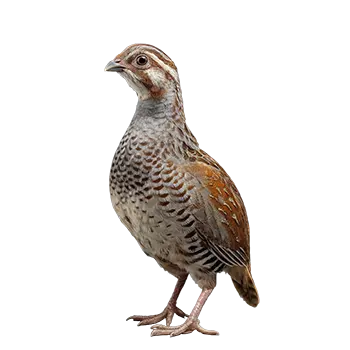

Coturnix Quail have one of the shortest natural lifespans among commonly kept birds, with most individuals living between two and three years under good captive conditions. Exceptional birds in optimal environments may reach four or occasionally five years, but these are outliers rather than the norm. This compressed lifespan is not a reflection of inadequate care — it is the biological reality of a species that evolved for rapid maturation, high reproductive output, and a life history strategy that prioritizes early fecundity over individual longevity.
Understanding this natural lifespan from the outset is important for keepers who form attachments to their birds. A Coturnix Quail that reaches two years of age has lived a full life by the standards of its species, even though two years seems heartbreakingly short compared to companion parrots that live for decades or even other gallinaceous birds like chickens that commonly reach eight to ten years. The emotional challenge of end-of-life care for Coturnix is compounded by this brevity — the keeper may feel that the time was too short for the bond that developed, and that feeling is both valid and universal among Coturnix keepers.
The transition from healthy senior to end of life is not always clearly delineated. Some birds decline gradually over weeks, losing weight, reducing activity, and slowly withdrawing from the flock. Others appear healthy until a sudden crisis — an egg peritonitis, an organ failure, a stroke — makes the transition abrupt and shocking. Neither pattern is inherently better or worse for the bird, though the gradual decline gives the keeper time to prepare emotionally and practically for the inevitable, while the sudden decline forces decisions under the pressure of a crisis.
Natural death in Coturnix Quail, when it occurs without veterinary intervention, is often quiet. A bird in terminal decline will typically seek a sheltered, warm spot, stop eating and drinking, become progressively less responsive, and eventually lose consciousness and cease breathing. Whether this process involves suffering that the bird cannot express is a question that honest veterinary science cannot answer with certainty, and this uncertainty is one of the reasons that many experienced keepers and veterinarians advocate for humane euthanasia when terminal decline is identified, rather than waiting for natural death to occur on its own timeline.