Tuareg Sloughi

Azawakh

Quick Facts

🐕 Breed Group
Hound Group
📏 Size Category
Large
📏 Height
Males: 25-29 inches, Females: 23.5-27.5 inches
⚖️ Weight
Males: 44-55 lbs, Females: 33-44 lbs
⏱️ Life Expectancy
12-15 years
🧣 Coat Type
Short and fine
🎨 Coat Colors
Sand to dark fawn, red, brindle, blue, black, white, parti-color, with white markings on chest, legs, and tail tip
😀 Temperament
Loyal, reserved, alert, independent, protective
🏃 Exercise Needs
High - needs daily running opportunities in secure areas
🎓 Training Difficulty
Moderate to high - independent thinker requiring patience and positive methods
👶 Good with Children
Best with older children who respect the dog's space
🐾 Good with Other Pets
Good with dogs raised together; strong prey drive toward small animals

Other Names & Breed Recognition

The Tuareg Sloughi is a name that speaks directly to the cultural heart of one of the most striking sighthounds to emerge from the African continent. If you have encountered this name in breed literature or at a rare breed event, you have found the Azawakh, a lean and regal coursing hound born from the wind-scoured expanses of the West African Sahel. The name Tuareg Sloughi was the first formal designation this breed carried when it arrived in Europe during the 1970s, reflecting an early Western assumption that these dogs were simply a regional variant of the North African Sloughi. That assumption turned out to be wrong, but the name persisted long enough to leave a lasting mark on the breed's identity in international cynology.

The Tuareg component of the name is straightforward. The Tuareg people, a confederation of nomadic groups spread across the Saharan and Sahelian regions of Mali, Niger, Algeria, and Burkina Faso, are the most widely recognized custodians of these dogs. They call them Oska, and the hounds have served for centuries as camp guardians, hunting partners, and symbols of status among the blue-veiled people of the desert. However, attributing the breed solely to the Tuareg oversimplifies its origins. The Peulh, Bella, and Hausa peoples also breed and keep these hounds across the broader Sahel region.

The Sloughi portion of the name reflects the European classification mindset of the era. When the first specimens arrived in France and Yugoslavia, Western breeders saw a lean, short-coated sighthound and naturally compared it to the Sloughi they already knew. The breed was registered with the FCI as the Sloughi-Azawakh in 1981, and it took until 1986 for that organization to drop the Sloughi prefix and recognize the Azawakh as a genetically distinct breed. Modern DNA analysis has confirmed the Azawakh possesses a unique mitochondrial lineage separate from both the Sloughi and the Saluki.

Beyond Tuareg Sloughi, this breed carries several other alternate designations. The name Azawakh itself derives from the Azawagh Valley stretching across Mali and Niger. You may also encounter Idi n Illeli, a Tuareg phrase meaning dog of the free people. Older literature references include Sahel Hound, Mali Greyhound, and Sahara Greyhound. The AKC recognized the breed under its Azawakh name in 2019 within the Hound Group, while the UKC granted recognition back in 1993.

Tuareg Sloughi Organizations & Standards

The Tuareg Sloughi's journey through the world of organized dog breeding has been shaped by its rarity and by the decades it spent classified under someone else's name. When these dogs first entered the European show ring in the late 1970s, they were exhibited alongside Sloughis, and their early standard was essentially an addendum to the existing Sloughi documentation. The Federation Cynologique Internationale initially grouped them as Sloughi-Azawakh in 1981, a compromise designation that satisfied nobody but at least gave the breed a foothold in the registry system. By 1986, the FCI had accumulated enough evidence from breeders and geneticists to justify a fully independent standard, and the Azawakh was recognized on its own merits under FCI Group 10, Section 3, which covers short-haired sighthounds.

The FCI standard describes a dog that is particularly leggy and elegant, with bone structure and musculature visible beneath fine, lean skin. Height at the withers for males falls between 25 and 29 inches, with females standing between 23.5 and 27.5 inches. Weight ranges from 44 to 55 pounds for males and 33 to 44 pounds for females. The standard originally restricted acceptable colors to sand through dark red and brindle, a limitation that caused significant controversy because dogs in the Sahel region come in a much wider range of colors including blue, black, white, and parti-color. This color restriction has been a point of ongoing debate between those who favor the FCI standard and breeders who work with dogs imported directly from the countries of origin.

In the United States, the breed's organizational history has followed its own path. The American Azawakh Association was founded in 1988 and serves as the AKC parent club. The breed spent years in the AKC Foundation Stock Service before being fully recognized and admitted to the Hound Group in January 2019. The AAA has notably taken a broader view on color than the FCI, accepting the full range of colors found in Sahelian populations. The United Kennel Club recognized the breed considerably earlier, granting full registration in 1993 and placing it in the Sighthound and Pariah Group.

The Kennel Club in the United Kingdom accepted the Azawakh onto its register more recently, and the breed remains uncommon in British show rings. Health testing requirements for responsible breeders typically include hip evaluation, thyroid panels, and cardiac screening. Given the breed's small global population, breeding decisions carry outsized importance, and most breed organizations emphasize the need for genetic diversity through carefully managed imports from the Sahel region alongside established Western lines.

Kennel Club Recognition

  • American Kennel Club (AKC): Recognized in 2019, Hound Group
  • United Kennel Club (UKC): Recognized, Sighthound and Pariah Group
  • FCI: Recognized, Group 10: Sighthounds
  • The Kennel Club (UK): Recognized, Hound

Tuareg Sloughi Physical Description

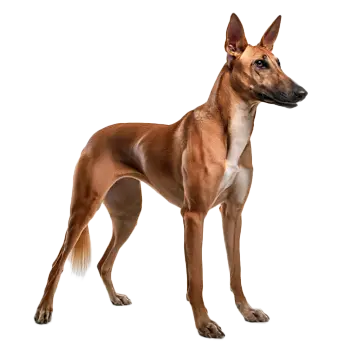
The Tuareg Sloughi is a dog whose physical appearance tells you everything you need to know about where it came from and what it was built to do. This is a sighthound forged by the Sahel, and every line of its body reflects the demands of surviving and working in one of the harshest environments on Earth. Stand one of these dogs in front of you and the first thing you notice is the height. Males typically reach 25 to 29 inches at the shoulder, females 23.5 to 27.5 inches, and that height is carried almost entirely in the legs. The Tuareg Sloughi is taller than it is long, fitting into a vertical rectangle rather than the horizontal frame you see in most other sighthound breeds. That upright proportion gives the dog an unmistakable silhouette that is impossible to confuse with any other breed once you have seen it.

The head is long and refined, with a flat skull that narrows slightly toward the muzzle. The stop is barely perceptible, creating a smooth, almost continuous line from the back of the skull to the tip of the nose. Eyes are large and almond-shaped, set somewhat obliquely, and they carry an expression that ranges from distant and contemplative to intensely focused depending on what has caught the dog's attention. Ear set is high and the ears fold flat against the head, though some dogs from Sahelian populations carry semi-erect or even fully erect ears that reflect the breed's more rustic origins.

The body beneath that elegant head is a study in functional minimalism. The chest is deep but not particularly wide, reaching close to the elbow to provide ample lung capacity for sustained running. Ribs are long and visible, and if you are accustomed to looking at heavier breeds, your first reaction might be that the dog is too thin. That reaction would be wrong. The Tuareg Sloughi carries what breeders describe as dry musculature, meaning the muscles lie flat against the bone rather than bunching into the rounded masses you see on a Greyhound or Whippet. Skin is fine and tight across the entire body, and the underlying anatomy is plainly visible. Hip bones, ribs, and shoulder blades show through clearly, and this transparency of structure is not a fault but a defining characteristic of the breed.

The coat is short, fine, and close-lying across most of the body, becoming even shorter or entirely absent on the belly. This minimal coat is perfectly adapted to the extreme heat of the Sahel but leaves the dog vulnerable in cold climates, and most owners in northern regions find that a coat or sweater is essential for winter outings. Color is one of the more complex topics in the breed. The FCI standard historically limited acceptable colors to clear sand through dark fawn and brindle, but dogs from the countries of origin appear in a much wider palette including blue, black, white, chocolate, and various parti-color combinations. Most breed organizations outside the FCI now accept this broader range. White markings on the chest, legs, and tail tip are common and often expected, with the classic pattern including white stockings on all four feet.

Movement is where the Tuareg Sloughi truly announces itself. The gait is light, springy, and elastic, covering ground with an efficiency that makes the dog appear to float rather than run. At speed, the breed displays an upright double-suspension gallop that is unique among sighthounds, with all four feet leaving the ground twice during each stride cycle. This gait allows the dog to reach speeds approaching 40 miles per hour, fast enough to course gazelle across the open Sahel. Watching a Tuareg Sloughi move at full extension is one of the great visual experiences in the dog world, a display of pure athletic purpose stripped of every unnecessary ounce.

Affectionate With Family
The Tuareg Sloughi forms deep, enduring bonds with its immediate family and shows genuine warmth to those it trusts. This affection runs quiet and steady rather than exuberant, expressed through physical closeness and attentive presence.
Good With Young Children
This breed does best with older children who understand boundaries and can read canine body language. Young children who are unpredictable or rough in their handling can overwhelm a dog that values calm interactions.
Good With Other Dogs
Tuareg Sloughis are pack-oriented and generally coexist well with other dogs, particularly those they are raised alongside. Same-sex tensions can arise, and proper introductions are important with unfamiliar dogs.
Shedding Level
The short, fine coat produces minimal shedding compared to most breeds. Some seasonal hair loss occurs, but regular brushing keeps it well under control.
Coat Grooming Frequency
Grooming demands are among the lowest of any breed. A weekly wipe-down with a soft brush or grooming mitt is all that is needed to maintain the coat in excellent condition.
Drooling Level
The Tuareg Sloughi is not a drooler. The refined head structure and tight lip line mean you will not be dealing with slobber on your furniture or clothing.
Coat Type
The coat is short, fine, and smooth, lying close to the body with virtually no undercoat. On the belly, hair may be sparse or entirely absent.
Openness To Strangers
Reserve with unfamiliar people is a defining trait of this breed. The Tuareg Sloughi observes newcomers from a distance and warms up slowly, if at all, on its own terms.
Playfulness Level
Playful energy comes in bursts rather than sustained enthusiasm. The breed enjoys spirited chase games and running sessions but is equally content to relax for extended periods between activities.
Watchdog/Protective Nature
Guarding is hardwired into the breed's identity. The Tuareg Sloughi is naturally vigilant, will alert to anything unusual, and positions itself to monitor and protect its household without any training.
Adaptability Level
This breed thrives on routine and stability. Frequent changes in environment, schedule, or household composition can produce visible stress and behavioral changes.
Trainability Level
Intelligence is not the issue. The Tuareg Sloughi understands commands readily but evaluates each request independently before deciding whether compliance serves its interests. Patience and positive methods are essential.

Tuareg Sloughi History & Development

The name Tuareg Sloughi carries within it a story of cultural identity, Western misclassification, and the slow process of correcting a mistake that took decades to untangle. The breed itself is ancient, with roots stretching back thousands of years among the nomadic peoples of the West African Sahel. But the name Tuareg Sloughi is a product of the 1970s, born from the moment these dogs first stepped onto European soil and the people receiving them tried to fit an unfamiliar animal into a familiar category.

The story begins with Renato Parigi, a French artist who lived and worked in Mali during the late 1960s and early 1970s. Parigi bred several litters from local hounds in Mali before returning to France with his dogs and continuing his breeding program there. Around the same time, Dr. Pecar, a Yugoslav diplomat stationed in Burkina Faso, brought additional specimens back to Yugoslavia. These two separate importation lines formed the foundation of the breed in the Western world. When it came time to register these dogs with European kennel organizations, the question of what to call them became immediately contentious. Western observers saw a lean, short-coated sighthound from a region near North Africa and defaulted to the closest breed they recognized. The Sloughi was already established in European registries, so these new arrivals were classified as a Tuareg variant of that breed.

This classification was always problematic. While both breeds are sighthounds adapted to hot, arid climates, the Azawakh and the Sloughi differ significantly in structure, temperament, and geographic origin. The Sloughi hails from the Maghreb region of North Africa, while the Azawakh developed much farther south in the sub-Saharan Sahel. The FCI acknowledged the connection by registering the breed as Sloughi-Azawakh in 1981, a hyphenated compromise that pleased neither camp. Five years of continued research and advocacy by dedicated breeders led the FCI to drop the Sloughi prefix in 1986, finally granting the Azawakh full independence as its own breed.

The Tuareg portion of the name, while more culturally accurate than the Sloughi component, still tells an incomplete story. The Tuareg are indeed the most famous keepers of these hounds, but the dogs are found across multiple ethnic groups throughout the Sahel. The Tuareg themselves use the name Oska for these dogs, or Idi n Illeli, meaning dog of the free people. The Western designation of Tuareg Sloughi was always an outsider's label, never a name used by the people who actually bred and lived alongside these animals for centuries.

Today the name Tuareg Sloughi persists primarily in breed literature and among enthusiasts who appreciate its historical significance. You will still find it referenced in older breed books, kennel club archives, and occasional show catalogs. Most formal registries have settled firmly on Azawakh as the official breed name, and newer generations of fanciers tend to use that designation exclusively. But understanding the Tuareg Sloughi name matters because it encapsulates the breed's complex passage from the campfires of Sahelian nomads to the show rings and living rooms of the Western world.

Tuareg Sloughi Temperament & Personality

Living with a Tuareg Sloughi means adjusting your expectations about what a dog-human relationship looks like. If you are coming from a breed that lives to please you, that greets every stranger with a wagging tail, and that follows your commands with eager enthusiasm, this dog is going to require a fundamental recalibration of your thinking. The Tuareg Sloughi is loyal in a way that runs deep and quiet rather than loud and obvious. These dogs bond intensely with their immediate family and will show genuine warmth and affection to the people they trust, but that circle of trust is not easily expanded.

With strangers, the default setting is reserved to the point of seeming aloof. A Tuareg Sloughi meeting someone new for the first time will typically maintain its distance, observe from across the room, and make its own decision about whether this person deserves further attention. Pushing the introduction, reaching for the dog uninvited, or making loud, enthusiastic overtures will almost certainly backfire. This is a breed that decides on its own terms and on its own timeline. Some individuals will warm up to regular visitors over time, while others will maintain a polite but permanent distance from anyone outside the immediate household.

The guarding instinct in this breed is not something that was trained into them. It is hardwired. In the Sahel, these dogs sleep on the rooftops of low village dwellings and serve as the first line of defense against hyenas and other predators. When one dog spots a threat, it leaps down and the others follow, forming a coordinated pack response. That same alertness and willingness to defend carries over into a domestic setting. A Tuareg Sloughi will position itself where it can monitor the household, will bark to alert you to anything unusual, and will move to place itself between its family and a perceived threat without hesitation.

Intelligence in this breed is considerable but expresses itself differently than in herding or retrieving breeds. The Tuareg Sloughi thinks independently and makes decisions based on its own assessment of the situation rather than waiting for instructions. This can look like stubbornness if you are measuring the dog against a Golden Retriever's eagerness to comply, but it is actually a reflection of the self-reliance that kept these dogs alive in an environment where waiting for human direction could mean missing a meal or failing to detect a predator.

Within the family pack, Tuareg Sloughis are surprisingly affectionate. They seek physical contact with their people, will drape themselves across laps and furniture with elegant disregard for personal space, and often sleep piled together with other dogs in the household. They form complex social hierarchies when kept in groups and have remarkable memories for individual dogs and people, recognizing them after long separations. The emotional depth of the breed is one of its most compelling qualities, but it comes with a corresponding sensitivity. These dogs absorb the emotional atmosphere of their household and will react to tension, conflict, or upheaval with visible stress.

Tuareg Sloughi Family Life & Living Requirements

Bringing a Tuareg Sloughi into your home means accepting that this is not a dog that adapts to your lifestyle so much as one that requires you to adapt somewhat to its nature. These hounds do best in calm, stable households where routines are predictable and the overall atmosphere is peaceful. Chaotic environments with constant noise, frequent visitors, and unpredictable schedules will stress this breed in ways that manifest as anxiety, withdrawal, or defensive behavior.

With children, the picture depends heavily on the age of the kids and the individual dog. Older children who understand how to read a dog's body language and respect its space can develop wonderful relationships with a Tuareg Sloughi. The breed is gentle with family members it trusts and will tolerate a good deal from people it considers part of its inner circle. Young children, however, present challenges. Toddlers who grab, pull, shriek, and move unpredictably can overwhelm a breed that values calm and personal boundaries. Puppies and juveniles of this breed are also surprisingly large and rambunctious, and their play style can easily knock over small children even without any aggressive intent.

Other dogs in the household are usually fine, particularly if the Tuareg Sloughi is raised alongside them from puppyhood. The breed has strong pack instincts and generally establishes a hierarchy with housemates without serious conflict. Same-sex pairings can sometimes produce tension, particularly between intact males, but this is manageable with proper introduction and supervision. Cats and other small animals are a different matter entirely. The prey drive in this breed is strong and deeply rooted. A Tuareg Sloughi that grows up with a household cat from puppyhood may learn to coexist peacefully with that specific animal, but the same dog might still chase an unfamiliar cat without hesitation.

Housing requirements reflect the breed's physical needs and temperament. A home with a securely fenced yard is strongly preferred. The fence needs to be high because these dogs are athletic jumpers, and it needs to be solid because they are fast enough to reach a gap before you can react. Apartment living is technically possible if you are committed to providing sufficient daily exercise, but it is not ideal. The breed is relatively quiet indoors and will spend long stretches resting on furniture between activity periods. Cold weather is a genuine concern given the thin coat and minimal body fat. If you live in a northern climate, invest in quality dog coats for winter and provide warm, soft bedding indoors. These dogs evolved for desert heat and simply do not carry the insulation that cold-weather breeds possess.

Tuareg Sloughi Training & Exercise Needs

Training a Tuareg Sloughi requires you to abandon everything you think you know about obedience if your experience has been with retrievers, shepherds, or other breeds that were selectively bred to take direction from humans. This is a sighthound that was developed to make split-second hunting decisions independently across open terrain, and that heritage shows up in every training session. The dog is not stupid. It understands what you want. It is simply evaluating whether your request makes sense from its perspective before deciding whether to comply.

Positive reinforcement is the only training approach that works with this breed. Harsh corrections, raised voices, or physical discipline will shut the dog down entirely or produce fearful, defensive behavior that is extremely difficult to undo. Keep sessions short, varied, and rewarding. Food motivation tends to be moderate in this breed compared to the obsessive treat drive you see in some others, so finding what motivates your individual dog is important. Some respond better to play, others to praise, and some simply need to understand the practical purpose of what you are asking.

Early socialization is absolutely critical and cannot be overstated. The window between eight and sixteen weeks is your best opportunity to expose the puppy to different people, environments, sounds, surfaces, and experiences. A Tuareg Sloughi that misses this socialization window will likely grow into an adult that is fearful or reactive in unfamiliar situations, and rehabilitating that is far more difficult than preventing it. Introduce the puppy to as many different types of people as possible, take it to new environments regularly, and make every new experience positive.

Recall training deserves special emphasis because the breed's prey drive creates genuine safety concerns off leash. A Tuareg Sloughi that spots a rabbit, squirrel, or running cat will pursue it with single-minded intensity, and no amount of calling is likely to override that instinct in the moment. Many experienced owners recommend never allowing the breed off leash in unfenced areas. If you want to give the dog opportunities to run freely, seek out securely fenced fields or dog parks during off-peak hours.

Exercise needs are significant but come in bursts rather than sustained marathons. The breed is built for explosive speed and short pursuits, not endurance jogging. A daily routine that includes one or two hard running sessions in a secure area plus a couple of moderate walks will satisfy most individuals. Between active periods, these dogs are remarkably calm and content to rest. Lure coursing is an excellent organized activity that channels the breed's natural abilities into a structured outlet.

Tuareg Sloughi Health Concerns

The Tuareg Sloughi is generally a hardy breed, shaped by centuries of natural selection in an environment that tolerated no weakness. Dogs that could not withstand the extreme heat, limited food, and physical demands of life in the Sahel simply did not survive to reproduce. That ruthless filtering has produced a breed with fewer inherited health problems than many popular breeds, but the small global population introduces its own set of concerns that prospective owners need to understand.

Hip dysplasia occurs at lower rates than in many larger breeds but should still be screened for, particularly in breeding stock. Bloat is a risk for any deep-chested breed and owners should be aware of the warning signs. One unique consideration with this breed is its sensitivity to anesthesia and certain medications due to low body fat and fast metabolism. Always inform your veterinarian that you own a sighthound before any procedure requiring sedation. The typical lifespan for the breed ranges from 12 to 15 years with proper care.

Common Health Issues

  • Hypothyroidism - An underactive thyroid gland that can cause weight gain, lethargy, skin problems, and coat changes, often linked to autoimmune thyroiditis and managed with daily hormone replacement medication
  • Idiopathic Epilepsy - Seizure disorder present across most bloodlines, ranging from mild isolated episodes to more severe clusters, typically managed through environmental controls and anticonvulsant medication when needed
  • Autoimmune Thyroiditis - The immune system targets and damages thyroid tissue, frequently underlying hypothyroidism cases in the breed and detectable through regular thyroid panel screening
  • Dermatomyositis - An inflammatory condition causing skin lesions and muscle weakness, more commonly seen in this breed than in the general dog population and requiring immunosuppressive treatment
  • Masticatory Muscle Myositis - An autoimmune condition targeting the jaw muscles that can cause difficulty eating and jaw pain, requiring prompt veterinary diagnosis and treatment
  • Hip Dysplasia - A malformation of the hip joint occurring at lower rates than in many large breeds but still warranting screening in breeding stock through radiographic evaluation
  • Bloat (Gastric Dilatation-Volvulus) - A life-threatening emergency where the stomach fills with gas and potentially twists, requiring immediate veterinary intervention and preventable through feeding management
  • Anesthesia Sensitivity - Heightened sensitivity to sedation and certain medications due to low body fat and rapid metabolism, requiring adjusted protocols and sighthound-aware veterinary care

Preventive Care & Health Monitoring

  • Schedule annual thyroid panel testing to catch hypothyroidism early - Particularly important given the breed's predisposition to autoimmune thyroiditis
  • Obtain hip evaluations through OFA or PennHIP for all breeding stock and any dog showing signs of joint discomfort or lameness - Obtain hip evaluations through OFA or PennHIP for all breeding stock and any dog showing signs of joint discomfort or lameness
  • Feed two or more smaller meals per day rather than one large meal to reduce bloat risk - And avoid vigorous exercise immediately before and after feeding
  • Begin extensive socialization between eight and sixteen weeks of age - Exposing the puppy to diverse people, environments, animals, and experiences
  • Inform your veterinarian that your dog is a sighthound before any procedure requiring anesthesia so appropriate drug protocols and dosages can be used - Inform your veterinarian that your dog is a sighthound before any procedure requiring anesthesia so appropriate drug protocols and dosages can be used
  • Provide protective clothing in cold weather due to the breed's minimal coat and low body fat - And ensure warm indoor sleeping areas during winter months
  • Maintain regular dental care including brushing several times weekly and professional cleanings as recommended by your veterinarian - Maintain regular dental care including brushing several times weekly and professional cleanings as recommended by your veterinarian
  • Keep the dog at a healthy lean weight - Understanding that visible ribs and hip bones are normal for the breed and not a sign of malnutrition

Tuareg Sloughi Grooming & Maintenance

If you are looking for a low-maintenance dog in the grooming department, the Tuareg Sloughi delivers on that front more than almost any other breed. The coat is short, fine, and close-lying, and on the belly it may be nearly absent altogether. There is no undercoat to speak of, no feathering, no furnishings, and no tendency toward matting. A weekly once-over with a soft bristle brush or a grooming mitt is all it takes to remove loose hair and distribute the natural oils that keep the coat looking sleek. Shedding is minimal compared to double-coated breeds, though you will notice some seasonal hair loss that a regular brushing routine easily manages.

Bathing is an infrequent affair. The breed carries very little of the oily, doggy odor that makes regular baths a necessity for some other breeds. Every two to three months is typically sufficient unless the dog has gotten into something unpleasant. When you do bathe, use a mild, hypoallergenic shampoo because the breed's thin, fine skin is more sensitive than that of heavier-coated dogs. Harsh detergents or heavily fragranced products can cause irritation and dryness.

Dental care follows the same guidelines as any breed. Regular brushing several times per week helps prevent tartar buildup and gum disease. Nail trimming should happen every two to three weeks, and you will need to check and clean the ears regularly to prevent infections, particularly if the dog spends time in dusty or dirty environments. The folded ear shape can trap debris and moisture, so a quick inspection after outdoor excursions is a good habit to develop.

The real maintenance challenge with this breed is not grooming but climate management. That thin coat and minimal body fat mean the Tuareg Sloughi has virtually no natural insulation against cold weather. In northern climates, you will need a wardrobe of functional dog coats for winter walks and possibly indoor sweaters for poorly heated spaces. Provide soft, warm bedding and avoid leaving the dog outdoors in cold temperatures. Conversely, the breed handles heat exceptionally well thanks to its desert heritage, though fresh water and shade should always be available during warm weather.