Rawondu

Azawakh

Quick Facts

🐕 Breed Group
Hound Group
📏 Size Category
Medium to Large
📏 Height
Males: 25-29 inches, Females: 23.5-27.5 inches
⚖️ Weight
Males: 44-55 lbs, Females: 33-44 lbs
⏱️ Life Expectancy
12-14 years
🧣 Coat Type
Short, fine, close-lying
🎨 Coat Colors
Sand, fawn, red, brindle, blue, black, brown, parti-color, white markings common
😀 Temperament
Loyal, reserved, protective, independent, affectionate with family
🏃 Exercise Needs
High
🎓 Training Difficulty
Moderate to difficult
👶 Good with Children
Best with older, respectful children
🐾 Good with Other Pets
Variable, strong prey drive toward small animals

Other Names & Breed Recognition

Rawondu is one of several indigenous West African names for the sighthound known internationally as the Azawakh. If you encountered this name and came looking for answers, you have found the right place. The Rawondu is the Azawakh, a lean and elegant desert hound bred for centuries by nomadic peoples of the Sahel region in Mali, Niger, and Burkina Faso. The name Rawondu comes from the Peulh (also called Fulani) people, one of several ethnic groups that have bred and maintained these dogs across the southern reaches of the Sahara for generations. Different peoples gave the dog different names, and Rawondu is the Peulh contribution to a list that reflects the breed's deep cultural roots across multiple communities.

The Azawakh carries more regional names than almost any breed in the hound group. The Tuareg people, perhaps the most commonly associated custodians of the breed, call it Oska or Aidi n'Ailluli, which translates roughly to Noble Dog of the Free People. Other names include Idi, Hanshee, Bareeru, and Wulo, each tied to a specific ethnic group or linguistic tradition within the Sahel. The Western kennel club name Azawakh derives from the Azawagh Valley, a seasonal river basin that cuts through the border region of Mali and Niger and sits at the geographic heart of the breed's historical range. In French-speaking contexts, you may also see the breed referred to as Levrier Azawakh, Sahelian Greyhound, or Sahelian Sloughi, and the older European designation Tuareg Sloughi acknowledges both the breed's tribal associations and its physical resemblance to the North African Sloughi.

In the international registry system, the breed is recognized as the Azawakh by the AKC, UKC, and FCI. The American Kennel Club granted full recognition in 2019, making the Azawakh one of the most recently admitted breeds in AKC history. The United Kennel Club had recognized the breed considerably earlier, in 1993. The FCI classifies the Azawakh in Group 10, Sighthounds, under Section 3 for short-haired breeds. The American Azawakh Association, founded in 1988, serves as the AKC parent club and has been central to the breed's preservation and promotion in North America.

Rawondu Organizations & Standards

The American Azawakh Association serves as the AKC parent club and has been the primary organizational force behind the breed's journey toward formal recognition in the United States. Founded on February 7, 1988, decades before the AKC admitted the breed, the AAA maintained its own registry recognized by the AKC Foundation Stock Service and worked to educate the American public about a breed that was virtually unknown outside of West Africa and a small circle of European sighthound enthusiasts. The club publishes the quarterly newsletter The Azawakh Aegis and maintains breeding guidelines that emphasize the preservation of the breed's native characteristics.

The AKC breed standard describes the Azawakh as a particularly leggy and elegant sighthound whose bone structure and musculature are visible beneath fine, lean tissue. Males stand 25 to 29 inches at the shoulder and weigh 44 to 55 pounds, while females are somewhat smaller at 23.5 to 27.5 inches and 33 to 44 pounds. The standard emphasizes the breed's distinctly dry musculature, which lies flat against the body rather than bunching like that of a Greyhound or Whippet. A correctly conditioned Azawakh should show a minimum of three to five ribs, a feature that often alarms observers unfamiliar with the breed but is entirely normal for a dog adapted to extreme desert heat. The coat is short and fine, virtually absent on the belly, and may appear in any color or combination of colors.

The FCI standard, which the AAA uses as its primary reference, predates the AKC standard and reflects the breed's European documentation history. The FCI classifies the Azawakh in Group 10, Section 3, among short-haired sighthounds. The UKC recognized the breed in 1993 and places it in its Sighthound and Pariah Group. The breed is not currently registered with the Canadian Kennel Club.

Health testing recommendations for the Azawakh include a thyroid panel to screen for autoimmune thyroiditis, hip evaluation via OFA or PennHIP, cardiac evaluation, and an ophthalmologist examination. DNA testing for progressive retinal atrophy is also recommended. Because the breed is rare and the North American population is small, maintaining genetic diversity is a significant concern for responsible breeders. The AAA has supported the importation of dogs directly from Africa to broaden the gene pool, recognizing that the breed's long-term health depends on avoiding the genetic bottlenecks that have affected many other rare breeds. Sensitivity to anesthesia is a well-documented sighthound trait that applies to the Azawakh, and veterinarians treating this breed should be familiar with sighthound-specific anesthetic protocols.

Kennel Club Recognition

  • American Kennel Club (AKC): Recognized in 2019, Hound Group
  • United Kennel Club (UKC): Recognized, Sighthound and Pariah
  • FCI: Recognized, Group 10: Sighthounds
  • The Kennel Club (UK): Recognized, Hound

Rawondu Physical Description

The Rawondu is built for survival in one of the harshest environments on earth, and every line of its body reflects that origin. This is not a dog designed in a kennel to meet an aesthetic ideal. It is a dog sculpted by the Sahel itself, where temperatures routinely exceed 100 degrees, water is scarce, and only the most thermally efficient, structurally sound animals endure. The result is a sighthound of extraordinary elegance whose lean appearance is not fragility but rather the ultimate expression of functional design.

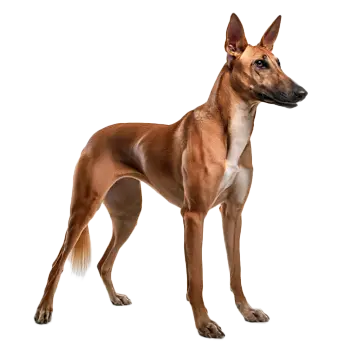
The overall silhouette is tall and rectangular, with the body fitting into a vertical rectangle where the longer sides are the height. This distinguishes the Azawakh from most other sighthounds, which tend toward horizontal proportions. Males stand 25 to 29 inches at the shoulder and females 23.5 to 27.5 inches, creating a leggy, upstanding profile that is immediately recognizable. Weight ranges from 33 to 55 pounds depending on sex, and the breed carries no excess mass. The correctly conditioned Rawondu displays visible ribs, hip bones, and muscle definition beneath fine, tight skin. This is not a sign of poor health but the breed's natural state, evolved to dissipate heat across maximum surface area with minimum insulation.

The head is long, fine, and lean, with a flat skull and a barely perceptible stop. The muzzle is straight and tapers slightly toward the nose, which may be black or brown. The jaws are long and strong enough to seize game at speed. The eyes are large and almond-shaped, set somewhat obliquely, and their expression combines alertness with a characteristic aloofness. Eye color ranges from dark brown to amber. The ears are set high and fine, lying flat against the skull when at rest and tipping slightly forward or to the side when the dog is attentive. They are triangular in shape, relatively thin, and pendant.

The neck is long, fine, muscular, and slightly arched, flowing into well-laid shoulders that provide the reach necessary for the breed's distinctive gait. The chest is deep but narrow when viewed from the front, reaching well below the elbow to provide substantial lung capacity for sustained coursing. The ribcage is long and visible, with the ribs clearly defined under the skin. The back is short and nearly horizontal, with a slight rise over the loin that culminates in prominent, prominent hip bones. The croup slopes steeply, and the belly is sharply tucked up, creating the dramatic underline that gives the breed its distinctive racing profile.

The limbs are long, lean, and dry, with flat muscle and fine bone that nonetheless provides adequate strength for high-speed pursuit. The forelegs are perfectly straight when viewed from the front, with long, oblique pasterns. The hindquarters feature long thighs, well-angulated stifles, and high-set hocks. The feet are round and compact with well-arched toes, somewhat cat-like in shape, and the pads are resistant to the hot terrain of the Sahel. The tail is set low, thin, and tapered, often with a slight curve or hook at the tip. It hangs down at rest and may rise slightly above the horizontal when the dog is in motion.

The coat is short, fine, and close-lying over most of the body, becoming virtually absent on the belly. Texture varies slightly by region and individual, but the coat should always feel smooth and satiny. Color presents in a wide range of possibilities, from clear sand to dark fawn, red, brindle, blue, black, brown, and parti-color patterns. White markings are common and typically appear as a bib on the chest, stockings on the legs, and a brush at the tip of the tail.

The Rawondu's movement is one of its most striking characteristics. The breed moves with a light, springy, almost floating gait that is unique among sighthounds, and at full speed it displays a distinctive double-suspension gallop that allows it to reach speeds of up to 40 miles per hour across open terrain.

Affectionate With Family
The Rawondu forms deep, intense bonds with its household and expresses devotion through quiet proximity and attentive watchfulness rather than boisterous affection. Its loyalty is profound and unwavering once established.
Good With Young Children
The breed's sensitivity and reserve make it a poor match for very young children. Older children who interact calmly and respectfully can develop strong relationships with this dog.
Good With Other Dogs
Azawakhs often bond well with other sighthounds or dogs they are raised with, but same-sex aggression can occur. Introductions to unfamiliar dogs should be handled carefully.
Shedding Level
The fine, short coat sheds minimally throughout the year. This is one of the lower-shedding breeds, though some seasonal hair loss occurs.
Coat Grooming Frequency
Grooming needs are minimal. A weekly rubdown with a soft brush or mitt keeps the coat in good condition with virtually no effort required.
Drooling Level
The Rawondu is an exceptionally clean-mouthed breed that produces no appreciable drool under any circumstances.
Coat Type
A single-layer coat that is short, fine, and virtually absent on the belly. It provides minimal insulation, reflecting the breed's desert adaptation.
Openness To Strangers
The breed is naturally reserved and cautious with unfamiliar people. Trust is extended slowly and on the dog's own terms, which is a core characteristic rather than a socialization failure.
Playfulness Level
The Rawondu enjoys play with trusted family members and can display surprising bursts of speed and agility during play sessions. It is not, however, a constantly playful breed.
Watchdog/Protective Nature
Guardian instincts run deep in this breed, which was bred to protect camps and livestock from predators. The Rawondu is alert, territorial, and will defend its family and property with conviction.
Adaptability Level
The breed is sensitive to environmental changes, cold weather, and disruptions in routine. It adapts poorly to rehoming and requires a stable, consistent household to thrive.
Trainability Level
Intelligent but independent, the Rawondu requires patient, positive training methods and does not respond well to repetitive drills or harsh corrections. Cooperation is earned, not commanded.

Rawondu History & Development

The name Rawondu belongs to the Peulh people, one of several nomadic and semi-nomadic ethnic groups who have bred and maintained sighthounds across the Sahel region of West Africa for centuries. Understanding this name means understanding that the Azawakh is not a breed that belongs to a single culture or carries a single native designation. It is a dog shared across multiple peoples, each of whom gave it their own name and maintained their own breeding traditions, united by a common geography and a common need for a fast, resilient, multipurpose dog capable of hunting game, guarding livestock, and serving as a valued companion in one of the most demanding environments on earth.

The Sahel stretches across the southern edge of the Sahara Desert, a semi-arid belt running through parts of Mali, Niger, Burkina Faso, and neighboring countries. For the nomadic peoples who inhabited this region, the sighthound was not a luxury or a hobby. It was a necessity. The dog hunted gazelle and hare to supplement diets built on millet and goat milk. It guarded camps from hyenas and other predators, working cooperatively in packs that would alert, assemble, and chase off threats. It served as a companion with a social status closer to family member than property. The Tuareg, Peulh, Bella, and Hausa all maintained these dogs, and each group's breeding decisions were shaped by the specific demands of their territory and lifestyle.

The name Rawondu is less commonly encountered in Western literature than the Tuareg names Oska and Aidi n'Ailluli, largely because early European contact with the breed came primarily through Tuareg intermediaries. French colonial presence in the region during the 19th and 20th centuries brought the first Western awareness of these dogs, and French-language descriptions often labeled them as Levrier du Sahel or Sloughi du Tuareg, further cementing the Tuareg association in Western perception. The Peulh contribution to the breed's development and maintenance has been historically underappreciated in kennel club narratives, despite the Peulh being one of the largest and most widespread ethnic groups in West Africa.

The breed first arrived in Europe in the 1970s, with early importations reaching France and Yugoslavia. The FCI recognized the Azawakh in 1981 under a standard that initially restricted accepted colors to shades of sand, fawn, and brindle, a limitation that reflected only a portion of the breed's natural variation in Africa. The first Azawakhs reached the United States in the mid-1980s, and the American Azawakh Association was founded in 1988 to promote and preserve the breed. AKC Foundation Stock Service registration began in 1997, the Miscellaneous Class followed in 2011, and full AKC recognition in the Hound Group came in 2019.

Today, the name Rawondu persists primarily in Peulh communities and among breed historians who recognize the importance of acknowledging the multiple cultural traditions that produced and sustained this dog. It serves as a reminder that the Azawakh is not simply a Western kennel club breed with an exotic pedigree but a living cultural artifact with deep roots in multiple African societies.

Rawondu Temperament & Personality

The Rawondu's temperament is unlike that of any European or American sighthound, and owners who expect Greyhound-like docility or Whippet-like approachability will need to recalibrate their expectations quickly. This is a dog forged in an environment where trust was earned, not freely given, and where a guardian hound that welcomed every stranger into camp would have been a liability rather than an asset. The result is a breed that combines deep, fierce loyalty to its own people with a pronounced reserve toward everyone else, a combination that some owners describe as paradoxical and others describe as exactly what they want in a dog.

Within its family, the Rawondu is genuinely affectionate, though the expression of that affection tends to be dignified rather than exuberant. This is not a dog that crashes into your lap or demands constant physical attention. It shows its bond through proximity, following its chosen person from room to room with quiet attention and settling nearby with a watchful calm that communicates devotion without neediness. Many Azawakh owners describe a quality of emotional intelligence in the breed that borders on the uncanny, a sensitivity to household moods and individual emotional states that goes beyond what most breeds demonstrate.

The reserve toward strangers is not aggression but genuine caution, and it should be respected rather than forced into premature friendliness. The Rawondu assesses new people carefully and on its own schedule. Pushing the dog toward interaction before it has decided to accept a visitor typically backfires, producing either withdrawal or a warning that the person has crossed a boundary. With patience and repeated positive exposure, most Azawakhs will accept regular visitors into their trust, but the acceptance is conditional and earned rather than automatic.

Protectiveness is a core behavioral trait that runs deeper in the Azawakh than in most sighthound breeds. In its native environment, the breed served as a camp guardian, alerting the community to approaching threats and joining other dogs in a coordinated pack response to drive off predators. This guardian instinct persists in domesticated settings and can manifest as territorial barking, alertness to unusual sounds or movements, and positioning between its family and perceived threats. It is a trait that needs direction rather than suppression. Adequate socialization from puppyhood helps the Rawondu distinguish between genuine threats and harmless daily occurrences, reducing the likelihood of reactive behavior.

Interactions with other dogs are highly variable and context-dependent. Azawakhs that are raised together typically form close social bonds and will sleep in contact with each other, reflecting their pack-oriented nature. However, the breed can be assertive with unfamiliar dogs and tends to prefer dominance within multi-dog households. Same-sex aggression is a documented concern. The prey drive is significant, as expected in a sighthound bred to course game at speeds approaching 40 miles per hour, and small animals including cats, rabbits, and pocket pets should be considered incompatible unless the dog has been raised with them from earliest puppyhood. Even then, the pursuit instinct can override familiarity when a small animal bolts.

Rawondu Family Life & Living Requirements

The Rawondu is not a breed for every household, and prospective owners who are honest about the breed's requirements will save themselves and the dog a great deal of difficulty. This is a sighthound with guardian instincts, a pronounced sensitivity to environmental stress, and a deep need for a stable, consistent home life. It does not adapt well to chaotic households, frequent changes in routine, or rehoming situations. The breed forms intense bonds with its primary family and can struggle profoundly when those bonds are disrupted. Placing an adult Azawakh in a new home is notoriously difficult, and the breed's extreme loyalty to its original family should be understood as a commitment requirement before acquisition.

In a suitable household, the Rawondu is a quiet, clean, and elegant companion. Despite its athleticism, the breed is calm indoors and can adapt to apartment living provided it receives adequate daily exercise. It is not a hyperactive or demanding dog inside the home. It prefers to settle on a comfortable surface near its people and observe the household with composed attention. Temperature sensitivity is a real consideration. The breed's fine coat and lean body provide almost no insulation, and Azawakhs are genuinely uncomfortable in cold weather. Owners in northern climates should plan for indoor coats, heated sleeping areas, and limited outdoor exposure during winter months.

With children, the Rawondu requires careful management. The breed's reserve and sensitivity mean it does not tolerate rough handling, loud unpredictable behavior, or being startled by sudden movements. Older children who understand how to interact calmly and respectfully with a sensitive dog can develop excellent relationships with an Azawakh. Very young children are generally a poor match for this breed's temperament. The dog is not aggressive toward children but may withdraw, become anxious, or react defensively when overwhelmed by unpredictable toddler behavior.

Other dogs in the household can work well if the pairing is thoughtful. Azawakhs often do best with another Azawakh or a compatible sighthound breed, as they share communication styles and social patterns that differ from those of other breed types. Same-sex pairings within the breed carry a higher risk of conflict. Cats and other small animals present a significant prey drive risk. The breed's heritage as a coursing hound means that the pursuit of small fast-moving animals is hardwired rather than learned, and reliable recall under prey drive is extremely difficult to achieve. Secure fencing is non-negotiable, as an Azawakh in pursuit of prey is single-minded, fast, and capable of clearing obstacles that would contain most other breeds.

Rawondu Training & Exercise Needs

Training a Rawondu requires an approach fundamentally different from what works with most Western companion breeds. The Azawakh is intelligent and capable of learning quickly, but it is not a dog that lives to please its handler in the way a retriever or a herding dog might. It is an independent thinker whose cooperation must be earned through trust and mutual respect rather than demanded through repetition or authority. Harsh training methods are not merely ineffective with this breed. They are destructive. An Azawakh subjected to punitive corrections will become fearful, shut down, or openly resistant, and the damage to the bond between dog and handler can be permanent.

Positive reinforcement is the only viable training philosophy for this breed, and even within that framework, the Azawakh responds best to calm, low-pressure sessions that allow it to process and choose to cooperate rather than being pushed toward compliance. Food rewards work for many individuals, but the motivation tends to be moderate compared to more food-driven breeds. Genuine praise and the opportunity to engage in enjoyable activities are often more powerful incentives. Sessions should be kept short. The breed's attention span for repetitive obedience exercises is limited, and drilling the same command multiple times will produce diminishing returns and visible disinterest.

Socialization is the single most critical investment an Azawakh owner can make, and it must begin early and continue throughout the dog's life. Puppies should be exposed to a wide variety of people, environments, sounds, and situations in a positive, non-overwhelming manner. The goal is not to produce a dog that enthusiastically greets every stranger but to produce one that can navigate the human world without excessive anxiety or reactive behavior. Given the breed's natural reserve, socialization will not transform an Azawakh into an extrovert. It will, however, build the confidence that allows the dog to assess situations calmly rather than reacting from fear.

Exercise needs are substantial but specific. The Rawondu requires daily opportunities to run at full speed in a securely enclosed area. Walking on a leash provides mental stimulation and bonding time but does not satisfy the breed's need for the explosive sprinting that is central to its physical and psychological health. Lure coursing is an outstanding outlet that engages the breed's natural hunting instincts in a safe, controlled setting. Agility and rally can also work if introduced gently. A securely fenced yard is essential, as the Azawakh's combination of speed, prey drive, and jumping ability makes inadequate containment genuinely dangerous. The breed can reach 40 miles per hour and can clear fences that would be sufficient for most other dogs.

Rawondu Health Concerns

The Rawondu benefits from the genetic vigor that comes with being a landrace breed maintained for centuries through natural selection in a demanding environment. The Sahel did not tolerate frail or sickly dogs, and the result is a breed that is fundamentally sound when compared to many modern purebreds. Most Azawakhs live 12 to 14 years, and serious health crises are uncommon in well-bred individuals. That said, several conditions are documented in the breed and deserve attention from owners and breeders alike.

Bloat and gastric dilatation-volvulus are concerns in this deep-chested breed, as in most sighthounds. Feeding smaller, more frequent meals and avoiding vigorous exercise immediately after eating are standard preventive measures. Anesthesia sensitivity is a well-documented sighthound trait that applies to the Azawakh. The breed's lean body composition and unique metabolism mean that standard anesthetic dosing protocols can produce dangerous results. Any veterinarian treating an Azawakh should be familiar with sighthound-specific anesthetic practices, and owners should proactively communicate this need before any surgical procedure.

Common Health Issues

  • Autoimmune thyroiditis causes progressive destruction of the thyroid gland by the immune system - Leading to hypothyroidism with symptoms including weight gain, lethargy, hair loss, and skin infections that require lifelong hormone supplementation.
  • Seizure disorders have been reported in the breed - With some evidence linking episodes to underlying thyroid dysfunction that should be investigated as part of any seizure workup.
  • Masticatory muscle myositis is an inflammatory condition affecting the jaw muscles that causes difficulty opening the mouth and reluctance to eat - Requiring prompt veterinary treatment to prevent permanent muscle damage.
  • Bloat and gastric dilatation-volvulus pose a risk in this deep-chested sighthound and can become life-threatening if the stomach twists - Cutting off blood supply and requiring emergency surgical intervention.
  • Anesthesia sensitivity is a well-documented trait in sighthound breeds including the Azawakh - Whose lean body composition and unique metabolism require adjusted anesthetic protocols to avoid dangerous overdosing.
  • Skin allergies and sensitivities can produce itching - Redness, and localized hair loss, sometimes requiring dietary changes or veterinary management to resolve effectively.

Preventive Care & Health Monitoring

  • Thyroid panel screening is recommended for all breeding stock and should be repeated periodically throughout the dog's life - As autoimmune thyroiditis can develop at any age between two and eight years.
  • Hip evaluation via OFA or PennHIP screens for dysplasia and contributes to breeding decisions that maintain the breed's structural soundness. - Hip evaluation via OFA or PennHIP screens for dysplasia and contributes to breeding decisions that maintain the breed's structural soundness.
  • Cardiac evaluation helps identify hereditary heart conditions that may not produce clinical symptoms in their early stages. - Cardiac evaluation helps identify hereditary heart conditions that may not produce clinical symptoms in their early stages.
  • Ophthalmologist examination by a board-certified ACVO specialist screens for progressive retinal atrophy and other inherited eye conditions. - Ophthalmologist examination by a board-certified ACVO specialist screens for progressive retinal atrophy and other inherited eye conditions.
  • PRA DNA testing identifies carriers and affected dogs for progressive retinal atrophy - Allowing breeders to make informed pairing decisions.
  • Sighthound-specific anesthetic protocols should be discussed with your veterinarian before any surgical procedure - As standard dosing can produce adverse reactions in this lean, metabolically distinct breed.
  • Bloat prevention measures including feeding two to three smaller meals per day rather than one large meal and avoiding strenuous exercise immediately before and after eating reduce the risk of gastric dilatation-volvulus. - Bloat prevention measures including feeding two to three smaller meals per day rather than one large meal and avoiding strenuous exercise immediately before and after eating reduce the risk of gastric dilatation-volvulus.

Rawondu Grooming & Maintenance

The Rawondu is among the lowest-maintenance breeds in terms of coat care, which is consistent with a dog that evolved in an environment where elaborate grooming was neither possible nor necessary. The coat is short, fine, and lies flat against the body, requiring only a weekly rubdown with a soft bristle brush or grooming mitt to remove loose hair and distribute natural skin oils. Some Azawakhs have virtually no hair on the belly, which is a normal breed characteristic rather than a sign of skin disease. Shedding is minimal compared to most breeds, and the fine texture of the hair means that what does shed is less noticeable on furniture and clothing than the coarser hair of many other sighthounds.

Bathing is infrequent, typically needed only every couple of months or when the dog has gotten particularly dirty. The breed's thin, fine skin is more delicate than that of heavier-coated breeds and can be susceptible to cuts, scrapes, and irritation from harsh grooming products. A mild, dog-specific shampoo is recommended, and owners should inspect the skin regularly for abrasions or hot spots that may require attention. Skin allergies and sensitivities are documented in the breed and can manifest as itching, redness, or localized hair loss. Dietary adjustments or veterinary evaluation may be needed for persistent skin issues.

Dental care follows the standard recommendations for all breeds, with regular tooth brushing at least several times per week to prevent tartar accumulation and periodontal disease. Nail trimming should occur every two to three weeks, as overgrown nails can affect the dog's gait and cause discomfort, which is particularly important in a breed whose movement and structural soundness are defining characteristics. Ears should be inspected weekly for debris or early signs of infection and cleaned as needed.

Cold weather management deserves special mention as a maintenance consideration for this breed. The Rawondu's thin coat and lean body provide almost no insulation against winter temperatures, and owners in temperate or cold climates will need to invest in fitted dog coats for outdoor excursions and ensure that indoor sleeping areas are warm and draft-free. Hypothermia is a genuine risk for this breed during winter months in northern regions.