Kinkalow Cat Breed Guide - Furry Critter Network

Kinkalow

Quick Facts

🏆 Breed Group
Hybrid (Designer)
📊 Size Category
Small
⚖️ Weight
3-7 pounds
⏱️ Life Expectancy
12-15 years
✨ Coat Type
Silky, plush
📏 Coat Length
Short to Medium
🎨 Coat Colors
All colors and patterns accepted
👁️ Eye Colors
All colors including blue, green, gold, copper, and odd-eyed
😊 Temperament
Playful, affectionate, social, curious, energetic
🔊 Vocalization
Moderate
👶 Good With Children
Yes, with gentle handling
🐾 Good With Other Pets
Yes

Kinkalow - Names & Recognition

The Kinkalow takes its distinctive name from a playful combination of the words "kinky" and "low," referencing the two physical traits that define the breed: the curled ears inherited from the American Curl and the short, low-slung legs contributed by the Munchkin. The name was coined by the breed's creator, Terri Harris, an American breeder who began developing the Kinkalow in the mid-1990s with the deliberate goal of combining these two striking physical characteristics into a single breed. The name has remained consistent since the breed's inception, and no widely recognized alternate names exist, though the breed is occasionally referred to informally as the "Kinkalow Dwarf Cat" in some breeding communities.

The International Cat Association (TICA) has acknowledged the Kinkalow under its Experimental breed program, which provides a formal framework for tracking the breed's development and pedigree records without granting full championship status. This experimental designation reflects the breed's relatively young history and small breeding population. The Cat Fanciers' Association (CFA) and Federation Internationale Feline (FIFe) do not currently recognize the Kinkalow, nor do most other major international registries. The limited recognition is partly due to ongoing debates within the cat fancy community about the ethics and health implications of breeding for dwarfism in cats.

Because the Kinkalow is a hybrid breed derived from crossing two existing recognized breeds, its path to wider registry acceptance is more complex than that of naturally occurring breeds. Registries typically require extensive documentation of breed health, consistent physical type across multiple generations, and a sufficiently large breeding population before granting championship status. The Kinkalow breeding community remains relatively small and geographically concentrated, which slows the accumulation of the multigenerational data that registries require. Despite limited formal recognition, the breed has developed a dedicated following among enthusiasts who value its unique combination of physical traits and endearing personality.

The breed's classification as a hybrid or designer breed places it alongside other intentionally developed cat breeds that combine traits from two or more established lines. This category distinction is important for prospective owners to understand, as it affects availability, pricing, and the genetic considerations involved in responsible breeding. The Kinkalow's status within the broader cat fancy continues to evolve as breeders work to establish consistent breed standards and demonstrate the long-term health and viability of the breeding program.

Cat Registry Recognition

  • The International Cat Association (TICA): Recognized, Experimental

Kinkalow Physical Description

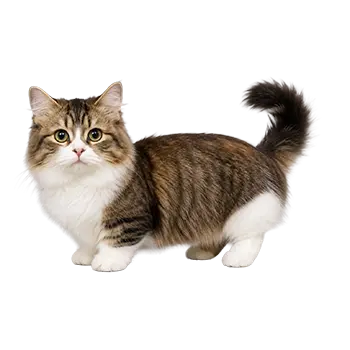
The Kinkalow is a small cat with a compact, muscular body set low to the ground on distinctively shortened legs. Adults typically weigh between three and seven pounds, with males tending toward the upper end of that range. Despite their diminutive stature, Kinkalows are solidly built rather than fragile, possessing a well-developed musculature that gives them surprising strength and agility relative to their size. The torso is moderately long and rounded, creating a low-slung silhouette that is the breed's most immediately recognizable feature alongside its curled ears.

The legs are the breed's most structurally notable characteristic, being significantly shorter than those of a standard domestic cat due to the achondroplasia gene inherited from the Munchkin parent. The front legs may be slightly shorter than the hind legs in some individuals, creating a subtle upward slope toward the hindquarters. Despite their reduced length, the legs are well-boned and straight, supporting the cat's weight without visible bowing or structural distortion. The paws are compact, neat, and round, proportionate to the body rather than oversized. Movement is fluid and surprisingly quick, with Kinkalows capable of darting, cornering, and playing with an agility that belies their low stance.

The second defining physical feature is the ears, which curl backward in a graceful arc inherited from the American Curl parent. The degree of curl varies among individuals, ranging from a gentle sweep to a more pronounced arc of up to 180 degrees. The ear cartilage is firm and should not be forcibly straightened, as the curl is maintained by the structural composition of the cartilage itself. Kittens are born with straight ears, and the curl begins to develop within the first few days of life, reaching its final degree by approximately sixteen weeks of age. The ears are set wide on the head and are medium-sized with rounded tips, often adorned with small tufts of fur at the tips that add to the breed's whimsical appearance.

The head is a rounded wedge shape with full cheeks, a moderately short muzzle, and a well-defined chin. The eyes are large, walnut-shaped, and widely set, giving the Kinkalow an open, alert expression that many owners describe as perpetually curious. Eye color spans the full range seen in domestic cats and is not linked to coat color or pattern. The nose is medium in length with a gentle curve in profile. The tail is long relative to the body, well-furred, and tapering to a rounded tip, serving as an expressive counterpoint to the breed's compact frame. The overall impression is of a small, well-proportioned cat whose two distinguishing features, the short legs and curled ears, create a unique and immediately recognizable appearance without compromising the cat's ability to move, play, and live a normal feline life.

The coat is typically short to medium in length, with a silky, plush texture that lies close to the body. Some individuals display a slightly denser undercoat depending on which parent breed's coat genetics are more dominant. All coat colors, patterns, and combinations are accepted in the breed, including solid, tabby, bicolor, colorpoint, tortoiseshell, and calico. This wide range of acceptable coat presentations reflects the breed's hybrid origins and the diversity present in both parent breeds.

Affectionate With Family
Kinkalows are deeply devoted companions that thrive on close contact with their human family members. They frequently seek out laps, nestle against their owners at bedtime, and follow household members from room to room throughout the day. Their small stature seems to amplify their desire for physical closeness, and they are known for head-butting, kneading, and purring loudly when receiving attention. This breed forms particularly strong bonds and can become distressed if left alone for extended periods.
Good With Young Children
Kinkalows are generally patient and tolerant with children, enjoying the active play that younger family members provide. Their playful energy matches well with kids who want an interactive pet. However, due to their small size and shortened legs, supervision is important to ensure children handle them gently and do not accidentally injure them during rougher play. Teaching children to sit on the floor when interacting with a Kinkalow reduces the risk of drops and makes the cat feel more secure.
Good With Other Cats
The sociable nature of the Kinkalow makes them generally agreeable housemates with other feline companions. They tend to approach new cats with curiosity rather than territorial aggression and often enjoy the company of another cat for grooming, playing, and sleeping together. Proper introductions are still recommended, but Kinkalows rarely exhibit dominant or confrontational behavior toward other cats, making multi-cat households a comfortable arrangement for this breed.
Shedding Level
Kinkalows are relatively low shedders compared to many other breeds, which is one of their practical advantages as indoor companions. Their silky, close-lying coat does not produce excessive loose hair under normal circumstances, though seasonal shedding in spring and autumn will increase the amount of hair they leave behind. Regular brushing during these transitional periods keeps shedding manageable and prevents hair from accumulating on furniture and clothing.
Coat Grooming Frequency
The Kinkalow's coat is relatively low-maintenance, requiring only weekly brushing to remove loose hair and distribute natural skin oils. Their silky texture resists matting far better than longer-coated breeds, so extensive detangling sessions are rarely necessary. A soft-bristle brush or rubber grooming mitt works well for their coat type. Bathing is seldom needed unless the cat gets into something messy, as their coat tends to stay clean with regular self-grooming.
Coat Type
Kinkalows can inherit a range of coat textures from their parent breeds, but most display a soft, silky coat that lies relatively close to the body. Some individuals lean toward a plush, slightly denser texture inherited from the American Curl side, while others have a sleeker coat reminiscent of the Munchkin. Both short and medium-length coats appear in the breed, and the texture is generally smooth to the touch with a subtle sheen when the cat is in good health.
Playfulness Level
Kinkalows are irrepressibly playful cats that retain a kitten-like enthusiasm for games and toys well into adulthood and even their senior years. They are known for inventing their own games, batting small objects across floors, and enthusiastically chasing feather wands and laser pointers. Their short legs do not diminish their speed or agility during play, and many owners are surprised by how quickly and nimbly a Kinkalow can dart after a toy. Interactive puzzle toys are particularly appreciated by this intellectually curious breed.
Adaptability Level
Despite their small stature, Kinkalows adapt well to a variety of living situations, from compact apartments to larger homes. They adjust to changes in routine, new environments, and travel with less stress than many breeds, partly due to their confident and curious disposition. Their size makes them well-suited to smaller living spaces where a larger, more active breed might feel confined. They do best in stable, loving environments but can handle reasonable changes without significant behavioral disruption.
Trainability Level
Kinkalows possess a sharp intelligence inherited from both parent breeds that makes them surprisingly trainable for a cat. They respond well to positive reinforcement and can learn to come when called, sit, and even perform simple tricks like high-fives or rolling over. Some owners have successfully clicker-trained their Kinkalows, taking advantage of the breed's food motivation and desire to interact with their humans. Consistency and patience yield the best results, as Kinkalows can occasionally display a streak of feline independence.
Vocalization Level
Kinkalows are moderately vocal cats that communicate with a repertoire of soft chirps, trills, and gentle meows rather than loud or demanding vocalizations. They tend to vocalize when greeting their owners, requesting meals, or inviting play, but they are not prone to excessive or persistent meowing. Their voices are typically soft and pleasant, fitting their overall gentle demeanor. Some individuals are chattier than others, often influenced by how much verbal interaction they receive from their owners.

Kinkalow History & Origins

The Kinkalow was intentionally created in the United States during the 1990s by breeder Terri Harris, who envisioned a cat that would combine the Munchkin's endearing short-legged build with the American Curl's distinctive backward-curling ears. Harris began her breeding program by crossing Munchkin cats with American Curls, selecting offspring that displayed both the shortened legs and the curled ears. This deliberate pairing of two breeds with dominant physical mutations was a novel approach in the cat fancy at the time, and the resulting kittens attracted immediate attention for their striking and unusual appearance.

The breed's development was not without controversy from its earliest days. The use of the Munchkin as a foundation breed meant that the Kinkalow inherited the ongoing debate surrounding achondroplasia in cats. Some veterinary professionals and cat welfare organizations have expressed concern that breeding for shortened limbs may predispose cats to skeletal problems, while proponents of the Munchkin and its derivatives argue that properly bred short-legged cats live healthy, active lives comparable to their standard-legged counterparts. This debate has followed the Kinkalow throughout its development and continues to influence its acceptance by major registries.

Terri Harris registered the breed with TICA's experimental program, establishing formal pedigree records and breeding guidelines that would allow the breed's development to be tracked and evaluated over time. The experimental designation was an important milestone, providing the breed with an official identity and a pathway toward potential future recognition. However, the breeding population has remained small, with only a handful of dedicated breeders working with Kinkalows at any given time. The limited gene pool has required careful management to maintain genetic diversity while consistently producing kittens that express both desired traits.

The genetics of the Kinkalow involve the interplay of two dominant mutations. The Munchkin gene responsible for shortened legs is an autosomal dominant trait, meaning only one copy is needed for expression, while embryos that inherit two copies are typically nonviable. The American Curl's ear mutation is similarly autosomal dominant with variable expressivity. Because both traits are dominant, first-generation crosses between Munchkins and American Curls can produce kittens displaying one trait, both traits, or neither. Only kittens expressing both the short legs and curled ears are considered Kinkalows for breeding and showing purposes, which means that a significant proportion of each litter may be classified as pet-quality cats without the full breed phenotype.

Despite its small breeding community, the Kinkalow has gradually gained visibility through social media and online cat communities, where photographs and videos of the breed's distinctive appearance and playful antics have attracted a growing number of admirers. The breed remains rare worldwide, with most breeders concentrated in North America. Prospective owners often face waiting lists and may need to travel significant distances to acquire a Kinkalow kitten from a reputable breeder. The breed's future trajectory will depend largely on whether the breeding community can expand the gene pool sufficiently to satisfy registry requirements for broader recognition while maintaining the health and type consistency that responsible breed development demands.

Kinkalow Temperament & Personality

The Kinkalow is widely described by breeders and owners as an outgoing, affectionate, and spirited companion whose personality seems deliberately engineered to maximize human engagement. These cats are extroverts by nature, approaching new people, situations, and experiences with confidence and curiosity rather than apprehension. They bond deeply with their primary caregivers but are generally welcoming to visitors and strangers, often approaching guests to investigate rather than retreating to a hiding spot. This sociability makes them poor candidates for households where they would spend long periods alone, as they genuinely crave interaction and can develop anxiety or behavioral problems without sufficient companionship.

Playfulness is a defining characteristic of the breed that persists well beyond kittenhood. Kinkalows maintain an energetic, mischievous approach to life that keeps their owners entertained and occasionally exasperated. They are inventive players who will turn almost any small household object into a toy, batting pens off desks, chasing crumpled paper, and pouncing on dangling strings with unbridled enthusiasm. Despite their short legs, they are remarkably quick and agile during play, darting across rooms and executing sharp turns with impressive coordination. Many owners compare their play style to that of a ferret, with rapid bursts of energy followed by brief periods of rest before the next round of activity begins.

Intelligence is another hallmark of the Kinkalow temperament, likely inherited from both parent breeds, which are themselves known for their cognitive abilities. Kinkalows are problem solvers who enjoy puzzle feeders, learn to open cabinets and doors, and can be trained to respond to verbal cues and perform simple tricks. Their intelligence, combined with their desire for interaction, makes them responsive to positive reinforcement training methods. Some owners have successfully taught their Kinkalows to walk on a leash, play fetch, and respond to their names, activities that further strengthen the bond between cat and owner.

Despite their energetic nature, Kinkalows have a well-developed affectionate side that emerges during quieter moments. They are dedicated lap cats who will curl up against their owners at every opportunity, purring contentedly for extended periods. Many Kinkalows develop a particular attachment to one household member while remaining friendly with everyone, and they often position themselves wherever their favorite person is, whether that means sitting on a desk during work hours, perching on a bathroom counter during morning routines, or burrowing under covers at bedtime. This combination of high energy and deep affection creates a cat that is simultaneously entertaining and emotionally rewarding to live with.

The breed's temperament also includes a notable degree of adaptability and resilience. Kinkalows tend to handle changes in routine, household moves, and the introduction of new family members or pets with relative equanimity. Their confident disposition means they are less prone to stress-related behaviors like inappropriate elimination or excessive grooming than more anxious breeds. This adaptability, paired with their small size and moderate exercise needs, makes them well-suited to a variety of living situations, from studio apartments to busy family homes.

Care Requirements

Caring for a Kinkalow involves attending to the same fundamental needs as any domestic cat while paying special attention to the breed-specific considerations that arise from their unique physical structure. Environmental enrichment is essential for this intelligent, active breed. Provide a variety of interactive toys, puzzle feeders, and rotating play options to keep their sharp minds engaged. Cat trees and climbing structures should be selected with the Kinkalow's shorter legs in mind; ramps, low-rise platforms, and wide steps are preferable to tall towers that require large vertical leaps, though many Kinkalows are surprisingly capable jumpers despite their leg length.

The breed's social nature means that companionship is a non-negotiable element of good care. Kinkalows should not be left alone for extended periods on a regular basis. If household members work full-time outside the home, a second pet, whether another cat, a cat-friendly dog, or another compatible companion, can help prevent the loneliness and boredom that may lead to destructive behavior or depression. When the family is home, active engagement through play sessions of at least fifteen to twenty minutes twice daily helps burn the Kinkalow's considerable energy and satisfies their need for interactive stimulation.

Litter box placement deserves consideration for this low-to-the-ground breed. Choose boxes with low entry points or cut an access notch in the side of a standard box to make entry comfortable for their shortened legs. The box itself should be large enough for the cat to turn around comfortably, and a fine-grained, clumping litter is generally preferred. Scoop daily and perform a complete litter change weekly to maintain the hygiene standards that most cats require for consistent box use.

Indoor living is strongly recommended for Kinkalows. Their small size, distinctive appearance, and reduced ability to flee from predators at full speed make them vulnerable to outdoor hazards that a larger, standard-legged cat might navigate more successfully. A secure outdoor enclosure or catio provides the environmental stimulation of outdoor access without the associated risks. Window perches positioned at accessible heights give indoor Kinkalows a view of the outside world, which satisfies their curiosity and provides visual stimulation throughout the day.

Temperature regulation is another care consideration. Small-bodied cats have a higher surface-area-to-volume ratio, which means they lose body heat more quickly than larger breeds. Ensure your Kinkalow has access to warm resting spots, particularly during colder months, and avoid placing their bed near drafts or uninsulated windows. Heated pet beds or self-warming mats can provide additional comfort for a breed that tends to seek out the warmest spot in any room.

Feeding & Nutrition

Nutritional management is particularly important for the Kinkalow due to the direct relationship between body weight and joint health in dwarf breeds. A high-quality, protein-rich diet formulated for small or indoor cats provides the appropriate caloric density and nutrient balance for this breed's metabolism. Look for foods where a named animal protein is the first ingredient, and avoid products that rely heavily on grain fillers or by-products as primary protein sources. Both wet and dry food formats can be appropriate, and many owners find that a combination of the two provides variety while ensuring adequate hydration.

Portion control requires careful attention because the Kinkalow's small frame means that even minor caloric excess accumulates quickly as body fat. Follow the feeding guidelines on your chosen food as a starting point, but adjust based on your individual cat's body condition, activity level, and metabolic rate. Most adult Kinkalows do well on measured meals served two to three times daily rather than free-feeding, which makes it easier to monitor intake and prevents the gradual weight gain that ad libitum access to food can cause. Your veterinarian can help you calculate the appropriate daily caloric target based on your cat's current weight and ideal body condition.

Kittens and growing Kinkalows have different nutritional requirements than adults, needing higher caloric density, increased protein for muscle development, and specific mineral ratios to support proper skeletal growth. A kitten formula specifically designed for the first year of life provides these elevated nutrient levels. The transition from kitten to adult food should occur gradually around twelve months of age, with the new food mixed in increasing proportions over seven to ten days to prevent digestive upset.

Fresh water should be available at all times, and many Kinkalows prefer running water from a pet fountain over a still bowl. Adequate hydration supports kidney function, urinary tract health, and overall metabolic processes. Cats that eat primarily dry food require particular attention to water intake, as kibble contains significantly less moisture than wet food. Monitoring urine output and concentration through regular litter box observation provides a practical indicator of hydration status.

Treats and supplemental feeding should account for no more than ten percent of the Kinkalow's daily caloric intake. While treats serve valuable roles in training, bonding, and dental health, excessive treat consumption can unbalance the diet and contribute to weight gain. Avoid human food items that are toxic to cats, including onions, garlic, grapes, chocolate, and anything containing xylitol. If you choose to offer supplements such as omega fatty acids for coat health or joint-support formulas, consult your veterinarian first to ensure they are appropriate and will not interfere with the nutritional balance of the primary diet.

Kinkalow Health & Lifespan

The Kinkalow has an expected lifespan of twelve to fifteen years when provided with appropriate veterinary care, nutrition, and living conditions. As a hybrid breed carrying two dominant physical mutations, the Kinkalow's health profile is shaped by the genetic contributions of both parent breeds as well as the specific implications of the dwarfism and curled-ear genes. Understanding these breed-specific health considerations is essential for owners and breeders alike, as proactive management and early intervention can significantly influence the quality and length of a Kinkalow's life.

The achondroplasia gene responsible for the Kinkalow's shortened legs affects the development of long bones throughout the body, and while this is primarily an aesthetic trait, it carries potential orthopedic implications. The altered biomechanics of shortened limbs change the distribution of forces across joints during movement, which may increase susceptibility to osteoarthritis over time. Maintaining a lean body condition is the single most impactful preventive measure owners can take, as every additional ounce of body weight amplifies the mechanical stress on already-compromised joint structures. Regular veterinary assessments of gait and joint mobility help detect early signs of discomfort before they progress to chronic pain.

Spinal health requires monitoring in dwarf cat breeds because the gene that shortens the limbs can occasionally affect vertebral development as well. Lordosis, an excessive inward curvature of the lumbar spine, and pectus excavatum, a sunken chest deformity, occur at elevated rates in breeds carrying the Munchkin gene. These conditions range from clinically insignificant to potentially life-threatening depending on severity, and responsible breeders screen their breeding stock to minimize the incidence of serious spinal and thoracic deformities in their litters.

The curled ear cartilage inherited from the American Curl parent is generally a benign trait that does not cause pain or discomfort. However, the structural difference in the ear cartilage can slightly alter the ear canal architecture in some individuals, potentially increasing susceptibility to debris accumulation and secondary infections. Regular ear cleaning and inspection, performed gently to avoid damaging the firm cartilage, constitute simple but effective preventive care for this breed-specific concern.

Beyond the breed-specific conditions, Kinkalows are subject to the same general feline health concerns as any domestic cat, including hypertrophic cardiomyopathy, dental disease, kidney disease, and common viral infections. A comprehensive preventive health program that includes regular veterinary examinations, up-to-date vaccinations, dental care, and parasite prevention provides the foundation for a long and healthy life. Because the breed is rare and the gene pool is limited, genetic diversity is an ongoing concern that responsible breeders must manage carefully to avoid the concentration of deleterious recessive traits that can emerge in small populations.

Common Health Issues

  • Lordosis - This condition involves an excessive inward curvature of the spine and can occur in dwarf cat breeds like the Kinkalow. The shortened limb bones associated with the Munchkin gene can occasionally affect spinal development, leading to compression of internal organs in severe cases. Responsible breeders screen for spinal abnormalities and avoid pairings that increase the risk of skeletal deformities.
  • Pectus excavatum - A congenital deformity in which the breastbone is sunken inward, pectus excavatum appears at higher rates in dwarf cat breeds. Mild cases may not require treatment, but severe presentations can compress the heart and lungs, causing breathing difficulties and exercise intolerance. Kittens should be evaluated for chest shape early in life so that intervention can be considered if necessary.
  • Osteoarthritis - The shortened leg structure of the Kinkalow places altered mechanical stress on joints, which may predispose them to early-onset arthritis compared to cats with standard leg length. Weight management is particularly important for this breed to reduce joint loading, and owners should watch for signs of stiffness, reluctance to jump, or changes in gait as the cat ages.
  • Ear canal issues related to curled cartilage - The distinctive curled ears inherited from the American Curl parent can create a slightly narrower ear canal in some individuals, potentially trapping debris and moisture more readily than in cats with standard ear anatomy. This can predispose Kinkalows to ear infections or wax buildup if regular cleaning is neglected. Gentle weekly ear inspections and careful cleaning with a veterinarian-approved solution help prevent problems.
  • Hypertrophic cardiomyopathy - HCM is the most prevalent form of heart disease in domestic cats and can affect Kinkalows as it does any breed. This condition causes progressive thickening of the heart muscle walls, reducing the chambers' ability to fill and pump blood efficiently. Regular cardiac screenings, including echocardiography for breeding cats, help detect the condition before clinical signs such as lethargy, rapid breathing, or collapse develop.
  • Dental disease - Small-statured cats like the Kinkalow can be prone to dental crowding due to their compact jaw structure, which may accelerate tartar accumulation and gingival inflammation. Without consistent dental care, periodontal disease can progress to tooth loss and systemic infection as oral bacteria enter the bloodstream. Regular veterinary dental assessments and at-home oral care routines are essential preventive measures.

Preventive Care & Health Monitoring

  • Regular veterinary examinations - Schedule wellness visits at least once a year for adult Kinkalows and twice yearly for seniors. These appointments should include a thorough physical assessment with particular attention to spinal alignment, joint mobility, chest conformation, and cardiac auscultation given the breed's predispositions. Early detection of skeletal or cardiac changes significantly improves management outcomes.
  • Weight management - Maintaining a lean body condition is critically important for the Kinkalow due to the additional stress that excess weight places on their shortened limbs and joints. Monitor body condition score regularly, ensuring ribs are palpable without a thick fat layer, and adjust caloric intake based on activity level, age, and any changes in metabolism. Even a modest amount of excess weight can accelerate joint degeneration in dwarf breeds.
  • Ear care routine - Inspect the Kinkalow's curled ears weekly for signs of redness, odor, or excessive wax accumulation. Clean gently with a veterinarian-recommended ear solution and a soft cotton ball, taking care not to insert anything into the ear canal. The cartilage of curled ears is firm and should never be straightened or manipulated during cleaning, as this can cause permanent damage to the ear structure.
  • Dental hygiene program - Establish a dental care routine that includes brushing with a feline-specific toothpaste several times per week, supplemented with dental treats or water additives approved by your veterinarian. Professional dental cleanings under anesthesia may be recommended periodically to address tartar buildup below the gumline that home care cannot reach.
  • Core vaccinations and parasite prevention - Keep vaccinations current according to your veterinarian's recommended schedule, typically including core vaccines for feline herpesvirus, calicivirus, panleukopenia, and rabies. Maintain year-round flea, tick, and intestinal parasite prevention even for indoor-only Kinkalows, as parasites can be introduced by other household pets or on human clothing and footwear.

Coat Color & Grooming

The Kinkalow is accepted in all coat colors, patterns, and combinations, reflecting the broad genetic diversity inherited from both the Munchkin and American Curl parent breeds. Solid colors including black, white, cream, blue, red, and chocolate are all represented, as are tabby patterns in classic, mackerel, spotted, and ticked configurations. Bicolor, tortoiseshell, calico, colorpoint, and mink patterns also appear in the breed, giving prospective owners an unusually wide range of aesthetic options. This diversity of coat presentation is one of the breed's appealing characteristics for those who value visual variety.

The coat itself is typically short to medium in length with a silky, smooth texture that has a natural sheen when the cat is in good health. Some individuals display a slightly plush undercoat that adds body and softness to the overall feel, while others have a sleeker, closer-lying coat. The texture is generally fine and resistant to matting, which significantly reduces the grooming demands placed on owners compared to longer-coated breeds. Regardless of length and texture, the coat should appear clean, glossy, and well-conditioned as an indicator of good nutritional status and overall health.

Grooming the Kinkalow is a straightforward process that most owners find pleasant rather than burdensome. A weekly brushing session with a soft-bristle brush or rubber grooming mitt removes loose hair, distributes skin oils, and provides an opportunity to check for skin abnormalities, parasites, or developing mats. During spring and autumn shedding seasons, increasing brushing frequency to two or three times per week helps manage the elevated hair loss and keeps the coat looking its best. Bathing is rarely necessary and should be reserved for situations where the cat has gotten genuinely dirty, as over-bathing strips the coat of its natural protective oils.

Nail trimming should be performed every two to three weeks, keeping the claws blunt enough to prevent snagging on fabrics and scratching surfaces. Because Kinkalows are indoor cats, their claws do not experience the natural wear that outdoor activity provides. Provide appropriate scratching surfaces, both horizontal and vertical, to satisfy the natural urge to scratch and help maintain claw health between trimmings. Eye care involves wiping away any discharge from the inner corners with a damp, soft cloth, using a separate area of the cloth for each eye to prevent cross-contamination.

The curled ears require the specific attention mentioned in the preventive care section, but it bears repeating in the grooming context: never attempt to straighten or uncurl the ears during cleaning, and use only gentle, veterinarian-approved cleaning solutions. The cartilage that maintains the curl is rigid and can be permanently damaged by rough handling. A cotton ball dampened with ear cleaning solution, used to wipe the visible portions of the ear without probing into the canal, is the safest approach. Establishing grooming routines early in life, ideally during kittenhood, helps the Kinkalow accept handling and makes the process smoother for both cat and owner throughout the cat's lifetime.

Children & Other Pets

The Kinkalow's sociable, playful, and affectionate temperament makes it a natural fit for households with children and other pets, though the breed's small size introduces some practical considerations that families should address proactively. Children who are old enough to understand and practice gentle handling will find in the Kinkalow an enthusiastic and tireless play companion. The breed's high energy level and love of interactive games align well with the active play style of school-age children, and the mutual engagement benefits both the child, who learns empathy and responsibility, and the cat, who receives the stimulation and companionship it craves.

Younger children require supervision during interactions with any cat, and this is especially true with the Kinkalow due to its small stature and shortened legs. A rough grab, an accidental drop from standing height, or well-intentioned but overly enthusiastic squeezing can injure a small cat more seriously than a larger, sturdier breed. Teaching children to sit on the floor when playing with or holding the Kinkalow, to support the cat's body fully when lifting, and to recognize when the cat has had enough interaction are essential safety practices. The Kinkalow's generally tolerant nature should not be interpreted as an unlimited willingness to endure rough handling, and even the most patient cat will eventually respond defensively if its boundaries are consistently overridden.

Multi-cat households are generally well-suited to the Kinkalow's social nature. They tend to integrate smoothly with existing feline residents when introductions are conducted gradually, following the standard protocol of scent exchange, visual contact through a barrier, and supervised face-to-face meetings over a period of days to weeks. Kinkalows rarely display territorial aggression and often seek out companionship with other cats for mutual grooming, play, and sleeping. Their playful energy can be a positive influence on more sedentary housemates, encouraging activity and engagement. In some cases, a resident cat may initially be confused by the Kinkalow's unusual proportions, but most cats adjust quickly once they recognize a fellow feline.

Cat-friendly dogs can also make excellent companions for Kinkalows, provided the dog has been properly socialized with cats and does not exhibit a strong prey drive. The Kinkalow's confident, curious disposition means it is less likely to trigger a chase response by fleeing in panic than a more timid breed might. Gradual introductions with controlled initial interactions allow both animals to establish comfortable boundaries. Small to medium dogs with calm temperaments tend to make the best matches, though individual personality matters more than breed or size in determining compatibility.

Smaller household pets such as birds, hamsters, rabbits, and fish require appropriate separation from the Kinkalow, as the breed retains normal feline hunting instincts despite its diminutive size and friendly demeanor. Secure enclosures and supervised interactions are necessary to prevent the Kinkalow's natural curiosity and prey drive from putting smaller animals at risk. The breed's intelligence and problem-solving ability mean that cage latches and terrarium lids should be genuinely secure, as a determined Kinkalow may figure out how to open simple closures over time.