Senegal Parrot Species Guide - Furry Critter Network

Senegal Parrot

Quick Facts

🔬 Scientific Name
Poicephalus senegalus
📊 Care Level
Moderate
😊 Temperament
Playful, Affectionate, Independent
📏 Adult Size
9-10 inches
⏱️ Lifespan
25-30 years
🔊 Noise Level
Low to Moderate
🗣️ Talking Ability
Moderate to Good
🍽️ Diet Type
Pellet-based
🌍 Origin
West Africa
🏠 Min Cage Size
20x20x28 inches
📐 Size
Medium

Senegal Parrot - Names & Recognition

The Senegal Parrot, scientifically designated as Poicephalus senegalus, derives its common name from Senegal, the West African country where the species was first scientifically described by European naturalists, though its range extends far beyond Senegal's borders. The scientific name places it in the Poicephalus genus, derived from Greek roots meaning "much" (poiki) and "head" (kephale), possibly referring to the relatively large heads characteristic of this genus, while "senegalus" indicates the geographic type locality.

This species is known by several alternate names across different regions and among aviculturists. Some references use "Senegal Parrot" exclusively while others say "Senegal" as shorthand. In West Africa, various local names exist in indigenous languages including Wolof, Fulani, and Hausa. The species is sometimes informally called the "Yellow-Bellied Senegal" or "Orange-Bellied Senegal" depending on the subspecies' belly coloration, though these terms aren't official designations.

Three subspecies of Poicephalus senegalus are recognized based on geographic distribution and belly coloration: P. s. senegalus (the nominate subspecies) from southern Mauritania to Guinea with deep orange belly, P. s. versteri from Ivory Coast to western Nigeria with deeper red-orange belly, and P. s. mesotypus from eastern and northeastern Nigeria to western Chad with yellow belly. These subspecies show subtle differences primarily in the intensity and hue of the belly coloration, ranging from bright yellow through orange to deep red-orange. The green body coloration and gray head remain consistent across all subspecies.

The Senegal Parrot belongs to the Poicephalus genus, which includes nine recognized species all native to Africa: Senegal Parrot, Meyer's Parrot, Red-Bellied Parrot, Brown-Headed Parrot, Jardine's Parrot, Cape Parrot, Ruppell's Parrot, Niam-Niam Parrot, and Yellow-Fronted Parrot. All Poicephalus species share characteristic traits including stocky builds, relatively large heads, short tails, generally subdued coloration with localized bright patches, quiet vocalizations compared to other parrots, and tendency toward one-person bonding. The genus name "Poicephalus" unites these African parrots as a distinct group separate from other parrot genera.

Color mutations in captive-bred Senegal Parrots are rare but do exist in limited numbers. These include lutino (yellow birds with red eyes lacking melanin), pied (irregular patches of normal and yellow coloration), and various shades of the natural coloration. However, mutations remain uncommon compared to heavily bred species like Budgerigars or Cockatiels, with the vast majority of Senegal Parrots displaying natural wild-type coloration. Most breeders and enthusiasts prefer the natural appearance that gives the species its distinctive beauty.

Senegal Parrot Physical Description

The Senegal Parrot is a compact, stocky small to medium-sized parrot measuring 9 to 10 inches in total length and weighing between 120 to 170 grams. Despite their relatively small size, they possess a robust, solid build with broad chests, large heads proportionate to their bodies, and the characteristic short, square tail typical of all Poicephalus parrots. This sturdy construction creates an impression of a confident, grounded bird rather than a delicate one.

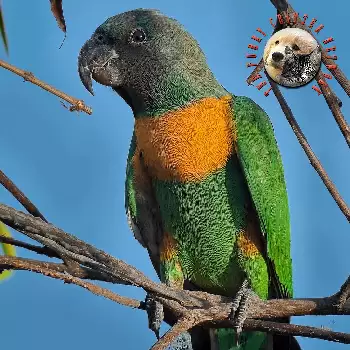
The most distinctive feature is the striking three-color pattern creating a "vest" appearance. The head is entirely charcoal gray to slate gray, covering from the crown down through the face, cheeks, and throat. This solid gray hood creates a dramatic contrast with the body. The back, wings, and upper breast are bright emerald green to olive green, creating the dominant body color. The lower breast and belly display a vibrant V-shaped "vest" of yellow, orange, or red-orange depending on the subspecies, with the color extending down the thighs and undertail coverts.

The wings show green flight feathers with darker edges, and the underwing coverts flash bright yellow or orange visible during flight. The tail is short and square, colored dark green above with yellowish undertones. The rump shows a distinctive bright yellow-green or lime green patch creating another identifying characteristic visible when the bird is perched. This bright rump patch contrasts with the darker green back and wings.

The beak is substantial and powerful for the bird's size, colored dark charcoal gray to black. The cere (fleshy area at beak base) is dark gray. The eyes are bright yellow to orange, creating a striking contrast against the gray head and giving Senegal Parrots their characteristic intense, intelligent expression. The bare eye rings are minimal, with the colorful iris being the prominent feature. The legs and feet are gray and robust, well-adapted for strong gripping and climbing.

Sexual dimorphism is minimal to absent in Senegal Parrots, making reliable visual sexing virtually impossible. Males and females appear identical in plumage, size, and coloration, requiring DNA testing or surgical sexing for definitive gender determination. Some experts suggest males may have slightly larger heads and beaks on average, and females may have slightly smaller, more delicate builds, but individual variation makes these unreliable indicators. Behavioral differences during breeding season may provide clues, but physical appearance alone cannot determine sex.

Juvenile Senegal Parrots closely resemble adults but display slightly duller overall coloration. Young birds have darker eyes that gradually lighten to the bright yellow-orange of adults over the first year. The gray head may show a brownish tinge in juveniles that becomes clearer gray with maturity. The green body coloration may appear slightly less vibrant, and the belly vest may show less intense coloration. Juveniles have softer, looser feathering that tightens and becomes sleeker as they mature. Full adult coloration typically develops by 12-18 months of age.

The overall impression is of a compact, beautifully proportioned parrot with bold, clean color blocks creating striking visual appeal. The gray head, green body, and colorful belly vest create an elegant, sophisticated appearance different from the gaudy brightness of many parrot species, appealing to those who appreciate understated natural beauty with distinctive character.

Affection Level
Senegal Parrots are highly affectionate with their chosen person, forming intense bonds and seeking regular interaction. They enjoy cuddling, head scratches, and being near their favorite human. However, they can be one-person birds, sometimes showing less affection or even jealousy toward other family members or visitors.
Sociability
These parrots tend to bond very strongly with one person and may be standoffish or territorial toward others. While they can be socialized to accept multiple people with consistent effort, their tendency toward one-person bonding requires early and ongoing socialization. They typically prefer human companionship to other birds.
Vocalization
Senegal Parrots are relatively quiet compared to many parrot species, making them suitable for apartments. They produce soft whistles, chirps, and occasional squawks rather than loud screaming. Many develop good talking ability with clear pronunciation. Their moderate noise level is one of their most appealing characteristics for noise-conscious owners.
Intelligence
These parrots demonstrate high intelligence with excellent problem-solving abilities and quick learning. They can master complex tricks, understand routines, and manipulate puzzle toys effectively. Their intelligence requires substantial mental stimulation through training, foraging activities, and environmental enrichment to prevent boredom and behavioral issues.
Exercise Needs
Senegal Parrots have moderate to high exercise needs, requiring 2-3 hours of daily out-of-cage time for climbing, playing, and exploring. They're active birds that enjoy physical activity but are less hyperactive than some species. Regular exercise prevents obesity and behavioral problems while maintaining their physical and mental health.
Maintenance Level
These parrots are relatively low-maintenance compared to larger species. They produce moderate mess, require standard cage cleaning, and have straightforward dietary needs. Their smaller size makes cage maintenance easier than large parrots. However, their need for consistent socialization and mental stimulation adds to care requirements.
Trainability
Senegal Parrots are highly trainable, responding excellently to positive reinforcement methods. They can learn extensive vocabularies, complex tricks, and desired behaviors with consistency. Their intelligence and food motivation make training sessions productive and enjoyable. However, their independent streak requires patience and respect for their boundaries.
Independence
These parrots balance independence with social needs. They can entertain themselves with toys for periods and don't demand constant attention like some species. However, they still require daily quality interaction and shouldn't be left alone for extended periods. This moderate independence suits working owners who provide dedicated morning and evening time.

Natural Habitat & Range

The Senegal Parrot inhabits a broad range across West Africa, extending from southern Mauritania and Senegal eastward through Gambia, Guinea-Bissau, Guinea, Mali, Burkina Faso, Ivory Coast, Ghana, Togo, Benin, Nigeria, Cameroon, and into Chad. This extensive distribution covers the Sahel zone and Guinea savanna regions, representing one of the widest ranges of any Poicephalus species. The species occurs from sea level to approximately 1,000 meters elevation, though they're most common in lowland and foothill areas.

These parrots inhabit open woodland savanna, gallery forests along rivers, wooded grasslands, agricultural areas with scattered trees, and park-like landscapes with mixed trees and open ground. They show strong preference for areas with baobab trees, acacia woodlands, and oil palm groves. Unlike rainforest specialists, Senegal Parrots thrive in drier, more open habitats with distinct wet and dry seasons. They readily adapt to human-modified landscapes including cultivated areas, rural villages with shade trees, and agricultural zones with remnant woodland, demonstrating considerable ecological flexibility.

The climate in their natural habitat is characterized by distinct wet and dry seasons, with temperatures typically ranging from 70-95°F (21-35°C) and lower humidity than rainforest regions. The dry season can be quite severe with minimal rainfall for several months, while the wet season brings substantial precipitation. This seasonal variation influences breeding cycles, food availability, and movement patterns. Senegal Parrots have adapted to these fluctuating conditions, demonstrating resilience to seasonal changes.

In their natural environment, Senegal Parrots are typically encountered in pairs during breeding season or small flocks of 10-30 birds outside breeding periods. They form larger aggregations, sometimes exceeding 100 individuals, at abundant food sources like fruiting trees or grain fields. These parrots are diurnal with peak activity during cooler morning and late afternoon hours. They're relatively inconspicuous despite being fairly common, often detected by their distinctive whistles and calls rather than visual sightings in dense foliage.

Daily activity patterns include departing communal roosting sites at dawn, flying to feeding areas within their home range which may extend several kilometers. They feed actively during morning hours, taking advantage of cooler temperatures. Midday heat sees birds resting in shaded tree canopies, preening and socializing quietly. Late afternoon brings renewed feeding activity before evening return flights to established roosting sites in tall trees. Flight is direct and swift with rapid wingbeats, typically below canopy level or just above vegetation.

The natural diet consists primarily of fruits, seeds, nuts, berries, flowers, leaf buds, and agricultural crops. They show particular fondness for figs, various palm fruits, acacia seeds, baobab fruits, millet, sorghum, corn, and peanuts. Their feeding on agricultural crops sometimes brings them into conflict with farmers, though damage is generally localized. They feed in tree canopies and occasionally descend to ground level for fallen fruits or crops. Their strong beaks allow them to crack hard seeds and nuts that smaller birds cannot access.

Breeding season varies by region but generally coincides with the end of the dry season and beginning of rains when food becomes abundant, typically from February to April in most areas. Pairs nest in natural tree cavities, often in baobabs, acacias, or dead trees at moderate heights. The female typically lays 3-4 white eggs which she incubates for approximately 27-28 days while the male provides food and guards the nest. Both parents feed nestlings, which fledge at about 9-10 weeks but remain with parents for several additional weeks learning foraging skills and social behaviors.

Conservation status for Senegal Parrots is currently listed as Least Concern by the IUCN, as they maintain stable populations across their extensive range and show good adaptability to modified habitats. However, they face pressures from habitat loss through deforestation and agricultural conversion, though their tolerance of modified landscapes provides some resilience. Trapping for the international pet trade, while regulated by CITES Appendix II, historically impacted local populations in accessible areas. Many countries now prohibit wild capture, and captive breeding supplies most of the pet trade. Regional populations in heavily developed or trapped areas have declined, but overall the species remains relatively common and widespread. Their adaptability and extensive range provide good conservation prospects, though continued monitoring and habitat protection remain important.

Temperament

Senegal Parrots possess charming, complex personalities combining intelligence, playfulness, affection, and independence in ways that make them both rewarding and occasionally challenging companions. Their temperament is best characterized as confident, personable, intelligent, moderately quiet, and intensely bonding with their chosen person, though they can be reserved or territorial with others. Understanding their tendency toward one-person bonding and need for consistent socialization is crucial for developing successful relationships with these charismatic African parrots.

These parrots form exceptionally strong bonds with their primary caretaker, often choosing one person as their special favorite and showing intense loyalty and affection to that individual. This bonding is deeper and more exclusive than many parrot species, which can be wonderful for the chosen person but challenging for other family members. Hand-raised Senegal Parrots that receive extensive early socialization with multiple people are more likely to accept various family members, though they typically still show clear preferences. The chosen person receives enthusiastic greetings, requests for attention, cuddling, and devoted companionship, while others may be tolerated or actively discouraged from interaction.

Affection displays in Senegal Parrots are endearing and varied. They actively seek head scratches, enjoy cuddling in hands or against necks, preen their favorite person's hair and eyebrows, make soft chirping sounds during bonding, and follow their person from room to room. They often sit contentedly on shoulders for extended periods, observing activities and enjoying proximity. Some individuals love being held on their backs like babies, a position of complete trust. However, this intense bonding can lead to jealousy when their person gives attention to others, potentially resulting in defensive or territorial behaviors.

Intelligence is a hallmark of Senegal Parrots, evident in their problem-solving abilities, quick learning, and capacity for extensive training. They observe household routines carefully, anticipate regular events, and understand cause-and-effect relationships. This intelligence requires substantial mental stimulation through varied toys, foraging activities, training sessions, and environmental enrichment. Bored Senegal Parrots can become destructive, nippy, or develop behavioral issues. Their cleverness means they quickly learn both desired and undesired behaviors, making consistency in training essential.

Vocally, Senegal Parrots are relatively quiet compared to many parrot species, making them suitable for apartments and noise-sensitive environments. Their natural vocalizations include soft whistles, chirps, chattering, and occasional squawks, but they lack the loud screaming typical of conures, cockatoos, or Amazons. Morning and evening calling is moderate and manageable. Their talking ability is good to excellent for their size, with many individuals developing clear vocabularies of 20-50 words or more. They often mimic household sounds, whistles, and phone ringtones with remarkable accuracy. Males may show slightly stronger talking tendencies than females, though individual variation is significant.

Playfulness in Senegal Parrots is delightful and entertaining. They enjoy interactive play with their owners, manipulating toys, solving puzzles, and engaging in gentle roughhousing with trusted people. They appreciate shreddable toys, foraging activities, bells, and items they can throw or manipulate. Their play style is energetic but not hyperactive, allowing for manageable interaction sessions. They often display amusing behaviors like hanging upside down, wrestling with toys, or performing acrobatic tricks to entertain themselves and their owners.

Socially with other birds, Senegal Parrots are typically territorial and may not accept avian companions well. Many prefer being the only bird and may show aggression toward other birds, particularly those invading their perceived territory. Some individuals tolerate other birds when housed separately, while others remain intolerant regardless. Their strong preference for human companionship often exceeds interest in other birds. Introducing a second bird rarely reduces their bond with their person and may create stress or jealousy.

Hormonal behavior can be challenging in Senegal Parrots, particularly during breeding season (typically spring). Hormonal individuals may become more territorial, nippy, or protective of their cage or favorite person. They may display breeding behaviors like regurgitating for their favorite person or toys, excessive chewing, and increased vocalization. Females may become broody and seek nesting sites. Males may become more aggressive toward perceived rivals. Understanding these seasonal changes helps owners manage expectations and adjust handling during hormonal periods.

One significant behavioral consideration is nippiness. Senegal Parrots can use their beaks during play, communication, or when hormonal, and their strong beaks can deliver painful bites. Proper bite pressure training from a young age, understanding body language, respecting boundaries, and avoiding reinforcing biting behaviors are essential. They use beaks for exploring and testing, which differs from aggressive biting, but owners must learn to distinguish between normal beak use and problematic behavior.

With strangers and visitors, Senegal Parrots are often reserved, cautious, or territorial. They may not accept handling from unfamiliar people and can be defensive of their cage, person, or territory. Socialization from an early age helps them tolerate visitors, though they rarely show strangers the affection they reserve for their special person. Some individuals are more accepting than others, with personality varying significantly between birds.

Overall, Senegal Parrots offer exceptional companionship to dedicated owners willing to invest time in training, socialization, and daily interaction. Their intelligence, talking ability, moderate size, relatively quiet nature, and devoted bonding make them excellent companions. However, their tendency toward one-person bonding, potential nippiness, and need for consistent mental stimulation mean they're best suited for experienced bird owners or those willing to learn and commit to their specific needs. They thrive with owners who appreciate their complex personalities and can provide the structure, enrichment, and attention these charismatic African parrots require.

Care Requirements

Senegal Parrots require appropriately sized housing accommodating their small to medium size and moderate to high activity level. The minimum cage dimensions should be 20 inches wide x 20 inches deep x 28 inches tall, though larger cages are always preferable for these active, intelligent birds. Many experienced keepers recommend cages measuring at least 24x24x30 inches or larger, particularly for birds spending significant time caged during work hours. Horizontal space for climbing and moving is more important than excessive height. Bar spacing should be ½ to ¾ inch to prevent escape or head entrapment while allowing comfortable climbing.

Cage construction materials must be durable and non-toxic. Powder-coated steel or stainless steel cages are recommended, as Senegal Parrots possess powerful beaks for their size capable of damaging inferior materials over time. Avoid galvanized cages unless properly sealed and powder-coated, as zinc toxicity can result from birds chewing untreated galvanized surfaces. The cage should feature horizontal bars on at least two sides to facilitate climbing, which Senegal Parrots enjoy extensively. Ensure the cage has a secure, reliable locking mechanism, as these intelligent birds can learn to open simple latches surprisingly quickly.

Cage placement significantly affects your bird's psychological wellbeing and behavior. Position the cage in a room where family activities occur so your Senegal feels included in daily household life, as they're social birds that enjoy observing family routines. Avoid extremely high-traffic areas where constant movement might cause stress or prevent adequate rest. Never place cages in kitchens where cooking fumes, particularly from non-stick cookware, can prove rapidly fatal. Avoid drafty locations near windows, doors, air conditioning vents, or heating registers. Position cages at approximately eye level or slightly below, as excessive height can encourage territorial aggression in some individuals. Ensure the location receives natural daylight without constant direct sunlight.

Perch variety is essential for foot health, exercise, and preventing arthritis and pressure sores. Provide natural wood branches of varying diameters (½ inch to 1 inch thick) to exercise foot muscles and prevent bumblefoot. Excellent wood choices include manzanita, java wood, and safe fruit tree branches like apple, pear, or willow. Include different textures such as rope perches (monitoring for fraying), calcium or pumice perches for natural beak maintenance, and varying heights encouraging climbing throughout the cage. Avoid sandpaper-covered perches which cause painful foot abrasions. Replace perches as they become heavily soiled or damaged. Position perches strategically so droppings don't contaminate food and water dishes.

Toy selection and rotation are crucial for these highly intelligent birds. Senegal Parrots need abundant varied toys for chewing, foraging, climbing, and manipulating to prevent boredom and behavioral issues. Provide shreddable toys (paper, palm leaves, balsa wood, cardboard), foraging toys requiring problem-solving, acrylic toys for manipulation, rope toys for climbing, bells, and puzzle toys. Ensure all toys are appropriately sized for small to medium parrots without small detachable parts risking ingestion. Rotate toys weekly to maintain novelty and interest. Senegal Parrots can become obsessed with favorite toys or defensive about them, so monitor for over-attachment. Foraging toys provide excellent mental stimulation and should be a daily component of enrichment.

Out-of-cage time is essential for these active, intelligent birds. Senegal Parrots require minimum 2-3 hours daily of supervised exercise time in a bird-proofed area for flying, climbing, exploring, and interacting with their person. They're active birds that benefit from physical activity and mental stimulation during free time. Create a designated play gym or play area featuring perches at various heights, ladders, swings, and toys where your Senegal can exercise, explore, and spend quality time with you. Supervision remains essential as curious, intelligent birds can encounter dangerous situations or get into mischief quickly.

Bird-proofing involves covering windows to prevent collision injuries, removing or securing toxic plants (many common houseplants are poisonous including pothos, philodendron, and dieffenbachia), covering or removing electrical cords which Senegals may chew, eliminating standing water sources, ensuring ceiling fans are off during free-flight time, and removing potential hazards including candles, hot surfaces, small objects, and unsecured access to other pets. Senegal Parrots are curious and fearless, making thorough proofing essential.

Safety hazards to strictly avoid include toxic fumes from non-stick cookware (Teflon/PTFE) which cause rapid respiratory failure and death, air fresheners, scented candles, cleaning products, aerosol sprays, and smoke. Other household pets, particularly cats and dogs, pose serious danger even during seemingly friendly interactions. Toxic foods including avocado, chocolate, caffeine, alcohol, and excessive salt must be kept away. Heavy metals from galvanized wire, lead weights, or old paint can cause severe poisoning. Small objects risking ingestion such as jewelry, coins, or small toy parts require removal.

Environmental enrichment extends beyond toys and out-of-cage time. Provide daily foraging opportunities by hiding food in paper bags, wrapping treats in paper, or using commercial foraging toys. Play music or nature sounds when you're away. Offer regular bathing opportunities through gentle misting, shallow dishes, or shower perches, as Senegal Parrots enjoy bathing. Some individuals love showering with their owners (with appropriate precautions). Provide fresh branches with leaves periodically for exploration and chewing. Training sessions provide mental stimulation and strengthen bonds.

Temperature and humidity needs are moderate. Senegal Parrots tolerate household temperatures between 65-80°F comfortably, though they prefer slightly warmer conditions reflecting their West African origins. Avoid sudden temperature changes, drafts, and extreme heat or cold. Maintain humidity levels between 40-60% if possible, though they adapt to typical household humidity with adequate bathing opportunities. Ensure good air circulation without direct drafts.

Lighting requirements include 10-12 hours of uninterrupted sleep in a quiet, darkened area for proper rest and hormonal regulation. Cover the cage at night if necessary to block light and reduce noise disturbances. Full-spectrum UV lighting or supervised outdoor time in appropriate weather (in a secure cage or on a harness) supports vitamin D synthesis, calcium metabolism, and overall wellbeing. Establish consistent daily routines for waking, feeding, play time, and sleep, providing security and structure. Senegal Parrots thrive on predictable schedules and may become stressed or develop behavioral issues with chaotic, unpredictable routines.

Feeding & Nutrition

Proper nutrition is absolutely fundamental to Senegal Parrot health, longevity, feather quality, immune function, and overall vitality throughout their long lives. In their natural West African savanna habitat, wild Senegal Parrots consume a diverse diet consisting of fruits, seeds, nuts, berries, flowers, palm fruits, and agricultural grains, constantly foraging throughout their territory for varied food sources. Captive diets should replicate this nutritional diversity while providing complete, scientifically balanced nutrition that prevents the deficiencies commonly seen in improperly fed birds.

The foundation of a healthy Senegal Parrot diet should be high-quality pellets specifically formulated for small to medium parrots, comprising 60-70% of total daily intake. Premium pellet brands provide scientifically balanced macronutrients, essential vitamins, minerals, and amino acids in appropriate ratios, preventing the selective eating and nutritional imbalances inherent in seed-based diets. Pellets eliminate deficiencies occurring when birds pick out favorite seeds while ignoring less palatable but nutritionally essential items. When converting seed-eating birds to pellets, introduce them gradually by mixing increasing amounts with decreasing seed amounts over several weeks while carefully monitoring weight to ensure adequate consumption.

The seeds versus pellets debate continues in aviculture, but avian veterinarians and nutritionists overwhelmingly recommend pellet-based diets for optimal health. Seeds are excessively high in fat and critically deficient in numerous essential nutrients, particularly vitamin A, calcium, certain amino acids, and various trace minerals. An all-seed diet inevitably leads to severe malnutrition, obesity, fatty liver disease, poor feather quality, and significantly shortened lifespan. However, seeds can comprise 5-10% of the diet as treats or training rewards. Offer limited amounts of canary seed, millet, safflower seeds, and very limited sunflower seeds. Avoid seed mixes containing dried corn which can harbor dangerous aflatoxin-producing molds.

Fresh vegetables should comprise 20-30% of the daily diet, offered fresh daily in abundant variety. Excellent vegetable choices include dark leafy greens (kale, collard greens, mustard greens, dandelion greens, Swiss chard), carrots, sweet potato, butternut squash, bell peppers in all colors, broccoli, cauliflower, snap peas, green beans, and Brussels sprouts. Chop vegetables into appropriate sizes or offer whole for foraging enrichment. Rotate vegetables regularly providing nutritional variety and preventing dietary boredom. Lightly steam hard vegetables like sweet potato and squash to improve digestibility, though many can be offered raw.

Fruits should comprise 5-10% of the diet due to high natural sugar content that can contribute to obesity if overfed. Offer fruits as treats, training rewards, or occasional additions rather than unlimited amounts. Good fruit options include berries (blueberries, strawberries, raspberries), papaya, mango, apple (seeds removed), pear, pomegranate, melon, and grapes. Remove pits and seeds from stone fruits (cherries, apricots, peaches) which contain toxic cyanogenic compounds. Citrus fruits can be offered occasionally.

Foods to strictly avoid include avocado which is highly toxic causing rapid cardiac and respiratory failure, chocolate containing poisonous theobromine, caffeine in any form, alcohol causing organ damage and death, and anything containing excessive salt, sugar, or artificial sweeteners. Onions and garlic in large amounts can cause hemolytic anemia. Rhubarb leaves contain toxic oxalic acid. Uncooked beans contain toxic hemagglutinin lectin and must be thoroughly cooked. Junk food, processed foods, and anything high in fat, salt, or sugar should never be offered. While small amounts of well-cooked lean chicken or scrambled eggs can provide protein occasionally, avoid dairy products as birds are lactose intolerant.

Treats and supplements should be used strategically. Nuts make excellent training rewards but are extremely high in fat—offer almonds, walnuts, and pecans in very limited quantities. Avoid peanuts unless specifically certified aflatoxin-free due to contamination risks. Whole grain pasta, brown rice, quinoa, and cooked legumes can be offered occasionally. Most Senegal Parrots on balanced pellet and fresh food diets don't require additional vitamin supplementation, though veterinarians may recommend specific supplements if deficiencies are identified through bloodwork.

Calcium and mineral needs are particularly critical, especially for breeding females at risk of egg binding. Provide cuttlebone, mineral blocks, or veterinarian-recommended calcium supplements ensuring adequate intake. Vitamin D3 is essential for calcium absorption, synthesized through UV light exposure or obtained through fortified diet. Full-spectrum lighting or supervised outdoor time helps maintain adequate vitamin D levels. Dark leafy greens also provide calcium and should be offered regularly.

Water requirements are simple but critical—provide fresh, clean water daily in a secure bowl that cannot be easily tipped. Change water at least once daily, more frequently if soiled. Some owners offer filtered or bottled water avoiding chlorine and contaminants, though most municipal water is safe. Never medicate water unless directed by a veterinarian, as this alters taste and may reduce consumption. Clean water dishes thoroughly during daily maintenance using hot water and mild soap to prevent bacterial growth.

Foraging opportunities enrich feeding time and provide essential mental stimulation. Hide food in paper bags requiring tearing open, wrap treats in paper requiring unwrapping, use commercial foraging toys requiring problem-solving, or scatter food among safe bedding material. Offer whole vegetables requiring effort to consume rather than pre-chopped pieces. Vary presentation methods keeping meals interesting and encouraging natural foraging behaviors extending meal times. Senegal Parrots are intelligent problem-solvers who enjoy accessing hidden foods, so regularly change foraging challenges maintaining engagement. This mimics natural behaviors where birds spend considerable time searching for and accessing diverse food sources throughout their savanna habitat range.

Senegal Parrot Health & Lifespan

Senegal Parrots are generally hardy, robust birds when provided with proper care, appropriate nutrition, and suitable environmental conditions. With excellent husbandry practices and regular veterinary oversight, captive Senegal Parrots typically live 25-30 years, with some well-cared-for individuals reaching 35-40 years or more, representing a substantial long-term commitment requiring sustained dedication to their health needs throughout multiple decades. Despite their overall hardiness, Senegal Parrots remain susceptible to various health conditions requiring vigilant monitoring and preventive care. Psittacosis, also known as chlamydiosis or parrot fever, is a bacterial infection caused by Chlamydia psittaci affecting the respiratory system and transmissible to humans, requiring immediate veterinary intervention if respiratory symptoms, nasal discharge, lethargy, or appetite loss develops. Aspergillosis, a potentially fatal fungal respiratory infection, can develop in birds housed in damp, poorly ventilated environments or exposed to moldy food, bedding, or environmental materials, manifesting as respiratory distress, open-mouth breathing, tail bobbing, and progressive exercise intolerance that can be fatal without aggressive treatment. Polyomavirus poses particular risks to young birds, potentially causing sudden death in nestlings or chronic health issues in survivors, emphasizing the critical importance of purchasing birds from reputable breeders maintaining comprehensive testing protocols. Psittacine Beak and Feather Disease (PBFD), a devastating viral infection affecting the immune system, feathers, and beak tissue, remains incurable and ultimately fatal, making strict quarantine protocols essential when introducing any new birds.

Preventive care forms the cornerstone of maintaining Senegal Parrot health throughout their long lives. Regular veterinary checkups with an experienced avian veterinarian, performed annually at minimum and semi-annually for birds over 15 years old, enable early detection of developing problems before they become critical emergencies, with examinations including thorough physical assessment, body condition scoring, weight monitoring, and detailed fecal examination. Proper diet and nutrition providing high-quality pellets as the dietary foundation, abundant fresh vegetables, limited fruits, and minimal seeds supports robust immune system function, maintains healthy weight, prevents nutritional deficiencies, and promotes exceptional longevity. Environmental enrichment through varied toys, regular foraging opportunities, training sessions, social interaction, and adequate supervised out-of-cage time prevents boredom-related behavioral problems and maintains both physical fitness and psychological wellbeing. Cage cleanliness with daily spot cleaning and thorough weekly disinfection reduces exposure to harmful bacteria, fungi, and parasites. UV lighting through full-spectrum bulbs or supervised outdoor time supports crucial vitamin D synthesis essential for calcium absorption and overall health. Annual wellness exams including complete blood count, blood chemistry panel, and fecal testing establish baseline health values and detect subtle changes indicating developing problems. Early illness recognition is critical as birds instinctively hide signs of weakness until disease is significantly advanced. Warning signs requiring immediate veterinary consultation include changes in droppings including color, consistency, or frequency, decreased appetite or food consumption, fluffed feathers and lethargy beyond normal rest, respiratory symptoms including labored breathing or tail bobbing, discharge from eyes, nostrils, or mouth, changes in voice quality or vocalization patterns, inability to perch properly or lameness, and any behavioral changes from established normal patterns. With dedicated care, appropriate nutrition, mental and physical stimulation, excellent environmental conditions, and proactive veterinary partnership, Senegal Parrots can thrive for decades as beautiful, intelligent companions bringing daily joy and devoted companionship to their owners throughout their remarkably long lives.

Common Health Issues

  • Psittacosis, also known as chlamydiosis or parrot fever - Is a bacterial infection caused by Chlamydia psittaci affecting the respiratory system and transmissible to humans, requiring immediate veterinary intervention if respiratory symptoms, nasal discharge, lethargy, or appetite loss develops.
  • Aspergillosis, a potentially fatal fungal respiratory infection - Can develop in birds housed in damp, poorly ventilated environments or exposed to moldy food, bedding, or environmental materials, manifesting as respiratory distress, open-mouth breathing, tail bobbing, and progressive exercise intolerance that can be fatal without aggressive treatment.
  • Polyomavirus poses particular risks to young birds - Potentially causing sudden death in nestlings or chronic health issues in survivors, emphasizing the critical importance of purchasing birds from reputable breeders maintaining comprehensive testing protocols.
  • Psittacine Beak and Feather Disease - PBFD, , a devastating viral infection affecting the immune system, feathers, and beak tissue, remains incurable and ultimately fatal, making strict quarantine protocols essential when introducing any new birds.\n\nBehavioral and nutritional health problems can significantly impact Senegal Parrots.
  • Feather plucking and self-mutilation can occur in birds experiencing chronic stress - Inadequate mental stimulation, poor nutrition, social isolation, hormonal frustration, or underlying medical conditions including allergies or infections, requiring comprehensive veterinary evaluation, environmental assessment, and behavioral modification.
  • Fatty liver disease - Also called hepatic lipidosis, develops in birds fed high-fat, seed-heavy diets without adequate vegetables, fruits, and pellets, progressively damaging liver function and potentially proving fatal without dietary intervention and supportive veterinary care.
  • Vitamin A deficiency commonly results from seed-only diets lacking fresh vegetables - Leading to respiratory problems, vision deterioration, skin abnormalities, and severely compromised immune function making birds highly susceptible to infections.\n\nReproductive issues primarily affect breeding females.
  • Egg binding, where a female cannot successfully pass an egg - Constitutes a life-threatening emergency requiring immediate veterinary intervention, with risk factors including calcium deficiency, inadequate nutrition, obesity, young age, first-time layers, and genetic predisposition.

Preventive Care & Health Monitoring

  • Senegal Parrots are generally hardy - Robust birds when provided with proper care, appropriate nutrition, and suitable environmental conditions.
  • With excellent husbandry practices and regular veterinary oversight - Captive Senegal Parrots typically live 25-30 years, with some well-cared-for individuals reaching 35-40 years or more, representing a substantial long-term commitment requiring sustained dedication to their health needs throughout multiple decades.\n\nDespite their overall hardiness, Senegal Parrots remain susceptible to various health conditions requiring vigilant monitoring and preventive care.
  • Psittacine Beak and Feather Disease - PBFD, , a devastating viral infection affecting the immune system, feathers, and beak tissue, remains incurable and ultimately fatal, making strict quarantine protocols essential when introducing any new birds.\n\nBehavioral and nutritional health problems can significantly impact Senegal Parrots.
  • Feather plucking and self-mutilation can occur in birds experiencing chronic stress - Inadequate mental stimulation, poor nutrition, social isolation, hormonal frustration, or underlying medical conditions including allergies or infections, requiring comprehensive veterinary evaluation, environmental assessment, and behavioral modification.
  • Vitamin A deficiency commonly results from seed-only diets lacking fresh vegetables - Leading to respiratory problems, vision deterioration, skin abnormalities, and severely compromised immune function making birds highly susceptible to infections.\n\nReproductive issues primarily affect breeding females.
  • Egg binding, where a female cannot successfully pass an egg - Constitutes a life-threatening emergency requiring immediate veterinary intervention, with risk factors including calcium deficiency, inadequate nutrition, obesity, young age, first-time layers, and genetic predisposition.

Training & Vocalization

Senegal Parrots are highly intelligent birds that respond excellently to positive reinforcement training methods, making them among the most rewarding small to medium parrots for dedicated training. Their combination of intelligence, food motivation, desire to please their favorite person, and capacity for extensive learning creates ideal conditions for successful training when approached with consistency, patience, and respect. Early training beginning as soon as you bring your Senegal Parrot home establishes good behaviors, builds strong bonds, and prevents problem developments that become harder to address later.

Basic training should start with step-up commands, the essential foundation of safe, cooperative bird handling. Use a consistent verbal cue such as "step up" while presenting your hand or a wooden perch for the bird to step onto. Immediately reward successful compliance with enthusiastic verbal praise and a small favored treat. Practice step-up training multiple times daily in brief sessions until it becomes completely automatic and reliable in all situations. This command is crucial for safe handling, cage cleaning, veterinary exams, and establishing leadership. Progress to step-down commands, teaching your Senegal to willingly leave your hand onto designated perches without resistance.

Trick training capabilities in Senegal Parrots are exceptional due to their high intelligence and eagerness to learn. They can master complex tricks including waving, turning around, playing dead, retrieving objects, navigating obstacle courses, ringing bells on cue, putting balls in cups, and performing elaborate behavior chains combining multiple actions. Target training, where the bird touches a designated stick to its beak, forms an excellent foundation for teaching more complex behaviors. Use the target stick to guide your Senegal through desired movements, rewarding each correct response immediately. Training sessions should be brief (10-15 minutes) but can occur multiple times daily to maintain engagement and maximize learning.

Talking ability and vocal mimicry in Senegal Parrots is moderate to good, with many individuals developing impressive vocabularies. While not matching African Greys in sheer number of words, Senegal Parrots often speak with remarkable clarity and appropriate context usage. Many individuals learn 20-50 words or more, along with phrases, songs, and various household sounds. They excel at mimicking phone rings, doorbells, microwave beeps, and other repetitive sounds. Males may show slightly stronger talking tendencies than females, though individual variation is significant and some females become excellent talkers. Begin speech training early using consistent repetition during times when your bird is alert and receptive. Reward all verbal attempts to encourage continued efforts.

Noise levels throughout the day are low to moderate compared to many parrot species, making Senegal Parrots suitable for apartments and noise-sensitive environments. Their natural vocalizations include soft whistles, chirps, chattering, and occasional squawks, but they lack the loud screaming typical of conures, cockatoos, or Amazons. Morning and evening calling periods are brief and moderate in volume. Contact calling when separated from their person can occur but is typically manageable. Some individuals are quieter than others, with personality affecting vocalization frequency. This relatively quiet nature is one of the species' most appealing characteristics for apartment dwellers.

Managing vocalization involves understanding natural communication needs. Contact calling when you leave the room is normal flock behavior and should be accepted within reason. Never yell at or punish a calling bird, as this provides attention reinforcing the behavior. Instead, reward quiet behavior with attention and treats, teaching that silence earns interaction. Ensure your Senegal receives adequate exercise, mental stimulation, social interaction, and environmental enrichment preventing boredom-induced calling. Establish predictable daily routines providing security and reducing anxiety-driven vocalizations. However, given this species' naturally moderate disposition, excessive screaming is rarely a major problem compared to louder species.

Socialization importance cannot be overstated for preventing one-person bonding issues. Senegal Parrots naturally prefer bonding intensely with one individual, but early extensive socialization with multiple people can help them accept various family members. Expose young birds to different people of various ages, genders, and appearances while they're most receptive. Have multiple family members participate in feeding, training, playing, and handling. Avoid allowing the bird to become territorial about one person by ensuring varied positive interactions with all household members. This early investment prevents later aggression or fear toward family members.

Bonding techniques include spending quality one-on-one time daily through training sessions, playing games, offering treats, or simply sitting together. Talk to your Senegal in friendly, engaging tones. Respect body language—if your bird wants space, allow it without forcing interaction. Offer head scratches and gentle petting in areas your bird enjoys, typically around the head and neck. Many Senegal Parrots love being held on their backs like babies once trust is established. Share mealtimes by eating bird-safe foods together. Take your Senegal to different rooms, allowing participation in household activities.

Behavioral challenges in Senegal Parrots include biting, territorial aggression, one-person bonding, and hormonal behavior. Biting can result from fear, territorialism, hormones, or learned behavior. Address biting by identifying triggers and removing them when possible. Never physically punish a bird—this destroys trust and escalates aggression. Use the "earthquake" technique (gentle hand wobbling when the bird attempts to bite) to unbalance without harming. Learn to read body language: pinned eyes, ruffled feathers, and lunging indicate potential biting. Bite pressure training from a young age teaches appropriate beak use.

Territory issues can develop if Senegal Parrots are allowed to claim areas like cage tops, shoulders, or rooms as their exclusive territory. Prevent this by moving the bird frequently, not allowing prolonged shoulder time, and maintaining control over all spaces. During hormonal periods (typically spring), expect increased territorialism, nippiness, and possessive behavior. Adjust handling expectations during these times without reinforcing problem behaviors.

Positive reinforcement methods are the only effective approach for Senegal Parrot training. Reward desired behaviors immediately (within 1-2 seconds) with treats, verbal praise, or head scratches. Use high-value treats like nuts, favorite fruits, or special seeds exclusively for training to maintain motivation. Never use punishment or negative reinforcement—these damage trust and create fearful or aggressive birds. Timing is critical; rewards must occur immediately after desired behaviors for the bird to make connections. Be patient, consistent, and persistent, as learning requires repetition and time.

With dedicated training efforts, proper socialization, and consistent positive reinforcement, Senegal Parrots can become exceptionally well-behaved, entertaining, and affectionate companions with impressive trick repertoires, clear speech, and strong bonds with their owners. Their intelligence and eagerness to learn make training sessions enjoyable and productive, creating opportunities for mental stimulation and relationship building that benefit both bird and owner throughout their long lives together.

Children & Other Pets

Senegal Parrots can make suitable family pets in households with older, responsible children, but their tendency toward one-person bonding and potential for nippiness requires careful consideration. Their suitability for families depends heavily on children's ages, maturity levels, ability to respect boundaries, and the individual bird's temperament and socialization. These small to medium parrots possess strong beaks capable of delivering painful bites if provoked, frightened, or defending their territory or favorite person. Families considering a Senegal Parrot should honestly evaluate whether this intelligent, sometimes possessive species aligns with their household dynamics.

Age recommendations for child interaction suggest that children under 10 years old should never be left unsupervised with a Senegal Parrot. Young children's unpredictable movements, loud noises, grabbing tendencies, and inability to consistently read bird body language can provoke defensive biting. Additionally, Senegal Parrots may view children as rivals for their favorite person's attention, leading to jealousy and aggression. Children aged 10-14 can participate in supervised care activities including food preparation, observing training sessions, and learning appropriate interaction techniques under constant adult supervision. Teenagers capable of understanding bird communication, respecting boundaries, and assuming care responsibilities can develop good relationships with Senegal Parrots, though the bird may still prefer the primary caretaker.

Supervision requirements are absolute for all child-Senegal interactions regardless of age or experience. Adults must remain present and vigilant, ready to intervene if the bird shows stress or aggression signals (pinned pupils, ruffled feathers, lunging, open beak) or if children handle the bird inappropriately. Never allow children to carry Senegal Parrots around the house, reach into cages without permission, or interact when the bird is hormonal, eating, or showing signs of stress. Teach children to observe body language carefully and respect when the bird wants distance. Consistent supervision prevents injuries while teaching children appropriate animal interaction skills.

Educating children about proper bird care builds respect and understanding. Teach children that Senegal Parrots are intelligent, sensitive creatures requiring gentle, patient handling and quiet voices, not toys for entertainment. Explain that these birds bond strongly with one person and may not want interaction with others, which isn't personal rejection but natural behavior. Demonstrate proper hand-washing before and after bird interaction. Show children how to offer treats correctly by placing food in an open palm rather than holding between fingers. Involve children in age-appropriate care tasks to build investment in the bird's wellbeing.

Senegal Parrots interact unpredictably with other household pets, requiring extreme caution. These small to medium birds can be seriously injured or killed by seemingly friendly interactions with larger animals. Dogs and cats possess predatory instincts that can activate unexpectedly, even in animals with no aggression history. A Senegal Parrot's sudden movements, vocalizations, and bright coloring may trigger predatory responses. Never allow direct unsupervised contact between Senegal Parrots and mammals. Birds must be secured in cages when dogs or cats have household access.

Interactions with other bird species are often problematic. Senegal Parrots tend to be territorial and may not accept other birds well. They can be aggressive toward birds of any size, particularly those invading their perceived territory or receiving attention from their favorite person. Many Senegal Parrots prefer being the only bird and show jealousy or aggression toward avian companions. Some individuals tolerate other birds when housed separately with no shared territory, while others remain intolerant regardless. Introducing a second bird rarely reduces their bond with their person and may create stress, jealousy, or fighting.

Attempting to introduce new birds requires extremely slow, careful acclimation through separate caging in different rooms initially, gradually moving cages closer while observing for stress or aggression. Supervised out-of-cage meetings should only occur after weeks of successful adjacent housing, in neutral territory, with escape routes available and ready intervention if aggression develops. However, many Senegal Parrots never accept other birds and shouldn't be forced into unwanted social situations.

Pair bonding with same-species companions is possible but often reduces human interaction. Bonded pairs redirect affection toward each other, becoming less interested in human companionship. This can be desirable for owners wanting lower-maintenance pets but disappointing for those seeking interactive companions. Additionally, opposite-sex pairs may breed, creating challenges including egg-laying health risks, baby care decisions, and increased territorial aggression. Same-sex pairs avoid breeding but may still become less tame. Carefully consider whether paired or single arrangements suit your expectations.

Jealousy issues are common in Senegal Parrots, particularly toward new family members, babies, other pets, or anyone receiving attention from their favorite person. They may become aggressive, nippy, or vocal when their person interacts with others. Managing jealousy requires maintaining boundaries, not allowing the bird to control situations, ensuring all family members participate in positive interactions, and not reinforcing jealous behaviors with attention or retreat.

Safety protocols for mixed households include strict physical separation between birds and other pets through secure caging, supervising all interactions vigilantly, creating bird-safe rooms where Senegal Parrots can exercise without other animal access, and educating all family members about dangers and appropriate responses. Position cages out of reach of jumping cats or dogs. Never leave birds unattended during out-of-cage time if other pets have household access. Install secure locks as intelligent Senegal Parrots can manipulate simple latches. Remember that accidents happen instantly—prevention through separation is the only safe approach.

Ultimately, Senegal Parrots thrive best in adult households or families with mature, responsible older children who understand and respect their one-person bonding tendency and need for boundaries. Their potential for territorial aggression, strong beaks, and preference for one person make them challenging for busy families or households with young children. Prospective owners must honestly assess family dynamics, available supervision time, ability to manage jealousy and territorial behaviors, and tolerance for a bird that may bond primarily with one person while showing indifference or aggression toward others. With proper socialization, consistent training, and realistic expectations, Senegal Parrots can become beloved family members, though they'll likely maintain clear favorites and require respect for their complex social needs throughout their long lives.